Quick Verdict: Is the 2025 Kia Niro EV Worth It?
The 2025 Kia Niro EV is a practical, affordable compact crossover built for daily commuters who can charge at home. With 239 miles of EPA range, a 64.8 kWh battery, and starting at roughly $39,600, it undercuts most rivals on price while offering strong cargo space and Kia's excellent warranty. However, its 85 kW peak DC fast-charging speed means road trips require patience — expect 10–80% in about 45 minutes. If you drive under 60 miles daily and have Level 2 home charging access, the Niro EV is one of the most cost-effective EVs on the market. If you road-trip frequently or lack home charging, the Niro Hybrid or a faster-charging rival may serve you better.
2025 Kia Niro EV Specs at a Glance
| Spec | 2025 Kia Niro EV |
|---|---|
| EPA Range | 239 miles |
| Battery Capacity | 64.8 kWh (usable), NMC chemistry |
| Motor Output | 201 hp / 188 lb-ft torque |
| 0–60 mph | ~7.0 seconds |
| DC Fast Charge (Peak) | 85 kW (CCS) |
| 10–80% DC Charge Time | ~45 minutes |
| Level 2 Charge Rate | 11 kW (~240V / 48A) |
| Level 2 Full Charge Time | ~7 hours (0–100%) |
| EPA Efficiency | 113 MPGe combined |
| Cargo Volume | 19.1 cu ft (rear seats up) / 53.0 cu ft (folded) |
| Base MSRP (Wind trim) | $39,600 |
| Warranty | 5 yr/60,000 mi basic; 10 yr/100,000 mi battery |
Real-World Range: What the EPA Number Doesn't Tell You
EPA Sticker: 239 miles
Real-World Expectation: 200–220 miles in mixed driving; 170–190 miles at sustained 75+ mph highway speeds; 150–170 miles in freezing temperatures (below 32°F).
The 2025 Niro EV's 239-mile EPA rating is solid for a daily commuter, but real-world results depend heavily on how and where you drive. In moderate temperatures (50–75°F) with mixed city and suburban driving, owners consistently report achieving 210–225 miles on a full charge, thanks to the regenerative braking system that recovers energy in stop-and-go traffic.
Highway driving is where the Niro EV — like most compact crossovers — loses efficiency. At 75 mph on flat terrain, expect roughly 180–195 miles before you need to plug in. The boxy crossover shape creates more aerodynamic drag than a sedan like the Hyundai Ioniq 6, which manages significantly more highway range from a similar battery.
Cold weather is the biggest range variable. Lithium-ion batteries lose efficiency in freezing temperatures, and cabin heating draws heavily from the 64.8 kWh pack. The Niro EV uses a heat pump (standard on most trims), which helps — but in sustained sub-30°F conditions, plan for 25–35% range reduction. If your round-trip commute exceeds 120 miles in winter, you'll want to charge daily or consider a longer-range vehicle.
Charging Speed: The Niro EV's Biggest Limitation
Here's where the 2025 Niro EV reveals its most significant compromise. With a peak DC fast-charging rate of 85 kW, it charges noticeably slower than competitors like the Hyundai Ioniq 5 (peak 240 kW on the Long Range model) or the Tesla Model Y (peak ~250 kW on V3 Superchargers).
| Charging Level | Power | Miles Added per Hour | Best For |
|---|---|---|---|
| Level 1 (120V outlet) | ~1.4 kW | ~4–5 miles | Emergency / overnight top-off |
| Level 2 (240V home charger) | ~11 kW | ~32–36 miles | Daily home charging |
| DC Fast Charge (CCS) | Up to 85 kW peak | ~150+ miles in 30 min (early curve) | Road trips (with patience) |
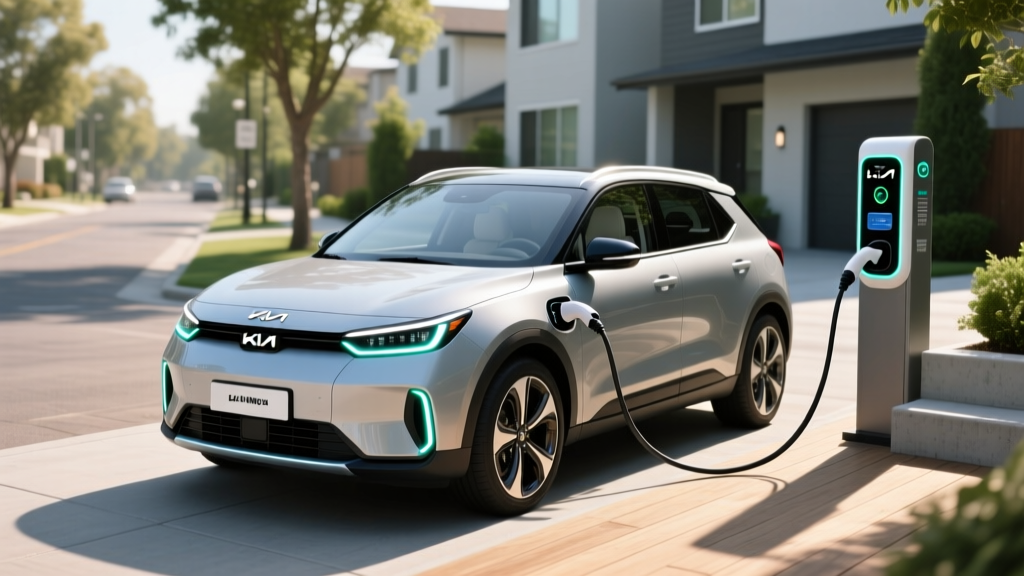
At home on a Level 2 charger, the Niro EV performs fine. A full overnight charge from near-empty takes roughly 7 hours, which suits most owners who plug in when they get home and wake up to a full battery. Installation of a 240V/48A Level 2 home charger typically costs $500–$2,000 depending on your electrical panel's proximity to the garage and whether a panel upgrade is needed.
On road trips, the 85 kW peak rate means a 10–80% session takes approximately 45 minutes at a compatible DC fast charger. The charge curve is relatively flat — the Niro EV sustains around 70–85 kW through about 60% state of charge before tapering. Compare this to the Ioniq 5's 18-minute 10–80% time, and you can see why frequent road-trippers may want to look elsewhere. The Niro EV also uses the CCS1 connector, not NACS (Tesla's plug), though Kia has committed to adopting NACS on future models. For now, CCS adapters for Tesla Superchargers are available but add cost and friction.
Cost Breakdown: Niro EV vs. Gas Niro vs. Niro Hybrid
The purchase decision between the Niro EV, Niro Hybrid, and a comparable gas compact crossover comes down to how you weigh upfront cost against long-term savings. Let's run the numbers over 5 years and 75,000 miles of driving.
| Cost Factor | 2025 Niro EV (Wind) | 2025 Niro Hybrid (EX) | Gas Compact Crossover Avg |
|---|---|---|---|
| Base MSRP | $39,600 | $28,990 | $30,000 |
| Est. Federal Tax Credit (§30D) | Up to $7,500* | $0 | $0 |
| Effective Purchase Price | ~$32,100* | $28,990 | $30,000 |
| Fuel/Energy (5 yr, 75k mi) | ~$3,200 (home charging)** | ~$5,400 (50 MPG) | ~$8,100 (28 MPG) |
| Maintenance (5 yr) | ~$1,200 | ~$2,800 | ~$3,500 |
| Insurance (5 yr est.) | ~$8,500 | ~$7,200 | ~$7,000 |
| 5-Year Total Cost | ~$45,000 | ~$44,390 | ~$48,600 |
* Tax credit eligibility depends on income caps, MSRP caps, battery sourcing, and point-of-sale transfer rules under IRS §30D. Consult a tax professional. ** Assumes $0.14/kWh national average home electricity rate and 3.5 mi/kWh efficiency.
The numbers tell a nuanced story. After a potential $7,500 federal credit (applied as a point-of-sale reduction at the dealer if you qualify), the Niro EV's effective price drops close to the Hybrid's. Over five years, the EV saves roughly $4,900 in fuel and maintenance compared to a gas crossover — but higher insurance premiums (EVs typically cost 15–20% more to insure due to battery replacement costs in collisions) eat into those savings.
Against the Niro Hybrid specifically, the EV's 5-year cost is nearly identical when you factor in the credit. The Hybrid wins if you can't charge at home or frequently drive in extreme cold. The EV wins if you have cheap home electricity, a short commute, and want to eliminate oil changes and transmission maintenance entirely.
Federal Tax Credit: What You Actually Qualify For
2025 §30D Clean Vehicle Credit Requirements:
- Income Caps: AGI ≤ $150,000 (single), $225,000 (head of household), $300,000 (joint)
- MSRP Cap: Vehicle base price must not exceed $55,000 for SUVs/crossovers (Niro EV qualifies)
- Battery Sourcing: Critical minerals and battery components must meet phased-in domestic/free-trade sourcing thresholds — the split credit ($3,750 + $3,750) depends on meeting each requirement
- Point-of-Sale Transfer: You can transfer the credit to the dealer at purchase for an immediate price reduction, or claim it on your tax return
- Assembly: Final assembly must occur in North America (the Niro EV is assembled in South Korea — this may disqualify it from the full §30D credit)
Critical note: The 2025 Kia Niro EV is manufactured in Hwaseong, South Korea. Under current IRS rules, the §30D credit requires final assembly in North America. This likely means the Niro EV does not qualify for the federal purchase credit when bought new. However, it may qualify when purchased as a used EV under the separate §25E used clean vehicle credit (up to $4,000 or 30% of sale price, whichever is less, on vehicles under $25,000 from a dealer). State-level incentives may also apply — check your local DMV or energy office. Always verify current rules at fueleconomy.gov before purchasing.
Who Should Buy the 2025 Kia Niro EV?
Choose the Niro EV if:
- You can install a Level 2 charger at home or have reliable workplace charging
- Your daily round-trip commute is under 80 miles
- You rarely take road trips over 200 miles one-way
- You live in a moderate or warm climate (less cold-weather range penalty)
- You value cargo versatility — 19.1 cu ft behind the rear seats beats most compact EV sedans
- You want Kia's 10-year/100,000-mile battery warranty for long-term peace of mind
Choose the Niro Hybrid or a different EV if:
- You lack home or workplace charging access (relying solely on public charging with 85 kW peak speed is frustrating)
- You road-trip frequently and need 15–20 minute DC fast-charge stops
- You live in a region with harsh winters and your commute exceeds 100 miles
- You want the federal new-vehicle tax credit — the Niro EV's Korean assembly likely disqualifies it
- You need all-wheel drive (the Niro EV is front-wheel drive only; consider the Ioniq 5 AWD or Tesla Model Y)
Common Misconceptions About the Niro EV
| Myth | Fact |
|---|---|
| "239 miles of range isn't enough for anyone" | The average American drives ~37 miles per day (FHWA data). 239 miles covers nearly a week of typical commuting without charging. |
| "EV batteries need replacing every few years" | Kia warranties the Niro EV battery for 10 years/100,000 miles against defects and capacity loss below 70%. NMC batteries in modern EVs typically retain 85–90% capacity after 100,000 miles based on industry fleet data. |
| "Charging an EV is more expensive than gas" | At the $0.14/kWh national average, the Niro EV costs about $0.04/mile to fuel on home electricity — roughly one-third the cost of a 28 MPG gas car at $3.50/gallon. Public DC fast charging is more expensive ($0.30–$0.50/kWh) but most charging happens at home. |
| "The Niro EV qualifies for the $7,500 tax credit" | Due to South Korean assembly, the new Niro EV likely does not qualify for the §30D new-vehicle credit. It may qualify for the used-EV credit (§25E) or state incentives. |
| "EVs are worse in the rain and cold" | EVs are sealed and handle rain and puddles without issue. Cold weather reduces range (25–35% in freezing temps) but does not affect safety or drivability. The heat pump helps mitigate cabin-heating energy draw. |
Ownership Practicalities: What First-Time EV Buyers Should Know
Home Charging Is Non-Negotiable for Most Owners
Over 80% of EV charging happens at home. Before buying the Niro EV, confirm you can install a Level 2 (240V) charger in your garage or driveway. A typical installation runs $500–$2,000 for the electrician and equipment if your panel has spare capacity. If your home has an older 100-amp panel, a panel upgrade to 200 amps can add $1,500–$3,000. Renters or condo dwellers without dedicated parking and electrical access should strongly consider whether public-charging-only ownership works with the Niro EV's 85 kW charge rate — it's manageable but requires planning.
Maintenance Is Minimal but Not Zero
The Niro EV eliminates oil changes, spark plugs, transmission fluid, and exhaust system maintenance. You'll still need tire rotations every 7,500 miles (EVs wear tires faster due to instant torque and heavier weight), cabin air filter replacements, brake fluid checks (regenerative braking extends pad life dramatically — many EV owners go 80,000+ miles on original pads), and windshield washer fluid. Budget roughly $200–$300/year in scheduled maintenance.
Insurance Costs More — Shop Around
EV insurance premiums run 15–20% higher than equivalent gas vehicles on average, driven by higher repair costs for battery packs and specialized bodywork. However, rates vary dramatically by insurer. Companies like Geico, Progressive, and USAA have become more competitive on EV policies. Get quotes before purchasing — the difference between insurers can be $400–$800/year.
The 10-Year Battery Warranty Matters
Kia's 10-year/100,000-mile powertrain and battery warranty is among the best in the industry. The battery is warranted against capacity loss below 70% of original capacity. For context, most owners report 5–10% degradation over the first 50,000 miles — well within the warranty threshold. If you plan to keep the Niro EV for 8–10 years, this warranty provides significant financial protection against the single most expensive component in the vehicle.
2025 Kia Niro EV vs. Key Competitors
| Spec | 2025 Kia Niro EV | 2025 Hyundai Kona Electric | 2025 Chevrolet Equinox EV | 2025 Nissan Leaf (SV Plus) |
|---|---|---|---|---|
| EPA Range | 239 mi | 261 mi | 315 mi (3RS) | 212 mi |
| Battery | 64.8 kWh | 64.8 kWh | 85 kWh | 60 kWh |
| DC Fast Charge Peak | 85 kW | 100 kW | 150 kW | 100 kW (CCS) |
| 10–80% Time | ~45 min | ~43 min | ~30 min | ~40 min |
| Horsepower | 201 hp | 201 hp | 288 hp (AWD) | 214 hp |
| Base MSRP | $39,600 | $32,975 | $33,600 | $36,190 |
| NA Assembly (§30D eligible?) | No (South Korea) | No (South Korea) | Yes (Mexico — verify) | Yes (USA) |
The Niro EV's strongest differentiator is cargo space and Kia's warranty. The Equinox EV offers more range and faster charging at a lower price, and the Kona Electric is cheaper with slightly more range. The Leaf uses the aging CHAdeMO connector and has less range but qualifies for the federal credit due to US assembly. Your choice depends on which combination of range, charging speed, cargo, credit eligibility, and warranty matters most to you.
Frequently Asked Questions
How long does it take to charge the 2025 Kia Niro EV at home?
On a 240V Level 2 home charger (11 kW), a full 0–100% charge takes approximately 7 hours. Most owners plug in overnight and wake up to a full battery. On a standard 120V household outlet (Level 1), a full charge takes over 40 hours — suitable only for emergency top-offs or very low daily mileage.
Does the 2025 Kia Niro EV qualify for the $7,500 federal tax credit?
Most likely not when purchased new. The §30D credit requires final assembly in North America, and the Niro EV is assembled in South Korea. However, it may qualify for the used EV tax credit (§25E) of up to $4,000 when purchased from a dealer for under $25,000, and may be eligible for various state-level incentives. Always verify at fueleconomy.gov and consult a tax professional.
Is the Niro EV good in snow and cold weather?
The Niro EV is front-wheel drive only, which limits traction in deep snow compared to AWD rivals. With winter tires, it handles light to moderate snow adequately. In freezing temperatures, expect 25–35% range loss due to battery chemistry limitations and cabin heating demands. The standard heat pump helps reduce heating-related energy consumption compared to resistive heaters.
How does the Niro EV compare to the Niro Hybrid?
The Niro Hybrid gets 53 MPG combined and starts around $28,990 with no range limitations or charging needs. The Niro EV costs more upfront but saves significantly on fuel and maintenance if you charge at home. The Hybrid is better for apartment dwellers, frequent road-trippers, and those in extreme cold climates. The EV is better for homeowners with charging access who want lower operating costs and zero tailpipe emissions.
What happens if the battery fails out of warranty?
Out-of-warranty battery replacement for the Niro EV is estimated at $8,000–$12,000 based on current NMC pack pricing. However, industry data suggests complete battery failure is rare — gradual degradation is far more common, and most packs retain 80%+ capacity well past 150,000 miles. Kia's 10-year/100,000-mile warranty covers the vast majority of ownership periods.
Can I tow with the 2025 Kia Niro EV?
Kia does not rate the Niro EV for towing in the US market. If you need towing capability, consider the Hyundai Ioniq 5 (up to 2,300 lbs with trailer brakes) or the Ford Mustang Mach-E (up to 3,000 lbs with the California Route 1 AWD trim).