The 2025 Kia Niro EV Lease Offer: What Buyers Actually Need to Know
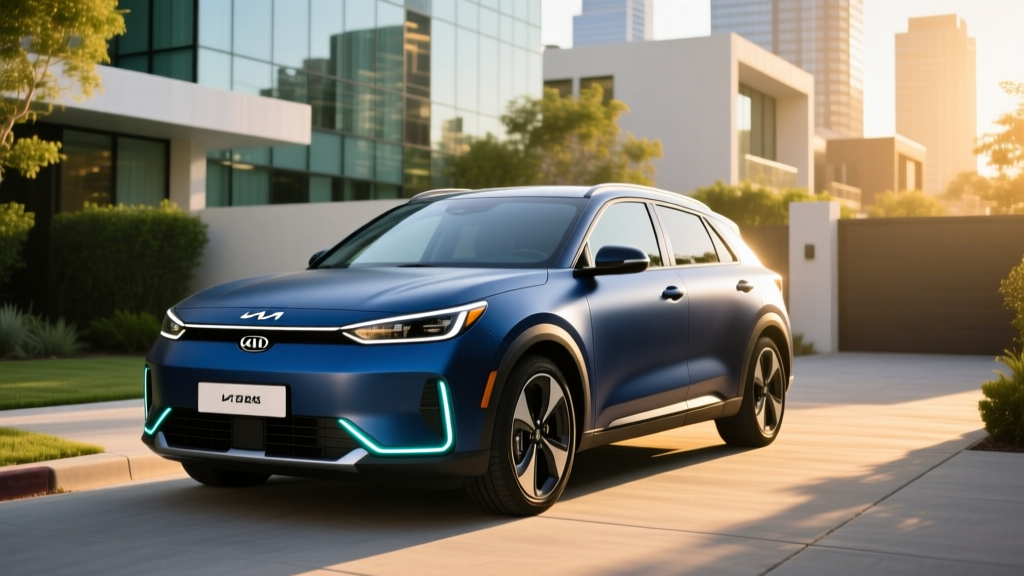
If you've been searching for a 2025 Kia Niro EV lease offer, you've likely seen advertised monthly payments that look tempting — sometimes under $300/month with minimal money down. But the sticker lease price is only one variable in a complex ownership equation. The Niro EV's 64.8 kWh battery, 119 MPGe combined rating, and eligibility for federal incentives make it one of the more financially compelling compact electric crossovers on the market, but only if the math works for your specific situation.
This analysis breaks down the full 5-year total cost of ownership for the 2025 Kia Niro EV, accounting for the lease structure, federal tax credit pass-through, real-world charging costs, insurance premiums, and depreciation realities that dealer ads don't mention. We're working with 2026 rules and pricing to give you an accurate picture of what you'll actually spend.
EPA Range: 239 miles (Wind trim) / 226 miles (GT-Line) | Real-World Highway: ~190–210 mi
Battery: 64.8 kWh usable, NMC chemistry | Max DC Charge: ~85 kW (10–80% in ~43 min)
Level 2 Rate: 11 kW | Motor: 201 hp, 188 lb-ft | 0–60 mph: ~7.2 sec
MPGe: 126 city / 113 hwy / 119 combined | EPA Efficiency: 28 kWh/100 mi
Base MSRP: ~$39,600 (Wind) | Warranty: 10 yr/100,000 mi battery & powertrain
How a Niro EV Lease Actually Works With Federal Tax Credits
Here's the critical detail most lease shoppers miss: when you purchase a new EV, the federal §30D tax credit requires meeting income caps, MSRP caps, and battery-sourcing rules. But when you lease, the credit is technically claimed by the leasing company (the lessor), and many manufacturers pass that savings through as a "lease cash" incentive that reduces the capitalized cost of the vehicle.
For the 2025 Kia Niro EV, Kia has historically applied the full $7,500 federal credit as a lease cash incentive. This effectively lowers the starting price by that amount before calculating your monthly payment — a significant advantage, especially if your personal tax situation wouldn't allow you to claim the full credit on a purchase.
- MSRP Cap: Vans/SUVs/pickups ≤ $80,000; sedans/other ≤ $55,000 (Niro EV qualifies as SUV at ~$39,600–$44,000)
- Income Cap: AGI ≤ $150,000 (single), $225,000 (head of household), $300,000 (joint)
- Battery Sourcing: Critical minerals and battery components must meet escalating domestic/free-trade-partner percentages per IRS §30D rules
- Point-of-Sale Transfer: Eligible buyers can transfer the credit to the dealer for an instant price reduction at purchase
- Lease Loophole: Lessors claim the credit and may pass savings as lease cash — buyer income/MSRP caps don't directly apply to the lessee
⚠ Rules evolve annually. Verify current-year eligibility at irs.gov before signing. Consult a tax professional for personal guidance.
5-Year Total Cost of Ownership: The Real Numbers
Below is a realistic 5-year/60,000-mile ownership cost projection for the 2025 Kia Niro EV on a typical lease (36 months) followed by either a lease buyout or a second lease. We're comparing it against a similarly priced gas compact SUV — the 2025 Kia Sportage EX (MSRP ~$33,000, 28 MPG combined) — to show where the Niro EV saves and where it costs more.
| Cost Category | 2025 Niro EV (5 yr) | Gas SUV Baseline (5 yr) |
|---|---|---|
| Net Vehicle Cost (after incentives) | ~$32,100* | ~$33,000 |
| Fuel / Electricity (60,000 mi) | ~$3,192** | ~$7,714*** |
| Maintenance | ~$1,200 | ~$3,500 |
| Insurance (5 yr total) | ~$10,800 | ~$9,000 |
| Depreciation (est. 5-yr) | ~$18,500 | ~$14,500 |
| Estimated 5-Year Total | ~$47,292 | ~$49,214 |
* After $7,500 lease cash incentive applied. ** At $0.14/kWh avg, 28 kWh/100 mi. *** At $3.60/gal, 28 MPG combined. Your actual costs will vary by region, driving habits, and utility rates.
Charging vs. Gas: Cost Per Mile With Real Numbers
The Niro EV's efficiency is where ownership economics shine. At an EPA-rated 28 kWh per 100 miles, it's one of the more efficient compact electric SUVs available. Here's what that translates to in dollars:
| Scenario | Cost/Mile | Annual (12,000 mi) |
|---|---|---|
| Home charging (Level 2, $0.14/kWh) | $0.039 | $470 |
| Home + public DC mix (70/30, $0.22 blended) | $0.062 | $740 |
| 100% public DC fast charging ($0.35/kWh) | $0.098 | $1,176 |
| Gas SUV (28 MPG, $3.60/gal) | $0.129 | $1,543 |
The takeaway: if you can charge primarily at home on a standard utility rate, the Niro EV costs roughly $0.04/mile to "fuel" versus $0.13/mile for gas — a savings of approximately $1,073 per year at 12,000 miles driven. Even with a mix of public DC fast charging (which is significantly more expensive per kWh), you'll still save meaningfully over gasoline.
One practical note on the Niro EV's charging: its peak DC rate of approximately 85 kW is modest by 2026 standards. Expect a 10–80% session to take roughly 43 minutes at a compatible station. This is perfectly adequate for daily life and overnight Level 2 charging (about 6 hours from empty on an 11 kW home charger), but it means longer road-trip stops compared to vehicles with 150+ kW peak rates.
Maintenance Savings: Where EVs Quietly Win
| Service Item | Niro EV | Gas SUV |
|---|---|---|
| Oil Changes | None | 5–8 over 60k mi (~$500–$800) |
| Brake Pads | Rarely (regen extends life) | 1–2 replacements (~$400–$700) |
| Transmission Fluid | None (single-speed) | 1 service (~$200) |
| Coolant Flush | Interval-based (~$150) | Interval-based (~$150) |
| Tire Rotation/Replacement | Same or slightly higher* | Standard |
| Cabin Air Filter | Same (~$80 over 5 yr) | Same |
| Est. 5-Year Maintenance Total | ~$1,200 | ~$3,500 |
* EVs are heavier and deliver instant torque, which can accelerate tire wear slightly. Budget for one tire replacement over 60,000 miles regardless of powertrain.
The regenerative braking system on the Niro EV is a major maintenance advantage. By using the electric motor to decelerate, the friction brakes are used far less frequently — many EV owners report original brake pads lasting 80,000+ miles. Combined with no oil changes, no spark plugs, no timing belt, and no multi-speed transmission to service, the Niro EV's maintenance budget is roughly one-third that of a comparable gas vehicle.
Insurance Costs: The Uncomfortable Reality
EV insurance premiums are typically 15–25% higher than equivalent gas vehicles, and the Niro EV is no exception. For a 35-year-old driver with a clean record, expect annual premiums in the range of $1,900–$2,400 depending on your state, compared to $1,600–$2,000 for a gas Sportage.
Why the premium? Three factors drive it:
- Higher repair costs: EV-specific components (battery pack, power electronics) are expensive to replace after collision damage.
- Specialized labor: Fewer body shops have high-voltage certification, raising labor rates for EV repairs.
- Total-loss thresholds: Battery damage that triggers a total-loss declaration at a lower vehicle value than for gas cars.
That said, Kia's 10-year/100,000-mile battery and powertrain warranty provides some protection against non-collision battery failures, and the Niro EV's IIHS safety ratings help moderate premiums. Shop at least three quotes — some insurers now offer specific EV discounts.
Depreciation and Resale Value: What to Expect
EV depreciation has been volatile since 2023, when price cuts from Tesla and others cascaded through the used-EV market. The Niro EV is not immune, but it holds value reasonably well for its segment thanks to Kia's strong warranty (which is transferable to second owners), practical hatchback form factor, and relatively accessible price point.
Based on current market trends, expect the Niro EV to retain approximately 35–42% of its MSRP after 5 years / 60,000 miles, compared to 45–55% for a gas compact SUV. The gap has narrowed as EV adoption has grown and buyer confidence in used EVs has improved, but it still represents roughly $3,000–$5,000 more depreciation over five years.
For lease buyers, depreciation is embedded in the residual value set by Kia Motors Finance. A 36-month lease typically sets the residual at 50–55% of MSRP. If the used-EV market is strong at lease-end, you may have equity; if it softens further, you can simply walk away — which is one of the advantages of leasing over buying in a volatile market.
Beyond the federal credit, many states and utilities offer additional savings:
- California: CVRP rebate up to $7,000 (income-dependent) + HOV lane access
- Colorado: State EV tax credit up to $5,000
- Utility rebates: Many utilities offer $250–$1,500 for home Level 2 charger installation or off-peak charging credits
- Local programs: Municipal utilities, air districts, and employers may offer additional rebates
Check your state energy office and utility provider for current programs. These incentives stack with the federal credit and can meaningfully lower your effective cost.
Should You Lease or Buy the 2025 Niro EV?
- You want the $7,500 incentive without worrying about personal income caps or battery-sourcing eligibility
- You prefer lower monthly payments and plan to upgrade every 3 years
- You're uncertain about long-term EV depreciation trends and want walk-away protection
- Your annual mileage is under 12,000–15,000 (standard lease limits)
- You qualify for the full §30D credit on a purchase (income, MSRP, and sourcing all check out)
- You plan to keep the vehicle 5+ years and want to avoid perpetual payments
- You drive high annual mileage (15,000+ mi/yr) where lease penalties would apply
- You want to build long-term equity in the vehicle
Frequently Asked Questions
How much does it really cost to own a 2025 Kia Niro EV over 5 years?
Based on our analysis, approximately $47,000–$50,000 over 5 years and 60,000 miles when accounting for the net vehicle cost (after incentives), electricity, maintenance, insurance, and depreciation. This is competitive with — and often slightly cheaper than — a comparably equipped gas compact SUV, primarily due to fuel and maintenance savings offsetting higher insurance and depreciation.
Do I qualify for the federal EV tax credit on a Niro EV lease?
On a lease, the $7,500 credit is claimed by the leasing company, not you personally. Kia has historically passed this through as lease cash, reducing your effective cost. This means buyer income caps and some sourcing requirements don't directly affect you as the lessee. For a purchase, you must meet the AGI limits ($150k single / $300k joint), the vehicle must be under the $80,000 SUV MSRP cap, and battery sourcing requirements must be satisfied. Verify current rules at IRS.gov.
How much do I save on fuel and maintenance with the Niro EV?
At 12,000 miles/year with primarily home charging at $0.14/kWh, you'll spend roughly $470/year on electricity versus $1,543/year on gasoline for a 28 MPG gas SUV — saving about $1,073 annually. Maintenance savings add another ~$460/year (no oil changes, reduced brake wear, no transmission service). Combined annual savings: approximately $1,500–$1,800.
Are EVs more expensive to insure than gas cars?
Yes, typically 15–25% more. For the Niro EV, expect $200–$400/year more than a gas equivalent, driven by higher repair costs for EV-specific components and a smaller pool of certified body shops. Shop multiple insurers and ask specifically about EV discounts.
How well do EVs hold their value compared to gas cars?
EVs currently depreciate faster — the Niro EV retains roughly 35–42% of MSRP after 5 years versus 45–55% for a gas compact SUV. However, this gap has been narrowing as the used-EV market matures. For lease buyers, this matters less because you're protected by the residual value set at signing; if the market drops, you walk away.
What's the real-world range of the 2025 Niro EV?
The EPA rates the Wind trim at 239 miles and the GT-Line at 226 miles. In real-world highway driving at 70 mph, expect approximately 190–210 miles in moderate temperatures. In cold weather (below 30°F), range drops 15–25%, so plan for 155–185 miles in winter conditions. The Niro EV's heat pump (standard on most trims) helps mitigate cold-weather losses compared to EVs without one.
Is home charging necessary to make the Niro EV economical?
It's strongly recommended. Home Level 2 charging at utility rates ($0.10–$0.18/kWh in most areas) delivers the lowest cost per mile. Relying entirely on public DC fast charging ($0.30–$0.48/kWh) narrows the cost advantage significantly and is less convenient. If you can't install a Level 2 charger at home, consider whether your workplace offers charging or whether a PHEV might be a better fit.
Sources: EPA efficiency data via fueleconomy.gov; federal tax credit rules via IRS.gov §30D; vehicle specifications via Kia Motors America. Pricing and incentive rules are subject to change — verify current figures before purchasing or leasing.