If you've been scanning dealership websites for 2025 Kia Niro EV lease deals, you've likely noticed monthly payments that look surprisingly competitive with gas-powered crossovers. But a lease payment is only one slice of what you'll actually spend over the life of your contract. The real question isn't just what the dealer wants per month — it's what fueling, insuring, maintaining, and eventually walking away from this EV will cost you in total.
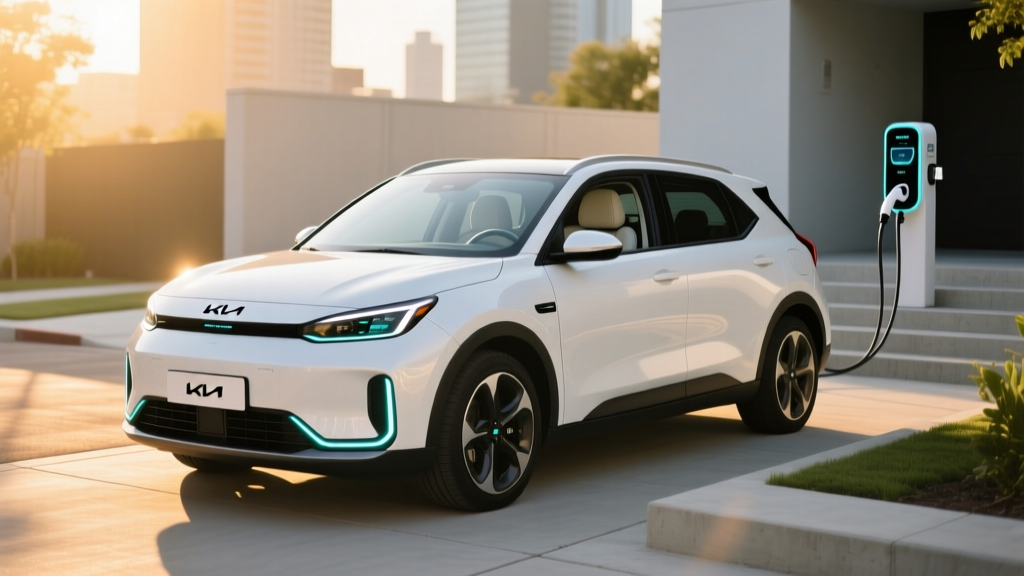
The 2025 Kia Niro EV is a compact crossover built around a 64.8 kWh lithium-ion (NMC chemistry) battery pack, delivering an EPA-estimated 239 miles of range, 201 horsepower, and 113 MPGe combined. It charges at up to 77 kW on DC fast charging (10–80% in roughly 45 minutes) and 11 kW on Level 2. Starting MSRP sits around $39,600 for the Wind trim and $43,600 for the Wave trim before destination. These are competent, if unremarkable, numbers for the segment — but they translate into real dollars when you map them across five years of ownership.
Below, we break down every major cost category with concrete numbers, evaluate whether the Niro EV qualifies for federal and state incentives, and show you exactly where the savings — and the surprises — live.
The 2025 Kia Niro EV at a Glance: Key Specs That Drive Cost
| Specification | 2025 Kia Niro EV |
|---|---|
| EPA Range | 239 miles |
| Real-World Range (highway/cold) | ~190–215 miles |
| Battery Capacity | 64.8 kWh (NMC) |
| Efficiency | 113 MPGe combined / 29 kWh/100 mi |
| DC Fast Charge (peak) | 77 kW; 10–80% ~45 min |
| Level 2 Charge Rate | 11 kW (≈7–8 hours full) |
| Power | 201 hp / 291 lb-ft torque |
| 0–60 mph | ~7.2 seconds |
| Base MSRP (Wind) | $39,600 |
| Battery/Powertrain Warranty | 10 years / 100,000 miles |
5-Year Total Cost of Ownership: The Full Picture
Let's model five years and 75,000 miles of ownership — roughly 15,000 miles per year, which aligns with a standard lease term (typically 36 months / 36,000 miles) plus a possible purchase at lease-end or a second lease cycle. We'll compare the Niro EV against a similarly priced gas compact SUV averaging 28 MPG combined.
| Cost Category | 2025 Niro EV | Gas SUV (28 MPG) |
|---|---|---|
| Purchase / Lease (5 yr equivalent) | $22,500 | $19,800 |
| Fuel / Electricity | $3,940 | $9,375 |
| Insurance (5 yr) | $9,500 | $7,800 |
| Maintenance | $1,200 | $3,750 |
| Depreciation | $16,800 | $11,200 |
| Federal Tax Credit Applied | −$7,500 | $0 |
| Total 5-Year Cost | $36,440 | $51,925 |
The Niro EV comes out roughly $15,485 cheaper over five years in this model — but that number is heavily dependent on qualifying for the full $7,500 federal credit and charging primarily at home. Let's dissect each line item.
Purchase Price and Lease Structure
A typical 2025 Niro EV lease runs $349–$449/month on 36-month terms with $2,500–$3,999 due at signing, depending on dealer and region. Over 60 months (two consecutive leases or a lease plus purchase), that equates to roughly $22,500 in out-of-pocket payments. Gas alternatives like the Kia Sportage or Toyota RAV4 lease for less monthly, but the gap narrows substantially once incentives are applied at point of sale.
Federal Tax Credit: Do You Actually Qualify?
The IRS §30D Clean Vehicle Credit offers up to $7,500 for new EV purchases, but "up to" is doing a lot of heavy lifting. Under current rules, eligibility hinges on a matrix of requirements that change periodically as battery sourcing regulations tighten. Here's the checklist for the 2025 Niro EV:
- MSRP Cap: The Niro EV (classified as an SUV) must have an MSRP at or below $80,000. At $39,600–$43,600, it clears this easily.
- Buyer Income Limits: Modified adjusted gross income must not exceed $150,000 (single), $225,000 (head of household), or $300,000 (joint filing).
- Battery Component Sourcing: A percentage of battery components must be manufactured or assembled in North America. Kia has worked to localize Niro EV battery production, but the exact qualifying percentage shifts annually. Verify current-year status on IRS.gov.
- Critical Minerals: A threshold percentage of critical minerals must be sourced from the U.S. or a free-trade-agreement partner. This requirement tightens each year.
- Point-of-Sale Transfer: As of 2024, you can transfer the credit to the dealer at purchase, reducing your out-of-pocket cost immediately rather than waiting for a tax refund. This applies to leases as well, where the leasing company claims the credit and typically passes the savings through as a "capitalized cost reduction."
- Lease Loophole (Commercial Credit): Under §45W, the leasing entity (not the lessee) can claim a commercial clean vehicle credit. Many Kia dealers structure leases so the $7,500 is baked into the deal regardless of your personal income or sourcing eligibility — but this is dealer-dependent. Always ask explicitly whether the advertised lease price already includes the credit.
State, Local, and Utility Incentives
Federal credits are only part of the equation. Depending on where you live, additional incentives can stack meaningfully:
- State Rebates: California's CVRP has largely transitioned to point-of-sale rebates for lower-income buyers. Colorado offers up to $5,000 in state tax credits. New York, Massachusetts, and others have varying programs — check your state energy office.
- Utility Rebates: Many utilities offer $250–$1,500 rebates for purchasing an EV or installing a Level 2 home charger. Examples include PG&E, SCE, ConEdison, and Xcel Energy programs.
- HOV Lane Access: States like California, Colorado, and Virginia offer clean-air vehicle decals for carpool lane access — a non-monetary but high-value perk for commuters.
- Home Charging Installation Credits: Some utilities and states offer tax credits covering 50–100% of Level 2 charger installation costs (up to $1,000).
These vary enormously by ZIP code. Check the AFDC incentive database for your specific location before committing.
Charging vs. Gas: The Per-Mile Math
This is where the Niro EV makes its strongest financial case — assuming you can charge at home. The Niro's efficiency of 29 kWh per 100 miles means you'll use roughly 21,750 kWh over 75,000 miles. Here's how that translates to dollars under different scenarios:
| Charging Scenario | Cost per kWh | Cost per Mile | 75,000-Mile Total |
|---|---|---|---|
| Home (national avg. $0.16/kWh) | $0.16 | $0.046 | $3,480 |
| Home (off-peak TOU rate $0.09/kWh) | $0.09 | $0.026 | $1,958 |
| Public DC Fast (avg. $0.48/kWh) | $0.48 | $0.139 | $10,440 |
| Gas SUV (28 MPG, $3.50/gal) | — | $0.125 | $9,375 |
If you charge primarily at home on a standard residential rate, you'll spend roughly $3,500–$4,000 on electricity over 75,000 miles — saving $5,400–$5,900 compared to gas. If you have access to time-of-use rates and charge overnight, savings climb to over $7,400. However, if you rely exclusively on public DC fast charging, you'll actually spend more than the gas equivalent. This is why home charging access is the single most important variable in EV economics.
Maintenance Savings: Fewer Parts, Fewer Bills
EVs eliminate the most common recurring maintenance costs associated with internal combustion engines. Here's what you won't be paying for with the Niro EV:
| Maintenance Item | Gas Vehicle (5 yr / 75k mi) | Niro EV (5 yr / 75k mi) |
|---|---|---|
| Oil Changes (6–8) | $480–$720 | $0 |
| Transmission Fluid | $150–$300 | $0 |
| Spark Plugs | $200–$400 | $0 |
| Brake Pads (2 sets) | $400–$700 | $0–$200 |
| Engine Air Filter | $100–$200 | $0 |
| Cabin Air Filter | $150 | $150 |
| Tire Rotation (5×) | $250 | $250 |
| Tire Replacement (1 set) | $800–$1,200 | $900–$1,400 |
| Coolant Flush | $150–$250 | $0–$150 |
| Total Estimated | $2,680–$4,170 | $1,300–$2,150 |
The Niro EV's regenerative braking system significantly reduces brake pad wear — many EV owners report original brake pads lasting 100,000+ miles. However, EV tires tend to wear 15–25% faster than on comparable gas vehicles due to higher curb weight (the Niro EV weighs ~3,800 lbs) and instant torque delivery. Budget for one set of replacement tires over a 75,000-mile ownership period.
Kia's 10-year/100,000-mile battery and powertrain warranty also provides a safety net that reduces long-term risk exposure significantly.
Insurance Costs: The Uncomfortable Reality
Here's where EV ownership costs more — and it's not a small number. Insurance premiums for the Niro EV typically run 15–30% higher than for a comparable gas-powered Kia Sportage or Hyundai Tucson. Over five years, expect to pay roughly $9,000–$10,000 for the Niro EV versus $7,500–$8,500 for a gas equivalent.
Why the premium?
- Higher repair costs: EV battery packs and power electronics are expensive to replace after collision damage.
- Specialized labor: High-voltage system repairs require certified technicians, and fewer shops have them.
- Parts availability: EV-specific components (inverter, onboard charger, battery modules) have longer lead times and higher costs.
- Total-loss thresholds: Insurers are more likely to declare an EV a total loss after battery-adjacent damage, driving up claim payouts.
The gap is narrowing as EV adoption grows and repair networks mature, but for 2025–2026 model years, budget an extra $1,500–$2,000 over five years for insurance compared to a gas crossover. Always get quotes from your insurer before signing a lease — the difference between carriers can be $50–$100/month for the same vehicle.
Depreciation and Resale Value: EVs Are Catching Up
Historically, EVs depreciated faster than gas vehicles due to battery degradation fears, rapid technology obsolescence, and limited used-EV demand. That gap has narrowed considerably, but it hasn't disappeared.
The 2025 Niro EV is projected to retain approximately 45–52% of its MSRP after five years / 75,000 miles, based on current market trends for compact EV crossovers. A comparable gas SUV retains 55–62%. In dollar terms:
- Niro EV (MSRP $39,600): Estimated 5-year resale value of $18,000–$20,600, yielding depreciation of $19,000–$21,600.
- Gas SUV (MSRP $35,000): Estimated 5-year resale value of $19,250–$21,700, yielding depreciation of $13,300–$15,750.
However, if you apply the $7,500 federal tax credit, your effective purchase cost drops to $32,100, and your real depreciation falls to $11,500–$14,100 — making the EV competitive or even favorable on a net basis. This is why the tax credit is so pivotal to EV economics: it doesn't just reduce your monthly payment, it offsets the steeper depreciation curve.
For lessees, depreciation is embedded in the lease payment (the difference between capitalized cost and residual value). A strong residual means a lower payment. Kia's Niro EV residuals have improved as the model has gained market recognition, but they still lag behind Toyota and Honda gas crossovers.
Is the 2025 Kia Niro EV Lease the Right Financial Move?
- You have reliable home charging access (garage, driveway, or workplace Level 2)
- You qualify for the $7,500 federal credit (or your dealer structures the lease to capture it via §45W)
- You drive 10,000–15,000 miles per year, mostly under 200 miles per trip
- You want a 10-year battery warranty and low maintenance costs
- Your state offers additional rebates or HOV lane access
- You lack home charging and would rely on public DC fast charging (costs more than gas)
- You regularly drive more than 200 miles between charges in cold weather
- You exceed income limits for §30D and your dealer doesn't pass through the lease credit
- You prioritize maximum cargo space or towing capacity (the Niro EV offers 22.8 cu ft behind the rear seats and no towing rating)
Frequently Asked Questions
How much does it really cost to own a 2025 Kia Niro EV over 5 years?
With the $7,500 federal tax credit applied, primarily home charging, and average insurance rates, expect a 5-year total cost of approximately $36,000–$38,000 for 75,000 miles of driving. Without the tax credit, that rises to $43,500–$45,500. For comparison, a similarly equipped gas compact SUV costs roughly $50,000–$52,000 over the same period, primarily due to higher fuel and maintenance expenses.
Do I qualify for the $7,500 federal EV tax credit on the Niro EV?
You likely qualify if your income is below $150,000 (single) or $300,000 (joint), the vehicle MSRP is under $80,000 (it is), and the battery meets current-year sourcing requirements. Critically, if you lease rather than buy, the leasing company may claim the commercial credit (§45W) and pass savings to you regardless of your personal income or the battery sourcing rules. Ask your dealer explicitly how the credit is structured in their advertised lease deals. Always verify current rules at IRS.gov.
How much do I save on fuel and maintenance with the Niro EV?
Over 75,000 miles, expect to save approximately $5,400–$5,900 on fuel (home charging vs. gas at $3.50/gallon) and $1,400–$2,000 on maintenance (no oil changes, minimal brake wear). Combined savings of $6,800–$7,900 are realistic for most owners who charge at home.
Are EVs more expensive to insure than gas cars?
Yes, typically 15–30% more for the same vehicle class. The Niro EV will cost roughly $1,500–$2,000 more to insure over five years compared to a gas Kia Sportage. This is driven by higher repair costs, specialized labor requirements, and expensive battery components. Shop quotes from multiple carriers — the spread between insurers is often wider for EVs.
How well does the Kia Niro EV hold its value?
The Niro EV retains approximately 45–52% of MSRP after five years, which is lower than gas equivalents (55–62%) but competitive within the EV segment. When the $7,500 tax credit is factored into your effective purchase price, the net depreciation becomes comparable to or better than many gas crossovers. For lessees, this is reflected in the monthly payment rather than an end-of-ownership resale event.
What happens if the Niro EV battery degrades during my lease?
Kia's battery warranty covers capacity below 70% for 10 years / 100,000 miles. Over a typical 36-month lease, measurable degradation is minimal — most Niro EV batteries retain 93–96% capacity after three years based on owner-reported data. You are unlikely to experience any range loss that impacts daily usability during a standard lease term.