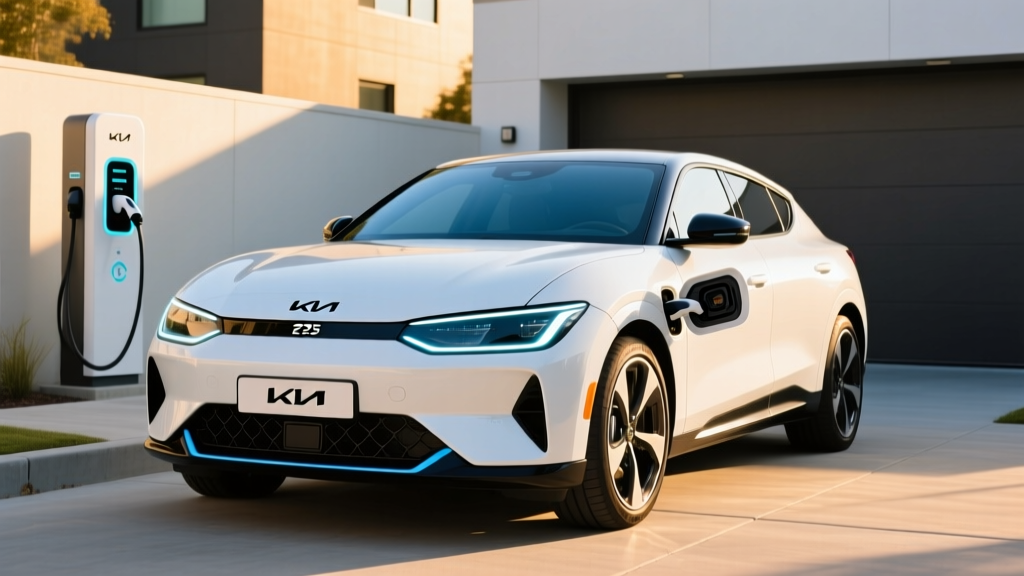
The 2025 Kia EV6 arrives with a larger battery, faster charging hardware, and a refreshed interior — but the question buyers actually need answered is whether these updates move the needle in an increasingly crowded midsize EV crossover segment. We've analyzed every spec, cross-referenced EPA data, and reconciled sticker numbers with real-world expectations so you know exactly what you're signing up for.
2025 Kia EV6 Specs at a Glance
| Specification | Light Long Range (RWD) | Wind / GT-Line (AWD) | GT (AWD) |
|---|---|---|---|
| EPA Range | 310 mi | 290 mi | 260 mi |
| Battery (usable) | 84.0 kWh | 84.0 kWh | 84.0 kWh |
| Chemistry | NMC (Nickel Manganese Cobalt) | NMC | NMC |
| Horsepower | 225 hp | 320 hp | 576 hp |
| 0–60 mph | 7.3 sec | 5.0 sec | 3.4 sec |
| Drivetrain | RWD single motor | AWD dual motor | AWD dual motor |
| Peak DC Charge Rate | 239 kW | 239 kW | 239 kW |
| 10–80% DC Time | ~18 min | ~18 min | ~18 min |
| Level 2 Rate | 10.9 kW | 10.9 kW | 10.9 kW |
| Combined MPGe | 134 MPGe | 117 MPGe | 85 MPGe |
| Base MSRP | $44,900 | $48,700 | $63,000 |
Source: Kia USA and fueleconomy.gov. Pricing excludes destination; specs reflect 2025 model year.
Range & Efficiency: What the EPA Sticker Doesn't Tell You
The headline number for the 2025 EV6 is 310 miles of EPA-estimated range on the Light Long Range RWD trim — up from 310 miles on the prior-generation Long Range (the 2025 uses a larger 84.0 kWh battery vs. the outgoing 77.4 kWh pack). AWD trims drop to 290 miles, and the performance-oriented GT settles at 260 miles.
- City / mixed driving (moderate climate): Expect ~280–305 mi on the Light Long Range RWD — close to EPA thanks to regenerative braking in stop-and-go traffic.
- Sustained highway (70–80 mph): Plan for ~240–265 mi. Aerodynamic drag hits all EVs hard above 65 mph, and the EV6's 0.28 Cd, while respectable, doesn't eliminate the physics.
- Cold weather (below 30°F): Budget a 20–30% reduction. That 310-mi sticker can shrink to ~220–250 mi in freezing conditions without preconditioning. The EV6's heat pump (standard on most trims) helps, but it can't fully offset the energy cost of cabin heating and battery warming.
Efficiency on the Long Range RWD is rated at 134 MPGe combined, which translates to roughly 25 kWh per 100 miles — competitive with the Hyundai Ioniq 5 and slightly behind the Tesla Model Y's ~28 kWh/100 mi. The GT's 85 MPGe reflects its 576-hp performance tuning; if you want efficiency, the GT isn't the trim for you.
Battery, Chemistry & Longevity
Kia equips the 2025 EV6 with an 84.0 kWh (usable) NMC (nickel manganese cobalt) lithium-ion battery. NMC chemistry offers higher energy density than LFP (lithium iron phosphate), which is why the EV6 can pack 310 miles into a relatively compact crossover footprint. The trade-off: NMC batteries are more sensitive to sustained high states of charge and extreme heat, and they carry a higher raw-material cost.
For daily driving, Kia recommends charging to 80% and using the vehicle's built-in charge-limit settings. If you regularly need the full 310 miles, a full charge is fine — just avoid letting the car sit at 100% SoC for extended periods.
Kia's battery warranty covers 10 years / 100,000 miles with a capacity retention threshold of 70% — meaning if your battery drops below 70% of original capacity within that window, Kia replaces or repairs it. This is one of the stronger warranties in the segment and reflects Kia's confidence in the pack's thermal management system.
Charging Speed: DC Fast, Level 2 & Home Setup
The 2025 EV6 retains its 800-volt electrical architecture, which is the key to its impressive DC fast-charging performance. Here's the full breakdown:
| Charging Level | Power / Rate | Miles Added | Notes |
|---|---|---|---|
| Level 1 (120V household) | ~1.4 kW | ~4–5 mi/hr | Emergency/trickle only; full charge in ~60+ hrs |
| Level 2 (240V home) | 10.9 kW | ~35–38 mi/hr | Full 0–100% in ~8.5 hrs; requires 48A circuit |
| DC Fast Charge (CCS) | Peak 239 kW | ~10–80% in ~18 min | 800V architecture; tapers above 80% |
| DC Fast Charge (NACS adapter) | Up to 150 kW* | Varies | Via Kia-provided Tesla Supercharger adapter (included) |
*NACS adapter speed limited by adapter hardware; native CCS2 port handles full 239 kW.
The 239 kW peak rate is sustained impressively well between roughly 10% and 55% SoC, then tapers progressively. On a 350 kW Electrify America or Ionity station, you'll see the fastest real-world times. On a 150 kW charger, expect 10–80% in roughly 28–32 minutes — still fast, but you're leaving performance on the table.
For home charging, the 10.9 kW onboard charger means you'll want a hardwired Level 2 wallbox on a 60-amp breaker (48 amps continuous). A full overnight charge from 10% takes about 8.5 hours. If your home panel is already at capacity, budget $1,500–$3,000 for a panel upgrade — a common surprise cost for first-time EV buyers in older homes.
Performance & Driving Dynamics
The 2025 EV6 lineup spans practical commuter to genuine performance machine:
- Light Long Range RWD (225 hp): Adequate for daily driving. The 7.3-second 0–60 time won't thrill, but the instant torque makes city merging effortless. This is the efficiency pick.
- Wind / GT-Line AWD (320 hp): The sweet spot for most buyers. The 5.0-second 0–60 is genuinely quick, and dual-motor AWD adds all-weather confidence without a massive range penalty.
- GT (576 hp): A legitimate performance vehicle. The 3.4-second 0–60 puts it in Porsche Taycan territory, and the electronically limited top speed of 161 mph is remarkable for a crossover. The cost: 260 miles of range and 85 MPGe.
Ride quality across the lineup is firm but controlled — Kia tuned the EV6's E-GMP platform for handling composure over plush isolation. Road noise is well-managed, and the low center of gravity (battery pack under the floor) keeps body roll minimal through corners.
Interior Space, Cargo & Technology
The EV6's dimensions place it squarely in the midsize crossover category, competing directly with the Ioniq 5, Model Y, and Ford Mustang Mach-E.
- Rear legroom: 39.4 inches — generous for the segment, thanks to the flat floor (no transmission tunnel).
- Cargo (behind rear seats): 24.4 cu ft
- Cargo (rear seats folded): 50.2 cu ft
- Front trunk (frunk): 0.7 cu ft (AWD) / 1.8 cu ft (RWD) — small, but useful for charging cables
On the tech front, the 2025 EV6 features dual 12.3-inch curved displays (instrument cluster + infotainment), wireless Apple CarPlay and Android Auto, and Kia's latest Highway Driving Assist 2 (HDA2) — a Level 2 driver-assist system that handles adaptive cruise, lane centering, and lane-change assist on divided highways. HDA2 requires hands on the wheel; this is not autonomous driving.
The updated infotainment system is faster and more responsive than the pre-refresh version, with improved voice recognition and over-the-air update capability. One lingering gripe: the haptic-touch climate controls below the main screen are harder to use while driving than physical buttons.
Pricing, Trims & Federal Tax Credit Eligibility
| Trim | Base MSRP | Est. After §30D Credit* | Key Features |
|---|---|---|---|
| Light Long Range RWD | $44,900 | ~$37,400 | 310-mi range, HDA2, heated seats, 10.9 kW L2 |
| Wind AWD | $48,700 | ~$41,200 | AWD, power liftgate, wireless phone charger |
| GT-Line AWD | $52,100 | ~$44,600 | Sport styling, augmented reality HUD, premium audio |
| GT AWD | $63,000 | ~$55,500 | 576 hp, drift mode, electronic LSD, sport seats |
*§30D credit estimates assume full $7,500 eligibility. Actual credit depends on buyer income, battery sourcing, and MSRP caps. See IRS guidelines.
- MSRP cap: SUVs/crossovers must be ≤$80,000 — all EV6 trims qualify on MSRP alone.
- Buyer income cap: AGI ≤$150,000 (single) / $225,000 (head of household) / $300,000 (joint). Exceed these and you get $0 credit.
- Battery sourcing: Critical minerals and battery components must meet escalating North American sourcing thresholds. Kia has worked to qualify, but verify current-year eligibility on the IRS clean vehicle credit list before purchasing.
- Point-of-sale transfer: You can apply the credit as an upfront discount at the dealer rather than waiting for tax filing — reducing your out-of-pocket cost immediately.
Consult a tax professional to confirm your personal eligibility. State and local incentives (utility rebates, HOV lane access) may stack on top but vary widely by jurisdiction.
Pros, Cons & Who the EV6 Suits Best
Pros
- 800V architecture delivers best-in-class DC charging speed (239 kW, 18 min 10–80%)
- 10-year/100,000-mile battery warranty — among the longest in the industry
- 310 miles EPA range (Long Range RWD) is genuinely road-trip capable
- Spacious rear seat (39.4" legroom) and flat floor make it family-friendly
- GT trim offers supercar-level acceleration in a practical package
- NACS adapter included for Tesla Supercharger access
Cons
- Frunk is nearly useless (0.7–1.8 cu ft) compared to Ioniq 5 or Mach-E
- Haptic climate controls are distracting while driving
- Real-world highway range drops noticeably vs. EPA — plan conservatively
- GT trim sacrifices significant range and efficiency for performance
- Ride quality is firm; some buyers will prefer the softer Ioniq 5
- Public CCS charger reliability remains inconsistent in many regions
- Commuters (30–60 mi round trip): The Light Long Range RWD is ideal — charge overnight, rarely visit a public charger, and enjoy 134 MPGe efficiency.
- Families needing space + road-trip range: The Wind AWD balances 290-mi range, all-weather capability, and a usable back seat. Plan charging stops on trips over 250 miles.
- Performance enthusiasts: The GT is a legitimate thrill machine, but understand you're paying a premium in both purchase price and range.
- Buyers without home charging: The 18-minute 10–80% DC charge time makes the EV6 viable on public fast chargers alone — but verify reliable CCS or Supercharger access near you first.
Frequently Asked Questions
What is the real-world range of the 2025 Kia EV6?
The EPA rates the Long Range RWD at 310 miles, but expect ~240–265 miles on sustained highway drives and ~220–250 miles in freezing weather. City and mixed driving in moderate temperatures gets you closest to the sticker — around 280–305 miles.
How fast does the EV6 charge at home and on DC fast chargers?
On a DC fast charger capable of 350 kW, the EV6 peaks at 239 kW and charges 10–80% in approximately 18 minutes. At home on a Level 2 wallbox (10.9 kW), a full charge takes about 8.5 hours. Level 1 (standard outlet) adds only ~4–5 miles per hour and is practical only for overnight top-offs.
Does the 2025 Kia EV6 qualify for the $7,500 federal tax credit?
All trims fall under the $80,000 MSRP cap for SUVs/crossovers. However, full eligibility depends on your adjusted gross income (≤$150K single / $300K joint), and the battery must meet current-year critical-mineral and component sourcing thresholds. Check the IRS clean vehicle credit page for the latest qualifying VIN list and confirm with your dealer before purchase.
Is the EV6 worth buying over the Hyundai Ioniq 5 or Tesla Model Y?
The EV6 and Ioniq 5 share the E-GMP platform and are nearly identical mechanically — the choice comes down to styling preference, interior layout, and dealer experience. The EV6 offers a slightly sportier driving feel; the Ioniq 5 has a larger frunk and a more spacious, lounge-like cabin. Against the Model Y, the EV6 charges faster on CCS but lacks Tesla's Supercharger network seamlessness (the included NACS adapter helps close that gap). If you prioritize charging speed and warranty, the EV6 wins. If cargo space and software ecosystem matter most, compare the Ioniq 5 and Model Y directly.
What is the Kia EV6's battery warranty?
Kia covers the EV6's battery pack for 10 years or 100,000 miles (whichever comes first), guaranteeing at least 70% of original capacity retention. The basic vehicle warranty is 5 years / 60,000 miles, and the powertrain warranty is 10 years / 100,000 miles.
Can the EV6 tow, and how does towing affect range?
The AWD EV6 has a maximum towing capacity of 2,700 pounds (braked). Towing will reduce range by roughly 30–50% depending on trailer weight, speed, and terrain. If you need to tow frequently, the EV6 is adequate for light utility trailers or small campers but not a serious tow vehicle.