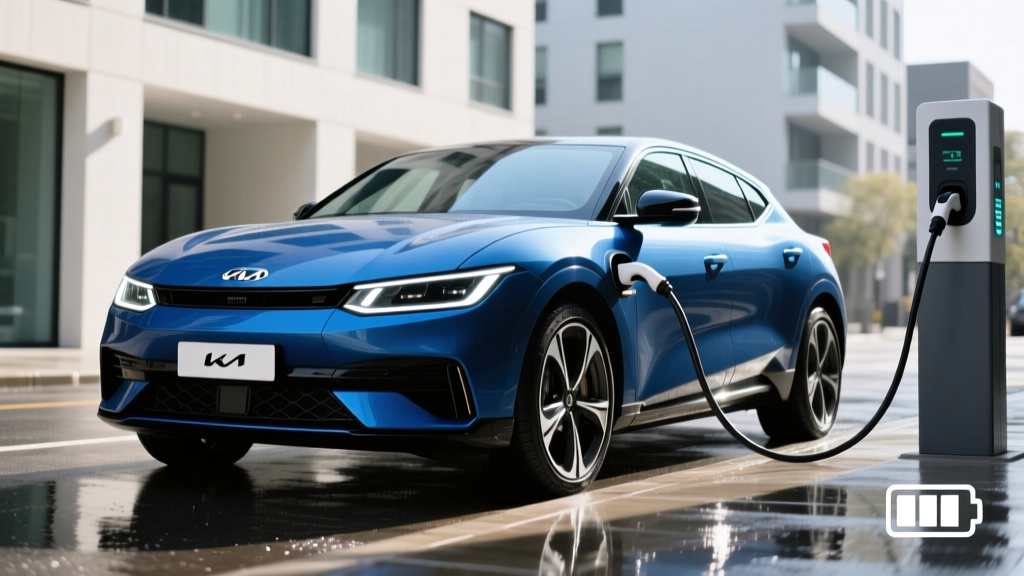
The Kia EV6 has been one of the most compelling electric crossovers since its debut, and the 2025 model year brings meaningful updates to an already strong package. With the EV6 now positioned as Kia's volume electric seller alongside the larger EV9, buyers are asking whether its 800-volt architecture, sporty driving dynamics, and practical crossover layout still hold up against an increasingly crowded field. After spending time with the 2025 EV6 across multiple trims, here's what the numbers actually look like when you move past the brochure.
2025 Kia EV6 at a Glance: Core Specifications
| Specification | Light / Wind (RWD) | GT-Line (AWD) | GT (AWD) |
|---|---|---|---|
| EPA Range | 310 miles | 282 miles | 206 miles |
| Battery (usable) | 77.4 kWh (NMC) | 77.4 kWh (NMC) | 77.4 kWh (NMC) |
| Horsepower | 225 hp | 320 hp | 576 hp |
| 0-60 mph | 7.2 sec | 5.1 sec | 3.4 sec |
| Drivetrain | RWD single motor | AWD dual motor | AWD dual motor |
| Max DC Fast Charge | 239 kW | 239 kW | 239 kW |
| 10-80% DC Time | ~18 min | ~18 min | ~18 min |
| Level 2 Rate (kW) | 10.9 kW | 10.9 kW | 10.9 kW |
| Combined MPGe | 134 MPGe | 106 MPGe | 85 MPGe |
| Base MSRP | $42,900 | $51,200 | $61,600 |
| Battery Warranty | 10 years / 100,000 miles | ||
Sources: EPA Fueleconomy.gov, Kia USA.
Range and Efficiency: EPA vs. the Real World
The headline number for most buyers is the 310-mile EPA estimate on the RWD Light and Wind trims. That's a genuinely useful figure that puts the EV6 in the upper tier of electric crossovers for range. The AWD GT-Line drops to 282 miles, while the performance-oriented GT falls to 206 miles — a significant penalty for that 576-hp powertrain.
In mixed highway-and-city driving at 70-75 mph, expect the RWD EV6 to deliver roughly 260-280 miles before you need to plug in. Highway speeds above 75 mph push energy consumption higher, and sustained 80+ mph travel can reduce effective range to around 240 miles. In cold weather (below 32°F), plan for a 15-25% range reduction depending on cabin heating use — that 310-mile sticker can become 235-265 miles in winter conditions. The EV6's heat pump (standard on most trims) helps mitigate this compared to EVs without one, but physics still wins in deep cold.
Efficiency on the RWD model is rated at 134 MPGe combined (roughly 25 kWh/100 mi), which is competitive with the Hyundai Ioniq 5 and slightly behind the Tesla Model Y Rear-Wheel Drive. The GT-Line AWD returns 106 MPGe, and the GT drops to 85 MPGe — acceptable for a performance EV but noticeably thirstier on electrons.
Charging: The 800-Volt Advantage in Practice
The EV6's 800-volt electrical architecture remains one of its strongest differentiators. This isn't just a spec-sheet number — it translates to sustained fast-charging speeds that most 400-volt competitors can't match.
| Charging Level | Power / Rate | Speed (miles added) | Notes |
|---|---|---|---|
| Level 1 (120V household) | ~1.4 kW | ~4-5 mi/hr | Emergency/trickle only |
| Level 2 (240V home) | 10.9 kW | ~36-40 mi/hr | Full charge in ~8 hours |
| DC Fast Charge (peak) | 239 kW | ~650+ mi/hr (at peak) | 10-80% in ~18 min |
| DC Fast Charge (350 kW station) | Up to 239 kW | Varies | Needs 350 kW-capable station |
Charging curve reality: The EV6 peaks near 239 kW between roughly 10-55% state of charge, then tapers progressively. From 55-80%, you'll see speeds drop to 120-150 kW, and above 80%, charging slows dramatically to protect the battery — typical of NMC chemistry. The 10-80% time of approximately 18 minutes assumes a preconditioned battery and a 350 kW-capable charger (Electrify America, select EVgo stations). On a 150 kW charger, expect 10-80% in roughly 28-32 minutes.
For home charging, the 10.9 kW onboard charger means a full 0-100% session on a Level 2 wall connector takes about 8 hours — overnight charging is practical and straightforward. A 48-amp dedicated circuit is recommended to get the full 10.9 kW rate; a 40-amp circuit will cap you at about 9.6 kW.
Performance and Driving Dynamics
The EV6's E-GMP platform (shared with the Hyundai Ioniq 5 and Genesis GV60) delivers a low center of gravity and near 50/50 weight distribution that makes this crossover feel more like a sport sedan than a tall hatchback. The RWD model's 225 hp is adequate for commuting but won't thrill — 0-60 in 7.2 seconds is unhurried by EV standards.
The GT-Line AWD's 320 hp and 5.1-second 0-60 time is the sweet spot for most buyers: brisk highway merging, confident passing, and all-weather capability without the GT's range penalty. The GT model is a different animal entirely — 576 hp and a 3.4-second 0-60 puts it in supercar territory, though the 206-mile range and firmer ride mean it's a specialist tool, not a daily-driver compromise most families will accept.
All trims feature regenerative braking with adjustable levels via steering wheel paddles, including a "i-Pedal" mode for one-pedal driving that brings the EV6 to a complete stop without touching the brake pedal.
Interior, Cargo, and Daily Practicality
The EV6's cabin uses a dual-screen layout with two 12.3-inch displays behind a single curved glass panel. The infotainment system supports wireless Apple CarPlay and Android Auto, over-the-air updates, and Kia's Digital Key 2 (which lets you use your smartphone as the key fob). Build quality on 2025 models is solid, with soft-touch materials on the dash and door uppers, though some lower-trim plastics feel less premium than the price suggests.
Cargo and passenger space:
- Rear cargo (behind second row): 24.4 cu ft
- Cargo with rear seats folded: 50.2 cu ft
- Front trunk (frunk): 0.7 cu ft (essentially a charging-cable cubby — don't plan on meaningful front storage)
- Rear legroom: 39.4 inches — generous for adults on longer trips
- Front headroom: 40.0 inches
The cargo area is practical but not class-leading — the Tesla Model Y offers more rear volume (roughly 30 cu ft behind the second row), and the Hyundai Ioniq 5 is close at 27.2 cu ft. If maximum cargo space is your priority, the EV6 isn't the segment winner, but it's adequate for a family of four with groceries, luggage, or a weekend's worth of gear.
Notable tech: Highway Driving Assist 2 (HDA2) provides adaptive cruise with lane centering and lane-change assist — a competent Level 2 system, though it requires hands-on-wheel engagement and doesn't match the hands-free capability of GM's Super Cruise or Ford's BlueCruise on mapped highways. Vehicle-to-load (V2L) capability lets you power external devices (up to 3.6 kW) from the EV6's battery — useful for camping, tailgating, or emergency backup power.
Pricing, Trims, and Federal Tax Credit Eligibility
The 2025 EV6 lineup spans four primary trims, and pricing has crept up modestly from the prior model year:
| Trim | Base MSRP | Est. As-Tested | §30D Credit Eligible? |
|---|---|---|---|
| Light (RWD) | $42,900 | $43,500-$44,800 | Check sourcing rules |
| Wind (RWD) | $47,500 | $48,000-$50,500 | Check sourcing rules |
| GT-Line (AWD) | $51,200 | $52,000-$56,500 | Check sourcing rules |
| GT (AWD) | $61,600 | $63,000-$66,000 | Check sourcing rules |
The EV6 is assembled in West Point, Georgia (moved from South Korea for the 2025 model year), which makes it potentially eligible for the federal §30D clean vehicle credit of up to $7,500. However, eligibility depends on several factors that change frequently:
- MSRP cap: The EV6 is classified as an SUV/crossover — the cap is $80,000. All trims clear this threshold.
- Buyer income limits: Modified AGI must not exceed $150,000 (single), $225,000 (head of household), or $300,000 (joint filing).
- Battery component & critical mineral sourcing: The credit is split into two $3,750 halves based on North American battery component manufacturing and critical mineral sourcing requirements. These rules tighten annually, and Kia's supply chain qualification can shift. Always verify current eligibility on IRS.gov before purchasing.
- Point-of-sale transfer: If eligible, you can transfer the credit to the dealer at purchase for an immediate price reduction rather than waiting to claim it on your tax return.
Warranty and Long-Term Ownership
Kia backs the EV6 with one of the strongest warranty packages in the EV segment:
- Battery & drive unit: 10 years / 100,000 miles (whichever comes first)
- Basic vehicle: 5 years / 60,000 miles
- Powertrain: 10 years / 100,000 miles
- Battery capacity retention: Kia warrants the high-voltage battery against dropping below 70% of original capacity during the warranty period
The NMC battery chemistry in the EV6 has demonstrated solid degradation behavior in early fleet data — typical losses of 5-8% over the first 50,000 miles, with the curve flattening significantly after that. The 800-volt system's thermal management helps keep cell temperatures in check during repeated fast charging, which is a longevity positive. Expect the battery to retain 80-85% of original capacity at 100,000 miles under normal use patterns.
Pros, Cons, and the Verdict
- 800V architecture delivers genuinely fast DC charging (~18 min 10-80%)
- 310-mile EPA range on RWD trims is competitive
- Engaging driving dynamics, especially GT-Line AWD
- 10-year/100,000-mile battery warranty
- V2L capability for external power
- Now US-assembled (Georgia) — improves tax credit prospects
- GT trim's 206-mile range is a steep tradeoff for performance
- Frunk is essentially useless (0.7 cu ft)
- Cargo volume trails Model Y and Ioniq 5
- No hands-free driving system (HDA2 requires hands on wheel)
- Infotainment learning curve with touch-only climate controls
- Tax credit eligibility depends on shifting sourcing rules
Who Should Buy the 2025 Kia EV6?
Best for: Commuters and couples who want a stylish, fast-charging EV with enough range for regular road trips and the driving engagement to make daily miles enjoyable. The RWD Wind trim at ~$47,500 (before potential credits) hits the best balance of range, features, and value.
Consider alternatives if: You need maximum cargo space (Model Y wins), hands-free highway driving (look at vehicles with Super Cruise or BlueCruise), or the lowest possible price (the Chevy Equinox EV undercuts on MSRP, though with slower charging). The GT trim makes sense only for buyers who prioritize acceleration over range and are willing to charge more frequently.
Frequently Asked Questions
What is the real-world range of the 2025 Kia EV6?
The RWD model's 310-mile EPA estimate translates to roughly 260-280 miles in mixed highway driving, and 235-265 miles in cold weather (below 32°F). City driving with heavy regen use can actually exceed the EPA number, sometimes reaching 320+ miles in mild conditions.
How fast does the EV6 charge at home and on the road?
On a Level 2 home charger (240V, 48A), the EV6 charges at 10.9 kW — adding about 36-40 miles per hour and reaching a full charge in roughly 8 hours. On a 350 kW DC fast charger, it peaks at 239 kW and charges from 10-80% in approximately 18 minutes.
Does the 2025 Kia EV6 qualify for the $7,500 federal tax credit?
The EV6 is assembled in Georgia, which satisfies the North American assembly requirement. However, the full credit depends on battery component sourcing and critical mineral rules that change periodically, plus buyer income limits ($150K single / $300K joint). Verify current eligibility at IRS.gov or with your tax professional before purchasing.
Is the Kia EV6 worth buying over the Hyundai Ioniq 5 or Tesla Model Y?
The EV6 shares its platform with the Ioniq 5 but offers a sportier driving feel and slightly less cargo space. Against the Model Y, it charges faster (800V vs. Tesla's ~250 kW peak on non-Tesla networks) and has a more conventional interior layout, but the Model Y offers more cargo room and access to the Supercharger network natively. Choose the EV6 if driving engagement and charging speed matter most; choose the Model Y for cargo versatility and Supercharger convenience.
What's the biggest drawback of the EV6 GT?
Range. The GT's 206-mile EPA rating means more frequent charging stops on road trips, and real-world highway driving can drop that to 170-180 miles. Unless you're committed to the 3.4-second 0-60 experience, the GT-Line AWD delivers 90% of the fun with 36% more range.
Does the EV6 support NACS (Tesla-style) charging?
The 2025 EV6 ships with a CCS1 port. Kia has announced a transition to the NACS connector for future model years, and current CCS-equipped EV6 owners can use Tesla Superchargers via a Kia-provided NACS adapter (availability and terms vary — check with your dealer).