The Real Price Tag Behind the 2025 Kia EV6
The 2025 Kia EV6 remains one of the most compelling electric crossovers on the market, with up to 310 miles of EPA-estimated range, 800V architecture for blistering fast charging, and a starting MSRP that undercuts many rivals. But the sticker price is only the opening move in a complex ownership equation. Between federal tax credits, state rebates, utility incentives, and the ongoing costs of charging, insurance, and maintenance, your actual five-year spend can vary by thousands of dollars depending on where you live and how you drive.
This guide dissects every cost layer of owning a 2025 Kia EV6 — from the moment you sign the paperwork through five years of real-world operation — so you can decide whether the math works for your household.
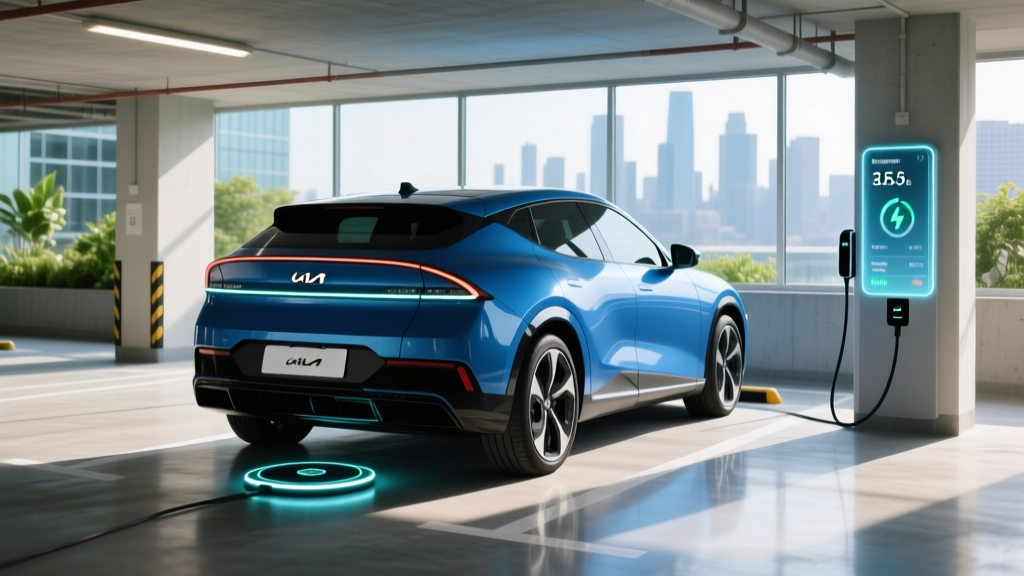
Battery: 77.4 kWh usable (NMC chemistry) | Range: 232–310 mi EPA (depending on drivetrain & wheel size) | DC Fast Charging: up to 240 kW peak, 10–80% in ~18 min | Level 2: 10.9 kW (7.3 hr full charge) | 0–60 mph: 5.1s (RWD) / 4.5s (AWD) / 3.4s (GT) | Starting MSRP: ~$42,900 (Light RWD) | Warranty: 10 yr/100,000 mi battery & powertrain
Federal Tax Credit: Do You Qualify for §30D?
The federal EV tax credit under IRS §30D can reduce your tax burden by up to $7,500 — but it is not a blanket discount. For the 2025 model year, the 2025 Kia EV6 faces specific eligibility hurdles tied to battery sourcing, buyer income, and vehicle price caps. Here is what you need to know before you count that credit in your budget.
- MSRP Cap: Vehicle must have an MSRP at or below $80,000 for SUVs/crossovers (EV6 qualifies on all trims except potentially the GT with options).
- Buyer Income Cap: Modified adjusted gross income (MAGI) must not exceed $150,000 (single), $225,000 (head of household), or $300,000 (joint filers).
- Battery Sourcing: Up to $3,750 depends on critical minerals sourced from the US or free-trade-agreement partners; up to $3,750 depends on battery components manufactured or assembled in North America. The EV6's battery supply chain has been under scrutiny — confirm current-year sourcing compliance with your dealer or the IRS qualified vehicles list.
- Point-of-Sale Transfer: As of 2024, you can transfer the credit to the dealer at purchase, reducing your out-of-pocket cost immediately rather than waiting for tax filing. The dealer must be registered with the IRS Energy Credits portal.
- One Credit Per Vehicle, Per Taxpayer: You cannot claim the credit for a used EV6 under §30D (that's a separate §25E credit with different rules).
The honest reality: The Kia EV6's battery components and critical-mineral sourcing have shifted across model years as Kia and its battery suppliers adjust supply chains. For some production batches, the EV6 has qualified for the full $7,500; for others, it has received $3,750 or zero. Always verify the specific VIN's eligibility on the IRS qualified clean vehicles list before signing a purchase agreement. Do not rely on a dealer's verbal assurance.
State, Local, and Utility Incentives
Federal credits are only one piece of the puzzle. Depending on your state, municipality, and electric utility, you may stack additional savings on top of the §30D credit.
- State rebates: California (CVRP, up to $7,000 for income-qualified buyers), Colorado (up to $5,000 state tax credit), Massachusetts (MOR-EV, up to $3,500), New York (Drive Clean Rebate, up to $2,000), and others. Many states have income tiers or vehicle price caps.
- Utility rebates: Hundreds of utilities offer $250–$1,500 rebates for EV purchases or Level 2 home charger installations. Examples include LADWP ($1,500), SMUD ($2,000 for income-qualified), Xcel Energy ($500–$1,250 depending on program).
- HOV lane access: States like California, Colorado, Virginia, and Maryland grant single-occupant carpool-lane access to EVs — a time savings worth real dollars to commuters.
- Property tax exemptions: Several states exempt EVs from personal property tax or registration surcharges.
Check the Alternative Fuels Data Center for a state-by-state incentive database updated regularly.
5-Year Total Cost of Ownership Breakdown
Here is where the rubber meets the road. Below is a five-year ownership estimate for a 2025 Kia EV6 Light RWD (base MSRP ~$42,900) assuming 12,000 miles per year, 80% home charging at $0.16/kWh (national average residential rate), and 20% public DC fast charging at $0.40/kWh. We compare it against a similarly sized gas crossover averaging 28 MPG combined at $3.50/gallon.
| Category | 2025 Kia EV6 | Gas Crossover |
|---|---|---|
| Purchase Price (MSRP) | $42,900 | $35,000 |
| Federal Tax Credit (§30D) | −$3,750 to −$7,500 | $0 |
| Net Purchase After Credit | $35,400–$39,150 | $35,000 |
| Fuel / Electricity (5 yr, 60k mi) | $4,560 | $7,500 |
| Maintenance (5 yr) | $1,200 | $3,200 |
| Insurance (5 yr) | $11,500 | $9,000 |
| Depreciation (5 yr) | $22,000 | $17,500 |
| 5-Year Total Cost | $74,660–$78,410 | $72,200 |
Key takeaway: The EV6 costs roughly the same or slightly more over five years compared to a conventional crossover when you factor in higher insurance premiums and steeper depreciation — even with the full tax credit. The savings on fuel and maintenance are substantial but partially offset by these other categories. Your specific numbers depend heavily on local electricity rates, your driving profile, and whether you qualify for the full $7,500 credit.
Charging vs. Gasoline: The Per-Mile Math
This is where EV ownership delivers its most tangible daily benefit. The 2025 Kia EV6 RWD achieves an EPA-estimated 134 MPGe combined, which translates to roughly 3.6 miles per kWh.
| Scenario | Energy Cost | Cost Per Mile | Annual Cost (12k mi) |
|---|---|---|---|
| EV6 — Home Level 2 ($0.16/kWh) | $0.16/kWh | $0.044 | $533 |
| EV6 — Public DC Fast ($0.40/kWh) | $0.40/kWh | $0.111 | $1,333 |
| EV6 — Blended (80% home / 20% DC) | $0.208/kWh | $0.058 | $693 |
| Gas Crossover (28 MPG, $3.50/gal) | $3.50/gal | $0.125 | $1,500 |
If you charge predominantly at home, the EV6 costs roughly $0.044 per mile — about one-third the fuel cost of a 28 MPG gas crossover at $3.50 per gallon. Even with heavy public fast-charging reliance, the EV6 still undercuts gasoline on a per-mile basis. Over 60,000 miles in five years, the blended-charging EV6 owner saves approximately $2,940 on fuel versus the gas baseline. If you have access to free workplace or utility-off-peak charging, that savings grows significantly.
Important caveat: Public DC fast-charging rates vary enormously. Networks like Electrify America and EVgo charge $0.31–$0.48/kWh depending on region and subscription tier. If you live in an apartment without home charging and rely entirely on public fast chargers, your fuel savings narrow considerably — and in some high-rate markets, they can disappear entirely.
Maintenance Savings: Where EVs Quietly Win
The 2025 EV6 eliminates the biggest recurring maintenance costs that gas-car owners take for granted. There is no engine oil to change, no transmission fluid to flush, no spark plugs, no timing belt, no exhaust system to replace, and no catalytic converter to worry about.
| Service Item | EV6 Cost | Gas Crossover Cost |
|---|---|---|
| Oil Changes (5–8 over 5 yr) | $0 | $350–$640 |
| Brake Pads/Rotors | $0–$200 (regen extends life) | $600–$1,200 |
| Tire Rotation & Replacement | $800–$1,200 (heavier, more torque) | $600–$900 |
| Cabin Air Filter | $100–$150 | $100–$150 |
| Coolant/Fluid Flushes | $100–$200 | $300–$500 |
| Transmission/Engine Service | $0 | $400–$800 |
| Estimated 5-Year Total | $1,000–$1,750 | $2,350–$4,190 |
The EV6's regenerative braking system handles the majority of deceleration, which dramatically reduces friction brake wear. Many EV owners report original brake pads lasting well beyond 80,000 miles. However, EVs tend to wear tires faster due to higher curb weight (the EV6 weighs approximately 4,500–4,700 lbs) and the instant torque delivery. Budget for tire replacement every 30,000–40,000 miles rather than the 50,000-mile intervals typical of lighter gas crossovers.
Overall, expect to save $1,500–$2,500 on maintenance over five years compared to a gas equivalent.
Insurance: The Cost Nobody Warns You About
EV insurance premiums are typically 15–25% higher than comparable gas vehicles, and the 2025 EV6 is no exception. Based on national averages, expect to pay $2,100–$2,500 per year for full coverage on an EV6, compared to $1,600–$1,900 for a gas crossover in the same class.
Why EVs cost more to insure:
- Higher repair costs: EV-specific components (battery pack, power electronics, 800V wiring harnesses) require specialized training and equipment to repair. Body shops certified for high-voltage work charge more.
- Total-loss thresholds: Even minor battery enclosure damage can push an EV into total-loss territory due to the cost of battery replacement ($15,000–$22,000+ for the EV6's 77.4 kWh pack).
- Higher vehicle value: The EV6's higher MSRP means higher comprehensive and collision payouts.
- Parts availability: EV-specific body panels and structural components can have longer lead times, increasing rental-car reimbursement costs for insurers.
Over five years, the insurance premium difference adds approximately $2,000–$3,000 to your EV6 ownership cost versus a gas crossover. Always get insurance quotes before purchasing — rates vary dramatically by insurer, zip code, driving record, and coverage level. Some insurers (like Progressive and State Farm) have begun offering EV-specific discounts, but these do not fully close the gap.
Depreciation and Resale Value
This is the single largest cost category for most vehicle owners — and it is where EVs have historically struggled. According to iSeeCars and Kelley Blue Book data, EVs have depreciated faster than gas vehicles over the past several years, driven by rapid technology obsolescence, aggressive price cuts from Tesla that pulled down the entire used-EV market, and consumer uncertainty about long-term battery health.
For the 2025 Kia EV6, expect approximately 50–55% depreciation over five years, meaning a $42,900 base model might be worth $19,000–$21,500 at the five-year mark. By comparison, a popular gas crossover like the Toyota RAV4 typically retains 55–60% of its value over the same period.
Factors working in the EV6's favor:
- Kia's industry-leading 10-year/100,000-mile battery and powertrain warranty provides strong residual-value support and buyer confidence in the used market.
- The 800V architecture and 240 kW peak charging speed are competitive even with newer 2026–2027 models.
- The NMC battery chemistry, combined with Kia's thermal management system, has shown strong state-of-health (SoH) retention in early real-world data.
Factors working against it:
- The used-EV market remains volatile, heavily influenced by new-vehicle pricing wars and evolving federal incentive rules.
- Buyer concern about battery replacement cost (though the 10-year warranty largely mitigates this for second owners).
- Rapid advances in charging speed, range, and ADAS features make older EVs feel dated faster than older gas cars.
Net depreciation cost over five years: approximately $21,500–$24,000 for the EV6 versus $14,000–$17,500 for a well-retaining gas crossover. This $4,500–$7,000 gap is the single biggest headwind against EV ownership economics — though it is gradually narrowing as the used-EV market matures.
Frequently Asked Questions
How much does it really cost to own a 2025 Kia EV6 over 5 years?
Based on our analysis, a 2025 EV6 Light RWD with the full $7,500 federal credit costs approximately $74,660 over five years (including purchase, fuel, maintenance, insurance, and depreciation). Without the credit, that figure rises to $78,410. This is competitive with — but not dramatically cheaper than — a similarly equipped gas crossover when all categories are included. The EV6 wins on fuel and maintenance; it loses on insurance and depreciation.
Do I qualify for the full $7,500 federal tax credit?
Possibly. You must meet income limits ($150k single / $300k joint MAGI), the vehicle must be under the $80,000 MSRP cap (most EV6 trims qualify), and the battery must meet critical-mineral and component-sourcing requirements. The sourcing rules tightened significantly in 2024–2025. Check the IRS qualified vehicles list for the specific VIN before purchasing. You can transfer the credit to the dealer at point of sale to reduce your out-of-pocket cost immediately.
How much do I save on fuel and maintenance?
Over five years and 60,000 miles, expect to save approximately $2,940 on fuel (with an 80% home / 20% public charging mix) and $1,500–$2,500 on maintenance compared to a 28 MPG gas crossover. Combined, that is roughly $4,400–$5,400 in operational savings. If you charge exclusively at home on off-peak utility rates ($0.10–$0.12/kWh), fuel savings can exceed $4,000 alone.
Are EVs more expensive to insure?
Yes, typically 15–25% more than comparable gas vehicles. For the EV6, that translates to an additional $2,000–$3,000 over five years. Higher repair costs, specialized high-voltage components, and the battery's replacement cost all contribute. Shop quotes from multiple insurers before purchasing — rates vary widely.
How well does the 2025 Kia EV6 hold its value?
Expect 50–55% depreciation over five years, which is steeper than top-retaining gas crossovers (55–60% retained) but improving as the used-EV market stabilizes. Kia's 10-year/100,000-mile battery warranty helps support resale value. The EV6's 800V architecture and strong charging performance keep it competitive against newer models, but the broader used-EV market remains subject to pricing volatility from new-vehicle price cuts and shifting incentive policies.