Quick Verdict: The Sporty All-Rounder Gets a Charging Upgrade
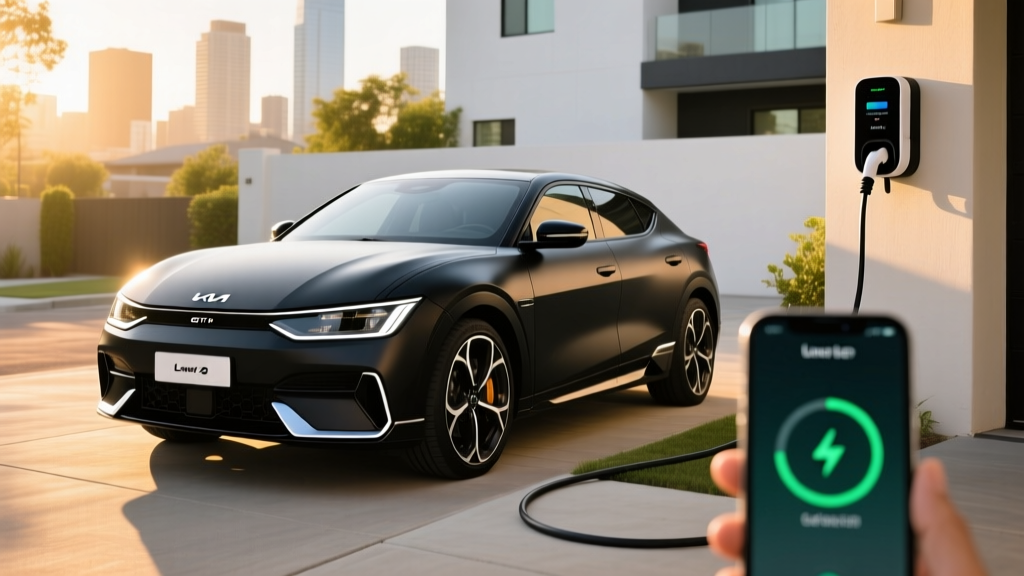
The 2025 Kia EV6 GT-Line occupies a deliberate middle ground in the electric crossover segment. It's not the raw-performance GT variant, and it's not the budget-friendly entry model. Instead, the GT-Line delivers the EV6's best combination of sporty styling, all-wheel-drive capability, and Kia's upgraded 800-volt charging architecture — all while retaining enough practicality for daily family use. For 2025, Kia has added the North American Charging Standard (NACS) port as standard equipment, a refreshed front fascia, and a slightly larger battery pack, making this one of the most well-rounded electric crossovers on the market.
But the real question for buyers is whether the GT-Line's premium pricing and specific federal tax credit limitations make sense against rivals like the Hyundai Ioniq 5, Ford Mustang Mach-E, and Tesla Model Y. After examining EPA data, real-world efficiency, and ownership economics, here's what you need to know before signing.
Range, Battery, and Real-World Efficiency
The 2025 EV6 GT-Line AWD uses a 84.0 kWh usable battery pack (94.5 kWh gross) with nickel-manganese-cobalt (NMC) chemistry. Kia chose NMC over LFP for this trim to maximize energy density and sustain the higher power demands of the dual-motor AWD system.
Range Reality Check
EPA Estimated Range: 290 miles (GT-Line AWD with 20-inch wheels)
Real-World Expectation: Plan for 240–265 miles on highway road trips at 70–75 mph. In cold weather (below 32°F), expect a 20–30% reduction, dropping effective range to roughly 200–230 miles. City driving with frequent regenerative braking can push closer to or slightly above the EPA sticker. The EV6's heat pump (standard on GT-Line) helps mitigate winter losses compared to EVs without active thermal management.
| Spec | Value |
|---|---|
| EPA Range | 290 miles |
| Battery (Usable / Gross) | 84.0 kWh / 94.5 kWh (NMC) |
| Efficiency | 117 MPGe combined / 29 kWh/100 mi |
| Drivetrain | Dual-motor AWD |
| Horsepower | 320 hp |
| Torque | 446 lb-ft |
| 0–60 mph | 5.0 seconds |
| Max DC Fast Charge | 239 kW (peak) |
| 10–80% DC Charge Time | ~18 minutes |
| Level 2 Charge Rate | 10.9 kW (~33 mi/hr) |
| Cargo (behind rear seats) | 24.4 cu ft |
| Cargo (rear seats folded) | 50.2 cu ft |
| Rear Legroom | 39.4 inches |
| Base MSRP (GT-Line AWD) | $52,200 |
| Battery Warranty | 10 years / 100,000 miles |
| Basic Warranty | 5 years / 60,000 miles |
The EV6's combined efficiency of 29 kWh per 100 miles is competitive for a 4,500-pound AWD crossover, though the lighter RWD EV6 Wind (310-mile EPA, 26 kWh/100 mi) is measurably thriftier. If maximum range is your priority over sporty styling and AWD traction, the Wind trim is worth considering.
Charging Speed: 800V Architecture Pays Off
Kia's E-GMP platform runs on an 800-volt electrical architecture, which allows the EV6 to accept significantly higher DC fast-charge power than 400V competitors like the Ford Mustang Mach-E or Volkswagen ID.4. For 2025, the NACS port replaces the CCS1 connector, giving EV6 owners native access to Tesla Supercharger stations (now opened to non-Tesla vehicles) without an adapter.
| Charging Level | Power | Speed | Typical Use |
|---|---|---|---|
| Level 1 (120V) | 1.4 kW | ~4 mi/hr | Emergency / overnight trickle |
| Level 2 (240V, 48A) | 10.9 kW | ~33 mi/hr | Home daily charging |
| DC Fast (350 kW station) | 239 kW peak | 10–80% in ~18 min | Road trips |
| DC Fast (150 kW station) | ~130 kW avg | 10–80% in ~30 min | Older public chargers |
The 239 kW peak charge rate is impressive on paper, but real-world charging curves matter more. The EV6 sustains above 180 kW from roughly 10–45% state of charge before tapering to 120–140 kW through 65%, then dropping further above 80%. On a 350 kW Electrify America or Tesla Supercharger V4 stall, you'll add approximately 180 miles of range in the first 15 minutes — enough for most highway driving segments.
For home Level 2 charging, the onboard 10.9 kW charger replenishes the 84 kWh usable battery from empty to full in about 8 hours. Most owners charging overnight from 20–80% daily will see a full top-up in under 5 hours. A 48-amp Level 2 home charger on a 240V/60A circuit is the recommended setup; expect installation costs between $800–$2,000 depending on panel proximity and local permit requirements.
Performance and Driving Dynamics
The GT-Line's dual-motor AWD powertrain produces 320 horsepower and 446 lb-ft of torque, launching the crossover from 0–60 mph in approximately 5.0 seconds. That's quick enough for confident highway merging and genuinely fun on a back road, but it's not the 3.5-second GT model. Kia tuned the GT-Line's suspension for a firmer, more responsive feel than the Wind or Light trims, with a slightly lower ride height and sport-tuned dampers.
Regenerative braking offers four levels adjustable via steering-wheel paddles, including an i-Pedal one-pedal driving mode that brings the EV6 to a complete stop without touching the brake pedal. The transition between regen and friction braking is well-calibrated — a common pain point in earlier Kia/Hyundai EVs that has been largely resolved for 2025.
One limitation: the GT-Line's 20-inch wheels and sport-tuned suspension transmit more road imperfections into the cabin than the Wind trim's 19-inch setup. If your commute involves broken pavement or gravel roads, the ride quality trade-off is worth testing before committing.
Interior, Cargo, and Daily Practicality
The EV6 GT-Line interior uses Kia's dual 12.3-inch curved panoramic display, combining the instrument cluster and infotainment screen into a single housing. Wireless Apple CarPlay and Android Auto are standard, along with a head-up display with augmented-reality navigation overlays (GT-Line exclusive). The cabin materials are a step above the lower trims, with suede-like seat bolsters and ambient lighting across the dashboard and door panels.
Cargo capacity is 24.4 cubic feet behind the rear seats — competitive with the Hyundai Ioniq 5 (27.2 cu ft) but less than the Tesla Model Y (30.2 cu ft). Fold the rear seats flat and you get 50.2 cubic feet, enough for a weekend camping trip or a large Costco haul. The front trunk (frunk) is modest at 0.7 cubic feet — essentially a charging-cable storage cubby rather than usable cargo space.
Rear-seat passengers get 39.4 inches of legroom, which is generous for the segment and comfortably fits adults on longer trips. The flat floor (no transmission tunnel) makes the middle seat usable, a practical advantage over many gas-powered crossovers.
Pricing, Trims, and Federal Tax Credit Eligibility
The 2025 Kia EV6 GT-Line AWD starts at $52,200 (including destination). Add the GT-Line Prestige package ($3,000) for features like the panoramic sunroof, remote smart parking assist, and a premium Meridian audio system, pushing the as-tested price to approximately $55,200.
| Trim | MSRP | Est. After §30D Credit | Notes |
|---|---|---|---|
| GT-Line AWD | $52,200 | $44,700 | If full $7,500 credit applies |
| GT-Line AWD + Prestige Pkg | $55,200 | $47,700 | Still under $80K SUV cap |
| EV6 Wind RWD (comparison) | $48,300 | $40,800 | Lower MSRP, same credit potential |
Federal tax credit reality check: The EV6's eligibility for the full $7,500 §30D Clean Vehicle Credit depends on battery-component and critical-mineral sourcing requirements that shift annually. As of the 2025 tax year, Kia has worked to shift supply-chain sourcing to qualify, but buyers should verify the specific VIN's eligibility on fueleconomy.gov before purchasing. Additional buyer requirements apply:
- Income caps: Modified AGI must not exceed $300,000 (joint filers), $225,000 (head of household), or $150,000 (single).
- MSRP cap: The EV6 qualifies as an SUV under IRS classification, so the cap is $80,000 — all trims clear this easily.
- Point-of-sale transfer: The credit can now be applied at the dealership as an immediate price reduction rather than waiting for a tax refund, provided the dealer is registered with the IRS.
Because sourcing rules are subject to change and can vary by production batch, always confirm credit eligibility with your dealer and a tax professional before finalizing the purchase.
Driver Assistance and Technology
The 2025 EV6 GT-Line comes equipped with Kia's Highway Driving Assist 2 (HDA2), which combines adaptive cruise control with lane-centering steering on divided highways. HDA2 is a competent SAE Level 2 system — meaning you must keep your hands on the wheel and eyes on the road at all times. It is not autonomous driving.
ADAS Limitation Notice
Kia Highway Driving Assist 2 is a Level 2 driver-assistance system. It does NOT make the EV6 self-driving. The driver is legally and practically responsible for all vehicle operation. Hands-off systems like GM's Super Cruise are not offered on the EV6.
Other standard tech includes a surround-view monitor, blind-spot collision avoidance, rear cross-traffic alert, and a digital key feature that lets you lock, unlock, and start the EV6 using your smartphone. The GT-Line Prestige adds remote smart parking assist — useful for squeezing into tight garage spaces by moving the vehicle forward or backward from outside the car using the key fob.
Pros, Cons, and Competitive Position
Pros
- 800V architecture delivers class-leading DC fast-charge speeds
- Native NACS port opens full Tesla Supercharger network access
- 10-year/100,000-mile battery warranty (best in segment)
- Spacious rear seat with flat floor and generous legroom
- Sporty design with GT-Line styling upgrades
- Competitive 0–60 time and well-tuned AWD powertrain
Cons
- 20-inch wheels reduce range and firm up ride quality
- Cargo space trails Model Y and Ioniq 5
- Tiny frunk offers minimal utility
- No hands-free driving system (unlike BlueCruise/Super Cruise)
- Federal tax credit eligibility not guaranteed for all VINs
- Higher starting price than base RWD EV6 trims
Who is the 2025 EV6 GT-Line for? This trim suits commuters and small families who want AWD confidence in inclement weather, value fast road-trip charging, and prioritize sporty styling over maximum cargo volume. If you need the longest possible range and don't require AWD, the EV6 Wind RWD (310 miles EPA, starting at $48,300) is a smarter financial play. If cargo space is your top priority, the Tesla Model Y or Hyundai Ioniq 5 offer more cubic feet behind the rear seats.
Is it worth buying vs. key competitors? Against the Ioniq 5 (its platform sibling), the EV6 GT-Line trades a bit of interior volume for sportier styling and a more engaging drive. Against the Mustang Mach-E Premium AWD, the EV6 charges significantly faster on DC and carries a longer battery warranty. Against the Model Y Long Range, the EV6 offers a more conventional interior layout, physical controls for climate, and a longer warranty — but less cargo space and no access to Tesla's FSD software (which remains a Level 2 system regardless).
Frequently Asked Questions
What is the real-world range of the 2025 Kia EV6 GT-Line?
The EPA rates the GT-Line AWD at 290 miles. In real-world highway driving at 70–75 mph, expect 240–265 miles. Cold weather (below freezing) can reduce range by 20–30%, dropping effective miles to 200–230. City driving with regenerative braking often yields results at or slightly above the EPA estimate.
How fast does the EV6 GT-Line charge at home and on the road?
On a 350 kW DC fast charger, the EV6 peaks at 239 kW and charges from 10–80% in approximately 18 minutes. At home on a Level 2 (240V/48A) charger, it adds about 33 miles of range per hour, fully replenishing the battery in roughly 8 hours.
Does the 2025 EV6 GT-Line qualify for the $7,500 federal tax credit?
It can, but eligibility depends on battery-component and critical-mineral sourcing rules that change periodically. Verify your specific VIN on fueleconomy.gov and consult a tax professional. Buyer income caps ($150K single / $300K joint) and the $80K MSRP cap for SUVs also apply.
How much does the 2025 EV6 GT-Line cost after incentives?
The GT-Line AWD starts at $52,200. With the full $7,500 federal credit applied at point of sale, the effective price drops to $44,700. State and local incentives (such as California's CVRP or Colorado's state credit) may reduce the cost further — check your state's energy office for current programs.
What is the biggest difference between the GT-Line and the GT?
The EV6 GT produces 576 hp and hits 0–60 in 3.4 seconds, but sacrifices range (206 miles EPA) and rides on an even firmer suspension. The GT-Line is the comfort-oriented sporty trim; the GT is the track-capable performance variant. Most buyers are better served by the GT-Line.
Is the Kia EV6 battery reliable long-term?
Kia covers the EV6's battery with a 10-year/100,000-mile warranty guaranteeing it will retain at least 70% of original capacity. NMC batteries in the E-GMP platform have shown strong degradation curves in early data, typically losing 5–8% capacity over the first 50,000 miles before leveling off. Full battery replacement (if ever needed out of warranty) is estimated at $12,000–$18,000 depending on labor.