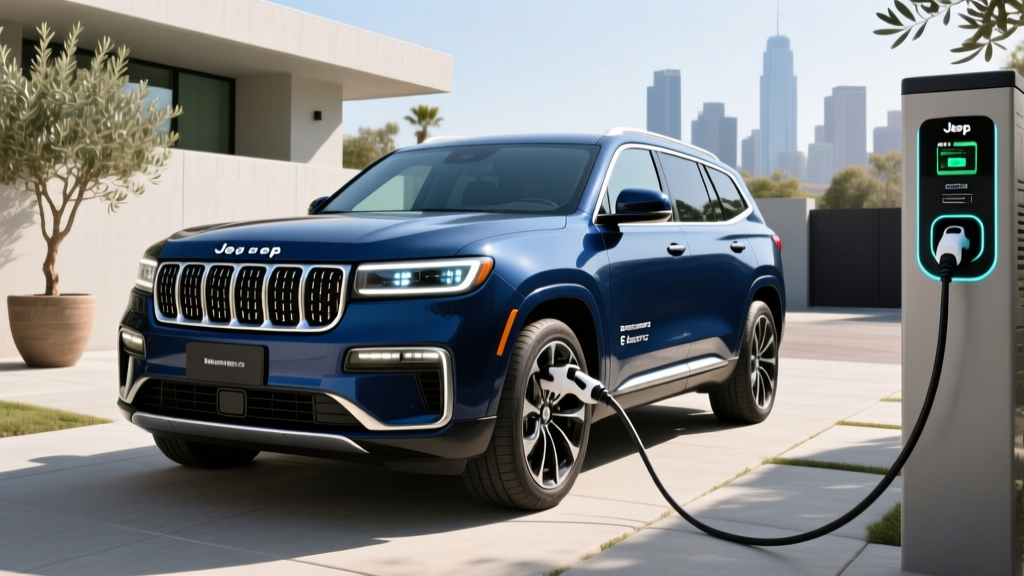
Jeep's first fully electric vehicle for the North American market arrives not as a Wrangler clone or a Compass replacement, but as a premium performance SUV wearing the Wagoneer nameplate. The 2025 Jeep Wagoneer S Electric rides on Stellantis' STLA Large platform, packs a 100 kWh battery, and promises 600 horsepower in its top Launch Edition trim. But with a starting price north of $65,000 and real competition from established electric SUVs, does the Wagoneer S deliver enough substance behind its aggressive styling?
We've broken down every spec that matters to EV buyers — from real-world range expectations and charging-curve behavior to federal tax credit eligibility and cargo practicality. Here's what you need to know before putting down a deposit.
2025 Jeep Wagoneer S Electric: Key Specifications at a Glance
| Specification | Wagoneer S Launch Edition | Wagoneer S (Base Trim) |
|---|---|---|
| EPA Estimated Range | 300 miles | ~300 miles (est.) |
| Battery Capacity (Usable) | 100 kWh | 100 kWh |
| Battery Chemistry | NMC (Nickel Manganese Cobalt) | NMC |
| Horsepower | 600 hp | ~400 hp (est.) |
| 0-60 mph | 3.4 seconds | ~5.0 seconds (est.) |
| Drivetrain | Dual-Motor AWD | Dual-Motor AWD |
| Max DC Fast Charge Rate | ~175 kW (peak) | ~175 kW (peak) |
| 10-80% DC Fast Charge Time | ~23 minutes | ~23 minutes |
| Level 2 Home Charge Rate | 11 kW (~30 mi/hr) | 11 kW (~30 mi/hr) |
| EPA Efficiency (MPGe) | ~89 MPGe (est.) | ~92 MPGe (est.) |
| Base MSRP | $71,995 | $65,200 (est.) |
| Battery/Powertrain Warranty | 8 years / 100,000 miles | 8 years / 100,000 miles |
Note: Base trim specs are estimated from Stellantis announcements. Final EPA certification figures for non-Launch Edition trims were not available at time of publication. Check fueleconomy.gov for updates.
Range and Efficiency: EPA Sticker vs. Reality
The Wagoneer S Launch Edition carries an EPA-estimated range of 300 miles from its 100 kWh NMC battery pack. For a dual-motor, 600-hp performance SUV, that's a respectable figure — roughly in line with the BMW iX xDrive50 (324 miles) and slightly behind the Tesla Model X Long Range (335 miles).
- City / mixed driving (moderate climate): ~280–300 miles — close to EPA sticker
- Sustained highway driving (70-80 mph): ~230–260 miles — aerodynamic drag hits all SUVs hard
- Cold weather (below 32°F / 0°C): ~210–240 miles — expect 20–30% reduction without preconditioning
- Worst case (highway + cold + full cargo): ~190–210 miles between charges
The Wagoneer S includes a heat pump for cabin heating efficiency, which helps mitigate cold-weather range loss compared to resistive heating systems. Preconditioning the battery before DC fast charging is also supported.
Efficiency comes in at an estimated 89 MPGe combined (roughly 34 kWh per 100 miles) for the Launch Edition. The lighter, lower-output base trim should edge slightly higher. These figures are typical for the segment — heavy, powerful dual-motor SUVs trade efficiency for performance and capability.
Charging Speed: DC Fast Charging and Home Level 2
Charging capability is where many luxury EV buyers focus, and the Wagoneer S delivers adequate but not class-leading performance. The SUV uses the CCS1 connector standard (with a NACS adapter available or planned for Tesla Supercharger access).
| Charging Level | Power / Rate | Miles Added per Hour | Notes |
|---|---|---|---|
| Level 1 (120V household) | ~1.4 kW | ~3–4 mi/hr | Emergency/trickle only — full charge takes 3+ days |
| Level 2 (240V home) | 11 kW | ~30 mi/hr | Full 0-100% charge in ~10 hours overnight |
| DC Fast Charge (peak) | ~175 kW | ~210 mi/hr (peak) | 10-80% in ~23 minutes; tapers significantly above 80% |
Charging-curve reality check: The 175 kW peak rate is not sustained across the full session. Expect peak speeds between roughly 15–50% State of Charge (SoC), after which the rate tapers to protect the NMC cells. A 10-80% session takes about 23 minutes on a capable 350 kW charger, but an 80-100% top-off can add another 25–30 minutes. For road trips, plan your stops around 10-80% charges and skip topping off unless you're at your final destination.
For home charging, the onboard 11 kW AC charger is competitive. On a 48-amp Level 2 home station (like a ChargePoint Home Flex or Tesla Wall Connector with J1772 adapter), you'll add roughly 30 miles of range per hour of charging — enough to fully replenish overnight for virtually any daily commute.
Performance: 600 Horsepower Meets Jeep DNA
The Launch Edition's dual-motor all-wheel-drive powertrain produces 600 horsepower and an estimated 617 lb-ft of torque, rocketing the Wagoneer S from 0-60 mph in 3.4 seconds. That puts it squarely in Porsche Cayenne Turbo E-Hybrid territory and makes it the quickest production Jeep ever built.
The standard dual-motor AWD system provides torque vectoring between axles and includes Jeep's Selec-Terrain traction management with modes for Snow, Sand, Mud, and Auto. Ground clearance is approximately 6.4 inches — adequate for light off-road duty and snowy roads, but this is no Wrangler on the Rubicon trail. The Wagoneer S is a performance-oriented luxury SUV first, and its AWD system is tuned for on-road grip and all-weather confidence rather than rock crawling.
Towing capacity is rated at approximately 3,500 pounds when properly equipped — sufficient for a small boat or lightweight utility trailer but below what body-on-frame competitors like the Rivian R1T or even the Ford F-150 Lightning offer.
Interior, Tech, and Cargo: What You Get for the Money
Inside, the Wagoneer S features a screen-heavy dashboard layout built around Stellantis' Uconnect 5 infotainment platform:
- 12.3-inch digital instrument cluster with configurable EV-specific displays (energy flow, range, charge status)
- 12.3-inch center touchscreen with wireless Apple CarPlay and Android Auto, navigation with charging-station routing
- 10.25-inch front passenger display (Launch Edition) for entertainment and navigation mirroring
- Heads-up display with speed, navigation, and driver-assist information
- McIntosh premium audio system (Launch Edition) — a heritage brand partnership unique to Stellantis luxury vehicles
Driver assistance includes adaptive cruise control with stop-and-go, lane centering, automatic emergency braking, blind-spot monitoring, and a 360-degree camera system. These are SAE Level 2 driver-assist features — the driver must remain fully engaged and attentive at all times. Jeep has not announced a hands-free highway driving system (comparable to GM's Super Cruise or Ford's BlueCruise) for the Wagoneer S at launch.
Cargo and passenger space:
| Dimension | Measurement |
|---|---|
| Cargo Volume (behind 2nd row) | ~30.4 cu ft |
| Cargo Volume (2nd row folded) | ~61.0 cu ft |
| Front Legroom | ~40.9 inches |
| Rear Legroom | ~38.5 inches |
| Seating Capacity | 5 passengers (2 rows) |
| Front Trunk (Frunk) | Not available (no frunk) |
The absence of a frunk is a notable omission for an EV and limits total cargo utility compared to the Tesla Model X or Rivian R1S. The rear cargo area is adequate for a family's weekly groceries and luggage but falls short of three-row competitors.
Pricing, Trims, and Federal Tax Credit Eligibility
The 2025 Wagoneer S launches in a single, fully loaded Launch Edition trim before additional trims become available:
| Trim | MSRP | Est. After §30D Credit* | Destination |
|---|---|---|---|
| Wagoneer S Launch Edition | $71,995 | $64,495 (if eligible) | $2,095 |
| Wagoneer S (Base, upcoming) | ~$65,200 | ~$57,700 (if eligible) | $2,095 |
*Federal tax credit shown as maximum $7,500 under IRS §30D. Eligibility is NOT guaranteed and depends on multiple factors below.
- MSRP Cap: Vehicle must have an MSRP at or below $80,000 for SUVs — the Wagoneer S qualifies ✓
- Buyer Income Cap: Adjusted gross income must not exceed $150,000 (single), $225,000 (head of household), or $300,000 (joint filers)
- Battery Sourcing: Critical minerals and battery components must meet phased-in domestic/Fta-partner sourcing thresholds that tighten annually through 2030 — verify current-year compliance with your dealer
- Point-of-Sale Transfer: Eligible buyers can transfer the credit to the dealer at purchase for an immediate price reduction rather than waiting for tax filing
- Assembly: The Wagoneer S is assembled in North America (Brampton, Ontario, Canada) — North American final assembly is required ✓
Rules change annually. Always verify current eligibility on IRS.gov or consult a tax professional before purchasing.
Warranty and Long-Term Ownership
Stellantis backs the Wagoneer S battery and electric powertrain with an 8-year / 100,000-mile warranty, which is the industry standard mandated for emissions-related components but also aligns with competitors like Hyundai, Kia, and Tesla. The battery warranty covers defects and capacity degradation below a specified threshold (typically 70% of original capacity — confirm exact terms with your dealer at purchase).
The limited vehicle warranty covers 3 years / 36,000 miles, with a 5-year / 60,000-mile powertrain warranty for non-battery drivetrain components. Free scheduled maintenance is included for the first 2 years, though EVs require far less routine maintenance than ICE vehicles (no oil changes, no transmission fluid, minimal brake wear due to regenerative braking).
NMC battery chemistry in the Wagoneer S offers higher energy density than LFP (lithium iron phosphate), enabling the 300-mile range in a manageable pack size. However, NMC cells generally show slightly more degradation over time than LFP. Based on industry data from similar NMC packs, expect roughly 8–12% total capacity loss over 10 years / 150,000 miles under normal use patterns — meaning your 300-mile range might settle around 265–275 miles after a decade.
Pros and Cons: The Honest Verdict
✓ Pros
- 3.4-second 0-60 mph is genuinely thrilling for a family SUV
- 300-mile EPA range is practical for most road trips
- Premium interior with McIntosh audio and triple-screen layout
- Standard dual-motor AWD with Selec-Terrain modes
- Eligible for up to $7,500 federal tax credit (if sourcing/income rules met)
- Heat pump included for cold-climate efficiency
✗ Cons
- DC fast charging peaks at ~175 kW — slower than Hyundai Ioniq 5 or Tesla Model Y
- No front trunk (frunk) reduces total cargo utility
- No hands-free highway driving system at launch
- Only 5 seats — no three-row option for larger families
- Launch Edition price ($71,995) is steep before incentives
- Limited real-world ownership data as Jeep's first BEV
Who Should Buy the 2025 Jeep Wagoneer S Electric?
- Choose the Wagoneer S if: You want a performance-oriented luxury EV SUV with Jeep brand cachet, need dual-motor AWD for snow and rain, value premium audio and interior materials, and typically drive fewer than 250 miles between charging stops.
- Look at the Tesla Model X if: You need three-row seating, Supercharger network reliability, and best-in-class DC fast charging — but accept higher pricing and a more minimalist interior.
- Look at the BMW iX if: You prioritize ride refinement, a more mature hands-free driving assist system, and slightly better range — but can live with less aggressive styling.
- Look at the Rivian R1S if: You need genuine off-road capability, three rows, and a frunk — but can accept a higher price and longer delivery wait.
- Look at a PHEV (like the Jeep Grand Cherokee 4xe) if: You lack reliable home charging access or regularly drive 400+ miles between stops where DC fast infrastructure is sparse.
The Wagoneer S is best suited for performance-minded families and commuters in regions with solid charging infrastructure — particularly the Northeast, West Coast, and upper Midwest. Its AWD system and heat pump make it a strong choice for cold-climate buyers who want EV performance without sacrificing winter capability. If you charge at home nightly and your longest regular trip is under 250 miles (or you're willing to plan one 20-minute charging stop), the Wagoneer S delivers a compelling blend of acceleration, comfort, and daily practicality.
Frequently Asked Questions
What is the real-world range of the 2025 Jeep Wagoneer S Electric?
The EPA estimates 300 miles for the Launch Edition. In real-world mixed driving, expect 280–300 miles in moderate temperatures, 230–260 miles on sustained highway trips, and 210–240 miles in freezing weather. The included heat pump helps reduce cold-weather losses compared to EVs using resistive cabin heating.
How fast does the Wagoneer S charge at home and on the road?
At home on a Level 2 (240V, 48-amp) station, the 11 kW onboard charger adds about 30 miles per hour — a full charge takes roughly 10 hours. On a DC fast charger, it peaks at approximately 175 kW and charges from 10-80% in about 23 minutes, though the rate tapers significantly above 80% SoC.
How much does the Wagoneer S cost after the federal tax credit?
The Launch Edition starts at $71,995 plus destination. If you qualify for the full $7,500 §30D credit (based on income limits, battery sourcing requirements, and MSRP cap compliance), the effective price drops to approximately $64,495. The upcoming base trim at ~$65,200 could fall to ~$57,700. Always verify eligibility on IRS.gov before purchasing.
Does the 2025 Jeep Wagoneer S qualify for the $7,500 federal EV tax credit?
It meets the MSRP cap (under $80,000 for SUVs) and North American assembly requirements. However, full credit eligibility depends on your income (caps apply), the battery's critical-mineral and component sourcing (thresholds tighten annually), and whether you have sufficient tax liability. The credit can be transferred to the dealer at point of sale for an instant discount. Consult IRS §30D guidelines or a tax professional.
Is the Wagoneer S worth buying over a Tesla Model X or BMW iX?
It depends on priorities. The Wagoneer S offers more aggressive styling, Jeep brand identity, strong AWD capability, and a premium McIntosh audio system at a lower starting price than the Model X. However, it trails in DC fast-charging speed, lacks a frunk and third row, and doesn't offer hands-free driving assist. Cross-shop all three and test-drive to compare ride quality and tech interfaces before deciding.
Does the Wagoneer S have a frunk or three-row seating?
No to both. The Wagoneer S is a two-row, five-passenger SUV with no front trunk. Total cargo capacity behind the second row is approximately 30.4 cubic feet, expanding to about 61 cubic feet with the rear seats folded. Buyers needing three rows should consider the Tesla Model X, Rivian R1S, or Kia EV9.
What charging connector does the Wagoneer S use?
The Wagoneer S uses the CCS1 connector standard for DC fast charging and the J1772 connector for Level 2 AC charging. Stellantis has indicated that a NACS adapter for Tesla Supercharger access will be available, though confirm adapter availability and compatibility with your dealer at purchase.
Sources: Stellantis North America press materials, fueleconomy.gov, IRS.gov §30D Clean Vehicle Credits. Specifications reflect manufacturer data available at time of publication. Some figures for non-Launch Edition trims are estimates pending final EPA certification. Always confirm final specs and pricing with your dealer.