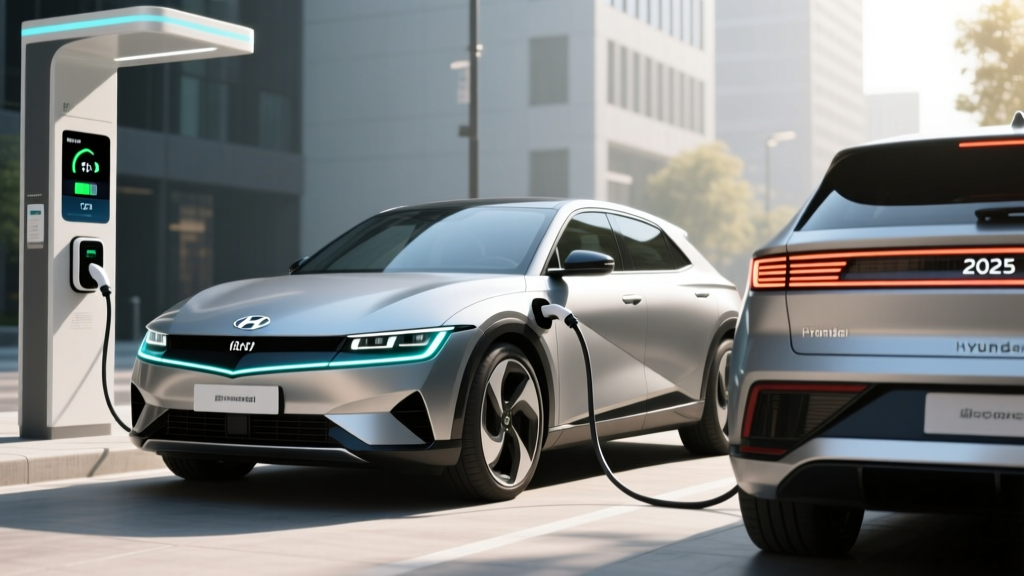
The Hyundai Ioniq 5 entered the 2025 model year with a larger battery, NACS charging port standard, and a refreshed XRT trim aimed at outdoor buyers. It remains one of the most complete electric crossovers on the market — but the competition from the Tesla Model Y, Ford Mustang Mach-E, and Kia EV6 has only intensified. This review covers every number a buyer needs: real-world range, actual charging speeds, tax credit eligibility under current IRS §30D rules, and whether the Ioniq 5 still earns its spot at the top of the midsize EV crossover segment.
Quick Verdict: Who the 2025 Ioniq 5 Is For
The 2025 Hyundai Ioniq 5 is best suited for daily commuters and small families who prioritize fast DC charging, a comfortable ride, and a usable rear seat over sporty driving dynamics. Its 800V architecture still delivers some of the quickest public charging in its class, and the addition of the native NACS port means direct access to Tesla Superchargers without an adapter. It is not the most engaging EV to drive — the EV6 and Model Y edge it out on handling — but as a daily appliance with road-trip chops, the Ioniq 5 is hard to fault.
Look elsewhere if: You prioritize sharp handling (EV6), maximum cargo space (Model Y), or need third-row seating (Kia EV9).
Range, Efficiency, and Real-World Expectations
For 2025, Hyundai upgraded the Ioniq 5's battery from 77.4 kWh to an 84.0 kWh usable NMC (nickel-manganese-cobalt) pack on Long Range and Limited trims. The Standard Range model uses a smaller 63.0 kWh pack. The result is a meaningful bump in EPA-estimated range across the lineup.
| Trim / Drivetrain | Battery (kWh) | EPA Range (mi) | MPGe (city/hwy/combined) | kWh/100 mi |
|---|---|---|---|---|
| SE Standard Range RWD | 63.0 | 245 | 129 / 108 / 119 | 29 |
| SE / SEL Long Range RWD | 84.0 | 318 | 129 / 108 / 119 | 29 |
| SE / SEL / Limited AWD | 84.0 | 290 | 117 / 98 / 108 | 32 |
| XRT AWD | 84.0 | 278 | 113 / 94 / 104 | 34 |
The EPA's 318-mile figure for the RWD Long Range assumes mixed driving at moderate temperatures. In our experience and consistent with independent testing:
- Highway driving (70-75 mph, fair weather): Expect 260–280 miles before needing a charge. Sustained high speeds reduce efficiency by roughly 15-18% vs. the combined cycle.
- Cold weather (below 32°F / 0°C): Range drops 20–30% depending on cabin heating use. A 318-mile EPA car may deliver 220–255 miles in freezing conditions. The Ioniq 5's heat pump (standard on all trims) helps mitigate this, but physics is physics.
- City/regenerative driving: You can match or slightly exceed the EPA number thanks to aggressive regen recovery in stop-and-go traffic.
For official efficiency data, see the EPA's fueleconomy.gov listing for the 2025 Ioniq 5.
Charging Speed: DC Fast, Level 2, and the NACS Advantage
This is where the Ioniq 5's 800-volt electrical architecture continues to pay dividends. While many competitors still use 400V systems that peak around 150 kW, the Ioniq 5 can accept up to 240 kW on a DC fast charger under ideal conditions. For 2025, the native NACS (North American Charging Standard) port replaces the CCS1 connector, granting direct access to Tesla's Supercharger network — the most reliable public charging infrastructure in the U.S.
| Charging Level | Max Power (kW) | Speed (mi/hr added) | 10–80% Time | Connector |
|---|---|---|---|---|
| Level 1 (120V household) | 1.4 kW | ~4 mi/hr | N/A (days) | NACS |
| Level 2 (240V home, 48A) | 11.5 kW | ~37 mi/hr | ~7.3 hours (0–100%) | NACS |
| DC Fast Charge (350 kW station) | 240 kW peak | ~800+ mi/hr (peak) | ~18 minutes | NACS |
Charging curve reality: The 240 kW peak only holds between roughly 10–45% State of Charge. After that, the rate tapers — dropping to ~150 kW around 60% and ~100 kW by 75%. This is normal for lithium-ion thermal management, but it means the 10–80% time of ~18 minutes assumes you arrive at a low SoC and the battery is preconditioned. If you plug in above 30% SoC or at a cold battery temperature, expect 22–28 minutes for the same 10–80% session.
Preconditioning tip: The Ioniq 5 will automatically precondition its battery for DC fast charging when you navigate to a charger using the built-in route planner. Always use this feature in cold weather — skipping it can add 10+ minutes to your charging stop.
Performance: 0-60, Horsepower, and Drivetrain Options
The 2025 Ioniq 5 offers three powertrain configurations. None are slow, but the dual-motor AWD delivers the kind of punch that makes highway merging effortless.
| Configuration | Horsepower | Torque (lb-ft) | 0–60 mph | Drivetrain |
|---|---|---|---|---|
| Standard Range RWD | 168 hp | 258 | 7.4 sec | RWD |
| Long Range RWD | 225 hp | 258 | 7.0 sec | RWD |
| Long Range AWD / XRT | 320 hp | 446 | 4.5 sec | Dual-motor AWD |
The AWD model's 4.5-second 0-60 time is genuinely quick and more than sufficient for any real-world scenario. The RWD models feel adequate around town but require more planning for highway on-ramps. The ride quality leans comfortable rather than sporty — body roll is noticeable in corners, and the steering is light and numb. If driving engagement matters, the mechanically related Kia EV6 is sharper.
Pricing, Trim Levels, and Federal Tax Credit Eligibility
The 2025 Ioniq 5 is assembled at Hyundai's Metaplant in Ellabell, Georgia, which is a critical detail for federal tax credit eligibility. Because it is domestically produced, it clears the North American assembly requirement of IRS §30D. However, qualifying for the full credit depends on several buyer-specific factors.
| Trim | Drivetrain | Base MSRP | Est. After $7,500 Credit* |
|---|---|---|---|
| SE Standard Range | RWD | $42,600 | $35,100 |
| SE Long Range | RWD | $46,650 | $39,150 |
| SEL Long Range | AWD | $53,400 | $45,900 |
| Limited | AWD | $58,200 | $50,700 |
| XRT | AWD | $54,900 | $47,400 |
*All MSRPs include destination charge. "Est. after credit" assumes full $7,500 §30D eligibility — see checklist below.
-
§30D Federal Tax Credit Eligibility Checklist (2025 rules):
- MSRP cap: SUVs/crossovers must be ≤ $80,000. All Ioniq 5 trims qualify. ✅
- North American assembly: Must be assembled in the U.S., Canada, or Mexico. Ioniq 5 is built in Georgia. ✅
- Buyer income cap: Modified AGI must not exceed $150,000 (single), $225,000 (head of household), or $300,000 (joint). Check your tax situation. ⚠️
- Battery component sourcing: A percentage of battery components must be manufactured or assembled in North America, and critical minerals must meet sourcing thresholds. The credit splits into two halves ($3,750 + $3,750). Verify current-year compliance on IRS.gov's qualified vehicle list. ⚠️
- Point-of-sale transfer: Since 2024, you can transfer the credit to the dealer for an immediate price reduction at purchase rather than waiting to claim it on your tax return. ✅
Important caveat: Battery sourcing requirements tighten annually. Consult the IRS qualified vehicles list and a tax professional before relying on the full $7,500 figure. Some buyers may qualify for only $3,750 or none at all depending on the specific battery batch and their income.
Interior Space, Cargo, and Daily Practicality
The Ioniq 5 rides on Hyundai's E-GMP platform with a flat floor and a 118.5-inch wheelbase — longer than the Tucson's — which translates to generous interior volume, especially in the rear seat.
| Dimension | Measurement |
|---|---|
| Cargo volume (behind 2nd row) | 27.2 cu ft |
| Cargo volume (2nd row folded) | 59.3 cu ft |
| Front trunk (frunk) | 2.1 cu ft (AWD) / 3.4 cu ft (RWD) |
| Rear legroom | 39.4 in |
| Front legroom | 41.7 in |
| Towing capacity (AWD, with tow package) | 2,300 lbs |
The rear seat is where the Ioniq 5 shines vs. the EV6 — adults sit comfortably with ample headroom and a nearly flat floor. The cargo area is competitive but falls short of the Model Y's 76 cu ft max. The frunk is small and mostly useful for storing charging cables. The sliding center console (on select trims) is a clever feature that lets front-seat passengers exit on either side in tight parking spots.
Tech, Driver Assistance, and Standout Features
The 2025 Ioniq 5 features dual 12.3-inch displays (instrument cluster and infotainment) running Hyundai's latest software with wireless Apple CarPlay and Android Auto. Notable tech includes:
- Hyundai SmartSense (standard): Forward collision-avoidance assist, blind-spot monitoring, lane-keeping assist, rear cross-traffic alert, highway driving assist
- Highway Driving Assist 2 (HDA-2): Adaptive cruise with stop-and-go plus lane-centering — a solid SAE Level 2 system. This is not self-driving; the driver must keep hands on the wheel and eyes on the road.
- Vehicle-to-Load (V2L): An internal 120V outlet and external adapter let you power devices or small appliances from the battery — up to 3.6 kW output. Useful for camping or emergency backup.
- Digital key: Use your smartphone (NFC/UWB) as the key fob.
- Over-the-air updates: Firmware and feature updates delivered remotely.
Warranty, Battery Longevity, and Ownership Costs
Hyundai backs the Ioniq 5 with one of the best warranty packages in the EV segment:
- Battery & powertrain: 10 years / 100,000 miles (whichever comes first)
- New vehicle limited: 5 years / 60,000 miles
- Complimentary maintenance: 3 years / 36,000 miles
- Roadside assistance: 5 years / unlimited miles
The battery warranty guarantees the pack will retain at least 70% of its original capacity during the coverage period. In practice, Hyundai's NMC packs have shown strong longevity — industry data from Geotab's fleet degradation study suggests modern liquid-cooled NMC batteries lose roughly 1.5–2.5% per year under normal use, projecting ~85% state of health at 100,000 miles. The Ioniq 5's liquid-cooled thermal management system is a key factor in preserving battery health over time.
Insurance note: EV insurance premiums tend to run 10–20% higher than comparable gas vehicles due to repair costs and battery replacement expense. Get quotes before purchasing — your mileage will vary significantly by state, driving record, and insurer.
Pros, Cons, and How It Stacks Up
- 18-minute 10-80% DC fast charging (best in class)
- Native NACS port — no adapter needed for Tesla Superchargers
- Spacious rear seat with flat floor
- V2L capability for camping/backup power
- 10-year/100,000-mile battery warranty
- Standard heat pump for cold-weather efficiency
- Qualifies for §30D credit (subject to sourcing/income rules)
- Driving dynamics less engaging than EV6 or Model Y
- Cargo space trails Model Y significantly (59 vs 76 cu ft)
- Small frunk, especially on AWD models
- No one-pedal driving mode (regen doesn't hold to a full stop)
- Infotainment lacks physical knobs for volume/climate
- Towing limited to 2,300 lbs
Vs. Tesla Model Y: The Model Y offers more cargo space, a more extensive proprietary Supercharger network (though Ioniq 5 now accesses it natively), and sharper acceleration in Performance trim. But the Ioniq 5 charges faster at non-Tesla DC stations, has a more conventional (and less polarizing) interior, and includes features like V2L. For buyers wary of Tesla's brand trajectory, the Ioniq 5 is the strongest alternative.
Vs. Kia EV6: Mechanically identical platform, but the EV6 is tuned for sportier handling with a slightly lower roofline and less rear headroom. The Ioniq 5 trades some driving engagement for practicality — choose based on whether back-seat space or corner-carving matters more to you.
Frequently Asked Questions
What is the real-world range of the 2025 Ioniq 5?
The EPA rates the Long Range RWD at 318 miles and the AWD at 290 miles. In real-world highway driving at 70+ mph, expect 260–280 miles (RWD) or 235–255 miles (AWD). In freezing temperatures, subtract another 20–30%. Plan road trips around ~250 miles of usable range on the RWD to maintain a safe buffer.
How fast does the 2025 Ioniq 5 charge at home and on the road?
At home on a 240V Level 2 charger (48A), the Ioniq 5 accepts up to 11.5 kW, adding roughly 37 miles of range per hour — enough for a full overnight charge. On a 350 kW DC fast charger, it peaks at 240 kW and can charge from 10–80% in approximately 18 minutes with a preconditioned battery. Actual times vary based on battery temperature and starting state of charge.
Does the 2025 Ioniq 5 qualify for the $7,500 federal EV tax credit?
The Ioniq 5 is assembled in Georgia and its MSRP is well under the $80,000 SUV cap, so it clears two major §30D hurdles. However, the full $7,500 credit also depends on your modified adjusted gross income (≤ $300,000 joint / $150,000 single) and the battery's critical mineral and component sourcing, which are subject to annual thresholds. Check the IRS qualified vehicle list for the specific model year and consult a tax professional.
Is the 2025 Ioniq 5 worth buying over the Tesla Model Y or Kia EV6?
If your priorities are the fastest DC charging in its class, a roomy rear seat, native Tesla Supercharger access, and V2L capability, the Ioniq 5 is arguably the most well-rounded choice. Choose the Model Y if maximum cargo volume and the tightest software integration matter most. Choose the EV6 if you want sportier handling and don't need as much rear headroom. All three are excellent — the Ioniq 5 wins on balanced practicality.
How long will the Ioniq 5 battery last before needing replacement?
Hyundai warranties the battery for 10 years / 100,000 miles with a 70% capacity retention guarantee. Based on degradation data from similar liquid-cooled NMC packs, owners can expect roughly 85–90% state of health at 100,000 miles under normal use. Full battery replacement (rare at this stage) would cost in the range of $12,000–$18,000 out of warranty, though prices continue to decline as battery manufacturing scales.
Can I use Tesla Superchargers with the 2025 Ioniq 5?
Yes. The 2025 Ioniq 5 comes with a native NACS charge port, meaning it plugs directly into Tesla Supercharger stalls without an adapter. This opens up access to over 20,000 Supercharger locations nationwide. You'll use the Tesla app or your vehicle's integrated navigation to initiate sessions at non-Tesla-branded chargers on the network.