Quick Answer: Is the 2025 Hyundai Kona EV Worth Buying?
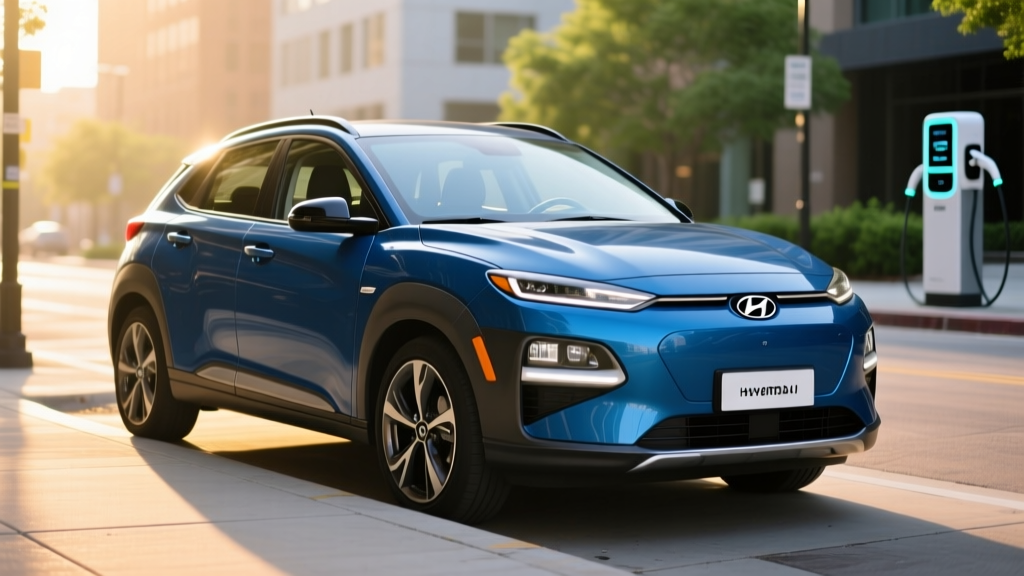
The 2025 Hyundai Kona Electric starts at $32,975 (SE trim) and offers an EPA-estimated 261 miles of range on the Long Range trims (SEL and up), powered by a 64.8 kWh NMC battery. It charges at up to 100 kW DC, reaching 10–80% in roughly 43 minutes. Real-world highway range drops to approximately 220–240 miles, and cold-weather driving can shave another 15–25%. It qualifies for the full $7,500 federal §30D tax credit (subject to income and sourcing rules), which can bring the effective starting price below $26,000. For buyers with home Level 2 charging access and mostly urban/suburban driving patterns, the Kona EV is one of the most cost-efficient compact electric crossovers available.
Range and Efficiency: EPA vs. Real-World Numbers
The 2025 Hyundai Kona EV comes in two range configurations. The base SE trim uses a 48.6 kWh battery rated at 200 miles EPA. The SEL and Limited trims use a larger 64.8 kWh pack rated at 261 miles EPA. Both use NMC (nickel manganese cobalt) chemistry, which provides higher energy density than LFP but is more sensitive to sustained high state-of-charge storage.
On fueleconomy.gov, the Kona Electric Long Range posts a combined MPGe of 105 (city 129 / highway 87). That highway drop matters — if your commute is predominantly freeway at 70+ mph, expect 220–240 miles before needing a charge. In winter temperatures below 30°F, battery chemistry slows and cabin heating draws significant power; plan for 190–210 miles of usable range on the Long Range trims.
The Kona EV includes a heat pump on all trims, which reduces winter range loss compared to resistive heaters. Preconditioning the battery while plugged in before departure recovers an additional 5–10 miles of range in cold conditions.
Charging Speed and Infrastructure
The Kona EV's charging profile is adequate but not class-leading. Here's what the numbers look like across charging levels:
| Level | Power | Connector | 10–80% Time | Miles Added/Hour |
|---|---|---|---|---|
| Level 1 (120V) | ~1.4 kW | J1772 | ~45+ hours | ~3–4 mi/hr |
| Level 2 (240V, 48A) | ~10.9 kW | J1772 | ~6 hours (full) | ~35 mi/hr |
| DC Fast Charge | Peak 100 kW | CCS1 | ~43 min (10–80%) | ~150 mi in 30 min |
The 100 kW peak DC charge rate is the Kona EV's weakest competitive point. Rivals like the Chevrolet Equinox EV (up to 150 kW) and Hyundai's own Ioniq 5 (up to 235 kW on 800V architecture) charge substantially faster. On a road trip, the Kona EV's 10–80% charge takes roughly twice as long as an Ioniq 5. The charge curve also tapers noticeably above 70% SoC — the last 10% (70–80%) can add 8–10 minutes alone.
The Kona EV uses the CCS1 connector. Hyundai has committed to transitioning to NACS (Tesla's connector) on future models, but the 2025 Kona EV ships with CCS1. Adapters for Tesla Supercharger access are available from Hyundai and third parties, though compatibility should be verified before purchase.
Cost of Ownership: Kona EV vs. Gas Equivalent
To understand the financial case, here's a five-year cost comparison between the Kona EV Long Range (SEL) and a comparably equipped gas-powered Hyundai Kona 1.6T AWD:
| Cost Factor | 2025 Kona EV SEL | 2025 Kona Gas (1.6T SEL) |
|---|---|---|
| Base MSRP | $35,175 | $29,390 |
| Federal Tax Credit (§30D) | –$7,500* | $0 |
| Effective Purchase Price | $27,675 | $29,390 |
| 5-Year Fuel/Energy (15k mi/yr) | $3,750** | $9,375*** |
| 5-Year Maintenance | $1,200 | $3,500 |
| 5-Year Insurance (est.) | $8,500 | $7,200 |
| 5-Year Total | $41,125 | $49,465 |
* Federal §30D credit eligibility depends on buyer income (≤$150k single / ≤$300k joint), vehicle MSRP cap ($80k SUVs), and battery critical-mineral sourcing. Credit can be transferred at point of sale as a purchase-price reduction. Verify current rules at irs.gov.
** Based on $0.15/kWh national average home charging; public DC charging costs more ($0.30–0.50/kWh).
*** Based on $3.50/gal, 28 MPG combined.
The Kona EV saves roughly $8,300 over five years when the federal credit applies. The two biggest variables: whether you qualify for the full §30D credit, and whether you charge primarily at home (cheap) or rely on public DC fast chargers (expensive). Insurance premiums on the Kona EV run 15–20% higher than the gas version — get a quote before committing.
What First-Time EV Buyers Need to Know
| Common Misconception | Fact |
|---|---|
| "The battery will need replacing in a few years." | Hyundai covers the battery with a 10-year/100,000-mile warranty against degradation below 70% capacity. Real-world data from Hyundai's Kona Electric (previous generation) shows ~90–93% capacity retention at 60,000 miles. |
| "I can charge from any outlet quickly." | Level 1 (120V) adds only 3–4 miles per hour — adequate only for low-mileage drivers. A Level 2 home charger ($500–$1,500 installed) is strongly recommended for daily use. |
| "261 miles means I can drive 261 miles." | EPA range assumes mixed driving at moderate speeds with climate control at 72°F. Sustained 75 mph highway driving, cold weather, and hilly terrain all reduce range. Plan trips around 75–80% of EPA range for a safety buffer. |
| "EVs need no maintenance." | No oil changes or spark plugs, but tires wear 20–30% faster due to instant torque and vehicle weight. Cabin air filters, brake fluid, wipers, and coolant still require service. |
| "The tax credit is automatic." | You must meet income caps, the vehicle must meet battery-sourcing requirements, and MSRP must be under the cap. Always verify on fueleconomy.gov's tax credit page before purchasing. |
Home Charging Setup
If you own a home with a 240V outlet (like a dryer circuit) near your parking spot, Level 2 charging installation can be as low as $300–$600 for a simple outlet and plug-in charger. If you need a new dedicated 240V circuit run from your panel, expect $800–$2,000 depending on distance and local code. Older homes with 100A electrical panels may need a panel upgrade ($1,500–$3,000) to support a 48A EV charger. A licensed electrician should assess your panel capacity before purchase.
Renters and apartment dwellers face a harder reality: without access to overnight charging, the Kona EV's 100 kW DC charging speed means weekly 45-minute charging stops become part of your routine. Before buying, map your nearest reliable public chargers and calculate the per-kWh cost in your area.
Decision Framework: Is the Kona EV Right for You?
Choose the 2025 Hyundai Kona EV if:
- You have home or workplace Level 2 charging access
- Your daily driving is under 80 miles round-trip
- You qualify for the §30D federal tax credit (bringing effective price under $28k)
- You prioritize low running costs over fast road-trip charging
- You want a compact crossover footprint with easy urban parking
Look elsewhere if:
- You frequently drive 300+ mile highway trips and need fast DC charging (consider Ioniq 5 or Tesla Model Y)
- You live in an apartment without charging access and public chargers are sparse in your area
- You need AWD for snow/ice (the Kona EV is FWD only; the gas Kona offers AWD)
- You regularly tow (Kona EV is not rated for towing)
- You exceed the §30D income caps and the full-MSRP price stretches your budget
Performance, Interior, and Daily Livability
The Kona EV's single front-mounted motor produces 201 horsepower and 188 lb-ft of torque, yielding a 0–60 mph time of approximately 7.6 seconds. That's brisk for a compact crossover and makes highway merging effortless. Regenerative braking is adjustable via steering-wheel paddles, from minimal coasting to near-one-pedal driving at Level 3 (though it doesn't come to a complete stop without brake application).
Inside, the 2025 Kona EV features dual 12.3-inch displays (digital cluster and infotainment), wireless Apple CarPlay and Android Auto on all trims, and a center console with physical climate controls — a practical choice over touch-only interfaces. Cargo space measures 25.5 cubic feet behind the rear seats and 52.8 cu ft with seats folded. There is no front trunk (frunk); the space under the hood houses power electronics.
Driver assistance comes via Hyundai SmartSense, which includes adaptive cruise control with stop-and-go, lane-keeping assist, blind-spot monitoring, and rear cross-traffic alert. This is an SAE Level 2 system — the driver must remain fully engaged with hands on the wheel and eyes on the road. It is not autonomous or self-driving.
Pricing, Trims, and Tax Credit Eligibility
| Trim | MSRP | Battery | EPA Range | Key Features |
|---|---|---|---|---|
| SE (Standard Range) | $32,975 | 48.6 kWh | 200 mi | Base infotainment, SmartSense, heated front seats |
| SE (Long Range) | $34,975 | 64.8 kWh | 261 mi | Same as SE Std Range + larger battery |
| SEL | $35,175 | 64.8 kWh | 261 mi | Proximity key, wireless charging pad, roof rails |
| Limited | $40,975 | 64.8 kWh | 249 mi | Leather, ventilated seats, HUD, Bose audio, sunroof |
Note that the Limited trim's additional weight and larger wheels reduce range to 249 miles EPA. All trims are front-wheel drive only. Destination charge adds approximately $1,395 to all prices.
The Kona EV currently qualifies for the full $7,500 §30D federal tax credit when purchased new, provided you meet the income thresholds ($150,000 single / $300,000 joint modified AGI). Under current IRS rules, this credit can be transferred to the dealer at point of sale as an upfront price reduction, rather than waiting to claim it on your tax return. Battery sourcing and critical-mineral requirements apply — confirm eligibility on the specific VIN with your dealer before signing.
Frequently Asked Questions
How long does the 2025 Kona EV battery last?
Hyundai warranties the high-voltage battery for 10 years or 100,000 miles against degradation below 70% of original capacity. Based on previous-generation Kona Electric fleet data, most owners see 8–12% total degradation over the first 5 years / 60,000 miles with normal charging habits. Avoiding frequent DC fast charging and not storing the vehicle at 100% SoC for extended periods helps maximize longevity.
Can I charge the Kona EV at a Tesla Supercharger?
The 2025 Kona EV ships with a CCS1 port. Tesla has opened select Superchargers to non-Tesla EVs via the Tesla app, and Hyundai offers a NACS adapter for purchase. However, not all Supercharger stalls are accessible to CCS vehicles due to cable length and parking geometry. Plan accordingly and verify station compatibility in the Tesla app before relying on Superchargers for road trips.
Is the Kona EV good in winter?
The heat pump on all trims helps preserve range compared to resistive heating systems. Expect 15–25% range reduction in sub-freezing temperatures. The Kona EV is FWD only, so winter tires are strongly recommended for snow and ice. Battery preconditioning is available but less aggressive than on Hyundai's E-GMP platform vehicles (Ioniq 5/6).
How does the Kona EV compare to the Ioniq 5?
The Ioniq 5 starts roughly $10,000 higher but offers 303 miles of range, up to 235 kW DC charging (10–80% in 18 minutes), available AWD, and significantly more interior space. If road-trip charging speed and interior volume matter, the Ioniq 5 is the better vehicle. If budget and urban efficiency are priorities, the Kona EV wins on value.
What happens if I can't charge at home?
Public DC fast charging costs roughly $0.30–$0.50/kWh nationally, which erases much of the fuel-cost advantage over a gas car. At $0.40/kWh, the Kona EV costs about $0.12/mile in energy — comparable to a 30 MPG gas car at $3.60/gallon. If home charging isn't feasible, a plug-in hybrid like the Hyundai Tucson PHEV may be a more practical electrified option.