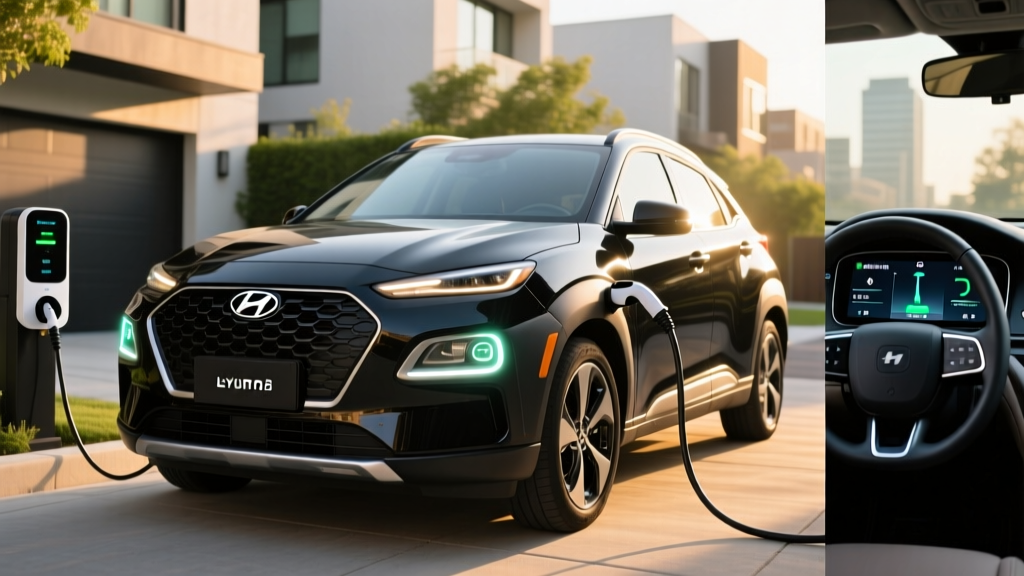
The subcompact electric SUV segment is crowded, but the 2025 Hyundai Kona Electric SUV carves out a distinct position by prioritizing everyday usability over headline-grabbing performance numbers. With an EPA-estimated 261 miles of range on the SEL and Limited trims, a starting price under $33,000, and access to Tesla's Supercharger network via its NACS port, the Kona Electric is a pragmatic choice for urban commuters and small families evaluating their first EV. We've spent time analyzing its specs, charging behavior, and ownership economics to help you decide if it belongs on your shortlist.
Quick Verdict: Who Should Buy the 2025 Kona Electric?
The 2025 Hyundai Kona Electric SUV is best suited for daily commuters and urban dwellers who can charge at home and don't frequently tow or road-trip beyond 200 miles without a planned stop. It's not the fastest-charging or longest-range EV in its class, but its combination of competitive pricing, a comfortable ride, and strong standard tech makes it a compelling entry point into electric ownership.
Consider alternatives if: You regularly road-trip 300+ miles, need AWD, or require more than 25.8 cu ft of cargo space.
Range, Battery & Efficiency: EPA vs. Real World
The 2025 Kona Electric is powered by a 64.8 kWh (usable capacity) lithium-ion battery pack using NMC (nickel-manganese-cobalt) chemistry. This pack feeds a single front-mounted electric motor producing 201 horsepower and 188 lb-ft of torque. Hyundai does not offer an all-wheel-drive variant for the Kona Electric — if you need AWD, look at the Ioniq 5 or competitors like the Kia EV6.
| Spec | Value |
|---|---|
| EPA Range (SEL/Limited) | 261 miles |
| EPA Range (SE) | 200 miles (smaller 48.6 kWh pack) |
| Battery Capacity (usable) | 64.8 kWh (SEL/Limited) / 48.6 kWh (SE) |
| Battery Chemistry | NMC (Nickel-Manganese-Cobalt) |
| Motor Output | 201 hp / 188 lb-ft (FWD) |
| 0–60 mph | ~7.5 seconds |
| EPA Efficiency (SEL/Limited) | 129 MPGe combined (26 kWh/100 mi) |
| Max DC Fast Charge | ~100 kW (peak) |
| 10–80% DC Fast Charge | ~43 minutes |
| Level 2 Charge Rate | 10.9 kW (onboard charger) |
| Charge Port | NACS (native Tesla Supercharger access) |
| Drivetrain | FWD only |
Efficiency is a strong point. At 129 MPGe combined (26 kWh per 100 miles), the Kona Electric sips electrons, translating to low per-mile charging costs. According to fueleconomy.gov, this efficiency rating places it among the most efficient subcompact EVs available.
Charging Speed: DC Fast, Level 2 & Home Setup
Charging is where the Kona Electric reveals its commuter-car priorities. The peak DC fast-charge rate of approximately 100 kW is modest by 2025 standards — rivals like the Hyundai Ioniq 5 (up to 240 kW) and Kia EV6 (up to 239 kW) charge considerably faster on compatible stations.
| Level | Power | Time / Rate |
|---|---|---|
| Level 1 (120V household) | ~1.4 kW | ~3–4 miles of range per hour |
| Level 2 (240V home/public) | 10.9 kW max | ~6.5 hours for a full charge (0–100%); ~30 miles/hr |
| DC Fast Charge | ~100 kW peak | 10–80% in ~43 minutes; tapers significantly above 80% |
The 10–80% time of roughly 43 minutes on DC fast charging is the Kona Electric's most notable limitation for road trippers. The charge curve peaks near 100 kW at a low state of charge but tapers steadily, meaning you won't sustain that peak rate for long. Plan road-trip stops around 30–40 minute breaks — adequate for a meal but longer than a quick Ioniq 5 stop.
At home on a Level 2 charger, the 10.9 kW onboard charger is competitive. A full charge from empty takes about 6.5 hours, meaning an overnight session on a home wallbox easily replenishes a day's driving. Most Kona Electric owners will rarely, if ever, need public charging if they have reliable home Level 2 access.
The native NACS (North American Charging Standard) port is a significant advantage. As of 2025, Hyundai has adopted the Tesla-style connector, granting Kona Electric owners direct access to Tesla Supercharger stations (via adapter-free NACS stalls or Tesla's open network) in addition to Electrify America, EVgo, and ChargePoint locations. This dramatically expands the practical charging network for road trips.
Performance & Driving Dynamics
The Kona Electric's 201-horsepower front motor delivers adequate acceleration for merging and passing, with a 0–60 mph time of approximately 7.5 seconds. It's not thrilling — the Ioniq 5 and Tesla Model Y are noticeably quicker — but the instant electric torque makes the Kona feel responsive around town.
Ride quality is compliant and well-damped for a subcompact crossover, and the low center of gravity (thanks to the under-floor battery) keeps body lean controlled in corners. Steering is light and precise, ideal for parking lots and city streets. Highway noise isolation is acceptable but not class-leading; you'll notice some tire and wind noise above 65 mph.
Regenerative braking is adjustable via steering-wheel paddles, with four levels including a full one-pedal driving mode (i-Pedal) that brings the car to a complete stop without touching the brake pedal. This system is intuitive and among the smoother implementations in the segment.
Interior, Cargo & Technology
The 2025 Kona Electric rides on a longer wheelbase than its predecessor, and the interior space reflects that growth. Front passengers enjoy generous headroom and legroom, while rear-seat accommodations are adequate for adults on shorter trips but tight for taller passengers on long hauls.
| Measurement | Value |
|---|---|
| Front Headroom | 39.9 in |
| Front Legroom | 41.7 in |
| Rear Headroom | 38.3 in |
| Rear Legroom | 36.4 in |
| Cargo (behind rear seats) | 25.8 cu ft |
| Cargo (rear seats folded) | 63.7 cu ft |
Cargo space at 25.8 cubic feet is competitive with the Kia Niro EV but trails the larger Ioniq 5 (27.2 cu ft). There is no front trunk (frunk) — the space under the hood houses conventional drivetrain components and the 12V auxiliary battery.
Technology highlights include dual 12.3-inch displays (digital instrument cluster and infotainment touchscreen) running Hyundai's latest infotainment software with wireless Apple CarPlay and Android Auto. The Limited trim adds a head-up display, Bose premium audio, and Hyundai's Digital Key 2 (phone-as-key via NFC/UWB). Over-the-air updates keep the software current without dealer visits.
The Hyundai SmartSense suite of driver-assistance features comes standard on all trims and includes forward collision-avoidance assist, lane-keeping assist, blind-spot monitoring, rear cross-traffic collision-avoidance, and adaptive cruise control with stop-and-go. Note: this is an SAE Level 2 driver-assistance system — the driver must remain fully engaged and responsible for vehicle control at all times. It is not autonomous or "self-driving."
Pricing, Trims & Federal Tax Credit Eligibility
The 2025 Hyundai Kona Electric is offered in three trims. Pricing is competitive within the subcompact EV SUV segment, especially when factoring in potential incentives.
| Trim | MSRP (incl. destination) | EPA Range | Key Features |
|---|---|---|---|
| SE | $32,975 | 200 mi (48.6 kWh) | Base tech suite, 12.3" displays, wireless CarPlay/Android Auto |
| SEL | $36,975 | 261 mi (64.8 kWh) | Heated seats, power driver seat, Proximity Key, roof rails |
| Limited | $40,975 | 261 mi (64.8 kWh) | HUD, Bose audio, ventilated seats, Digital Key 2, heat pump |
Federal Tax Credit: Does the Kona Electric Qualify?
The 2025 Kona Electric's eligibility for the federal §30D EV tax credit (up to $7,500) depends on several factors that change periodically and are subject to IRS interpretation of battery-sourcing and critical-mineral requirements. As of the current tax year, the Kona Electric is assembled in South Korea, which historically has complicated eligibility under the North American final-assembly requirement. However, Hyundai has been working to shift production and battery sourcing to comply.
- MSRP cap: SUVs must be under $80,000 — all Kona Electric trims qualify.
- Buyer income cap: AGI must not exceed $150,000 (single), $225,000 (head of household), or $300,000 (joint).
- Battery sourcing: Must meet critical-mineral and battery-component requirements as defined by the IRS — verify current status at irs.gov.
- Final assembly: Must occur in North America — check the VIN on fueleconomy.gov for your specific vehicle.
- Point-of-sale transfer: If eligible, the credit can be transferred to the dealer at purchase, reducing the sale price directly.
If the Kona Electric does not qualify for the full federal credit in your situation, many states and utilities offer their own EV rebates — check your state energy office or DSIRE for local incentives.
Warranty & Long-Term Ownership
Hyundai backs the Kona Electric with one of the strongest warranty packages in the industry:
| Coverage | Term |
|---|---|
| Basic (bumper-to-bumper) | 5 years / 60,000 miles |
| Powertrain | 10 years / 100,000 miles |
| EV Battery | 10 years / 100,000 miles (capacity retention above 70%) |
| Roadside Assistance | 5 years / unlimited miles |
| Complimentary Maintenance | 3 years / 36,000 miles |
The 10-year/100,000-mile battery warranty guarantees that the pack will retain at least 70% of its original capacity. NMC chemistry in Hyundai's packs has shown solid longevity in real-world fleet data, with typical degradation of 8–12% over the first 100,000 miles. For most owners, this means the battery will outlast the ownership period without issue.
2025 Kona Electric vs. Key Competitors
- You want a sub-$37K EV with 261 miles of range (SEL)
- Home charging is your primary refueling method
- You value Hyundai's 10-year warranty and standard SmartSense safety tech
- Native NACS/Supercharger access matters to you
- Your daily commute is under 80 miles round-trip
- You need DC fast-charging speeds under 25 minutes (10–80%)
- All-wheel drive is essential for your climate
- You regularly carry 4+ adults or need maximum cargo space
- You tow — the Kona Electric is not rated for towing
- Fast road-trip charging is a top priority
Compared to the Kia Niro EV (239-mile range, ~$39,600), the Kona Electric offers more range at a lower price on the SEL trim. Against the Volvo EX30 (~275-mile range, starting ~$36,145), the Kona trades slightly shorter range for more cargo room and a longer warranty. The Chevrolet Equinox EV (315-mile range, starting ~$33,000) is its closest range-and-price rival, but the Kona's interior quality and standard tech give it an edge in daily livability.
Pros, Cons & Final Assessment
- 261-mile EPA range (SEL/Limited) at a competitive price
- Native NACS port for Tesla Supercharger access
- Excellent 10-year/100,000-mile battery warranty
- Standard Hyundai SmartSense ADAS on all trims
- Strong efficiency at 129 MPGe combined
- Comfortable ride quality and quiet cabin at city speeds
- DC fast-charging limited to ~100 kW; 43-min 10–80% time
- FWD only — no AWD option
- Rear seat is tight for tall adults on long trips
- No frunk (front trunk) for additional storage
- SE trim's 200-mile range is below average for the price
- Not rated for towing
Frequently Asked Questions
What is the real-world range of the 2025 Hyundai Kona Electric?
Expect approximately 230–250 miles in mixed driving conditions with the SEL or Limited (261-mile EPA rating). Highway-only driving at 70+ mph reduces this to around 210–230 miles, and cold weather below freezing can drop it to 170–200 miles. The heat pump on the Limited trim helps mitigate cold-weather losses.
How fast does the Kona Electric charge at home and on the road?
At home on a Level 2 (240V) charger, the 10.9 kW onboard charger adds roughly 30 miles of range per hour, fully charging the 64.8 kWh battery in about 6.5 hours. On DC fast chargers, it peaks at approximately 100 kW, reaching 10–80% in about 43 minutes — slower than rivals like the Ioniq 5 or EV6.
Does the 2025 Kona Electric qualify for the $7,500 federal tax credit?
Eligibility depends on battery sourcing, critical-mineral content, final assembly location, your income, and the vehicle's MSRP. The Kona Electric's MSRP is well under the $80,000 SUV cap, but final assembly and battery-component rules must be verified at the time of purchase. Check irs.gov and confirm with your dealer. A tax professional can help assess your specific situation.
Is the 2025 Kona Electric worth buying over the Ioniq 5 or EV6?
It depends on your needs. The Kona Electric is smaller, more affordable, and more efficient for city commuting. The Ioniq 5 and EV6 offer more interior space, faster DC charging (18–20 minutes 10–80%), and available AWD — but start at higher prices ($42,000+). If budget and urban driving are your priorities, the Kona Electric is a strong value. If you road-trip frequently or need more room, step up to the Ioniq 5.
Can I charge the Kona Electric at Tesla Superchargers?
Yes. The 2025 Kona Electric comes equipped with a native NACS (North American Charging Standard) charge port, providing direct access to Tesla's Supercharger network without requiring an adapter, in addition to CCS-compatible public networks.
What is the battery replacement cost if the warranty expires?
Out-of-warranty battery replacement for the Kona Electric is estimated at $8,000–$14,000 depending on labor and parts availability. However, Hyundai's 10-year/100,000-mile battery warranty (70% capacity retention) and the proven durability of NMC packs mean most owners will never face this cost. Battery prices continue to decline year over year.