The Real Math Behind a 2025 Hyundai Kona Electric Lease
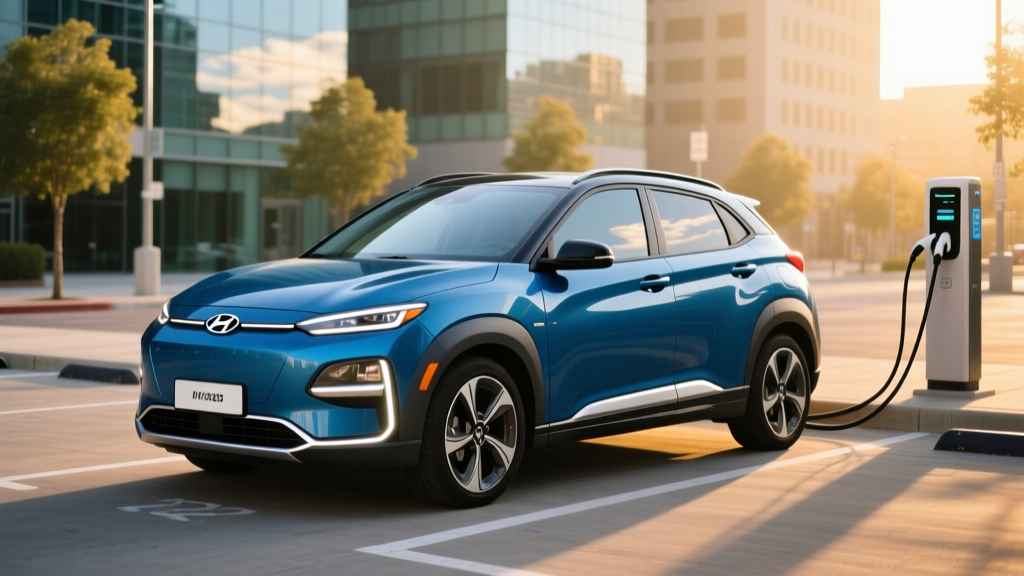
Leasing a 2025 Hyundai Kona Electric looks attractive on paper: a sub-$35,000 MSRP compact crossover with up to 261 miles of EPA-estimated range, DC fast charging, and the potential to qualify for a $7,500 federal tax credit that can be applied at the point of sale as a lease rebate. But lease calculators on dealer websites rarely show you the full picture — insurance premiums, home charging setup, real-world range loss in cold weather, and the nuances of IRS §30D eligibility all factor into what you'll actually spend over a 36- or 48-month term.
This guide walks through every cost layer of owning and leasing the 2025 Kona Electric, using concrete numbers rather than marketing promises. Whether you're comparing it to a gas-powered Kona, a Chevrolet Equinox EV, or a Nissan Ariya, the data below will help you decide if the math works for your specific situation.
2025 Kona Electric: Key Specs at a Glance
Before we get into ownership costs, here are the hard numbers that drive them. The 2025 Kona Electric carries over the second-generation platform introduced for 2024, with a 64.8 kWh usable battery (NMC chemistry) on the upper trims and a smaller 48.6 kWh pack on the base SE trim.
| Spec | SE (Standard Range) | SEL / Limited (Extended Range) |
|---|---|---|
| Usable Battery | 48.6 kWh (NMC) | 64.8 kWh (NMC) |
| EPA Range | ~200 miles | 261 miles |
| Real-World Range (highway/cold) | ~155–175 miles | ~200–230 miles |
| Motor Output | 133 hp / 188 lb-ft | 201 hp / 188 lb-ft |
| 0–60 mph | ~8.5 sec | ~7.3 sec |
| Peak DC Fast Charge | ~100 kW | ~105 kW |
| 10–80% DC Fast Charge | ~43 min | ~43 min |
| Level 2 (240V) Charge Rate | ~7.2 kW | ~10.9 kW |
| MPGe (Combined) | ~118 MPGe | ~112 MPGe |
| Starting MSRP | ~$32,975 | ~$35,025 (SEL) / ~$41,025 (Limited) |
| Battery/Powertrain Warranty | 10 years / 100,000 miles | |
5-Year Total Cost of Ownership Breakdown
Below is a realistic 5-year / 60,000-mile ownership projection for the 2025 Kona Electric SEL (Extended Range, ~$35,025 MSRP) compared against a comparably equipped gas-powered 2025 Hyundai Kona SEL (2.0L, ~$28,500 MSRP). While most leases run 36 months, a 5-year window captures the full depreciation curve and lets you compare against a purchase scenario.
| Cost Category | Kona Electric SEL | Gas Kona SEL (2.0L) |
|---|---|---|
| Purchase Price (MSRP) | $35,025 | $28,500 |
| Federal Tax Credit (§30D) | –$7,500 (if eligible) | $0 |
| Effective Purchase Price | $27,525 | $28,500 |
| Fuel / Charging (60k mi) | $3,240 | $7,500 |
| Maintenance (5 yr) | $1,200 | $3,800 |
| Insurance (5 yr avg) | $9,600 | $7,500 |
| Depreciation (est. 5 yr) | $14,500 | $12,800 |
| Total 5-Year Cost | $56,065 | $60,100 |
| Total w/ Tax Credit | $48,565 | $60,100 |
The EV wins on fuel and maintenance by a combined ~$6,860, but loses ground on insurance (~$2,100 more over 5 years) and steeper depreciation (~$1,700 more). The $7,500 federal credit is the swing factor — with it, the Kona Electric comes out roughly $11,500 ahead. Without it, the gap narrows to about $4,000 in the gas car's favor when you factor in the higher insurance and depreciation.
Federal Tax Credit: Do You Actually Qualify?
The IRS §30D Clean Vehicle Credit offers up to $7,500 for qualifying new EVs, but the rules are layered and have tightened significantly since the Inflation Reduction Act took effect. Here's the full eligibility checklist for the 2025 Kona Electric:
- MSRP Cap: The vehicle's MSRP must not exceed $55,000 for SUVs/crossovers (the Kona qualifies — its top Limited trim is ~$41,025).
- Buyer Income Cap: Modified adjusted gross income (MAGI) must not exceed $150,000 (single), $225,000 (head of household), or $300,000 (married filing jointly). The IRS uses the lesser of your current-year or prior-year MAGI.
- Battery Sourcing — Critical Minerals ($3,750): A percentage of the battery's critical minerals must be extracted or processed in the US or a free-trade-agreement country, or recycled in North America. These thresholds increase annually.
- Battery Sourcing — Components ($3,750): A percentage of battery components must be manufactured or assembled in North America, also increasing annually.
- Foreign Entity of Concern (FEOC) Exclusion: Starting 2024, vehicles with battery components from a FEOC (primarily Chinese entities) are disqualified. Starting 2025, vehicles with critical minerals from a FEOC are also disqualified. This has removed several models from eligibility.
- North American Final Assembly: The Kona Electric for the US market is assembled in South Korea — this was historically a disqualifier under §30D. However, as of 2025, Hyundai has shifted some Kona Electric production; verify the VIN on the fueleconomy.gov credit lookup tool before signing.
- Point-of-Sale Transfer: You can elect to transfer the credit to the dealer at purchase (or to the lessor in a lease), reducing the upfront cost. The dealer must be IRS-registered.
For a complete, current eligibility determination, check the IRS §30D guidance page and verify your specific vehicle's VIN on fueleconomy.gov. Tax rules change — consult a tax professional for your situation.
Charging Cost vs. Gas: The Per-Mile Math
This is where the Kona Electric delivers its most consistent savings — but the exact number depends heavily on how and where you charge.
| Scenario | Cost per kWh / Gallon | Cost per Mile | Annual Cost (12k mi) |
|---|---|---|---|
| Home L2 — National Avg Electricity ($0.16/kWh) | $0.16/kWh | $0.048 | $576 |
| Home L2 — Low-Cost State ($0.10/kWh, e.g., WA, LA) | $0.10/kWh | $0.030 | $360 |
| Home L2 — High-Cost State ($0.28/kWh, e.g., CA, MA) | $0.28/kWh | $0.084 | $1,008 |
| Public DC Fast Charging ($0.40/kWh avg) | $0.40/kWh | $0.120 | $1,440 |
| Gas Kona (28 MPG combined, $3.50/gal) | $3.50/gal | $0.125 | $1,500 |
The Kona Electric Extended Range consumes roughly 30 kWh per 100 miles (or 0.30 kWh/mi), based on its EPA rating of ~112 MPGe. At the national average residential electricity rate of ~$0.16/kWh (EIA data), home charging costs about $0.048/mile — roughly 62% less than fueling a gas Kona at $3.50/gallon and 28 MPG combined.
However, if you rely entirely on public DC fast charging at $0.40/kWh, your per-mile cost nearly matches gasoline. This is why home Level 2 charging access is the single biggest variable in EV ownership economics. If you can't install a home charger, the fuel savings shrink dramatically.
Maintenance Savings: Where EVs Quietly Win
EVs don't eliminate maintenance, but they dramatically reduce it. The Kona Electric's single-speed reduction gear and electric motor have far fewer wear items than a gas powertrain.
| Service Item | Kona Electric | Gas Kona |
|---|---|---|
| Oil Changes | $0 (none required) | $600–$900 (6–9 changes) |
| Brake Pads/Rotors | $0–$200 (regen extends life to 80k+ mi) | $600–$1,200 (1–2 replacements) |
| Transmission Fluid | $0 (sealed reduction gear) | $150–$300 |
| Coolant Flush | $100–$150 (at ~60k mi) | $100–$150 |
| Cabin Air Filter | $60–$100 | $60–$100 |
| Tire Rotation/Replacement | $800–$1,200 (EVs wear tires faster due to weight/torque) | $600–$900 |
| Estimated Total | $960–$1,650 | $2,110–$3,550 |
The biggest EV maintenance advantage is brake longevity — regenerative braking handles most deceleration, so friction brake pads often last 80,000–100,000+ miles. The biggest EV maintenance disadvantage is tire wear: the Kona Electric weighs ~3,700 lbs (about 400 lbs more than the gas Kona), and instant electric torque accelerates tread wear. Budget for a tire replacement around 35,000–45,000 miles rather than the 50,000–60,000 miles typical for ICE vehicles.
Insurance: The Cost Category That Catches EV Buyers Off Guard
EV insurance premiums run 15–30% higher than equivalent gas vehicles, and the Kona Electric is no exception. According to industry data, expect to pay roughly $1,800–$2,100/year for the Kona Electric versus $1,400–$1,600/year for the gas Kona — a difference of $400–$500 annually, or $2,000–$2,500 over five years.
The reasons are structural:
- Higher repair costs: EV battery packs and power electronics are expensive to replace after a collision, and fewer body shops are certified for high-voltage work.
- Higher vehicle value: The Kona Electric's MSRP is $6,500+ more than the gas Kona, so comprehensive and collision payouts are larger.
- Specialized parts: Replacement parts for EV-specific components (onboard charger, inverter, battery modules) carry premium pricing and longer lead times.
- Total-loss threshold: Even minor battery damage can trigger a total-loss declaration, increasing insurer risk exposure.
To mitigate this, get quotes from at least three insurers before signing a lease. Some carriers (GEICO, Progressive, State Farm) now offer EV-specific discounts, and Hyundai sometimes bundles complimentary coverage through its partnership programs. Bundling home and auto, maintaining a clean driving record, and opting for a higher deductible can close the gap significantly.
Depreciation and Resale Value: The EV Wild Card
EV depreciation has been volatile. In 2023–2024, aggressive price cuts by Tesla, combined with an influx of new EV models and rising interest rates, caused used EV values to drop 25–35% in some segments — far steeper than the historical norm. The Kona Electric was not immune; first-generation models (2022–2023) saw accelerated depreciation as the redesigned second-gen arrived.
For the 2025 Kona Electric, expect 5-year depreciation of roughly 40–50% of MSRP (so ~$14,000–$17,500 on a $35,025 SEL), compared to 35–45% for the gas Kona. Factors working against EV resale include:
- Battery health uncertainty: Used buyers discount EVs based on perceived battery degradation risk, even though Hyundai's 10-year/100,000-mile battery warranty provides substantial coverage.
- Rapid tech obsolescence: Newer models with faster charging, longer range, and NACS connectors make older EVs less desirable.
- Lease returns flooding the market: High lease volumes create a supply surge of 3-year-old EVs hitting the used market simultaneously.
If you're leasing rather than buying, depreciation is the lessor's problem — but it directly affects your lease payment, since the money factor and residual value are calculated from projected depreciation. A lower residual means higher monthly payments. Hyundai's lease residuals for the Kona Electric have been conservative, which keeps payments competitive but means you're unlikely to have positive equity at lease-end.
State, Local, and Utility Incentives
Beyond the federal §30D credit, a patchwork of state and utility incentives can further reduce your effective cost. These vary enormously by jurisdiction and change frequently:
- California: The Clean Fuel Reward program has been discontinued, but low-income buyers in disadvantaged communities may qualify for up to $9,500 through the Clean Cars 4 All program.
- Colorado: Offers a state tax credit of up to $5,000 for new EVs with MSRP under $80,000 (stackable with federal credit).
- New York: The Drive Clean Rebate offers up to $2,000 based on income and vehicle price.
- Utility rebates: Many utilities (e.g., PG&E, Con Edison, Xcel Energy) offer $500–$1,500 rebates for purchasing a new EV and/or installing a home Level 2 charger.
- HOV lane access: Several states (CA, CO, FL, GA, MD, NJ, NY, VA, WA) offer single-occupant HOV lane access for EVs — a significant non-monetary perk in congested metro areas.
Lease vs. Buy: Which Structure Works Best for the Kona Electric?
Leasing the 2025 Kona Electric makes sense if you want to capture the $7,500 federal credit without worrying about your tax liability (since the lessor claims the commercial credit and passes it through as a cap-cost reduction), if you're concerned about long-term depreciation risk, or if you plan to upgrade to a newer EV with NACS charging in 3–4 years.
Buying makes more sense if you drive under 10,000 miles/year (lease mileage penalties add up), if you plan to keep the vehicle 7+ years to ride out the depreciation curve, or if you want to take full advantage of Hyundai's industry-leading 10-year/100,000-mile battery warranty (which transfers to second owners on purchased vehicles but may not apply the same way on lease returns).
Frequently Asked Questions
How much does it really cost to own a 2025 Hyundai Kona Electric over 5 years?
Between $48,500 and $56,000 over 5 years and 60,000 miles, depending on whether you qualify for the full $7,500 federal tax credit. The largest cost components are depreciation (~$14,500), insurance (~$9,600), and charging (~$3,240 at national average electricity rates). Without the tax credit, total cost rises to roughly $56,000 — still competitive with many gas crossovers when fuel and maintenance savings are factored in.
Do I qualify for the $7,500 federal EV tax credit on the Kona Electric?
It depends on four factors: your income (must be under $150k single / $300k joint MAGI), the vehicle's MSRP (must be under $55k for SUVs — the Kona qualifies), the battery's critical-mineral and component sourcing (must meet annually increasing thresholds and exclude FEOC-sourced materials), and North American final assembly. The Kona Electric's assembly location has been a variable — verify your specific VIN on fueleconomy.gov and consult a tax professional before relying on the credit.
How much do I save on fuel and maintenance vs. the gas Kona?
Approximately $4,260 on fuel and $2,600 on maintenance over 5 years / 60,000 miles — a combined savings of ~$6,860. Fuel savings assume home Level 2 charging at the national average rate of $0.16/kWh. If you rely primarily on public DC fast charging at $0.40/kWh, fuel savings shrink to roughly $720 over 5 years.
Are EVs more expensive to insure than gas cars?
Yes, typically 15–30% more. For the Kona Electric, expect annual premiums of $1,800–$2,100 versus $1,400–$1,600 for the gas Kona — a difference of roughly $400–$500/year or $2,000–$2,500 over 5 years. Higher repair costs, specialized parts, and the vehicle's higher MSRP all contribute.
How well does the Kona Electric hold its value?
Expect roughly 40–50% depreciation over 5 years, which is steeper than the gas Kona's 35–45%. EV depreciation has been volatile due to rapid technology advances, price competition, and lease-return supply surges. If you're leasing, depreciation is baked into your monthly payment via the residual value. If you're buying, plan to hold the vehicle 5+ years to amortize the steeper initial depreciation curve.
What happens if the battery degrades during my lease?
Hyundai covers the battery with a 10-year/100,000-mile warranty that guarantees it will retain at least 70% of its original capacity. During a typical 36-month lease (30,000–45,000 miles), measurable degradation is minimal — most NMC batteries lose only 5–8% capacity in the first three years. You're unlikely to experience any warranty-covered battery issues during a standard lease term.