Quick Verdict: The Efficiency King of the Midsize EV Sedan Segment
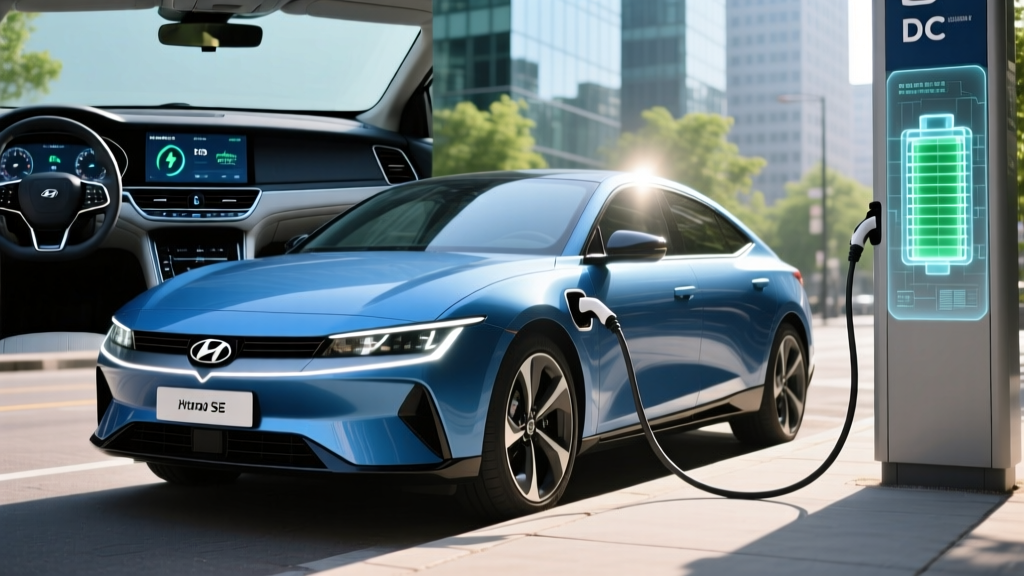
The 2025 Hyundai Ioniq 6 SE occupies a rare position in the electric vehicle market: it delivers over 360 miles of EPA-estimated range at a base price under $40,000, while charging faster than nearly every non-800-volt competitor on the road. For buyers who prioritize highway commuting efficiency and rapid DC fast-charging over crossover ride height, the Ioniq 6 SE is one of the most compelling EVs available in the 2025 model year.
But the streamlined "Electrified Streamliner" design comes with trade-offs. Rear headroom is tight, cargo space trails its SUV sibling (the Ioniq 5), and Hyundai's infotainment software still lags behind Tesla's and Rivian's in responsiveness. This review breaks down every spec that matters — from real-world range to tax-credit eligibility — so you can decide whether the Ioniq 6 SE fits your driving life.
Range, Battery & Efficiency
The 2025 Ioniq 6 SE comes in two drivetrain configurations that dramatically affect range:
- SE Standard Range (RWD): 54.0 kWh battery (LFP chemistry), EPA-estimated 240 miles
- SE Long Range (RWD): 77.4 kWh battery (NMC chemistry), EPA-estimated 361 miles
- SE Long Range (AWD): 77.4 kWh battery (NMC chemistry), EPA-estimated 316 miles
The 361-mile EPA figure for the Long Range RWD is achievable in mixed city/suburban driving at moderate speeds. On sustained 75-mph highway runs, expect approximately 300–320 miles before needing to charge. In cold weather (below 32°F), range drops 20–30% depending on cabin heating use, putting realistic winter highway range closer to 250–275 miles. The Standard Range model's 240-mile EPA sticker translates to roughly 190–210 miles in real-world highway/cold conditions — adequate for commuters with home charging, but limiting for road trips.
Efficiency is where the Ioniq 6 truly shines. The Long Range RWD achieves an EPA-rated 140 MPGe combined (24 kWh per 100 miles), making it one of the most energy-efficient EVs sold in the United States. The aerodynamic teardrop shape — with a drag coefficient of just 0.21 — is the primary reason. For context, the Tesla Model 3 Long Range achieves 132 MPGe combined, and the Hyundai Ioniq 5 (boxier crossover) achieves 114 MPGe.
| Spec | SE Std Range RWD | SE Long Range RWD | SE Long Range AWD |
|---|---|---|---|
| Usable Battery Capacity | 54.0 kWh (LFP) | 77.4 kWh (NMC) | 77.4 kWh (NMC) |
| EPA Range | 240 mi | 361 mi | 316 mi |
| MPGe (Combined) | 135 MPGe | 140 MPGe | 123 MPGe |
| kWh/100 mi | 25 | 24 | 27 |
| Real-World Highway Range (est.) | ~195–210 mi | ~300–320 mi | ~265–280 mi |
Source: EPA fueleconomy.gov
Charging Speed: DC Fast, Level 2 & Home Setup
Hyundai's 800-volt E-GMP architecture gives the Ioniq 6 a decisive charging advantage over 400-volt competitors. Here is the full charging breakdown:
| Charging Level | Power / Rate | 10–80% Time | Miles Added per Hour |
|---|---|---|---|
| Level 1 (120V household) | ~1.4 kW | N/A (overnight trickle) | ~5 mi/hr |
| Level 2 (240V home/public) | 10.9 kW (48A) | ~7 hr 20 min (full) | ~40 mi/hr |
| DC Fast Charge (Long Range) | Peak 239 kW | ~18 minutes | N/A |
| DC Fast Charge (Std Range) | Peak ~150 kW | ~22 minutes | N/A |
Charging curve reality: The 239 kW peak on the Long Range models is not sustained. The Ioniq 6 holds near-peak power from roughly 10% to 55% State of Charge (SoC), then tapers progressively. You will see 230+ kW in the early phase on a 350 kW Electrify America or Ionity station, but above 80% SoC the rate drops below 60 kW to protect the battery. The 18-minute 10–80% figure assumes preconditioned battery and a capable charger.
Connector note: The 2025 Ioniq 6 ships with a CCS1 (Combined Charging System) port. Hyundai has announced a transition to the NACS (Tesla-style) connector for future model years, but for 2025, CCS remains standard. Tesla Supercharger access requires Hyundai's included CCS-to-NACS adapter at participating stations.
For home Level 2 charging, a 48-amp hardwired wall connector on a 60-amp circuit delivers the full 10.9 kW rate. Installation costs typically range from $800 to $2,500 depending on panel proximity and local permitting. A full overnight charge (0–100%) adds the entire 361 miles of range in about 7 hours — more than sufficient for daily replenishment.
Performance & Drivetrain
The Ioniq 6 SE is tuned for efficiency rather than outright acceleration, but it is no slouch:
- SE Long Range RWD: 168 kW (225 hp) single rear motor, 0–60 mph in approximately 6.2 seconds
- SE Long Range AWD: 239 kW (320 hp) dual motor, 0–60 mph in approximately 5.1 seconds
- SE Standard Range RWD: 111 kW (149 hp) single rear motor, 0–60 mph in approximately 8.5 seconds
The RWD models use a single permanent-magnet synchronous motor on the rear axle. The AWD adds an induction motor up front. All trims feature regenerative braking with adjustable levels via steering-wheel paddles, including an i-Pedal one-pedal driving mode that brings the car to a complete stop without touching the brake pedal.
Ride quality is composed and quiet, with the low-slung battery pack contributing to a planted feel through corners. However, the sport-tuned suspension (especially on models with 20-inch wheels) transmits more road imperfections than a Tesla Model 3 or a Volkswagen ID.7. The turning circle of 39.4 feet is average for the class.
Interior, Cargo & Technology
The Ioniq 6's cabin is a study in minimalism — dual 12.3-inch displays (one for the instrument cluster, one for infotainment) sit atop a slim dashboard with ambient lighting that syncs to driving mode and speed. The SE trim includes:
- Cloth and recycled-material seating surfaces (heated front seats)
- Wireless Apple CarPlay and Android Auto
- Hyundai SmartSense ADAS suite (detailed below)
- Dual-zone automatic climate control with heat pump (Long Range trims)
- Vehicle-to-Load (V2L) capability — powers external devices up to 3.6 kW via interior outlet or external adapter
Passenger space: Front legroom is generous at 41.7 inches. Rear legroom measures 35.1 inches — adequate for adults but tighter than a Tesla Model 3 (35.3 in) and significantly less than the Ioniq 5 crossover (39.4 in). The sloping roofline cuts rear headroom to 37.1 inches, which will be noticeable for passengers over 6 feet tall.
Cargo volume: The trunk offers 11.2 cubic feet behind the rear seats, plus a modest front trunk (frunk) of approximately 0.7 cubic feet (RWD models; AWD reduces this further). This is the Ioniq 6's most significant practical limitation compared to hatchback rivals. The Tesla Model 3 provides 23 cu ft of cargo space (hatchback design), and the Ioniq 5 offers 27.2 cu ft.
Driver assistance (SAE Level 2): Hyundai SmartSense includes Highway Driving Assist 2 (HDA-2), which provides adaptive cruise control with stop-and-go, lane-centering steering, and lane-change assist on divided highways. This is a Level 2 driver-assist system — the driver must remain engaged with hands on the wheel and eyes on the road at all times. It is not autonomous driving.
Hyundai's Highway Driving Assist 2 (HDA-2) is classified as SAE Level 2 automation. It does not drive the car autonomously. The driver is legally and practically responsible for all vehicle operation. Hands-off operation is not supported, and the system will issue escalating warnings and eventually disengage if driver attention is not detected.
Pricing, Trims & Federal Tax Credit
The 2025 Hyundai Ioniq 6 SE is available in the following configurations (MSRP including destination charge):
| Trim | MSRP | Est. §30D Credit | Effective Price |
|---|---|---|---|
| SE Standard Range RWD | $38,650 | Up to $7,500* | ~$31,150* |
| SE Long Range RWD | $42,400 | Up to $7,500* | ~$34,900* |
| SE Long Range AWD | $46,100 | Up to $7,500* | ~$38,600* |
*Federal tax credit eligibility is NOT guaranteed. It depends on multiple IRS §30D requirements:
- MSRP cap: Sedans must have an MSRP at or below $55,000 (all Ioniq 6 SE trims qualify).
- Buyer income cap: Modified AGI must not exceed $150,000 (single), $225,000 (head of household), or $300,000 (joint filers).
- Battery sourcing: Critical minerals and battery components must meet phased-in percentage thresholds from US or FTA-partner sources. Hyundai's supply chain has been evolving; eligibility can change by production batch.
- Point-of-sale transfer: As of 2024, qualifying buyers can transfer the credit to the dealer for an upfront price reduction rather than waiting to claim it on their tax return.
Always verify current eligibility on IRS.gov before purchasing, as battery-sourcing compliance can shift with model year and production date.
Warranty & Ownership Costs
Hyundai backs the Ioniq 6 with one of the strongest warranty packages in the EV segment:
- New vehicle limited warranty: 5 years / 60,000 miles
- Powertrain warranty: 10 years / 100,000 miles
- High-voltage battery warranty: 8 years / 100,000 miles (covers capacity loss below 70% of original)
- Complimentary maintenance: 3 years / 36,000 miles (includes tire rotation, multi-point inspection)
- Roadside assistance: 5 years / unlimited miles
The 8-year/100,000-mile battery warranty with a 70% capacity-retention threshold is competitive with Tesla's 8-year/120,000-mile warranty (also 70% threshold for NMC packs). Real-world degradation data from early Ioniq 5 owners (same E-GMP platform) suggests approximately 5–8% capacity loss after 60,000 miles, well within warranty coverage.
Insurance premiums for the Ioniq 6 average 10–15% higher than a comparably priced gasoline sedan, consistent with most EVs due to higher repair costs for battery-adjacent damage. Obtain a personalized quote before committing to a purchase.
Pros & Cons
- Class-leading 361-mile EPA range (Long Range RWD)
- Ultra-fast 800V DC charging — 10–80% in ~18 min
- Best-in-segment efficiency at 140 MPGe / 24 kWh/100 mi
- Strong 10-year/100,000-mile powertrain warranty
- Standard V2L capability for camping/emergency power
- Qualifies for up to $7,500 federal tax credit (verify sourcing)
- Quiet, composed highway ride with excellent aero
- Tight rear headroom due to sloping roofline
- Small 11.2 cu ft trunk — trails hatchback rivals
- Infotainment responsiveness lags Tesla and Rivian
- Standard Range model's 240-mile range limits road trips
- CCS port requires adapter for Tesla Supercharger access
- No hands-free driving mode (HDA-2 requires hands on wheel)
- AWD significantly reduces range (316 vs 361 mi EPA)
Who Should Buy the 2025 Hyundai Ioniq 6 SE?
- You commute 40+ miles daily and want to charge only 1–2 times per week at home
- You prioritize energy efficiency and low per-mile electricity costs
- You take regular highway road trips and value 18-minute fast-charge stops
- You want a sedan (not a crossover) with maximum range per dollar
- Your daily commute is under 50 miles round-trip and you charge nightly at home
- You want the lowest possible purchase price and rarely drive more than 150 miles in a day
- You prefer LFP battery chemistry (better longevity, less degradation, can charge to 100% daily)
- You regularly carry tall rear-seat passengers (consider the Ioniq 5 or Kia EV6)
- You need substantial cargo space for strollers, gear, or pets (the 11.2 cu ft trunk is limiting)
- You want hands-free highway driving (GM Super Cruise or Ford BlueCruise offer this on select mapped roads)
Competitive Comparison
| Spec | Hyundai Ioniq 6 SE LR RWD | Tesla Model 3 LR RWD | Polestar 2 LR SM |
|---|---|---|---|
| Base MSRP | $42,400 | $42,880 | $49,900 |
| EPA Range | 361 mi | 363 mi | 320 mi |
| MPGe (Combined) | 140 | 132 | 107 |
| DC Fast Charge (10–80%) | ~18 min (239 kW peak) | ~25 min (250 kW peak) | ~28 min (205 kW peak) |
| 0–60 mph | 6.2 sec | 4.9 sec | 5.9 sec |
| Cargo Volume | 11.2 cu ft | 23.0 cu ft | 14.4 cu ft |
| Battery Warranty | 8 yr / 100k mi | 8 yr / 120k mi | 8 yr / 100k mi |
The Ioniq 6 SE Long Range RWD matches the Tesla Model 3 Long Range on EPA range but wins decisively on charging speed (18 vs 25 minutes to 80%) and energy efficiency (140 vs 132 MPGe). Where the Model 3 pulls ahead is cargo versatility (hatchback design doubles the trunk space) and the integrated Supercharger network. The Polestar 2 trails on range and efficiency but offers a more premium interior and hatchback practicality.
Frequently Asked Questions
What is the real-world range of the 2025 Hyundai Ioniq 6 SE Long Range?
In mixed driving at moderate temperatures, expect 320–340 miles from a full charge. Sustained highway driving at 75 mph reduces this to roughly 300–320 miles. In sub-freezing winter conditions, plan for 250–275 miles of usable range before needing to charge. These figures assume the battery is preconditioned and climate control is in use.
Does the 2025 Ioniq 6 SE qualify for the $7,500 federal EV tax credit?
All Ioniq 6 SE trims fall under the $55,000 MSRP cap for sedans under IRS §30D rules. However, eligibility also depends on your income (AGI caps of $150K/$225K/$300K), and critically, on battery-sourcing compliance that can vary by production batch. Hyundai has worked to shift battery component and critical-mineral sourcing to qualify, but you must confirm eligibility at the point of sale with your dealer and cross-reference the IRS clean vehicle credit list. The credit can be transferred to the dealer for an upfront price reduction.
How long does it take to charge the Ioniq 6 SE at home?
With a Level 2 home charger delivering 10.9 kW (48 amps on a 240V circuit), the Long Range 77.4 kWh battery charges from empty to full in approximately 7 hours and 20 minutes. Most owners who plug in nightly will never need a full 0–100% charge — a typical daily replenishment of 60–80 miles of range takes under 2 hours. Level 1 (120V standard outlet) adds about 5 miles per hour and is only practical as emergency or supplemental charging.
Is the Ioniq 6 SE a good car for road trips?
The Long Range RWD model is excellent for road trips thanks to its 361-mile EPA range and 18-minute DC fast-charging capability. On a 600-mile trip, you would need one charge stop lasting roughly 20 minutes (10–80%). The Standard Range model is less suited to road trips due to its 240-mile EPA range, which drops to approximately 190–210 miles at highway speeds, requiring more frequent stops. The main road-trip drawback across all trims is the small 11.2 cu ft trunk, which limits luggage for families.
How does the Ioniq 6 SE compare to the Ioniq 5?
Both share Hyundai's E-GMP 800-volt platform and similar powertrains, but the Ioniq 6's aerodynamic sedan shape delivers significantly better range (361 vs 303 miles EPA for Long Range RWD) and efficiency (140 vs 114 MPGe). The Ioniq 5 wins on practicality: it offers 27.2 cu ft of cargo space (vs 11.2 cu ft), substantially more rear headroom, and a higher seating position. If cargo and passenger comfort are priorities, the Ioniq 5 is the better choice. If maximum range and efficiency matter most, the Ioniq 6 is superior.
What is the battery chemistry and how long will it last?
The Long Range models use NMC (nickel-manganese-cobalt) lithium-ion cells, which offer high energy density but benefit from being kept between 20–80% SoC for daily use. The Standard Range model uses LFP (lithium iron phosphate) chemistry, which trades some energy density for longer cycle life, better thermal stability, and the ability to be charged to 100% regularly without accelerated degradation. Hyundai's battery warranty covers capacity below 70% for 8 years or 100,000 miles. Based on E-GMP platform data, most owners can expect 85–92% capacity retention at 100,000 miles.