Quick Verdict: The Efficiency King Keeps Its Crown
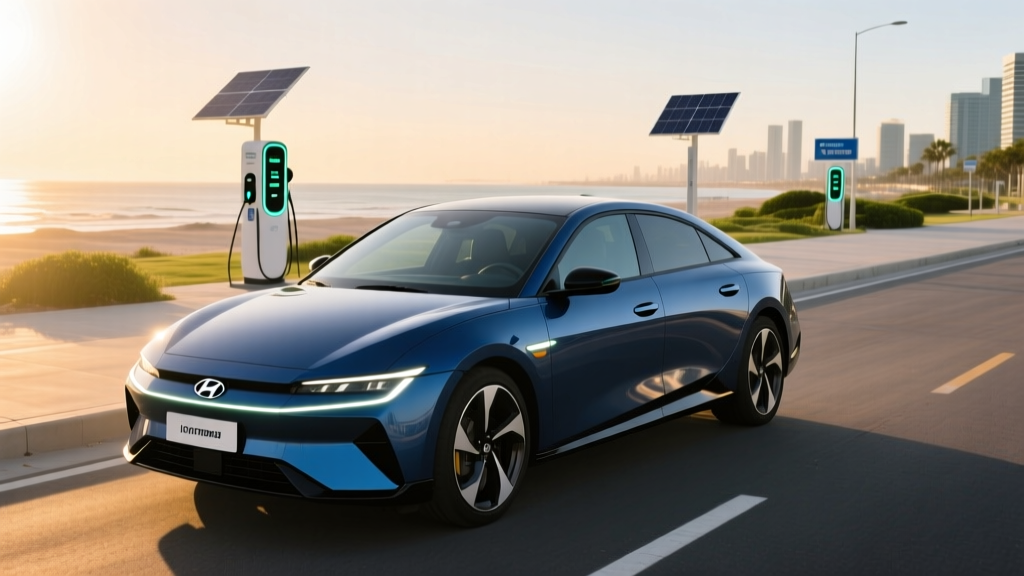
The 2025 Hyundai Ioniq 6 remains one of the most aerodynamically efficient electric sedans on the market. Its teardrop silhouette isn't just styling — it translates directly into class-leading energy consumption and an EPA-estimated range that outpaces rivals like the Tesla Model 3 and BMW i4. For buyers prioritizing highway range, charging speed, and a quiet cabin over crossover ride height, the Ioniq 6 is a serious contender in the 2025 model year.
Hyundai carried over the core powertrain from the previous year but refined the infotainment stack and expanded driver-assist features. The big question for 2025 buyers: does the Ioniq 6 still qualify for the full federal tax credit, and how does real-world range compare to the EPA sticker? We break down every number that matters.
Range, Battery & Real-World Efficiency
| Spec | SE/SEL RWD (Long Range) | SEL AWD | Limited RWD |
|---|---|---|---|
| EPA Range | 361 miles | 290 miles | 320 miles (est. w/ 20" wheels) |
| Battery (usable) | 77.4 kWh | 77.4 kWh | 77.4 kWh |
| Chemistry | NMC (Nickel Manganese Cobalt) | NMC | NMC |
| MPGe (combined) | 140 MPGe | 111 MPGe | ~125 MPGe |
| Efficiency | 24 kWh/100 mi | 30 kWh/100 mi | ~27 kWh/100 mi |
| Horsepower | 225 hp | 320 hp | 225 hp |
| 0–60 mph | 6.1 sec | 4.5 sec | 6.1 sec |
| Drivetrain | RWD (single motor) | AWD (dual motor) | RWD (single motor) |
EPA Sticker: 361 miles (SE RWD Long Range with 18" wheels)
Highway (70 mph, 75°F): Expect approximately 290–315 miles. The Ioniq 6's 0.21 Cd drag coefficient means highway losses are less severe than most EVs, but sustained high speeds still reduce range roughly 12–18% below the EPA combined figure.
Cold Weather (30°F, highway): Plan for 230–260 miles. NMC chemistry loses efficiency in cold temperatures, though Hyundai's battery preconditioning and heat pump (standard on most trims) help mitigate the hit compared to competitors without thermal management.
City / Stop-and-Go: 340–360+ miles. Regenerative braking recovers significant energy in urban driving, sometimes exceeding the EPA combined estimate.
The 77.4 kWh NMC battery pack sits beneath the floor in Hyundai's E-GMP platform. Unlike some competitors moving to LFP chemistry for standard-range models, Hyundai has stuck with NMC across the Ioniq 6 lineup, prioritizing energy density over the longer cycle life and lower cost that LFP offers. For most buyers, this is the right call — the range advantage is tangible.
Charging: 800V Architecture Means Serious Speed
| Charging Level | Power / Voltage | Time / Rate | Connector |
|---|---|---|---|
| Level 1 (120V household) | ~1.4 kW | ~3–4 miles per hour | J1772 / NACS adapter |
| Level 2 (240V home) | 10.9 kW (onboard charger) | ~36 miles per hour; 0–100% in ~7.5 hours | J1772 / NACS |
| DC Fast Charge (350 kW station) | Peak ~240 kW (800V) | 10–80% in ~18 minutes | CCS1 / NACS (2025 models) |
| DC Fast Charge (150 kW station) | Peak ~135 kW | 10–80% in ~28 minutes | CCS1 / NACS |
The Ioniq 6's 800-volt electrical architecture is its standout technical advantage. When paired with a 350 kW DC fast charger, the sedan can accept a peak charge rate of approximately 240 kW. That translates to a 10–80% charge in roughly 18 minutes under ideal conditions — among the fastest in its price class.
Charging curve reality check: Like all EVs, the Ioniq 6 does not sustain peak charge rate across the full session. The charge curve holds strong from roughly 10–55% SoC, then tapers progressively. From 80–100%, charging slows dramatically to protect battery longevity. For road trips, plan your stops around 10–80% sessions — pushing past 80% adds significant time for relatively few miles.
For the 2025 model year, Hyundai began offering Ioniq 6 models with the NACS (North American Charging Standard) port alongside CCS1, depending on production date and trim. Buyers should verify connector type at purchase. A CCS-to-NACS adapter is available from Hyundai for compatibility with Tesla Supercharger stations, expanding the available fast-charging network significantly. Per fueleconomy.gov, the SE RWD Long Range achieves 140 MPGe combined.
Performance & Driving Dynamics
The single-motor RWD configuration delivers 225 horsepower and 258 lb-ft of torque, reaching 60 mph in about 6.1 seconds. It's brisk for daily driving and highway merging, though not sports-sedan quick. The dual-motor AWD variant bumps output to 320 hp and 446 lb-ft, dropping the 0–60 time to 4.5 seconds.
Ride quality is firm but composed. The low center of gravity from the floor-mounted battery pack keeps body roll minimal through corners. The steering is precise if slightly light on feel — a common EV trait. Where the Ioniq 6 excels is highway cruising: the cabin is remarkably quiet thanks to the aerodynamic body, acoustic glass, and active noise control on higher trims.
Regenerative braking: Hyundai offers four levels of regen adjustable via steering wheel paddles, plus an "i-Pedal" mode that enables one-pedal driving in most situations. The transition between regen and friction braking is smooth — a detail some competitors still struggle with.
Interior, Cargo & Technology
Passenger Space
- Front headroom: 40.2 inches
- Front legroom: 41.7 inches
- Rear headroom: 37.8 inches (the sloping roofline cuts into this vs. boxier sedans)
- Rear legroom: 38.2 inches
Cargo Volume
- Trunk: 12.3 cubic feet
- Front trunk (frunk): 0.5 cubic feet (essentially a small cubby for cables — the AWD model forgoes the frunk entirely)
The trunk is the Ioniq 6's most notable compromise. At 12.3 cu ft, it's smaller than the Tesla Model 3's 23 cu ft and the Hyundai Ioniq 5's 27.2 cu ft (with seats folded). The sedan's sleek roofline and fixed rear glass mean no hatchback utility. If you regularly haul bulky cargo, this is a genuine limitation.
Infotainment & Driver Assist
The dual 12-inch display setup (digital cluster + touchscreen) runs Hyundai's latest infotainment software with wireless Apple CarPlay and Android Auto. The 2025 model year brought over-the-air update capability and improved voice recognition. Physical buttons for climate control remain — a welcome choice in an era of screen-only interfaces.
Hyundai SmartSense (ADAS): Standard across all trims, including:
- Forward Collision-Avoidance Assist with pedestrian/cyclist detection
- Lane Keeping Assist and Lane Following Assist
- Blind-Spot Collision-Avoidance Assist
- Rear Cross-Traffic Collision-Avoidance Assist
- Highway Driving Assist (HDA) with stop-and-go adaptive cruise — a solid SAE Level 2 system
Hyundai SmartSense and Highway Driving Assist are Level 2 driver-assistance systems. The driver must remain fully engaged, hands on the wheel (or ready to resume), and eyes on the road at all times. This is not autonomous or "self-driving" capability.
Pricing, Trims & Federal Tax Credit Eligibility
| Trim | Drivetrain | Base MSRP | Est. After §30D Credit* |
|---|---|---|---|
| SE Standard Range | RWD | ~$38,650 | ~$31,150 |
| SE (Long Range) | RWD | ~$43,600 | ~$36,100 |
| SEL | RWD | ~$46,100 | ~$38,600 |
| SEL | AWD | ~$49,600 | ~$42,100 |
| Limited | RWD | ~$52,600 | ~$45,100 |
*Prices are approximate MSRP including destination. Actual transaction prices vary by dealer. The §30D credit column assumes full $7,500 eligibility — see requirements below.
Does the 2025 Ioniq 6 Qualify for the Federal EV Tax Credit?
The Ioniq 6 is potentially eligible for up to $7,500 under IRS §30D, but eligibility depends on several factors that change based on supply chain rules and buyer circumstances. Here is the current checklist per IRS guidelines:
- MSRP Cap: Sedans must have an MSRP at or below $55,000. The SE, SEL RWD, and SEL AWD trims qualify; the Limited trim may exceed the cap depending on options.
- Buyer Income Cap: Modified AGI must not exceed $150,000 (single), $225,000 (head of household), or $300,000 (joint filers).
- Battery Sourcing: Critical minerals and battery components must meet phased-in percentage thresholds from US or free-trade-agreement countries. Hyundai has worked to shift supply chains, but specific eligibility varies by production batch — confirm the VIN on the IRS eligible vehicles list before purchase.
- Point-of-Sale Transfer: As of 2024, buyers can transfer the credit to the dealer at purchase, reducing the upfront cost rather than waiting for a tax refund. The dealer must be IRS-registered.
- Final Assembly: Must occur in North America. The Ioniq 6 sold in the US is assembled in South Korea, which has been a point of contention — Hyundai shifted some US-market production to the Georgia plant, but buyers should verify VIN-level assembly location.
Federal EV tax credit rules under §30D are subject to change. Battery sourcing requirements tighten annually. Always verify current eligibility using the official fueleconomy.gov tax credit lookup and consult a tax professional for your specific situation. State and local incentives may also apply — check your state's energy office or AFDC incentive database.
Warranty & Long-Term Ownership
Hyundai backs the Ioniq 6 with one of the strongest warranty packages in the EV segment:
- Battery & Drive Components: 10 years / 100,000 miles
- New Vehicle Limited Warranty: 5 years / 60,000 miles
- Roadside Assistance: 5 years / unlimited miles
- Complimentary Maintenance: 3 years / 36,000 miles
The 10-year/100,000-mile battery warranty covers capacity loss below 70% of original capacity — a standard threshold. NMC chemistry typically sees 5–10% degradation over the first 100,000 miles based on industry data, though individual results depend heavily on charging habits, climate, and DC fast-charging frequency. Hyundai's active thermal management system helps preserve long-term State of Health (SoH).
Ownership cost note: EV insurance premiums for the Ioniq 6 run 15–25% higher than comparable gas sedans, per industry averages. Get quotes before purchasing to factor this into your total cost of ownership.
Pros & Cons at a Glance
Pros
- Class-leading EPA range of 361 miles (SE RWD Long Range)
- 800V architecture enables 10–80% DC charging in ~18 minutes
- 140 MPGe combined — among the most efficient EVs sold
- 10-year / 100,000-mile battery warranty
- Quiet, refined highway cruiser with excellent aerodynamics
- Standard wireless CarPlay/Android Auto and OTA updates
- Physical climate control buttons retained
Cons
- Small 12.3 cu ft trunk — not a hatchback
- Tiny frunk (0.5 cu ft) or none on AWD models
- Rear headroom compromised by sloping roofline
- RWD performance adequate but not thrilling (6.1 sec 0–60)
- Federal tax credit eligibility uncertain due to South Korea assembly on some VINs
- Limited trim may exceed $55,000 MSRP sedan cap for §30D
- No LFP battery option for buyers prioritizing longevity over range
Who Should Buy the 2025 Ioniq 6?
Choose the Ioniq 6 if:
- You commute long distances or take frequent highway road trips and want maximum range per charge
- Charging speed matters — you want minimal time at DC fast chargers
- You value a quiet, aerodynamic sedan over crossover ride height
- Efficiency (kWh per mile) is a priority to minimize electricity costs
Look elsewhere if:
- You need serious cargo space — consider the Ioniq 5, Kia EV6, or Tesla Model Y
- You want all-out performance — the AWD is quick, but the Tesla Model 3 Performance is quicker
- You require guaranteed federal tax credit eligibility — verify VIN assembly location before committing
- You prefer the LFP battery option for maximum cycle life — Tesla Model 3 RWD offers this
Frequently Asked Questions
What is the real-world range of the 2025 Ioniq 6?
The EPA rates the SE RWD Long Range at 361 miles combined. In real-world highway driving at 70 mph in moderate temperatures, expect approximately 290–315 miles. In cold weather (below freezing), plan for 230–260 miles. City driving with regenerative braking can approach or even exceed the EPA figure.
How fast does the Ioniq 6 charge at home and on the road?
At home on a 240V Level 2 charger, the Ioniq 6 charges at up to 10.9 kW, adding roughly 36 miles of range per hour and reaching a full charge in about 7.5 hours. On a 350 kW DC fast charger, it peaks around 240 kW and charges from 10–80% in approximately 18 minutes. On a more common 150 kW charger, expect 10–80% in roughly 28 minutes.
Does the 2025 Ioniq 6 qualify for the $7,500 federal EV tax credit?
Potentially, but it depends on the specific VIN and your tax situation. The sedan MSRP cap is $55,000, buyer income caps apply ($150K single / $300K joint), and battery component and critical mineral sourcing rules must be met. Because some Ioniq 6 units are assembled in South Korea, final assembly location is a key variable — verify the VIN on the IRS eligible vehicle list and consult a tax professional.
Is the Ioniq 6 worth buying over the Tesla Model 3 or BMW i4?
The Ioniq 6 beats the Model 3 on EPA range (361 vs. 341 miles for Long Range RWD) and matches or exceeds it on charging speed thanks to the 800V platform. The Model 3 wins on cargo space (hatchback trunk), Supercharger network access (though Hyundai's NACS adoption is closing this gap), and performance variants. The BMW i4 is more engaging to drive but costs significantly more and offers less range. For range-per-dollar and charging speed, the Ioniq 6 is highly competitive.
How does the Ioniq 6 handle cold weather?
Like all NMC-equipped EVs, the Ioniq 6 loses range in cold temperatures — expect a 25–35% reduction in freezing conditions during highway driving. Hyundai includes a heat pump on most trims and offers battery preconditioning when a DC fast charger is set as your navigation destination, which helps maintain charging speed in cold weather. Garage parking and scheduled preconditioning can significantly reduce cold-weather losses.
What connector does the 2025 Ioniq 6 use?
Depending on production date, the 2025 Ioniq 6 comes with either a CCS1 or NACS charge port. Hyundai has been transitioning to NACS for the North American market. Regardless of the native port, adapters are available to access both CCS and Tesla Supercharger networks. Confirm the connector type on your specific vehicle before purchase.