Quick Verdict: Is the Ioniq 6 Worth Leasing in 2025?
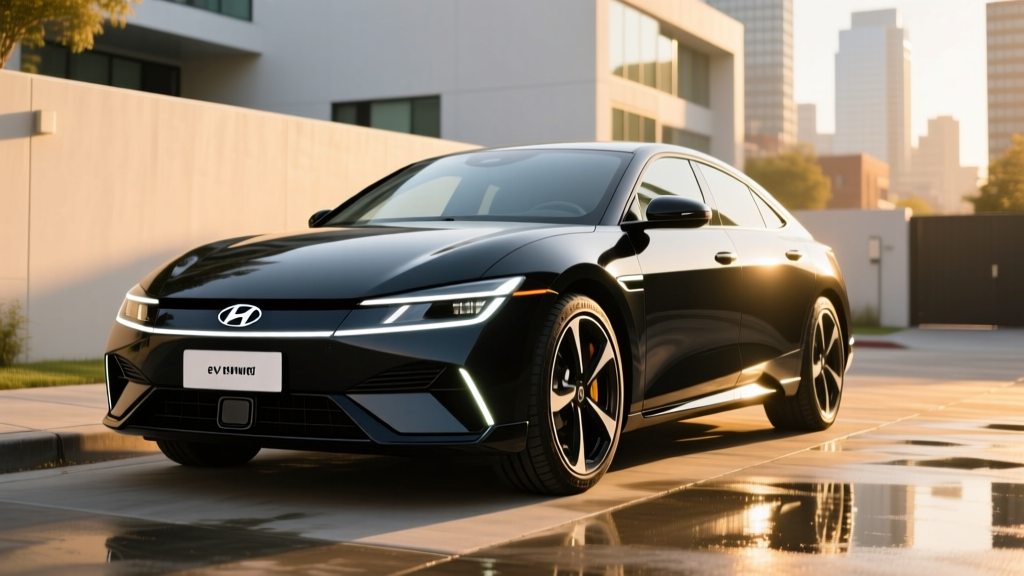
The 2025 Hyundai Ioniq 6 occupies a narrow but compelling lane: a wind-tunnel-sculpted electric sedan that prioritizes highway efficiency and ultra-fast 800V charging over crossover practicality. With EPA range stretching to 361 miles on the SE Light Long Range trim and DC fast-charging that peaks near 240 kW, it's one of the most road-trip-capable EVs under $50,000. But leasing — rather than buying — is where the Ioniq 6 math gets interesting, especially given shifting federal incentive structures and Hyundai's aggressive subvented lease rates.
This profile covers every number you need to evaluate 2025 Hyundai Ioniq 6 lease deals: real-world range, charging curves, trim pricing, §30D tax credit nuances, and how it stacks against the Tesla Model 3 and BMW i4.
Range, Efficiency & Real-World Expectations
Real-World Expectation: Plan for ~280–310 miles on mixed highway driving at 70–75 mph. In winter conditions (below 30°F), expect a 20–30% reduction, dropping effective range to ~220–260 miles on AWD trims. The Ioniq 6's heat pump (standard on all trims) helps mitigate cold-weather losses compared to EVs without active thermal management.
The Ioniq 6's teardrop shape isn't just aesthetic — its 0.21 drag coefficient is among the lowest of any production car, and it shows in efficiency. The RWD Long Range models achieve an EPA-rated 140 MPGe combined (approximately 24 kWh/100 mi), making them some of the most efficient EVs in their class. AWD trims drop to 111 MPGe combined (31 kWh/100 mi).
| Trim | Drivetrain | EPA Range | MPGe (City/Hwy/Combined) | kWh/100 mi |
|---|---|---|---|---|
| SE Light Long Range | RWD | 361 mi | 145 / 132 / 140 | 24 |
| SE Long Range | RWD | 342 mi | 139 / 127 / 134 | 25 |
| SEL Long Range | RWD | 342 mi | 139 / 127 / 134 | 25 |
| Limited Long Range | RWD | 342 mi | 134 / 122 / 129 | 26 |
| SE Long Range | AWD | 316 mi | 117 / 104 / 111 | 31 |
| SEL Long Range | AWD | 316 mi | 117 / 104 / 111 | 31 |
| Limited Long Range | AWD | 316 mi | 111 / 98 / 105 | 33 |
Source: fueleconomy.gov
Battery, Chemistry & Charging Speeds
All 2025 Ioniq 6 Long Range trims use a 77.4 kWh usable (84.0 kWh gross) lithium-ion battery pack with NMC (nickel-manganese-cobalt) chemistry. Hyundai has not offered an LFP (lithium iron phosphate) variant of the Ioniq 6. The NMC pack delivers higher energy density — necessary for the sedan's 361-mile range target — but requires more careful state-of-charge management than LFP. For daily driving, charging to 80% and using the full 100% only for road trips is best practice for long-term NMC health.
The Ioniq 6 rides on Hyundai's E-GMP platform with an 800V electrical architecture, meaning it can accept significantly higher DC fast-charge power than 400V competitors.
| Charging Level | Power | Speed / Time | Notes |
|---|---|---|---|
| Level 1 (120V household) | ~1.4 kW | ~4 mi/hr | Emergency/trickle only; full charge in ~60+ hrs |
| Level 2 (240V home) | 10.9 kW | ~36 mi/hr; full charge ~8.5 hrs | Requires 48A circuit on 60A breaker |
| DC Fast (400V station) | ~50–100 kW | 10–80% in ~45–55 min | Older CCS stations |
| DC Fast (800V station) | Peak ~240 kW | 10–80% in ~18 min | Ioniq 5 N and Ioniq 6 peak at 240 kW; sustained rate drops above 60% SoC |
The charging curve matters: the Ioniq 6 holds above 200 kW up to roughly 55–60% state of charge, then tapers progressively. On a 350 kW Electrify America or Tesla Supercharger (with NACS adapter) pedestal, you'll see the fastest 10–80% times. At older 50–150 kW stations, charging takes noticeably longer. Battery preconditioning activates automatically when the navigation system routes to a DC fast charger — this is essential in cold weather to avoid severely throttled charge rates.
Performance & Driving Dynamics
| Metric | RWD Long Range | AWD Long Range |
|---|---|---|
| Horsepower | 225 hp | 320 hp |
| Torque | 258 lb-ft | 446 lb-ft |
| 0–60 mph | ~6.2 sec | ~4.5 sec |
| Top Speed | 115 mph (electronically limited) | 115 mph |
| Drivetrain | Single rear motor | Dual motor (front + rear) |
The RWD model is the efficiency champion and perfectly adequate for commuting and highway passing. The AWD dual-motor variant transforms the Ioniq 6 into a genuinely quick sedan — the 4.5-second 0–60 time puts it in BMW 340i territory. Regenerative braking is adjustable via steering-wheel paddles, with i-PEDAL mode enabling full one-pedal driving. The steering is precise if somewhat numb, and the low center of gravity keeps body roll well-controlled on twisty roads.
Pricing, Lease Deals & Federal Tax Credit
| Trim | Drivetrain | MSRP | With Destination ($1,195) |
|---|---|---|---|
| SE Light Long Range | RWD | $38,650 | $39,845 |
| SE Long Range | RWD | $42,400 | $43,595 |
| SE Long Range | AWD | $46,100 | $47,295 |
| SEL Long Range | RWD | $44,900 | $46,095 |
| SEL Long Range | AWD | $48,600 | $49,795 |
| Limited Long Range | RWD | $50,550 | $51,745 |
| Limited Long Range | AWD | $54,250 | $55,445 |
Does the Ioniq 6 Qualify for the Federal EV Tax Credit?
Under current IRS §30D rules, the 2025 Ioniq 6's federal tax credit eligibility depends on battery component and critical mineral sourcing requirements that have tightened significantly. Hyundai has worked to shift battery cell sourcing to qualify, but the credit amount varies — potentially up to $7,500, partially, or not at all depending on the specific build date and battery pack origin. Always verify the VIN's eligibility at fueleconomy.gov before purchasing.
- MSRP cap: Sedans must be under $55,000 — this eliminates the Limited AWD ($55,445 with destination) from eligibility
- Buyer income cap: Modified AGI must not exceed $150,000 (single), $225,000 (head of household), or $300,000 (joint)
- Battery sourcing: Critical minerals and battery components must meet escalating domestic/free-trade-partner thresholds — verify per VIN
- Point-of-sale transfer: Eligible buyers can transfer the credit to the dealer for an upfront price reduction rather than waiting for tax filing
- New vs. lease: Leased EVs fall under §45W (commercial clean vehicle credit) claimed by the lessor — the lessor may pass savings to the lessee through lower payments, but is not required to do so. This often makes leasing an easier path to accessing the incentive regardless of personal income or battery-sourcing eligibility
Source: IRS.gov — New Clean Vehicle Credit. Consult a tax professional for your specific situation.
Why Leasing Changes the Math
Hyundai frequently offers subvented lease rates (money factors below market) and loyalty/conquest cash on the Ioniq 6, making lease payments competitive with — or lower than — financing. The §45W commercial credit loophole means the leasing company can claim the $7,500 credit and apply it as a capitalized cost reduction, effectively lowering monthly payments even if your income or the vehicle's sourcing would disqualify you from §30D on a purchase. Hyundai has historically passed this through as a lease bonus — check current dealer listings and Hyundai's national offers page for the exact figure.
Interior, Cargo & Technology
The Ioniq 6's cabin is minimalist and modern, dominated by a dual 12.3-inch panoramic display setup (instrument cluster + infotainment). Physical buttons are sparse — climate and volume rely on touch-sensitive panels that can be frustrating while driving. Wireless Apple CarPlay and Android Auto are standard across all trims. The center console features a bridge-style design with open lower storage.
| Dimension | Measurement |
|---|---|
| Front Headroom | 40.2 in |
| Rear Headroom | 37.1 in (sloping roofline reduces this noticeably) |
| Front Legroom | 43.0 in |
| Rear Legroom | 35.2 in |
| Cargo Volume (trunk) | 12.3 cu ft |
| Frunk (front trunk) | 0.5 cu ft (RWD) / 0.4 cu ft (AWD) |
The 12.3 cu ft trunk is the Ioniq 6's most significant compromise versus crossover rivals. The sloping fastback roofline also cuts into rear headroom — taller passengers (6'0"+) will notice. This is a sedan for two-plus-cargo, not a family hauler.
Driver Assistance & Standout Tech
All trims include Hyundai SmartSense: forward collision-avoidance assist with pedestrian/cyclist detection, lane-keeping assist, blind-spot collision-avoidance, rear cross-traffic alert, and highway driving assist (HDA). The Limited trim upgrades to HDA 2 with lane-change assist and navigation-based smart cruise control. This is an SAE Level 2 system — the driver must remain attentive with hands on the wheel at all times.
Unique Ioniq 6 features include customizable ambient lighting with 64 colors, a Vehicle-to-Load (V2L) adapter (standard on SEL and above, optional on SE) that can power devices up to 3.6 kW, digital key via NFC/UWB on your smartphone, and over-the-air software updates for powertrain and infotainment systems.
Ownership, Warranty & Reliability
| Warranty Coverage | Term |
|---|---|
| New Vehicle Limited | 5 years / 60,000 miles |
| Powertrain | 10 years / 100,000 miles |
| EV Battery | 10 years / 100,000 miles (capacity retention above 70%) |
| Roadside Assistance | 5 years / unlimited miles |
| Complimentary Maintenance | 3 years / 36,000 miles |
Hyundai's 10-year/100,000-mile battery warranty with a 70% capacity retention floor is among the best in the industry. For context, a battery that degrades to 69% of its original 77.4 kWh usable capacity would still hold ~53 kWh — roughly 250 miles of range on the RWD model. Real-world degradation data from E-GMP platform vehicles (Ioniq 5, EV6) suggests 5–8% loss over the first 3 years under normal use, well within the warranty threshold.
Pros, Cons & Who Should Lease the Ioniq 6
Pros
- Class-leading efficiency: 140 MPGe combined on RWD
- Ultra-fast 800V DC charging: 10–80% in ~18 minutes at compatible stations
- EPA range up to 361 miles — among the longest under $45K
- Strong warranty: 10-yr/100K-mi battery and powertrain
- Lease incentive structure often sidesteps §30D sourcing complications
- V2L capability for camping, tailgating, or backup power
- Quiet, refined ride quality at highway speeds
Cons
- Small trunk (12.3 cu ft) and cramped rear headroom vs. crossovers
- Touch-sensitive climate controls are distracting while driving
- AWD trims sacrifice significant range (316 vs. 361 mi)
- No LFP battery option for buyers who prefer simpler SoC management
- Limited AWD trim exceeds $55K MSRP cap for §30D credit
- Rear visibility is compromised by the thick C-pillar and small rear window
Who This EV Suits Best
Ideal for: Solo commuters and couples who prioritize highway efficiency, fast road-trip charging, and sedan styling. The 361-mile RWD range and 18-minute DC fast-charge window make it one of the best EVs for frequent 200–400 mile highway trips. Leasing is especially attractive for buyers who want access to the commercial credit without worrying about battery sourcing rules.
Look elsewhere if: You need family cargo space (consider the Ioniq 5 or Kia EV6), you drive primarily in extreme cold (the range penalty is real), or you want a vehicle you can charge to 100% daily without battery-health concerns (an LFP vehicle like the Tesla Model 3 RWD may suit better).
Frequently Asked Questions
What is the real-world range of the 2025 Hyundai Ioniq 6?
The EPA rates the RWD Long Range at 342–361 miles depending on trim. In real-world mixed driving at highway speeds (70–75 mph), expect approximately 280–310 miles. In winter temperatures below 30°F, plan for 220–260 miles, particularly on AWD trims. The heat pump helps, but cold still impacts battery chemistry and cabin heating demands.
How fast does the Ioniq 6 charge at home and on the road?
At home on a 240V Level 2 charger (48 amps), the Ioniq 6 accepts 10.9 kW, adding roughly 36 miles per hour — a full charge takes about 8.5 hours overnight. On an 800V DC fast charger rated at 350 kW, it peaks near 240 kW and charges from 10% to 80% in approximately 18 minutes. On older 400V stations (50–150 kW), expect 45–55 minutes for the same 10–80% session.
How much does the Ioniq 6 cost after tax credits and incentives?
The base SE Light Long Range starts at $39,845 with destination. If you qualify for the full $7,500 §30D credit (income under limits, battery sourcing verified, MSRP under $55K), the effective purchase price drops to ~$32,345. On a lease, the lessor may apply the $7,500 §45W commercial credit as a cap cost reduction — monthly payments on a 36-month lease have been advertised in the $299–$399 range with $3,000–$4,000 due at signing, depending on regional incentives and credit tier. Always confirm current dealer offers.
Is the Ioniq 6 worth leasing vs. the Tesla Model 3 or BMW i4?
The Model 3 Long Range AWD ($47,740) offers 363 miles of range, a superior Supercharger network, and more cargo space (23 cu ft with rear seats folded) — but its ride quality is firmer and build quality varies. The BMW i4 eDrive40 ($57,975) is more premium and engaging to drive but costs significantly more and charges slower on DC (peak ~200 kW). The Ioniq 6 wins on efficiency, fast-charge speed, and warranty — but loses on cargo versatility and charging-network access (though Hyundai's NACS adapter for Tesla Supercharger access is now available).
Does the 2025 Ioniq 6 qualify for the $7,500 federal EV tax credit?
It depends. The §30D credit requires the buyer to meet income caps ($150K single / $300K joint), the vehicle MSRP must be under $55,000 (eliminating the Limited AWD), and battery components and critical minerals must meet domestic sourcing thresholds that tighten annually. Check the specific VIN at fueleconomy.gov before purchasing. On a lease, the commercial credit (§45W) is claimed by the leasing company and may be passed through as lower payments — this often makes leasing the more reliable path to accessing the incentive.
What connector does the Ioniq 6 use?
The 2025 Ioniq 6 ships with a CCS1 (Combined Charging System) port for DC fast charging and a J1772 inlet for Level 2 AC charging. Hyundai offers an official NACS adapter that enables access to Tesla's Supercharger network (V3 and V4 stalls). For home Level 2 charging, any J1772-compatible wall connector (ChargePoint Home Flex, Emporia Vue, Wallbox Pulsar Plus) will work.