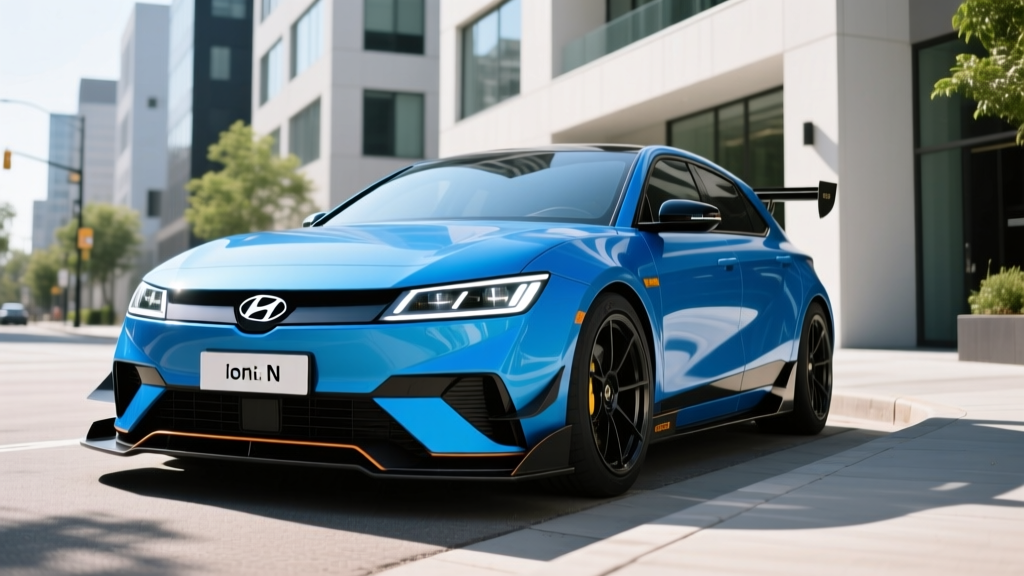
The 2025 Hyundai Ioniq 5 N is not the EV you buy to maximize efficiency or chase the longest range sticker. It's the EV you buy because you want a dual-motor, 641-horsepower performance machine that happens to be electric — one that can lap a track, fake gear shifts, and still drive you home with groceries in the back. Built on Hyundai's E-GMP platform and developed by the N performance division, the Ioniq 5 N is a hot hatch reimagined for the battery era, and it arrives with specifications that demand attention.
But performance EVs live and die by the numbers that matter beyond the dyno sheet: real-world range when you're driving hard, charging speed when you're on a road trip, and the total cost once you factor in incentives. This review breaks down every figure you need to decide whether the Ioniq 5 N earns a spot in your garage.
2025 Hyundai Ioniq 5 N: Full Specifications at a Glance
| Spec | Value |
|---|---|
| EPA Range | 221 miles |
| Battery (usable) | 84.0 kWh, NMC lithium-ion |
| Drivetrain | Dual-motor AWD |
| Horsepower | 641 hp (N Grin Boost engaged) |
| Torque | 568 lb-ft |
| 0-60 mph | 3.4 seconds |
| Top Speed | 161 mph |
| Max DC Fast Charge | 232 kW (peak) |
| 10-80% DC Charge Time | ~18 minutes |
| Level 2 Charge Rate | 10.9 kW (onboard charger) |
| EPA Efficiency | 93 MPGe combined (36 kWh/100 mi) |
| Cargo Volume | 27.2 cu ft (rear seats up) / 59.3 cu ft (folded) |
| Rear Legroom | 39.4 inches |
| Base MSRP | $67,475 (incl. destination) |
| Battery Warranty | 8 years / 100,000 miles |
| Vehicle Warranty | 5 years / 60,000 miles (new vehicle) |
Range and Efficiency: What 221 EPA Miles Really Means
EPA Estimate: 221 miles
Real-World Highway (70-75 mph): ~170-185 miles
Real-World City/Mixed: ~195-210 miles
Cold Weather (below 32°F): ~150-170 miles (30-40% reduction under aggressive driving)
The Ioniq 5 N's performance tuning, stickier tires, and higher curb weight (~4,800 lbs) reduce efficiency compared to the standard Ioniq 5. If range is your priority, the Ioniq 5 Long Range AWD delivers 290 EPA miles for significantly less money.
The EPA rates the 2025 Ioniq 5 N at 221 miles of combined range. On paper, that's modest for a vehicle with an 84 kWh (usable) battery. The explanation is physics: Hyundai's N division prioritized power output, thermal management under load, and grip over efficiency. The 275/35R21 Pirelli P Zero tires generate enormous mechanical grip but carry a rolling-resistance penalty, and the dual-motor powertrain is tuned for sustained high-output delivery rather than sipping electrons.
In real-world highway cruising at 70-75 mph, expect roughly 170 to 185 miles before you're hunting for a charger. That's enough for most daily commutes with margin, but it means road trips require more frequent stops than a Tesla Model Y Performance (rated at 277 miles EPA) or even the standard Ioniq 5. In freezing temperatures, the NMC battery's chemistry loses capacity temporarily, and running cabin heat without a heat pump (the Ioniq 5 N uses a conventional HVAC system to prioritize cabin cooling under track use) compounds the loss.
Efficiency lands at 93 MPGe combined, or 36 kWh per 100 miles — roughly 30% thirstier than the standard Ioniq 5 AWD. For context, that translates to about $0.12-$0.15 per mile on home Level 2 charging (depending on your electricity rate) and considerably more on DC fast-charging networks.
Charging Speed: 232 kW Peak and What the Curve Actually Looks Like
| Charging Level | Power / Rate | Speed (Approx.) |
|---|---|---|
| Level 1 (120V household) | ~1.4 kW | ~4 miles per hour |
| Level 2 (240V home/public) | 10.9 kW (max onboard) | ~32 miles per hour |
| DC Fast Charge (CCS/NACS adapter) | 232 kW peak | 10-80% in ~18 min |
Hyundai's E-GMP 800-volt architecture remains one of the fastest-charging platforms available. The Ioniq 5 N can accept up to 232 kW at a compatible DC fast charger, and the 10-80% sprint takes approximately 18 minutes under ideal conditions (battery preconditioned, ambient temperature 65-80°F, charger capable of sustaining the rate).
Here's where the charging curve matters more than the peak number: the Ioniq 5 N sustains roughly 200+ kW from approximately 10% to 45% state of charge, then begins a gradual taper. Between 45% and 70%, expect sustained rates around 150-170 kW. Above 80%, the rate drops significantly to protect the NMC cells — roughly 50-70 kW. This means a 10-90% session will take closer to 30-35 minutes, not the 18-minute headline figure.
For home charging, the 10.9 kW onboard charger means a full 0-100% charge takes roughly 8-9 hours on a Level 2 wall connector — easily manageable overnight. Hyundai includes a complimentary two years of charging at Electrify America stations (with session limits), which helps offset the higher running costs during the ownership honeymoon period.
Note: The Ioniq 5 N ships with a CCS1 connector. Hyundai provides a NACS adapter for Tesla Supercharger access, expanding the available fast-charging network considerably. As of 2025, NACS-native ports are appearing on newer Hyundai models, but the adapter solution remains functional and widely compatible.
Performance: 641 HP, Fake Gear Shifts, and Track Credibility
The headline number is 641 horsepower and 568 lb-ft of torque, available when N Grin Boost is engaged (a 10-second overboost function; standard output is 601 hp). The dual-motor AWD system delivers a 3.4-second 0-60 mph time — verified by multiple independent tests — making the Ioniq 5 N competitive with the Tesla Model Y Performance (3.5s) and quicker than the Porsche Macan 4 Electric (4.9s).
But the numbers only tell part of the story. Hyundai's N division engineered the Ioniq 5 N with a feature called N e-Shift, which simulates an 8-speed dual-clutch transmission complete with shift shock, torque interruption, and even a simulated redline. It sounds gimmicky until you experience it: the artificial shifts provide rhythm and engagement that most EVs lack, and they're toggleable for drivers who prefer seamless single-speed acceleration.
Track hardware backs up the software. The Ioniq 5 N features a reinforced body structure, upgraded brakes (4-piston front calipers with 400mm rotors), an electronically controlled limited-slip differential (e-LSD), and a dedicated N battery conditioning mode that pre-cools or pre-heats the battery for optimal track-session performance. The 84 kWh NMC pack is mounted low for a favorable center of gravity, and the car's thermal management system is specifically tuned to prevent power derating during sustained high-speed driving — a common issue in performance EVs not engineered for track use.
Top speed is electronically limited to 161 mph. The N Active Sound+ system projects synthetic engine and exhaust sounds through interior and exterior speakers — another feature you'll either love or find unnecessary, but it's fully adjustable in volume and character.
Pricing, Tax Credit Eligibility, and Total Cost
| Item | Amount |
|---|---|
| Base MSRP (single trim) | $67,475 |
| Destination Charge | Included |
| Typical Dealer Options (N Performance package, etc.) | $0-$1,500 |
| As-Tested Price (with common add-ons) | ~$68,000-$69,000 |
| Federal §30D Tax Credit (if eligible) | Up to $7,500 |
| Effective Price After Max Credit | ~$59,975-$61,500 |
The 2025 Ioniq 5 N comes in a single, fully loaded trim at $67,475 including destination. There are no stripped-down variants — every Ioniq 5 N includes the performance hardware, N e-Shift, N Active Sound+, the upgraded brake package, 21-inch forged wheels, and the full Hyundai SmartSense driver-assistance suite.
Federal Tax Credit (§30D) Eligibility: The Ioniq 5 N's MSRP of $67,475 falls under the $80,000 SUV/truck cap (the Ioniq 5 is classified as a light truck/SUV by the EPA for credit purposes). However, eligibility for the full $7,500 credit depends on three factors per current IRS §30D rules:
- Buyer Income Caps: Modified adjusted gross income must not exceed $300,000 (joint filers), $225,000 (head of household), or $150,000 (single filers).
- Battery Component Sourcing: A percentage of battery components must be manufactured or assembled in North America, and critical minerals must meet sourcing thresholds. These thresholds tighten annually. Verify current-year compliance on the fueleconomy.gov tax credit lookup.
- Point-of-Sale Transfer: As of 2024, the credit can be transferred to the dealer at purchase, reducing your out-of-pocket cost at the dealership rather than waiting for a tax refund. The dealer must be registered with the IRS energy credit portal.
Given the Ioniq 5 N is assembled in Ellabell, Georgia (as of Hyundai's updated production), it has a stronger case for domestic sourcing compliance than import-built competitors. However, always confirm credit eligibility with your tax professional and the dealer at the time of purchase — rules change, and battery supply chains shift.
Interior, Cargo, and Daily Livability
The Ioniq 5 N shares its cabin architecture with the standard Ioniq 5, which means a spacious, flat-floor interior thanks to the E-GMP platform's long 118.1-inch wheelbase. The N variant adds heavily bolstered N Performance sport seats (heated and ventilated front, heated rear), an Alcantara-trimmed N steering wheel, and metal pedals. The dual 12.3-inch displays (instrument cluster and infotainment) run Hyundai's latest interface with wireless Apple CarPlay and Android Auto.
Cargo space measures 27.2 cubic feet behind the rear seats and 59.3 cubic feet with the 60/40 split rear seats folded — competitive with the Tesla Model Y (30.2/76.2 cu ft) though slightly less. Rear legroom is 39.4 inches, adequate for adults on longer trips. The front trunk (frunk) is present but small at roughly 2.0 cubic feet — enough for charging cables and a small bag.
Driver-assistance technology includes Hyundai SmartSense: forward collision-avoidance assist, lane-keeping assist, blind-spot monitoring, rear cross-traffic collision-avoidance, and highway driving assist (SAE Level 2). The highway driving assist system is competent for long-distance cruising but requires hands-on-wheel engagement and does not approach the hands-free capability of GM's Super Cruise or Ford's BlueCruise.
Pros, Cons, and Who Should Buy the Ioniq 5 N
Pros
- 641 hp and 3.4s 0-60 in a practical crossover body
- 232 kW DC fast charging (10-80% in ~18 min)
- Genuine track capability with battery preconditioning and e-LSD
- N e-Shift adds engagement that most EVs lack
- Strong 8-year/100,000-mile battery warranty
- Georgia-built, improving tax-credit sourcing odds
- Spacious interior with flat floor and usable cargo area
Cons
- 221-mile EPA range limits road-trip flexibility
- 93 MPGe means higher per-mile charging costs
- $67,475 base price is steep for the range delivered
- No hands-free Level 2+ highway driving system
- Heavy at ~4,800 lbs — tire wear will be significant
- Artificial sound and shifts won't appeal to purists
- Cargo space trails the Model Y
Who the Ioniq 5 N Is For
Buy it if: You want a performance EV that can genuinely handle track days, you value engagement over maximum range, your daily commute fits within 170 real-world miles, and you have reliable home Level 2 charging to offset the efficiency penalty.
Look elsewhere if: Range and efficiency are your top priorities (the standard Ioniq 5 or Tesla Model Y serve better), you need maximum cargo space, you want a hands-free highway driving system, or you're budget-sensitive and the $67K+ price stretches your finances.
How the Ioniq 5 N Stacks Up Against Key Rivals
The Ioniq 5 N occupies a narrow niche: a track-capable electric crossover with hot-hatch personality. Its closest competitors differ in character:
- Tesla Model Y Performance ($52,490): Quicker to 60 in some tests (3.5s), far longer range (277 mi EPA), vastly more cargo room, and access to the Supercharger network natively. But it lacks the Ioniq 5 N's track focus, simulated shifts, and chassis tuning depth. The Model Y is the rational choice; the Ioniq 5 N is the emotional one.
- Porsche Macan 4 Electric ($80,500+): More luxurious and prestigious, but slower to 60 (4.9s), shorter EPA range (~308 mi for the base, less for performance trims), and significantly more expensive. The Porsche wins on refinement; the Hyundai wins on value and raw acceleration.
- BMW iX M60 ($111,500): A luxury performance SUV in a different price bracket entirely. More range, more power, more everything — except affordability. Not a direct competitor on price.
For buyers cross-shopping in the $60,000-$70,000 performance EV space, the Ioniq 5 N's closest value rival is arguably the Model Y Performance, which undercuts it by roughly $15,000 while offering more range and space. The Ioniq 5 N justifies its premium through track engineering, N-specific features, and a driving character the Tesla simply doesn't pursue.
Frequently Asked Questions
What is the real-world range of the 2025 Hyundai Ioniq 5 N?
The EPA rates the Ioniq 5 N at 221 miles combined. In real-world highway driving at 70-75 mph, expect approximately 170-185 miles. City and mixed driving yields closer to 195-210 miles. Cold weather (below freezing) can reduce range by 30-40%, particularly under aggressive driving that generates battery heat and requires cooling overhead.
How fast does the Ioniq 5 N charge at home and on the road?
At a DC fast charger capable of 232+ kW, the Ioniq 5 N charges from 10-80% in approximately 18 minutes with a preconditioned battery. At home on a Level 2 charger (240V, 48A), the 10.9 kW onboard charger delivers roughly 32 miles of range per hour, meaning a full overnight charge is easily achievable. Level 1 (standard 120V outlet) adds about 4 miles per hour — useful for emergencies only.
Does the 2025 Ioniq 5 N qualify for the $7,500 federal EV tax credit?
It may, depending on your income, the current battery-sourcing requirements, and MSRP classification. The Ioniq 5 N's $67,475 MSRP falls under the $80,000 SUV/truck cap. Georgia assembly improves domestic content odds. However, buyer income limits ($150K single / $300K joint) and annually tightening critical-mineral sourcing thresholds apply. Confirm eligibility at fueleconomy.gov and with your tax professional before purchase. The credit can be applied as a point-of-sale reduction through a registered dealer.
Is the Ioniq 5 N worth buying over a Tesla Model Y Performance?
If you value track capability, simulated gear shifts, and a more engaging driver experience, the Ioniq 5 N offers something the Model Y does not. If you prioritize range (277 vs. 221 miles), cargo space, Supercharger network access, and a lower price ($52,490 vs. $67,475), the Model Y Performance is the more practical choice. They serve different buyer profiles.
What is the battery warranty on the Ioniq 5 N?
Hyundai covers the 84 kWh NMC battery for 8 years or 100,000 miles, whichever comes first. The warranty guarantees the battery will retain a minimum percentage of its original capacity (typically 70%) during the coverage period. The general new-vehicle warranty covers 5 years or 60,000 miles.
Can the Ioniq 5 N use Tesla Superchargers?
Yes. Hyundai provides a NACS adapter with the Ioniq 5 N, enabling access to Tesla's Supercharger network. The vehicle's native port is CCS1, and it also works with Electrify America, EVgo, ChargePoint, and other CCS-compatible networks. As Hyundai transitions to native NACS ports on future models, the adapter remains the bridge solution for current vehicles.