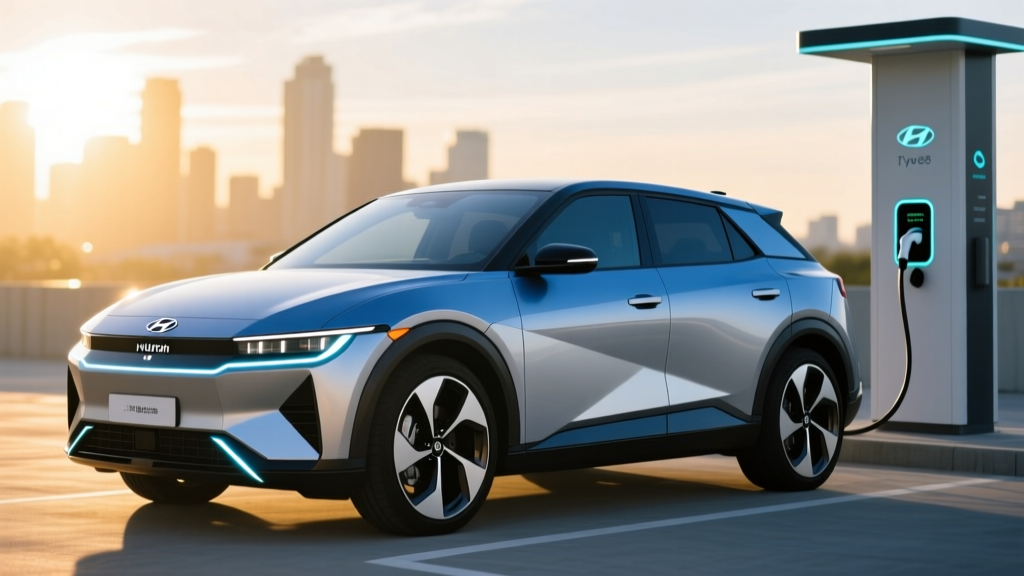
The Hyundai Ioniq 5 has been a cornerstone of the mainstream electric crossover segment since its launch, and the 2025 model year brings meaningful refinements that keep it competitive against the Tesla Model Y, Ford Mustang Mach-E, and Kia EV6. Built on Hyundai Motor Group's Electric-Global Modular Platform (E-GMP) with its 800-volt architecture, the Ioniq 5 continues to offer some of the fastest DC charging in its class. For 2025, Hyundai has added the NACS (North American Charging Standard) port as native equipment, expanded battery capacity on select trims, and introduced a more rugged Ioniq 5 XRT variant. This review covers every spec that matters to a real buyer — from EPA range and charging curves to tax credit eligibility and ownership economics.
Spec Sheet: 2025 Hyundai Ioniq 5 at a Glance
| Spec | SE/SEL Standard Range (RWD) | SE/SEL/Limited Long Range (RWD) | SE/SEL/Limited (AWD) |
|---|---|---|---|
| EPA Range | 245 mi | 311 mi | 288 mi (SE/SEL) / 260 mi (Limited) |
| Battery (usable) | 63.0 kWh | 84.0 kWh | 84.0 kWh |
| Chemistry | NMC (Nickel Manganese Cobalt) | NMC | NMC |
| Horsepower | 168 hp | 225 hp | 320 hp |
| 0-60 mph | ~7.5 sec | ~6.7 sec | ~4.5 sec |
| Drivetrain | RWD (single motor) | RWD (single motor) | AWD (dual motor) |
| Max DC Fast Charge | ~175 kW peak | ~240 kW peak | ~240 kW peak |
| 10-80% DC Time | ~22 min | ~18 min | ~18 min |
| Level 2 Charge Rate | 10.9 kW | 10.9 kW | 10.9 kW |
| MPGe (combined) | 110 MPGe | 114 MPGe | 101 MPGe |
| Efficiency (kWh/100 mi) | 30 | 29 | 33 |
| Starting MSRP | $42,600 | $46,650 | $50,150 |
Range and Efficiency: EPA Numbers vs. Reality
Real-world expectation: On sustained highway driving at 70-75 mph, expect roughly 260-280 miles from the Long Range RWD. In cold weather (below 32°F), range can drop 20-30%, putting a 311-mile sticker closer to 215-250 miles depending on cabin heating use and terrain. City driving with regenerative braking recovers more energy and typically aligns closer to or even slightly above the EPA estimate.
The 311-mile EPA figure on the Long Range RWD is among the best in this segment, trailing only the Tesla Model Y Long Range (~330 mi) and edging out the Ford Mustang Mach-E Extended Range (~312 mi for RWD). The Standard Range model's 245 miles is adequate for commuting but will require more planning on road trips.
The 84.0 kWh usable battery pack (NMC chemistry) in Long Range models is generous. Hyundai's thermal management system includes a heat pump on all trims, which helps mitigate cold-weather range loss — a meaningful advantage over competitors that reserve heat pumps for higher trims. The battery preconditioning feature warms the pack when you navigate to a DC fast charger, enabling those peak charge rates even in cooler temperatures.
Efficiency on the Long Range RWD is rated at 29 kWh/100 miles (114 MPGe combined), which is competitive. The AWD dual-motor variant is thirstier at 33 kWh/100 miles, a tradeoff for the 320 hp and 4.5-second 0-60 sprint.
Charging Speed: 800V Architecture Pays Off
The Ioniq 5's 800-volt electrical architecture remains one of its strongest selling points. While most competitors in this price range use 400V systems that peak around 150 kW, the Ioniq 5 can accept up to ~240 kW at a compatible DC fast charger — provided the charger can deliver it.
| Charging Level | Power (kW) | Miles of Range Added | Notes |
|---|---|---|---|
| Level 1 (120V household) | ~1.4 kW | ~4-5 mi/hr | Emergency/trickle only; ~55+ hours for full charge |
| Level 2 (240V home/public) | 10.9 kW | ~36-40 mi/hr | Full charge in ~8-9 hours (84 kWh pack) |
| DC Fast Charge (peak) | Up to 240 kW | ~180-200 mi in 18 min (10-80%) | Requires 350 kW-class charger; curve tapers above 80% |
| DC Fast Charge (50 kW station) | ~50 kW | ~150 mi/hr | 10-80% in ~70-80 minutes |
Understanding the charge curve: The Ioniq 5 does not sustain 240 kW for the entire session. Peak rate holds roughly from 10% to 45% State of Charge (SoC), then tapers progressively. From 80% to 100%, charging slows dramatically to protect the battery — expect the final 20% to take nearly as long as the 10-80% session. This is normal for NMC lithium-ion packs but worth knowing if you habitually charge to 100% on road trips.
For 2025, the native NACS port means direct access to Tesla's Supercharger network (now open to non-Tesla EVs at many locations) without an adapter. Hyundai also includes two years of complimentary 30-minute charging sessions at Electrify America stations. At home, a Level 2 wallbox at 10.9 kW will replenish the 84 kWh pack from empty in roughly 8 hours — plan for overnight charging.
Performance and Driving Dynamics
The Ioniq 5 lineup offers three distinct powertrain configurations:
- Standard Range RWD: 168 hp, single rear motor. Adequate for city and suburban use but noticeably less punchy when merging onto highways.
- Long Range RWD: 225 hp, single rear motor. The sweet spot for most buyers — responsive, efficient, and maximizes range.
- AWD (dual motor): 320 hp, 446 lb-ft torque. Genuinely quick at 4.5 seconds to 60 mph. The dual-motor system provides confident traction in rain and snow.
Ride quality is composed and slightly firm, tuned more for comfort than sportiness. The low center of gravity (battery pack under the floor) keeps body roll well-controlled. Steering is light but accurate. The Ioniq 5 is not a sports SUV, but it's a genuinely pleasant daily driver.
Hyundai's i-Pedal mode enables true one-pedal driving with aggressive regenerative braking that can bring the car to a full stop. Four levels of regen are selectable via steering-wheel paddles, giving you fine-grained control.
Interior, Cargo, and Technology
The Ioniq 5's retro-futuristic interior remains a standout. The flat floor (no transmission tunnel) and long 118.1-inch wheelbase create genuinely spacious cabin proportions.
| Measurement | Value |
|---|---|
| Front headroom | 39.7 in |
| Front legroom | 41.7 in |
| Rear headroom | 38.7 in |
| Rear legroom | 39.4 in |
| Cargo (behind rear seats) | 27.2 cu ft |
| Cargo (rear seats folded) | 59.3 cu ft |
| Frunk (front trunk) | 0.85 cu ft (AWD) / 2.0 cu ft (RWD) |
Rear-seat legroom is genuinely generous — enough for adults on longer trips. The sliding rear bench lets you trade legroom for cargo space as needed. The frunk is small (especially on AWD models, where the front motor eats into the space) but useful for charging cables.
Tech highlights:
- Dual 12.3-inch displays (instrument cluster + infotainment) in a single curved housing
- Wireless Apple CarPlay and Android Auto
- Hyundai Digital Key 2 (phone-as-key via NFC/UWB)
- Vehicle-to-Load (V2L): powers external devices up to 3.6 kW via an interior outlet or exterior adapter — useful for camping or emergency backup
- Over-the-air (OTA) software updates
- Highway Driving Assist 2 (HDA2): adaptive cruise with lane centering and lane-change assist — an SAE Level 2 system requiring continuous driver supervision
Notable drawbacks: The infotainment system uses a mix of touch-capacitive and physical controls that can be fiddly while driving. There is no rear wiper on earlier builds (addressed on some 2025 production runs). The panoramic glass roof has no shade, which can make the cabin warm in summer sun despite UV coating.
Pricing, Trims, and Federal Tax Credit Eligibility
| Trim | Drivetrain | MSRP | Est. After §30D Credit* |
|---|---|---|---|
| SE Standard Range | RWD | $42,600 | $35,100 |
| SE | RWD (Long Range) | $46,650 | $39,150 |
| SE | AWD | $50,150 | $42,650 |
| SEL | RWD (Long Range) | $49,150 | $41,650 |
| SEL | AWD | $52,650 | $45,150 |
| Limited | AWD | $58,200 | $50,700 |
*Price after credit assumes full $7,500 §30D eligibility. Actual credit depends on battery sourcing, buyer income, and MSRP cap compliance. See eligibility checklist below.
Per IRS guidelines, the 2025 Ioniq 5 may qualify for up to $7,500 if:
- MSRP cap: Vehicle MSRP (SUVs/crossovers) must be ≤ $80,000 — the Ioniq 5 clears this on all trims.
- Buyer income cap: Modified AGI ≤ $150,000 (single) / $225,000 (head of household) / $300,000 (joint).
- Battery sourcing: Must meet critical minerals and battery component requirements, which phase in stricter thresholds each year. Hyundai has been working to shift Ioniq 5 battery production to the Georgia plant (Metaplant America), improving sourcing compliance for 2025.
- Point-of-sale transfer: Eligible buyers can transfer the credit to the dealer at purchase for an immediate price reduction — no need to wait for tax filing.
Verify eligibility with your tax professional and check the latest fueleconomy.gov listings before purchasing, as sourcing rules can change mid-year.
Warranty and Long-Term Battery Outlook
Hyundai backs the Ioniq 5 with one of the strongest warranty packages in the segment:
- New vehicle limited warranty: 5 years / 60,000 miles
- Powertrain warranty: 10 years / 100,000 miles
- EV battery warranty: 10 years / 100,000 miles (guarantees ≥ 70% capacity retention)
- Complimentary maintenance: 3 years / 36,000 miles
- Roadside assistance: 5 years / unlimited miles
The 70% capacity retention threshold over 10 years is the industry-standard benchmark. Real-world degradation data from Ioniq 5 owners (and the mechanically similar Kia EV6) suggests NMC packs in the E-GMP platform lose roughly 5-8% capacity over the first 60,000 miles, then stabilize. Hyundai's heat pump and active thermal management system contribute to slower degradation compared to passively cooled packs.
A full battery replacement outside warranty currently costs in the range of $12,000-$18,000 (parts and labor), though this figure is expected to decline as battery costs continue falling. No widespread battery failure issues have been reported for the E-GMP platform.
How the Ioniq 5 Compares to Key Rivals
The Ioniq 5's most direct competitors are the Tesla Model Y, Ford Mustang Mach-E, and Kia EV6 (its corporate sibling). Here's how they stack up on the metrics buyers care about most:
- vs. Tesla Model Y Long Range AWD (~$48,000, ~330 mi EPA): The Model Y still wins on range, Supercharger network convenience, and cargo volume. The Ioniq 5 counters with faster peak DC charging (240 kW vs. ~250 kW but on a more sustained curve), V2L capability, a more distinctive interior, and a smoother ride. Tesla's FSD (Supervised) remains Level 2 despite its name — Hyundai's HDA2 is less ambitious but arguably more transparent about its limitations.
- vs. Ford Mustang Mach-E Extended Range (~$48,000, ~312 mi EPA): Very close competitors. The Mach-E has a sportier driving feel and slightly more cargo space. The Ioniq 5 charges faster (240 kW peak vs. ~150 kW for the Mach-E on most DC chargers) and offers V2L. Both now have NACS access.
- vs. Kia EV6 (~$43,000, ~310 mi EPA): Mechanically near-identical (same E-GMP platform, same 800V architecture). The EV6 has a sportier exterior design and slightly lower roofline; the Ioniq 5 offers more rear headroom and a more upright, practical cargo area. Choose based on styling preference and dealer experience.
Who Should Buy the 2025 Hyundai Ioniq 5?
- You want one of the fastest-charging mainstream EVs for road trips (18 min, 10-80%)
- You value V2L for camping, tailgating, or emergency power
- You prefer a spacious, flat-floor cabin with adult-friendly rear seats
- You want NACS native access to the Tesla Supercharger network without adapters
- Heat pump standard equipment matters for cold-climate efficiency
- Maximum cargo volume is your top priority (Model Y has ~76 cu ft with seats folded)
- You need a third row or tow more than 2,300 lbs
- You prefer a sportier driving feel (Mach-E GT or EV6 GT-Line)
- You want the longest possible range on a single charge (Model Y Long Range edges ahead)
Best trim for most buyers: The SEL Long Range RWD at ~$49,150 (before credit) hits the sweet spot — 311 miles of range, premium features like leatherette seats, power liftgate, and HDA2, without the AWD price premium. Add AWD if you regularly face snow or want the 4.5-second 0-60 time.
Pros and Cons
- Class-leading DC fast-charge speed (240 kW peak, 10-80% in ~18 min)
- Native NACS port for Tesla Supercharger access
- Spacious flat-floor cabin with generous rear legroom
- Standard heat pump on all trims
- V2L capability (3.6 kW output)
- Strong warranty: 10 yr / 100,000 mi battery coverage
- Up to 311 miles EPA range (Long Range RWD)
- Panoramic glass roof lacks a retractable sunshade
- Small frunk, especially on AWD models
- Cargo volume trails the Model Y with seats folded
- Touch-capacitive climate controls are distracting while driving
- Rear wiper availability inconsistent across early 2025 builds
- AWD Limited trim pushes past $58K before options
Frequently Asked Questions
What is the real-world range of the 2025 Hyundai Ioniq 5?
The EPA rates the Long Range RWD at 311 miles, but real-world highway driving at 70-75 mph typically yields 260-280 miles. In cold weather (below freezing), expect a 20-30% reduction, putting range around 215-250 miles. City driving with regenerative braking tends to match or slightly exceed the EPA figure. The AWD variant's 288-mile EPA sticker translates to roughly 240-260 real-world highway miles.
How fast does the Ioniq 5 charge at home and on the road?
At home on a 240V Level 2 charger, the Ioniq 5 accepts up to 10.9 kW, adding roughly 36-40 miles of range per hour — a full charge of the 84 kWh pack takes about 8 hours overnight. On a 350 kW-class DC fast charger, it peaks at ~240 kW and charges from 10-80% in approximately 18 minutes. On a 50 kW DC charger, expect 10-80% in roughly 70-80 minutes. Remember: kW is the rate of energy delivery (like gallons-per-minute at a pump), while kWh is the total energy stored (like the tank size).
How much does the 2025 Ioniq 5 cost after the federal tax credit?
If you qualify for the full $7,500 §30D credit, the SE Long Range RWD drops from $46,650 to roughly $39,150. The SEL Long Range RWD falls from $49,150 to about $41,650. Eligibility depends on your modified adjusted gross income (≤ $150K single / $300K joint), the vehicle's MSRP (≤ $80K for SUVs — all Ioniq 5 trims qualify), and battery sourcing compliance. The credit can be transferred to the dealer at point of sale for an immediate price reduction. Consult a tax professional and verify current eligibility on IRS.gov.
Is the 2025 Ioniq 5 worth buying over the Tesla Model Y?
It depends on your priorities. The Model Y offers more range (~330 mi), greater cargo volume (~76 cu ft), and seamless Supercharger integration. The Ioniq 5 counters with faster DC charging on compatible stations, V2L capability, a more comfortable ride, a distinctive interior, and competitive pricing. With NACS now standard, the Ioniq 5 also accesses the Supercharger network directly. For buyers who value charging speed and interior comfort over maximum range, the Ioniq 5 is an excellent choice.
Does the Ioniq 5 have self-driving capability?
No. The Ioniq 5's Highway Driving Assist 2 (HDA2) is an SAE Level 2 driver-assistance system. It combines adaptive cruise control with lane-centering and can assist with lane changes, but it requires continuous driver supervision — hands on or near the wheel and eyes on the road at all times. It is not autonomous or "self-driving." Only Level 4 services like Waymo operate without a human driver, and those are limited to specific geofenced areas.
What is the battery warranty and expected lifespan?
Hyundai covers the Ioniq 5's high-voltage battery for 10 years or 100,000 miles, guaranteeing at least 70% of original capacity retention. Real-world data from E-GMP platform vehicles suggests 5-8% degradation over the first 60,000 miles, with the curve flattening thereafter. Proper care — avoiding frequent 100% charges, using DC fast charging judiciously, and letting the thermal management system precondition the battery — can extend long-term health. Out-of-warranty replacement is estimated at $12,000-$18,000 but is expected to decline.
Can the Ioniq 5 tow?
Yes. When properly equipped with the factory towing package, the AWD Ioniq 5 is rated for up to 2,300 pounds — enough for a small utility trailer or a pair of dirt bikes. The RWD models have a lower tow rating. Keep in mind that towing significantly reduces range, often by 30-50% depending on trailer weight and aerodynamics.
Sources: EPA Fuel Economy, Hyundai USA, IRS §30D Clean Vehicle Credits. Pricing and tax credit rules reflect 2025 model year data and are subject to change. Verify with your dealer and tax professional before purchase.