Quick Verdict: The Ioniq 5 Remains the EV Sweet Spot
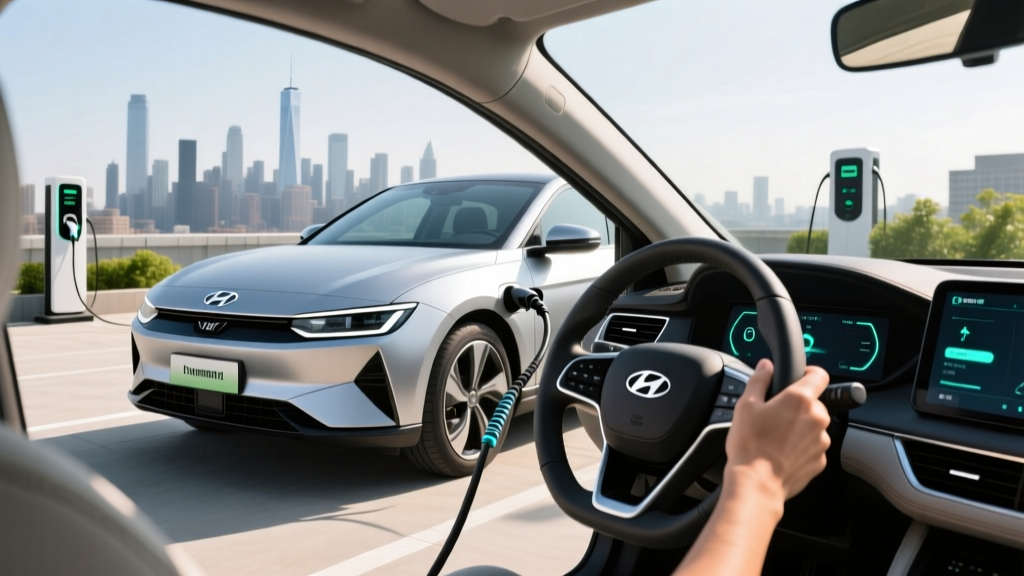
The 2025 Hyundai Ioniq 5 occupies a rare position in the electric-vehicle market: it delivers flagship-level charging speeds, competitive range, and practical crossover packaging at a price point that undercuts rivals like the Tesla Model Y and Ford Mustang Mach-E. Now built at Hyundai's Metaplant America facility in Georgia, the Ioniq 5 returns for 2025 with the XRT trim joining the lineup, enhanced battery sourcing for federal tax credit eligibility, and continued use of its class-leading 800-volt E-GMP architecture.
If you're researching 2025 Hyundai Ioniq 5 specs to decide whether this EV fits your commute, road-trip habits, and budget, this review covers every number that matters — from EPA range and real-world highway efficiency to DC fast-charge curves and the fine print on the §30D federal tax credit.
2025 Hyundai Ioniq 5 Specs at a Glance
| Specification | SE/SEL RWD (Standard Range) | SE/SEL/Limited RWD (Long Range) | SEL/Limited/XRT AWD |
|---|---|---|---|
| EPA Range | 245 miles | 318 miles | 290 miles |
| Battery (usable) | 63.0 kWh | 84.0 kWh | 84.0 kWh |
| Battery Chemistry | NMC (Nickel Manganese Cobalt) | NMC | NMC |
| Horsepower | 168 hp | 225 hp | 320 hp |
| Torque | 258 lb-ft | 258 lb-ft | 446 lb-ft |
| 0-60 mph | ~7.4 sec | ~7.0 sec | ~4.5 sec |
| Drivetrain | Rear-Wheel Drive | Rear-Wheel Drive | Dual-Motor AWD |
| Max DC Fast Charge | ~180 kW (peak) | ~240 kW (peak) | ~240 kW (peak) |
| 10-80% DC Fast Charge | ~20 min | ~18 min | ~18 min |
| Level 2 Charge Rate | 10.9 kW | 10.9 kW | 10.9 kW |
| Charge Port | NACS (native Tesla Supercharger) | NACS (native Tesla Supercharger) | NACS (native Tesla Supercharger) |
| MPGe (combined) | 114 MPGe | 117 MPGe | 101 MPGe |
| kWh/100 mi | 29 | 28 | 33 |
| Base MSRP | $42,600 | $46,650 | $50,650 |
Sources: fueleconomy.gov, Hyundai Motor America specifications.
Range and Efficiency: EPA Sticker vs. Real-World Miles
Hyundai equips the Long Range trims with a heat pump as standard, which mitigates cold-weather range loss compared to EVs without active thermal management. However, the physics of lithium-ion chemistry still apply: expect a 15–25% range reduction in sustained sub-freezing conditions, particularly on highway drives where aerodynamic drag compounds the efficiency penalty.
The Standard Range RWD (245 miles EPA) is best suited for commuters with reliable home charging and daily round trips under 80 miles. If you regularly drive 200+ miles between charges or live in a cold climate, the Long Range variants are the pragmatic choice.
Charging Speed: The Ioniq 5's Biggest Advantage
The 2025 Ioniq 5's 800-volt E-GMP platform remains one of the fastest-charging architectures in its class. Here's how the numbers break down across charging levels:
| Charging Level | Power / Voltage | Miles Added per Hour | Notes |
|---|---|---|---|
| Level 1 (120V household) | ~1.4 kW | ~4-5 mi/hr | Emergency/top-off only; full charge takes 60+ hours |
| Level 2 (240V home) | 10.9 kW | ~37-42 mi/hr | Full 0-100% in ~8.5 hours (Long Range); requires 48A circuit |
| DC Fast Charge (350 kW station) | Up to ~240 kW peak | N/A (timed session) | 10-80% in ~18 min; tapers significantly above 80% |
| DC Fast Charge (150 kW station) | Up to ~150 kW sustained | N/A (timed session) | 10-80% in ~25-28 min |
Understanding the charge curve: The "240 kW peak" figure applies only when the battery is preconditioned (warmed to optimal temperature via navigation-routed preconditioning) and connected to a 350 kW-class charger like an Electrify America or Tesla Supercharger V4 stall. Peak power is sustained roughly between 10% and 45% State of Charge (SoC), then tapers progressively. From 80% to 100%, charging slows dramatically to protect battery longevity — plan to charge to 80% on road trips and move on rather than waiting for a full top-off.
A critical 2025 update: the Ioniq 5 now ships with a native NACS (North American Charging Standard) port, meaning it can access Tesla Supercharger stations directly without an adapter. This dramatically expands the reliable DC fast-charging network available to owners, particularly in rural corridors where CCS-only stations are sparse.
Performance and Drivetrain
The Ioniq 5 is not positioned as a performance EV — that role belongs to the Ioniq 5 N (320 hp standard, up to 640 hp in N Grin Boost mode). For the mainstream lineup, Hyundai prioritizes smooth, linear acceleration and composed highway manners over outright speed.
The RWD Long Range model's 225 hp delivers adequate merging power and confident city driving, with a 0-60 mph time around 7.0 seconds. The dual-motor AWD variant (320 hp, 4.5 seconds to 60 mph) provides genuine sports-sedan acceleration and all-weather traction, though it sacrifices 28 miles of EPA range compared to the RWD Long Range.
Regenerative braking is adjustable via steering-wheel paddles across four levels (0-3), with Level 3 enabling near one-pedal driving in city traffic. The i-Pedal mode brings the car to a complete stop without touching the brake pedal.
Pricing, Trims, and Federal Tax Credit Eligibility
| Trim | Base MSRP | Destination | Total Before Credit | Est. After §30D Credit |
|---|---|---|---|---|
| SE Standard Range RWD | $42,600 | $1,495 | $44,095 | ~$36,595* |
| SE RWD (Long Range) | $46,650 | $1,495 | $48,145 | ~$40,645* |
| SEL RWD (Long Range) | $49,600 | $1,495 | $51,095 | ~$43,595* |
| Limited RWD | $54,350 | $1,495 | $55,845 | ~$48,345* |
| SEL AWD | $53,100 | $1,495 | $54,595 | ~$47,095* |
| XRT AWD | $53,600 | $1,495 | $55,095 | ~$47,595* |
| Limited AWD | $58,200 | $1,495 | $59,695 | ~$52,195* |
*Estimated prices assume full $7,500 federal tax credit eligibility. Actual credit depends on individual circumstances.
- MSRP Cap: Vehicle MSRP must not exceed $80,000 for SUVs/crossovers (Ioniq 5 qualifies across all trims)
- Buyer Income Cap: Modified AGI must not exceed $150,000 (single), $225,000 (head of household), or $300,000 (joint filers)
- Battery Sourcing: Battery components must be manufactured or assembled in North America; critical minerals must meet escalating percentage thresholds from US or free-trade-agreement partners
- Point-of-Sale Transfer: Buyers can transfer the credit to the dealer at purchase, reducing the purchase price directly rather than waiting for a tax refund
- Final Assembly: Vehicle must undergo final assembly in North America (Ioniq 5 is assembled in Ellabell, Georgia — qualifies)
Consult IRS.gov §30D guidelines or a tax professional to confirm your personal eligibility. Battery-sourcing requirements tighten annually and may affect partial ($3,750) vs. full ($7,500) credit amounts.
Interior Space, Cargo, and Daily Practicality
The Ioniq 5's dedicated EV platform (E-GMP) yields a flat floor and a 118.1-inch wheelbase — longer than the Hyundai Tucson — translating to generous interior volume:
- Front legroom: 41.7 inches
- Rear legroom: 39.4 inches
- Cargo (behind rear seats): 27.2 cu ft
- Cargo (rear seats folded): 59.3 cu ft
- Front trunk (frunk): 0.85 cu ft (AWD) / 2.0 cu ft (RWD) — sufficient for charging cables, not luggage
The flat floor and sliding center console armrest (on SEL and above) create an airy, lounge-like cabin. However, the sloping rear hatch design sacrifices some vertical cargo height compared to boxier competitors like the Kia EV9 or Volkswagen ID.4. If you regularly haul tall items (bicycles standing upright, large dog crates), test-fit before purchasing.
Technology, Driver Assistance, and Standout Features
Every 2025 Ioniq 5 includes a 12.3-inch digital instrument cluster and a 12.3-inch infotainment touchscreen running Hyundai's latest software with wireless Apple CarPlay and Android Auto. The Limited trim adds a head-up display with augmented-reality navigation overlays, a premium Bose audio system, and a digital key that allows your smartphone to unlock and start the vehicle.
Hyundai's Highway Driving Assist 2 (HDA2) is standard on all trims — a Level 2 driver-assistance system combining adaptive cruise control, lane-centering steering, and lane-change assist. This is not autonomous driving. Per NHTSA and SAE International definitions, Level 2 systems require continuous driver engagement: hands on or near the wheel, eyes on the road, full responsibility for vehicle control.
A standout utility feature: Vehicle-to-Load (V2L). Using an adapter plugged into the charge port or the interior V2L outlet (SEL and above), the Ioniq 5 can supply up to 3.6 kW of 120V AC power — enough to run a laptop, mini-fridge, power tools at a job site, or essential appliances during a home power outage.
Battery Warranty and Long-Term Ownership
Hyundai provides one of the strongest battery warranties in the industry:
- High-voltage battery: 10 years / 100,000 miles (whichever comes first)
- Capacity retention threshold: Battery is covered if it degrades below 70% of original capacity during the warranty period
- Electric powertrain (motor, inverter, reduction gear): 10 years / 100,000 miles
- New vehicle limited warranty: 5 years / 60,000 miles
- Roadside assistance: 5 years / unlimited miles
The NMC battery chemistry in the Ioniq 5 offers higher energy density than LFP alternatives, enabling the 318-mile range in a relatively compact pack. However, NMC cells are more sensitive to sustained high-SoC storage and extreme heat. Best practices for longevity: charge to 80% for daily use (set the limit in the infotainment system), avoid leaving the car at 100% SoC in hot weather for extended periods, and use DC fast charging for road trips rather than daily commuting.
Pros and Cons
Pros
- Class-leading DC fast-charge speed (~240 kW peak, 10-80% in 18 min)
- Native NACS port — direct Tesla Supercharger access without adapter
- Competitive 318-mile EPA range on Long Range RWD
- Spacious, flat-floor cabin with generous rear legroom
- Vehicle-to-Load (V2L) capability for power tools, camping, outages
- 10-year/100,000-mile battery warranty
- Qualifies for up to $7,500 federal tax credit (verify sourcing rules)
- Heat pump standard on Long Range trims
Cons
- Standard Range limited to 245 miles — insufficient for road-trip-heavy buyers
- AWD models lose 28 miles of range vs. RWD Long Range
- Rear hatch slope limits vertical cargo space vs. boxier SUVs
- Frunk is small (0.85-2.0 cu ft) — mostly cable storage
- No rear wiper on hatchback glass (visibility issue in rain/snow)
- Infotainment can lag; no physical volume knob on base trims
- Insurance premiums run 15-25% higher than comparable gas crossovers
Who Should Buy the 2025 Hyundai Ioniq 5?
- You want the fastest public-charging speeds in the segment and regularly road-trip
- You value Tesla Supercharger network access without adapter hassle
- You need a practical family crossover with strong range and V2L utility
- You qualify for the §30D federal tax credit and want to reduce effective purchase price
- You need 3-row seating (consider the Kia EV9 or Hyundai Ioniq 9)
- You tow regularly — the Ioniq 5 is not rated for significant towing (no official tow rating published for US models)
- You prioritize maximum cargo volume over design (Volkswagen ID.4 offers more cubic feet)
- You want a sub-$35,000 EV (consider the Chevrolet Equinox EV or base Hyundai Kona Electric)
Competitor Comparison: Ioniq 5 vs. Model Y vs. Mach-E
| Attribute | 2025 Hyundai Ioniq 5 SEL RWD | 2025 Tesla Model Y LR RWD | 2025 Ford Mustang Mach-E Premium RWD |
|---|---|---|---|
| EPA Range | 318 mi | 320 mi | 320 mi |
| Battery (usable) | 84.0 kWh | ~75 kWh | 91 kWh (extended) |
| Max DC Charge | ~240 kW | ~250 kW | ~150 kW |
| 10-80% DC Time | ~18 min | ~20 min | ~35 min |
| 0-60 mph | ~7.0 sec | ~6.5 sec | ~6.1 sec |
| Base MSRP (comparable trim) | $49,600 | $44,990 | $48,995 |
| Cargo (rear seats up) | 27.2 cu ft | 30.2 cu ft | 29.7 cu ft |
| Battery Warranty | 10 yr / 100k mi | 8 yr / 120k mi | 8 yr / 100k mi |
The Ioniq 5's charging speed advantage is clear — 10-80% roughly 17 minutes faster than the Mach-E on a 350 kW station. The Model Y matches it on range and slightly beats it on cargo volume, and Tesla's integrated Supercharger network remains the most reliable. However, the Ioniq 5's native NACS access now closes that gap significantly. The Mach-E falls behind primarily on charging speed, though its driving dynamics and styling resonate with buyers who prefer a sportier feel.
Frequently Asked Questions
What is the real-world range of the 2025 Hyundai Ioniq 5?
The Long Range RWD model is EPA-rated at 318 miles. In real-world highway driving at 70-75 mph in moderate temperatures, expect 260-290 miles. In sustained freezing weather, plan for 220-250 miles. The Standard Range RWD (245 miles EPA) realistically delivers 190-220 miles on the highway.
How fast does the Ioniq 5 charge at home and on the road?
On a Level 2 home charger (240V, 48A), the Ioniq 5 charges at 10.9 kW, adding roughly 37-42 miles of range per hour and reaching a full charge in about 8.5 hours for the Long Range model. On a 350 kW DC fast charger, it peaks at approximately 240 kW and charges from 10-80% in about 18 minutes with battery preconditioning active.
Does the 2025 Ioniq 5 qualify for the $7,500 federal EV tax credit?
The Ioniq 5 is assembled in Georgia and falls under the $80,000 MSRP cap for SUVs/crossovers, so it meets the vehicle-side requirements. However, your personal eligibility depends on income limits ($150K single / $300K joint), and the full $7,500 credit depends on battery-component and critical-mineral sourcing thresholds that tighten annually. Some buyers may qualify for $3,750 (partial) or the full $7,500. Check the fueleconomy.gov tax credit lookup and consult a tax professional.
Is the Ioniq 5 worth buying over the Tesla Model Y?
Both are strong choices. The Ioniq 5 offers faster peak DC charging, a longer battery warranty (10 years vs. 8), V2L capability, and a more conventional crossover interior layout. The Model Y offers slightly more cargo space, Tesla's integrated software ecosystem, and the broadest Supercharger network (though the Ioniq 5 now accesses it natively). If charging speed and warranty matter most, lean Ioniq 5. If you want maximum software integration and cargo volume, lean Model Y.
What are the biggest drawbacks of the Ioniq 5?
The sloping hatch limits vertical cargo space. The frunk is too small for practical luggage storage. There is no rear windshield wiper, which is a visibility annoyance in wet weather. AWD trims sacrifice 28 miles of range compared to RWD. Insurance costs tend to run higher than gas-powered crossovers. And the infotainment system, while functional, lacks a physical volume knob on lower trims and can feel less responsive than Tesla's interface.
Can the Ioniq 5 use Tesla Superchargers?
Yes. Starting with the 2025 model year, the Ioniq 5 is equipped with a native NACS charge port, allowing direct access to Tesla Supercharger stations without any adapter. This gives Ioniq 5 owners access to over 25,000 Supercharger stalls across North America in addition to CCS networks like Electrify America and EVgo.
How long will the Ioniq 5 battery last?
Hyundai warranties the high-voltage battery for 10 years or 100,000 miles against degradation below 70% capacity. Based on industry data from similar NMC packs, most owners can expect 85-90% capacity retention after 100,000 miles with normal use patterns (daily charging to 80%, occasional DC fast charging). The battery should remain functional well beyond the warranty period, though with gradually reduced range.