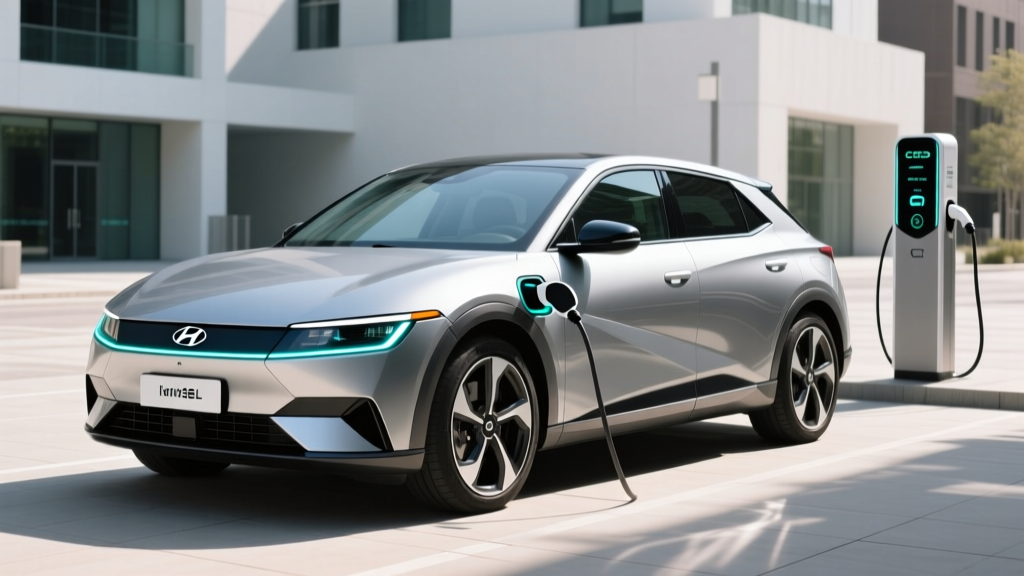
Quick Verdict: The 2025 Hyundai Ioniq 5 SEL
The 2025 Hyundai Ioniq 5 SEL is the mid-trim volume seller in Hyundai's electric crossover lineup, and for good reason. It bundles the larger 84 kWh (usable) battery, dual-motor AWD, and an 800V-class electrical architecture that enables DC fast charging up to 240 kW — all at a price point that can still clear the MSRP cap for the federal §30D tax credit. After spending time with the platform across multiple model years, the 2025 SEL remains one of the most practical, fast-charging, and well-rounded electric SUVs under $50,000. The NACS port is now standard, opening the Tesla Supercharger network natively. The trade-offs? A firm ride on rough pavement, and the lack of a front trunk eats into cargo versatility compared to the Ford Mustang Mach-E or Tesla Model Y.
2025 Ioniq 5 SEL Specifications at a Glance
| Spec | 2025 Ioniq 5 SEL AWD |
|---|---|
| Base MSRP | $48,385 (incl. destination) |
| EPA Range | 290 miles (AWD) / 303 miles (RWD SE) |
| Battery (usable) | 84.0 kWh, NMC lithium-ion |
| Drivetrain | Dual-motor AWD (SEL) / RWD (SE base) |
| Horsepower | 320 hp (AWD) |
| 0–60 mph | 4.5 seconds (AWD) |
| Max DC Fast Charge | 240 kW peak |
| 10–80% DC Time | ~18 minutes (optimal conditions) |
| Level 2 Charge Rate | 10.9 kW (onboard charger) |
| EPA Efficiency | 110 MPGe combined / 30 kWh/100 mi |
| Cargo (rear seats up) | 27.2 cu ft |
| Cargo (rear seats folded) | 59.3 cu ft |
| Rear Legroom | 39.4 inches |
| Battery Warranty | 8 years / 100,000 miles |
| Vehicle Warranty | 5 years / 60,000 miles |
Sources: fueleconomy.gov, Hyundai Newsroom
Range and Efficiency: EPA vs. Real-World
Real-World Expectation: Expect 240–265 miles on highway-heavy trips at 70–75 mph. In cold weather (below 30°F), plan for 190–220 miles depending on cabin heating use and whether you precondition the battery.
The Ioniq 5 SEL AWD carries a 290-mile EPA sticker. That figure is achievable in mixed suburban and city driving at moderate speeds with mild temperatures. However, highway efficiency drops noticeably above 70 mph — the boxy crossover shape and AWD drivetrain losses push consumption toward 33–35 kWh/100 mi at sustained interstate speeds, translating to roughly 240–255 real-world highway miles from a full charge.
Cold weather compounds this. In sub-freezing conditions without a garage or preconditioning, range can dip 25–30% below the EPA figure. The Ioniq 5 does include a heat pump (standard on all trims with the long-range battery), which mitigates cabin-heating losses compared to resistive heaters, but battery chemistry still suffers in deep cold. If you regularly drive in winter conditions, budget for roughly 200–220 miles of usable range and plan charging stops accordingly.
Efficiency on the combined EPA cycle is rated at 110 MPGe (30 kWh/100 mi), which is competitive with the Tesla Model Y Long Range (117 MPGe) and slightly behind the Ford Mustang Mach-E Extended Range AWD (105 MPGe). In real-world mixed driving, owners typically report 28–32 kWh/100 mi depending on climate and terrain.
Charging: 800V Architecture, NACS Port, and the Curve Reality
The Ioniq 5's headline feature since launch has been its 800V-class electrical architecture, which enables DC fast charging at up to 240 kW peak. For 2025, Hyundai has adopted the NACS (North American Charging Standard) connector as the native port, meaning you can plug directly into Tesla Superchargers (V3 and V4) without an adapter — a significant practical advantage over the outgoing CCS1 models.
| Charging Level | Power / Rate | Miles Added per Hour | Use Case |
|---|---|---|---|
| Level 1 (120V) | ~1.4 kW | ~4–5 mi/hr | Overnight top-off, emergencies |
| Level 2 (240V, 48A) | 10.9 kW (max onboard) | ~35–38 mi/hr | Home daily charging, full overnight |
| DC Fast (peak) | 240 kW | — | Road-trip stops, 10–80% in ~18 min |
| DC Fast (sustained avg.) | ~160–180 kW avg. | — | Real-world 10–80% average rate |
Understanding the Charging Curve
Hyundai advertises 10–80% in approximately 18 minutes, and that number is achievable — but only at a compatible 350 kW charger (such as Electrify America or EVgo stations with sufficient capacity) and when the battery is properly preconditioned. The 800V system sustains peak rates longer than most 400V competitors, but the curve still tapers. Expect roughly:
- 10–40% SoC: Near-peak 220–240 kW (fastest segment)
- 40–65% SoC: 160–190 kW (still brisk)
- 65–80% SoC: 100–140 kW (tapering begins)
- 80–100% SoC: Below 50 kW (slow — avoid on road trips)
On a real road trip, plan your stops from 10% to 80% and move on. Charging from 80% to 100% can add another 25–30 minutes for only ~60 miles of range — poor use of time.
Home Charging (Level 2)
The 10.9 kW onboard charger means a 48-amp Level 2 home station (on a 60-amp circuit) will add roughly 35–38 miles per hour of charging. A full 10–100% charge takes about 8–9 hours. Most owners charging overnight from 20–80% will need only 4–5 hours, easily managed with a scheduled departure time. If your home electrical panel is older or near capacity, budget $500–$1,500 for a panel upgrade before installation — a common hidden cost for first-time EV buyers.
Performance and Driving Dynamics
The SEL trim comes exclusively with dual-motor AWD producing 320 horsepower and 446 lb-ft of torque. The 0–60 mph sprint takes 4.5 seconds, which is genuinely quick for a family crossover and puts it ahead of the Mach-E Select AWD (5.1s) while trailing the Model Y Long Range (4.8s on older ratings, ~4.5s current). Power delivery is linear and immediate — no turbo lag, no gear shifts.
Driving dynamics are competent rather than sporty. The steering is light and accurate, and the low center of gravity keeps body roll well-controlled. However, the ride quality is firm, particularly on 20-inch wheels (standard on the SEL). Rough pavement and expansion joints transmit more impact than in the Kia EV6 or the Model Y. If ride comfort is a priority, consider the SE trim with 18-inch wheels, which absorbs imperfections more gracefully.
Regenerative braking is adjustable via steering-wheel paddles, from Level 0 (coast) to Level 3 (strong regen, near one-pedal driving). The i-Pedal mode enables full one-pedal driving with complete stops. The brake pedal feel is among the best in the EV segment — firm, predictable, and free of the grabby regen-blending that plagues some competitors.
Interior, Tech, and Practicality
The 2025 Ioniq 5 interior continues the retro-futuristic design language with a dual 12.3-inch display layout (digital cluster + infotainment). The SEL adds leatherette seating, heated front seats, a heated steering wheel, and a power-adjustable driver's seat. Build quality is solid, with soft-touch materials on the dash and door panels, though some lower trim pieces use harder plastics.
Space and Cargo
Passenger space is generous. Rear legroom measures 39.4 inches — more than the Model Y and comparable to midsize sedans. The flat floor (no transmission tunnel) makes the middle seat usable for adults on shorter trips. Cargo volume behind the second row is 27.2 cu ft, expanding to 59.3 cu ft with seats folded. Notably, the Ioniq 5 has no front trunk (frunk) on AWD models — the space is occupied by power electronics. This is a missed opportunity compared to the Mach-E (13.1 cu ft frunk) and the Tesla Model Y (4.1 cu ft frunk).
Tech and Driver Assistance
The infotainment system runs Hyundai's latest software with wireless Apple CarPlay and Android Auto, over-the-air updates, and a digital key (phone-as-key via NFC/UWB). Navigation-based smart cruise control and Highway Driving Assist 2 (HDA2) are standard on the SEL. HDA2 is a competent SAE Level 2 system — it handles lane centering, adaptive cruise, and lane-change assist on divided highways, but requires continuous driver attention and hands-on-wheel contact. It is not autonomous driving and should not be treated as such.
One standout feature: Vehicle-to-Load (V2L) capability via an interior outlet and an external adapter. You can power small appliances, a laptop, or even a campsite from the Ioniq 5's battery — useful for camping or emergency backup, though it lacks the full Vehicle-to-Home (V2H) bidirectional capability of the Ford F-150 Lightning.
Pricing, Trims, and Federal Tax Credit
The 2025 Ioniq 5 SEL AWD starts at $48,385 including destination. That positions it below the $55,000 MSRP cap for SUVs under the IRS §30D Clean Vehicle Credit, making it potentially eligible for the full $7,500 federal credit — but eligibility is not automatic. You must meet all of the following:
- Income cap: Modified AGI ≤ $150,000 (single) / $300,000 (joint) / $225,000 (head of household)
- MSRP cap: ≤ $80,000 for SUVs (the Ioniq 5 clears this easily)
- Battery sourcing: Critical minerals and battery components must meet escalating domestic-content thresholds per IRS guidance. For 2025, the thresholds are stricter than prior years, and Hyundai's supply chain compliance should be confirmed at point of sale via the IRS Energy Credits portal.
- Point-of-sale transfer: You may transfer the credit to the dealer at purchase, reducing the purchase price by up to $7,500 at closing — you don't need to wait until tax filing.
Always verify current-year eligibility at irs.gov and with a tax professional before committing to a purchase.
| Trim | MSRP (incl. dest.) | Est. Price After $7,500 Credit |
|---|---|---|
| SE Standard Range (RWD) | $42,600 | ~$35,100 |
| SE (RWD, Long Range) | $46,985 | ~$39,485 |
| SEL AWD | $48,385 | ~$40,885 |
| Limited AWD | $54,385 | ~$46,885 |
Pros and Cons
- 240 kW DC fast charging — among the fastest in its class
- NACS port native — direct Supercharger access
- Spacious rear seat and flat floor
- Competitive real-world efficiency (~30 kWh/100 mi)
- V2L capability for camping/backup power
- Strong 8-yr/100,000-mi battery warranty
- Heat pump standard (cold-weather efficiency)
- No frunk on AWD models
- Firm ride, especially on 20-inch wheels
- 290-mi EPA range (AWD) trails some rivals
- Rear wiper absent (ongoing complaint)
- HDA2 requires hands-on-wheel (less hands-free than BlueCruise/Super Cruise)
- Cargo area slightly smaller than Model Y
Who Should Buy the 2025 Ioniq 5 SEL?
- You prioritize fast DC charging for road trips (240 kW is a tangible advantage)
- You want native NACS/Supercharger access without adapters
- You need a spacious rear seat for kids or car seats
- You value a strong battery warranty and Hyundai's dealer network
- You want V2L for camping or emergency power
- You need maximum cargo volume (Model Y wins at 76 cu ft max)
- You want hands-free highway driving (Ford BlueCruise or GM Super Cruise)
- You prioritize ride comfort over performance (Kia EV6 is slightly softer)
- You need a frunk for storing charging cables or gear
Frequently Asked Questions
What is the real-world range of the 2025 Ioniq 5 SEL AWD?
The EPA rates it at 290 miles. In real-world highway driving at 70–75 mph, expect 240–265 miles. In cold weather (below 30°F), plan for 190–220 miles. City and suburban driving at moderate speeds can match or slightly exceed the EPA figure.
How fast does the Ioniq 5 SEL charge?
On a compatible 350 kW DC fast charger with battery preconditioning, it peaks at 240 kW and reaches 10–80% in approximately 18 minutes. At home on a 48-amp Level 2 station (10.9 kW), it adds roughly 35–38 miles per hour, with a full charge taking about 8–9 hours.
Does the 2025 Ioniq 5 SEL qualify for the federal EV tax credit?
It can, provided you meet the IRS §30D income caps (≤$150K single / ≤$300K joint), the MSRP is under $80,000 (it is), and the battery meets 2025 critical-mineral and component sourcing thresholds. Confirm eligibility via the IRS Energy Credits portal and your dealer at point of sale. The credit can be transferred to the dealer to reduce the purchase price by up to $7,500 at closing.
Is the Ioniq 5 SEL worth it vs. the Tesla Model Y or Ford Mach-E?
The Ioniq 5 SEL wins on DC charging speed (240 kW vs. ~250 kW for Model Y but with better sustained curves) and native NACS access. The Model Y offers more cargo space and a more mature software ecosystem. The Mach-E offers a frunk and available hands-free BlueCruise. If fast road-trip charging and warranty coverage are your priorities, the Ioniq 5 is a strong pick.
What is the battery warranty?
Hyundai covers the high-voltage battery for 8 years or 100,000 miles (whichever comes first) against defects and capacity loss below 70% of original capacity. The powertrain and vehicle limited warranty is 5 years / 60,000 miles.
Does the Ioniq 5 have a frunk?
No — AWD models (including the SEL) have no front trunk. The space is occupied by the front motor and power electronics. Only the RWD SE Standard Range has a small frunk (~0.85 cu ft). If front storage matters, consider the Mach-E or Model Y.