Quick Verdict: The Ioniq 5's Sweet Spot
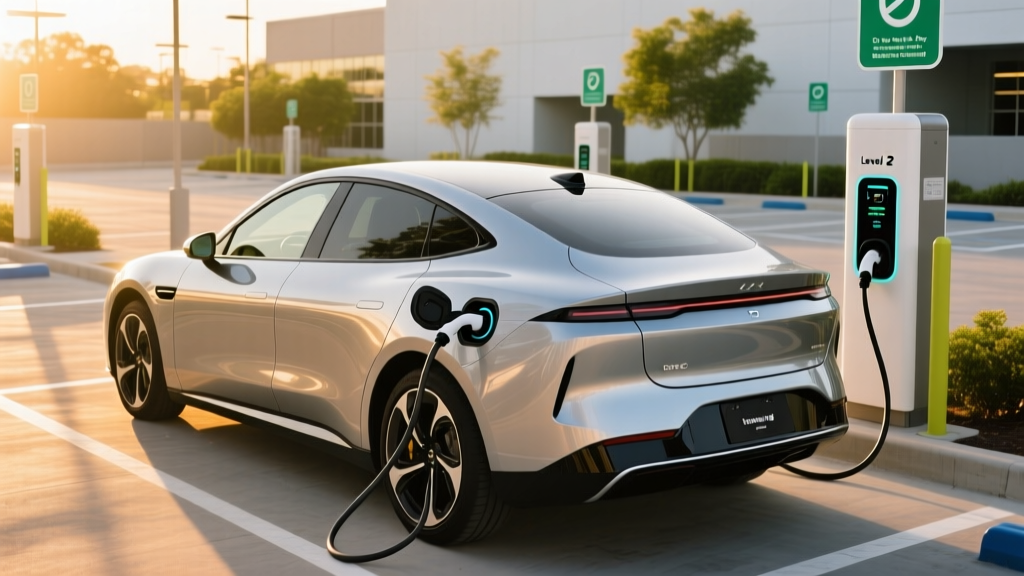
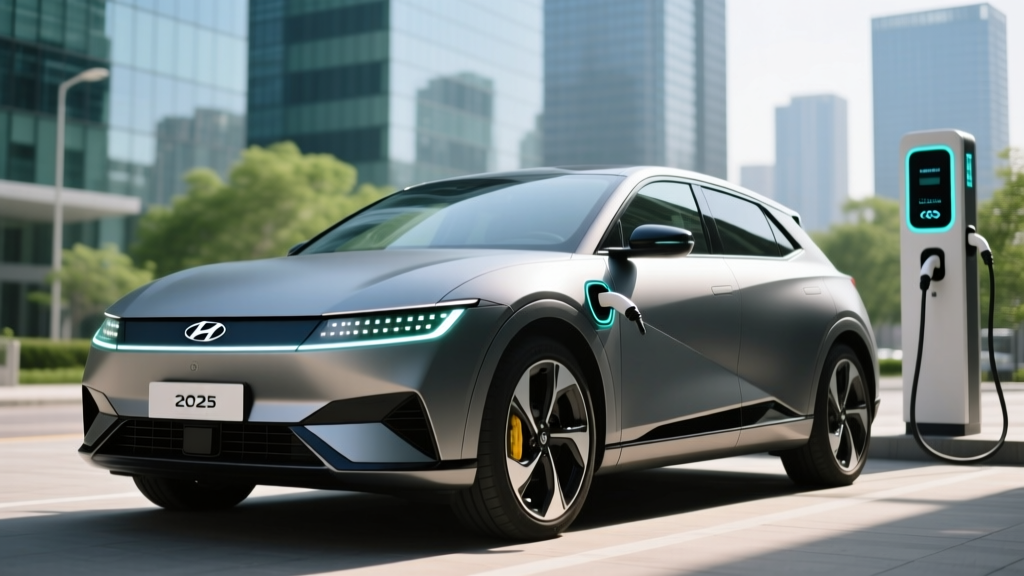
The 2025 Hyundai Ioniq 5 remains one of the most balanced electric crossovers on the market, combining an 800V architecture that enables class-leading DC fast charging with a practical interior and competitive range. For 2025, Hyundai added the Tesla NACS port as standard equipment, unlocking access to the Supercharger network without an adapter — a significant convenience upgrade that shifts the value equation. The Ioniq 5 doesn't lead in any single metric, but its combination of 318 miles of EPA range, sub-20-minute fast charging, and a starting price near $42,600 (before incentives) makes it the crossover EV that does the fewest things wrong.
| Spec | SE/SEL RWD | Limited RWD | SE/SEL/Limited AWD |
|---|---|---|---|
| EPA Range | 318 mi | 303 mi | 290 mi |
| Battery (usable) | 84.0 kWh, NMC lithium-ion | ||
| Peak DC Fast Charge | 238 kW (800V architecture) | ||
| 10–80% DC Fast Charge | ~18 minutes (optimal conditions) | ||
| Level 2 Home Charge | 10.9 kW (~44 mi/hr added) | ||
| Horsepower | 168 hp | 168 hp | 320 hp |
| 0–60 mph | ~7.4 sec | ~7.4 sec | ~4.5 sec |
| MPGe (combined) | 117 MPGe | 113 MPGe | 110 MPGe |
| Base MSRP | $42,600 | $50,900 | $46,600–$54,400 |
| Battery Warranty | 10 years / 100,000 miles | ||
Real-World Range vs. the EPA Sticker
The EPA rates the 2025 Ioniq 5 RWD at 318 miles, while the dual-motor AWD variant drops to 290 miles. Those are strong numbers on paper, but as any EV owner knows, the window sticker tells only part of the story.
- Mixed city/highway (mild weather): 270–300 miles — the Ioniq 5's heat pump and efficient drivetrain perform well in stop-and-go driving where regen recovers energy.
- Sustained highway at 75 mph: 240–265 miles — aerodynamic drag cuts into range at speed; expect roughly a 15–20% reduction from the EPA combined figure.
- Cold weather (below 30°F): 200–240 miles — NMC chemistry loses efficiency in the cold despite Hyundai's battery preconditioning. Plan for a 25–35% range reduction on frigid mornings.
The Ioniq 5's 84 kWh usable battery provides a meaningful buffer, but route planning on 300+ mile highway trips in winter still requires a charging stop. Source: fueleconomy.gov
One factor working in the Ioniq 5's favor is its relatively low efficiency penalty under load. The RWD model achieves 117 MPGe combined (29 kWh/100 mi), which is competitive with the Tesla Model Y Long Range (122 MPGe) and slightly ahead of the Ford Mustang Mach-E Extended Range RWD (111 MPGe). The AWD drops to 110 MPGe combined — still respectable for a 4,500-pound dual-motor crossover.
Charging Speed: Where the Ioniq 5 Shines
The Ioniq 5's 800V electrical architecture is its most distinctive technical advantage. While most competitors in this price range use 400V systems that peak around 150 kW, the Ioniq 5 can accept up to 238 kW at a compatible DC fast charger, dramatically cutting road-trip downtime.
| Charge Level | Power (kW) | Connector | Speed / Time |
|---|---|---|---|
| Level 1 (120V household) | ~1.4 kW | NACS (J1772 adapter) | ~5 mi/hr added |
| Level 2 (240V home) | 10.9 kW | NACS / J1772 adapter | ~44 mi/hr added; 0–100% in ~8 hr |
| DC Fast (350 kW station) | Peak 238 kW | NACS (native) | 10–80% in ~18 min |
| DC Fast (150 kW station) | ~130 kW sustained | NACS (native) | 10–80% in ~30 min |
| Tesla Supercharger (V3) | ~150 kW | NACS (native) | 10–80% in ~25 min |
Charging curve reality check: The 238 kW peak is not sustained across the full session. In real-world testing at 350 kW Electrify America or Tesla V4 Supercharger stations, the Ioniq 5 typically holds above 200 kW from roughly 10–40% state of charge, then tapers to ~150 kW through 60%, and drops sharply above 80%. This taper is normal for NMC chemistry and is managed by the battery thermal system to protect long-term health. The 18-minute 10–80% claim assumes a station capable of delivering the full 238 kW and a battery preconditioned to optimal temperature — use the navigation-based preconditioning feature to ensure this on cold days.
The 2025 switch to the native NACS (North American Charging Standard) port is a practical win. Ioniq 5 owners can now plug directly into Tesla Superchargers, which remain the most reliable and widespread DC fast-charging network in the U.S., without carrying a CCS-to-NACS adapter. For home Level 2 charging, Hyundai includes a J1772 adapter for compatibility with most residential wall connectors, though NACS-native home chargers (like the Tesla Wall Connector) are also directly compatible.
Performance and Drivetrain
The 2025 Ioniq 5 offers two distinct personalities depending on drivetrain choice:
Rear-Wheel Drive (168 hp): The single-motor RWD layout prioritizes efficiency and range. The 0–60 mph time of approximately 7.4 seconds is adequate for merging and passing but won't thrill anyone coming from a performance sedan. The RWD model's lighter front end also gives it slightly better ride quality and a marginally tighter turning radius.
All-Wheel Drive (320 hp, dual motor): Adding a front motor transforms the Ioniq 5 into a genuinely quick crossover. The 4.5-second 0–60 mph time puts it in hot-hatch territory, and the instant torque delivery makes it feel even faster in real-world driving. The AWD model's 290-mile range is the trade-off, along with a ~$4,000 price premium across comparable trims.
Neither drivetrain offers one-pedal driving strong enough to bring the car to a complete stop — Hyundai's i-Pedal mode provides aggressive regen but still requires the brake pedal for final stopping. This is a deliberate engineering choice that some EV veterans find frustrating but that eases the transition for first-time EV buyers.
Pricing, Trims, and Federal Tax Credit Eligibility
The 2025 Ioniq 5 lineup spans four trims, with pricing that positions it against the Tesla Model Y, Ford Mustang Mach-E, and Volkswagen ID.4.
| Trim | Drivetrain | Base MSRP | Est. Price After §30D Credit* |
|---|---|---|---|
| SE Standard Range | RWD | $42,600 | ~$35,100 |
| SEL | RWD | $45,350 | ~$37,850 |
| SEL | AWD | $49,350 | ~$41,850 |
| Limited | RWD | $50,900 | ~$43,400 |
| Limited | AWD | $54,900 | ~$47,400 |
*Estimated after $7,500 federal tax credit under IRS §30D. Eligibility depends on buyer income, battery sourcing, and MSRP caps. See rules below.
Does the 2025 Ioniq 5 Qualify for the $7,500 Federal Tax Credit?
The Ioniq 5 is assembled at Hyundai's Metaplant in Ellabell, Georgia, which resolved the manufacturing-location issue that initially disqualified it when the vehicle was Korea-built. However, eligibility for the full $7,500 credit under IRS §30D rules depends on several factors that buyers must verify at the time of purchase:
- MSRP cap: The Ioniq 5 is classified as an SUV/van, so the MSRP cap is $80,000. All trims qualify.
- Buyer income cap: Adjusted gross income must not exceed $150,000 (single), $225,000 (head of household), or $300,000 (joint filers).
- Battery critical minerals and components: The $7,500 credit is split into two $3,750 halves — one for critical-mineral sourcing and one for battery-component manufacturing. Hyundai has been working to qualify the Ioniq 5's battery supply chain under these requirements. Confirm the exact credit amount with your dealer and a tax professional before purchase, as sourcing rules tighten annually through 2032.
- Point-of-sale transfer: Eligible buyers can apply the credit as an immediate price reduction at the dealership rather than waiting to claim it on their tax return. The dealer must be registered with the IRS Energy Credits portal.
Important: Tax credit rules under §30D are subject to change, and battery-sourcing requirements become stricter each year. Always verify current eligibility on irs.gov and consult a tax professional before relying on the credit in your purchase budget.
Interior Space, Cargo, and Technology
The Ioniq 5's E-GMP skateboard platform gives it a flat floor and a long 118.1-inch wheelbase, which translates to genuinely generous interior volume for a compact crossover:
- Front legroom: 41.7 inches
- Rear legroom: 39.4 inches — enough for tall adults on longer trips
- Cargo behind rear seats: 27.2 cubic feet
- Cargo with rear seats folded: 59.3 cubic feet
- Front trunk (frunk): 0.85 cu ft (AWD) / 2.0 cu ft (RWD) — small but useful for charging cables
The cabin materials are a mixed bag. The Limited trim offers H-Tex leatherette and a clean, minimalist design with dual 12.3-inch displays (instrument cluster and infotainment). Lower trims use more hard plastics, which is noticeable at this price point. Physical buttons for climate control and volume are a welcome ergonomic choice that Hyundai retained while competitors have moved to all-touch interfaces.
Standout tech features:
- Vehicle-to-Load (V2L): The Ioniq 5 can output up to 3.6 kW of AC power through an interior outlet and an exterior adapter, enough to run appliances, power tools, or even charge another EV in an emergency.
- Highway Driving Assist 2 (HDA2): Hyundai's Level 2 driver-assistance system combines adaptive cruise control with lane-centering and lane-change assistance. It works well on divided highways but requires hands on the wheel — this is not a hands-free system like GM's Super Cruise or Ford's BlueCruise.
- Digital side mirrors: Available on the Limited trim, replacing traditional mirrors with camera-based displays in the door panels. They reduce drag slightly but take time to adjust to visually.
- Augmented reality head-up display: Projects navigation arrows and speed onto the windshield with impressive clarity, standard on Limited.
Notable drawbacks:
- The rear wiper is conspicuously absent on many trims — a common complaint among Ioniq 5 owners in rainy climates.
- The infotainment system, while functional, lacks the responsiveness and app ecosystem of Tesla's interface.
- No front trunk on AWD models beyond a small cable-storage cubby.
- Ride quality on the Limited's 20-inch wheels can be firm over rough pavement; the 19-inch wheels on SE/SEL trims ride noticeably better.
Pros and Cons at a Glance
- Fastest DC charging in its class (238 kW peak, 10–80% in ~18 min)
- Native NACS port — direct Tesla Supercharger access
- Competitive 318-mile EPA range (RWD)
- Spacious rear seat and flat floor for the segment
- V2L capability for camping, emergencies, or job-site power
- Industry-leading 10-year/100,000-mile battery warranty
- Comfortable, quiet ride at highway speeds
- AWD range drops to 290 miles — less than Model Y LR AWD
- RWD performance is merely adequate (7.4 sec 0–60)
- No hands-free driving mode (HDA2 requires hands on wheel)
- Limited trim pricing pushes past $54,000 before incentives
- Rear wiper absent on most trims
- Frunk is tiny, especially on AWD models
- Tax credit eligibility depends on evolving battery-sourcing rules
Who Should Buy the 2025 Hyundai Ioniq 5?
Choose the Ioniq 5 if:
- You take regular road trips and want the fastest DC charging in the crossover segment — the 800V architecture and Supercharger access make long-distance travel genuinely practical.
- You need a spacious back seat for car seats or adult passengers but don't want to step up to a three-row SUV.
- You value the V2L feature for camping, tailgating, or emergency backup power.
- You prefer a conventional crossover driving experience with physical buttons and a familiar layout over Tesla's minimalist approach.
Look elsewhere if:
- Maximum range is your top priority — the Tesla Model Y Long Range AWD offers 330+ miles EPA with similar performance.
- You want a hands-free highway driving system — consider the Ford Mustang Mach-E with BlueCruise or a GM Ultium vehicle with Super Cruise.
- You need serious towing capacity — the Ioniq 5 is not rated for heavy towing; look at the Rivian R1S or Ford F-150 Lightning.
- Budget is tight and you can't access the full tax credit — the Chevrolet Equinox EV starts significantly lower and may offer similar credit eligibility.
Frequently Asked Questions
What is the real-world range of the 2025 Hyundai Ioniq 5?
The EPA rates the RWD model at 318 miles and the AWD at 290 miles. In mixed real-world driving, expect 270–300 miles for the RWD and 250–270 miles for the AWD in mild weather. Sustained highway driving at 75 mph reduces range by roughly 15–20%, and cold weather below 30°F can cut range by 25–35%. Always plan charging stops based on the lower end of these estimates.
How fast does the Ioniq 5 charge at home and on the road?
At home on a 240V Level 2 charger, the Ioniq 5 accepts 10.9 kW, adding about 44 miles of range per hour — a full charge takes roughly 8 hours. On a 350 kW DC fast charger, it peaks at 238 kW and charges from 10% to 80% in approximately 18 minutes under optimal conditions. On a 150 kW charger (more common), expect 10–80% in about 30 minutes. The native NACS port means direct compatibility with Tesla Superchargers.
How much does the 2025 Ioniq 5 cost after tax credits?
The base SE Standard Range starts at $42,600. If you qualify for the full $7,500 federal tax credit under IRS §30D, the effective price drops to approximately $35,100. However, eligibility depends on your income (capped at $150K single / $300K joint), the vehicle's battery-sourcing compliance (which changes annually), and the $80,000 MSRP cap (all Ioniq 5 trims clear this). The credit can be applied at the point of sale as an immediate price reduction. Verify current eligibility on irs.gov and with a tax professional.
Is the Ioniq 5 worth buying vs. the Tesla Model Y or Ford Mach-E?
The Ioniq 5 wins on DC charging speed (238 kW vs. ~250 kW for Model Y but with broader non-Tesla network compatibility) and offers a more traditional interior layout with physical controls. The Model Y Long Range AWD still leads on range (330+ miles) and has a more mature software ecosystem. The Ford Mustang Mach-E offers BlueCruise hands-free driving and a sportier feel but charges more slowly (peak ~150 kW on most trims). If fast road-trip charging and cabin comfort are your priorities, the Ioniq 5 is the strongest choice in this trio.
What is the battery warranty on the Ioniq 5?
Hyundai covers the Ioniq 5's high-voltage battery for 10 years or 100,000 miles, whichever comes first. The warranty guarantees the battery will retain at least 70% of its original capacity during that period. This is one of the longest battery warranties in the industry, matched by Kia but exceeding most competitors' 8-year/100,000-mile coverage. The basic vehicle warranty is 5 years/60,000 miles, and the powertrain warranty is 10 years/100,000 miles.
Can the Ioniq 5 use Tesla Superchargers?
Yes. The 2025 Ioniq 5 comes with a native NACS (North American Charging Standard) port, which is the same connector used by Tesla Superchargers. No adapter is required. This gives Ioniq 5 owners access to over 20,000 Supercharger stalls across North America in addition to CCS-compatible networks like Electrify America and EVgo (via a NACS-to-CCS adapter for non-NACS stations).
Sources: EPA fuel economy data via fueleconomy.gov; federal tax credit rules via irs.gov; Hyundai Motor America official specifications.