Quick Verdict: A Track Weapon Disguised as an EV Crossover
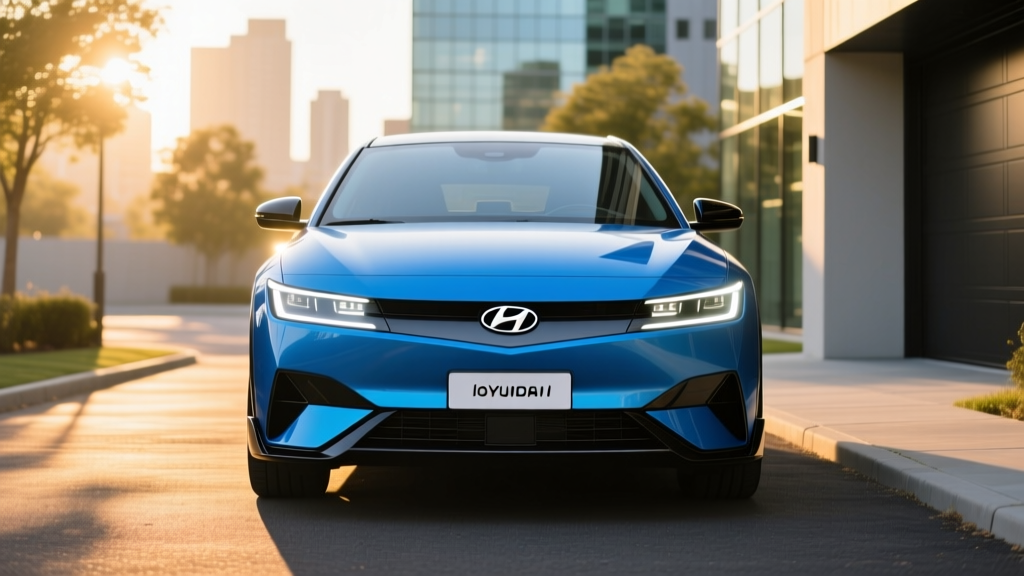
The 2025 Hyundai Ioniq 5 N isn't trying to be the longest-range electric SUV on the market. It's trying to be the most engaging one. With 641 horsepower in N Grin Boost mode, a 0-60 mph time of 3.4 seconds, and a thermal management system engineered for sustained track abuse, Hyundai's N performance division has built something genuinely rare: an EV that rewards enthusiastic driving without pretending to be something it's not.
But performance comes at a measurable cost to efficiency and range. The Ioniq 5 N carries an 84.0 kWh usable battery (NMC chemistry) and earns an EPA-estimated 221 miles of range — roughly 80 miles fewer than the standard Ioniq 5 SEL AWD. If you're cross-shopping this against a Tesla Model Y Performance or a Ford Mustang Mach-E GT, the trade-offs are stark, and the numbers tell the real story.
Range & Efficiency: The Performance Tax in Numbers
Real-World Expectation: Expect 180–200 miles on mixed highway driving at 70+ mph. In cold weather (below 30°F), plan for 155–175 miles without preconditioning. Track use will deplete the battery far faster — Hyundai's own N-mode testing shows as little as 6–8 hard laps before thermal management prioritizes cooling over power delivery.
The Ioniq 5 N's EPA combined efficiency rating is 84 MPGe, which translates to roughly 40 kWh per 100 miles — significantly thirstier than the standard Ioniq 5 AWD's 110 MPGe / 30 kWh/100mi. That gap is the physics of performance: stickier Pirelli P Zero tires, aggressive aerodynamic drag from the N-specific body kit, and a heavier curb weight (~4,861 lbs) all demand more energy.
For context, here's how the Ioniq 5 N's efficiency compares to its closest performance-EV rivals:
| Vehicle | EPA Range | MPGe (Combined) | kWh/100mi |
|---|---|---|---|
| 2025 Hyundai Ioniq 5 N | 221 mi | 84 | 40 |
| 2025 Tesla Model Y Performance | 277 mi | 111 | 30 |
| 2025 Ford Mustang Mach-E GT | 260 mi | 84 | 40 |
| 2025 BMW i4 M50 | 227 mi | 97 | 35 |
Data sourced from fueleconomy.gov. The Mach-E GT matches the Ioniq 5 N's efficiency, but the Model Y Performance's superior aero and lighter weight give it a decisive range advantage.
Battery & Charging: 800V Architecture Pays Off
The Ioniq 5 N uses the same E-GMP platform as the standard Ioniq 5, which means 800-volt electrical architecture — one of the fastest-charging systems available in any production EV. Here's the full charging breakdown:
| Charging Level | Power / Rate | Time / Speed |
|---|---|---|
| Level 1 (120V household) | ~1.4 kW | ~3–4 miles per hour of charging |
| Level 2 (240V home, 48A) | 10.9 kW | ~28–32 miles per hour; full charge in ~8 hours |
| DC Fast Charge (peak) | 232 kW (peak) | 10–80% in approximately 18 minutes |
| DC Fast Charge (50 kW station) | 50 kW | 10–80% in approximately 60 minutes |
Battery Details:
- Usable capacity: 84.0 kWh (88.8 kWh gross)
- Chemistry: NMC (Nickel Manganese Cobalt) — chosen for higher energy density and power delivery over LFP
- Thermal management: Active liquid cooling with N-specific track cooling mode that pre-conditions the battery aggressively before high-load use
- Connector: CCS1 (standard J1772 for AC, CCS combo for DC). Note: Hyundai has confirmed the 2025 Ioniq 5 N ships with CCS1; a NACS adapter is available for Tesla Supercharger access
The 800V system's real advantage shows up at 350 kW-capable chargers (Electrify America, Ionity). The Ioniq 5 N sustains above 180 kW from roughly 10% to 55% SoC before tapering — a charge curve that outperforms most 400V rivals, which typically peak briefly and drop off sharply. If your local DC infrastructure tops out at 50–150 kW, the 800V advantage narrows considerably, and you'll see charge times closer to 40–50 minutes for a 10–80% session.
Performance & Drivetrain: 641 HP With Nuance
| Spec | 2025 Ioniq 5 N |
|---|---|
| Drivetrain | Dual-motor AWD |
| Front Motor | 221 hp / 258 lb-ft |
| Rear Motor | 362 hp / 369 lb-ft |
| Combined (N Grin Boost) | 641 hp / 568 lb-ft (10-second bursts) |
| Combined (Normal N Mode) | 601 hp / 545 lb-ft |
| 0–60 mph | 3.4 seconds (N Grin Boost, launch control) |
| Top Speed | 161 mph (electronically limited) |
| Curb Weight | ~4,861 lbs |
N Grin Boost isn't just a horsepower bump — it temporarily increases torque output on both motors for up to 10 seconds per activation, with a cooldown period before re-arming. In practice, this means highway merging and passing are explosively quick, but sustained track use relies on the 601 hp baseline.
The N-tuned adaptive dampers, electronically controlled limited-slip differential (e-LSD), and N-specific brake regeneration (up to 0.6g of regen force) give this EV a chassis personality that genuinely separates it from the standard Ioniq 5. Hyundai also includes N Active Sound+, which pipes synthetic engine and exhaust notes through interior and exterior speakers — polarizing, but it addresses the sensory void that makes many fast EVs feel disconnected.
Interior, Cargo & Daily Practicality
The Ioniq 5 N retains the standard model's spacious cabin with N-specific upgrades:
- Front legroom: 41.7 inches
- Rear legroom: 39.4 inches
- Cargo behind rear seats: 27.2 cu ft
- Cargo with rear seats folded: 59.3 cu ft
- Frunk (front trunk):strong> 0.85 cu ft (significantly reduced vs. standard Ioniq 5's 2.0 cu ft due to additional power electronics)
The N-specific sport bucket seats are heavily bolstered and include a fixed center console armrest (the standard Ioniq 5's sliding universal island is gone). This improves lateral support during hard cornering but reduces the open-floor feel that many Ioniq 5 buyers love. The rear seat is comfortable for two adults but tighter for three across than a Model Y.
Infotainment: Dual 12.3-inch displays (instrument cluster + infotainment) running Hyundai's latest ccNC software with wireless Apple CarPlay and Android Auto, over-the-air updates, and N-specific performance telemetry pages showing battery temp, motor output, G-forces, and lap timing.
Driver Assistance (SAE Level 2): Hyundai SmartSense suite includes Highway Driving Assist 2 (HDA2) with lane-centering and adaptive cruise, Navigation-Based Smart Cruise Control, Forward Collision-Avoidance Assist, Blind-Spot Collision-Avoidance, and Rear Cross-Traffic Collision-Avoidance. This is a Level 2 driver-assist system — the driver must remain engaged with hands on the wheel at all times. It is not autonomous driving.
Pricing, Tax Credits & Ownership Cost
| Item | Amount |
|---|---|
| Base MSRP (single trim) | $67,475 (including $1,375 destination) |
| As-tested (with N accessories package) | ~$69,000–$71,000 |
| Federal §30D Tax Credit (if eligible) | Up to $7,500 |
| Effective price after max credit | ~$59,975 |
Federal Tax Credit Eligibility (§30D): The Ioniq 5 N's MSRP of $67,475 falls below the $80,000 SUV/truck MSRP cap set by the Inflation Reduction Act, making it potentially eligible for the full $7,500 credit — but only if the buyer meets all requirements:
- Buyer income caps: Modified AGI must not exceed $150,000 (single), $225,000 (head of household), or $300,000 (joint filing)
- MSRP cap: Vehicle must be under $80,000 for SUVs (Ioniq 5 N qualifies)
- Battery sourcing: A percentage of critical minerals must be sourced from the US or FTA partners, and battery components must be manufactured/assembled in North America — these thresholds tighten annually. Check current-year requirements at irs.gov
- Point-of-sale transfer: As of 2024, buyers can transfer the credit to the dealer at purchase, reducing the purchase price directly rather than waiting for a tax refund
Important caveat: Battery component and critical-mineral sourcing requirements have phased in aggressively. The Ioniq 5's battery cells are manufactured by SK On, with assembly in Commerce, Georgia (SK Battery America). However, critical-mineral sourcing compliance shifts yearly. Always verify current-year eligibility on fueleconomy.gov and with your tax professional before relying on the credit in your purchase decision.
Warranty & Long-Term Ownership
Hyundai backs the Ioniq 5 N with one of the strongest warranty packages in the EV segment:
- Basic vehicle warranty: 5 years / 60,000 miles
- Powertrain warranty: 10 years / 100,000 miles
- Battery warranty: 10 years / 100,000 miles (covers capacity loss below 70% of original)
- Complimentary maintenance: 3 years / 36,000 miles
The 70% capacity retention threshold is industry-standard (Tesla uses the same benchmark). NMC batteries in Hyundai's E-GMP platform have shown moderate degradation in early data — roughly 5–8% loss over the first 50,000 miles before stabilizing. The N variant's more aggressive thermal cycling from track use could theoretically accelerate degradation, but Hyundai's enhanced cooling system is specifically designed to mitigate this.
Pros & Cons: The Honest Scorecard
Pros
- 800V architecture delivers best-in-class DC fast charging (10–80% in ~18 min)
- 641 hp with N Grin Boost; 3.4-second 0–60 is supercar territory
- Genuine track capability with sustained thermal management
- Industry-leading 10-yr/100,000-mi battery and powertrain warranty
- Spacious rear seat and 27.2 cu ft cargo volume
- CCS1 + NACS adapter for broadest charging network access
- MSRP under $80K cap keeps federal tax credit in play
Cons
- 221-mile EPA range is the lowest in its class — road trips require planning
- 84 MPGe / 40 kWh/100mi means higher electricity costs vs. rivals
- Single trim with limited options; no lower-cost entry point
- N Active Sound+ is gimmicky to some ears
- Reduced frunk space (0.85 cu ft) limits front storage
- Firm N-tuned suspension may be too stiff for rough-road commuters
- Insurance premiums run 15–25% higher than standard Ioniq 5
Who Should Buy the Ioniq 5 N?
Choose the Ioniq 5 N if:
- You want the most engaging, track-capable EV crossover under $70K
- Most of your driving is within 150 miles of home with reliable Level 2 charging
- You value charging speed over total range (800V is a massive advantage for quick stops)
- You'll use N-mode features — this car's personality is wasted on commuters who never enable sport mode
Look elsewhere if:
- You regularly drive 250+ miles between charging stops (consider Model Y LR or Ioniq 5 SEL AWD)
- Efficiency and low running costs are your top priority
- You need maximum cargo space or a flat-load-floor frunk
- Your commute involves rough, potholed roads where the firm N suspension will punish you daily
Frequently Asked Questions
What is the real-world range of the 2025 Hyundai Ioniq 5 N?
The EPA rates it at 221 miles combined. In real-world highway driving at 70–80 mph, expect 180–200 miles. Cold weather (below 30°F) without preconditioning can drop that to 155–175 miles. Track driving in N mode will consume energy far faster — budget for 2–3 miles per lap on a typical road course.
How fast does the Ioniq 5 N charge at home and on the road?
At home on a 240V Level 2 charger (48 amps / 10.9 kW), you'll add roughly 28–32 miles per hour of charging, reaching a full charge from empty in about 8 hours. On a 350 kW-capable DC fast charger, the 800V system peaks at 232 kW and can go from 10–80% in approximately 18 minutes — among the fastest in production. At a 50 kW DC charger, expect 10–80% in about 60 minutes.
Does the 2025 Ioniq 5 N qualify for the $7,500 federal EV tax credit?
It potentially qualifies. The MSRP ($67,475) is under the $80,000 SUV cap. However, eligibility depends on your income (AGI caps apply), the vehicle's battery component and critical-mineral sourcing compliance for the current tax year, and whether you've already claimed the credit on another vehicle. Verify on irs.gov and consult a tax professional. The credit can be transferred to the dealer at point of sale.
Is the Ioniq 5 N worth buying vs. a Tesla Model Y Performance or Mach-E GT?
It depends on priorities. The Model Y Performance offers 277 miles of range, access to the Supercharger network natively (NACS), and comparable 0–60 performance — but its chassis and steering feel are less engaging. The Mach-E GT matches the Ioniq 5 N's efficiency but charges slower (no 800V architecture) and has a less refined thermal management system for sustained performance. The Ioniq 5 N wins on driving engagement, charging speed, and warranty; it loses on range and efficiency.
What are the biggest drawbacks of the Ioniq 5 N?
Range (221 miles EPA) and efficiency (84 MPGe) are the primary trade-offs. The N-tuned ride is firm, the synthetic engine sound is polarizing, and insurance costs run higher than the standard Ioniq 5. For a daily commuter who never visits a track, the performance premium is difficult to justify over a $52,000 Ioniq 5 SEL AWD with 290 miles of range.
Can I use Tesla Superchargers with the Ioniq 5 N?
Yes, with a NACS adapter. The 2025 Ioniq 5 N ships with a CCS1 charge port. Hyundai offers a NACS adapter that enables access to Tesla's Supercharger network (V3 and V4 stalls). This significantly expands long-distance travel options, though you'll still charge at CCS-equivalent speeds, not native NACS rates.
How does the Ioniq 5 N handle cold weather?
The heat pump (standard on the N) helps preserve cabin efficiency, but the NMC battery loses roughly 15–25% of its range in sustained sub-freezing temperatures. Preconditioning the battery while plugged in is essential — it warms the pack for both range preservation and faster DC charging. Hyundai's battery preconditioning for navigation-routed DC charging activates automatically when a fast charger is set as your destination.
Sources: EPA data via fueleconomy.gov; Hyundai Motor America official specifications; IRS §30D credit rules at irs.gov.