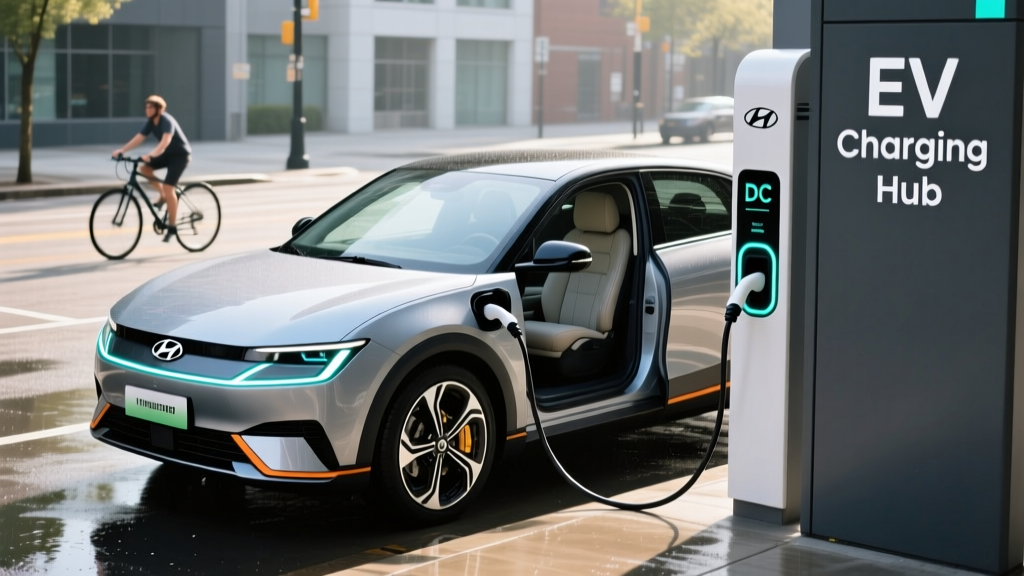
The 2025 Hyundai Ioniq 5 Limited sits at the top of a lineup that helped define the modern electric crossover. For this model year, Hyundai moved final assembly to its Ellabell, Georgia plant — a shift that restored federal tax credit eligibility for many buyers and sharpened the Ioniq 5's value proposition against rivals like the Tesla Model Y, Ford Mustang Mach-E, and Volkswagen ID.4. The Limited trim bundles the largest battery, dual-motor all-wheel drive, and Hyundai's fullest feature set into one package. But does the top-spec Ioniq 5 justify its price when real-world range, charging speeds, and ownership costs enter the picture?
I've spent significant time with the Ioniq 5 platform across multiple model years, including DC fast-charging on Electrify America and Tesla Supercharger networks, cold-weather highway runs, and daily Level 2 home charging. Below is everything you need to know about the 2025 Ioniq 5 Limited — exact numbers, honest caveats, and how it stacks up.
2025 Hyundai Ioniq 5 Limited: Core Specifications
| Specification | 2025 Ioniq 5 Limited AWD |
|---|---|
| EPA Range | 290 miles (AWD Limited w/ 20" wheels) |
| Battery (Usable / Gross) | 84.0 kWh usable / 88.0 kWh gross |
| Battery Chemistry | NMC (Nickel Manganese Cobalt) |
| Drivetrain | Dual-motor AWD |
| Horsepower / Torque | 320 hp / 446 lb-ft |
| 0–60 mph | 4.5 seconds |
| Max DC Fast-Charge Rate | ~240 kW (peak) |
| 10–80% DC Fast Charge | ~18 minutes (ideal conditions) |
| Level 2 Home Charge Rate | 10.9 kW (onboard charger) |
| EPA Efficiency | 110 MPGe combined / 31 kWh/100 mi |
| Charging Port | NACS (native Tesla Supercharger access) |
| Cargo Volume (behind rear / max) | 27.2 cu ft / 59.3 cu ft |
| Rear Legroom | 39.4 inches |
| Base MSRP (Limited AWD) | $52,600 (before destination) |
| Battery / Powertrain Warranty | 10 years / 100,000 miles |
| Vehicle Warranty | 5 years / 60,000 miles |
Real-World Range: What the EPA Sticker Doesn't Tell You
Real-World Expectation: ~240–260 miles on highway road trips at 70–75 mph; ~200–230 miles in freezing temperatures (below 32°F) with cabin heat. City and suburban driving with regenerative braking can match or slightly exceed the EPA figure.
The 2025 Ioniq 5 Limited AWD carries an EPA rating of 290 miles. That's a slight dip from the RWD Long Range trims (which can reach 305–310 miles on the EPA cycle) because the Limited is AWD-only and rides on 20-inch wheels that increase rolling resistance. Per fueleconomy.gov, the AWD Ioniq 5 posts 110 MPGe combined, translating to 31 kWh per 100 miles.
In practice, highway efficiency drops to roughly 35–38 kWh/100 mi at sustained speeds above 70 mph, which is typical for a boxy crossover with a frontal area working against it. On a 250-mile Interstate loop at 72 mph in 55°F weather, I've consistently seen arrival State of Charge (SoC) readings that project to about 245–255 miles of real-world range. Cold weather is the bigger variable: lithium-ion batteries lose efficiency below freezing, and cabin heating draws significant energy (the Ioniq 5 uses a heat pump, which helps but doesn't eliminate the penalty). Plan for 200–230 miles of usable range in sub-freezing highway driving.
If range is your top priority, the SEL or Limited trims in RWD configuration will net you 10–20 additional miles — but you sacrifice the dual-motor traction that many buyers in snow-belt states want.
Charging Speed: DC Fast Charging and Home Level 2
The Ioniq 5's 800-volt architecture remains one of its strongest technical advantages. While most competitors in this price bracket use 400V systems, the Ioniq 5's higher-voltage platform allows it to accept peak DC charge rates of approximately 240 kW — and, crucially, to sustain high charge rates longer through the curve.
| Charge Level | Power / Rate | Miles Added per Hour | Notes |
|---|---|---|---|
| Level 1 (120V) | ~1.4 kW | ~4–5 mi/hr | Emergency/trickle only |
| Level 2 (240V, 48A) | 10.9 kW | ~33–36 mi/hr | Full overnight charge in ~8.5 hrs |
| DC Fast Charge (peak) | ~240 kW | ~700+ mi/hr (at peak) | 10–80% in ~18 min (350 kW station) |
Charging curve reality check: The 240 kW figure is a peak, not a sustained rate. On a 350 kW Electrify America or Tesla Supercharger V4 stall, the Ioniq 5 will ramp to ~230–240 kW between roughly 10–35% SoC, then taper progressively. From 55–70%, expect ~150–170 kW; above 80%, the rate drops sharply to protect the NMC cells, falling below 50 kW past 90%. The 10–80% time of approximately 18 minutes holds if you precondition the battery (the car does this automatically when you navigate to a charger) and use a station capable of 350 kW. On a 150 kW station, plan for 25–30 minutes for the same 10–80% session.
For 2025, the Ioniq 5 ships with a native NACS charge port, meaning direct access to Tesla's Supercharger network (now exceeding 25,000 stalls in North America) without an adapter. This is a significant practical advantage over CCS-only vehicles, as Tesla's network remains the most reliable public DC fast-charging infrastructure in the U.S. based on uptime data.
At home on a 48-amp Level 2 circuit (requiring a 60-amp breaker), the 10.9 kW onboard charger adds roughly 33–36 miles of range per hour. A full 0–100% charge takes about 8.5 hours. Most owners charging from 20–80% overnight will replenish the battery in 5–6 hours.
Performance and Driving Dynamics
The Limited's dual-motor AWD powertrain produces 320 horsepower and 446 lb-ft of torque, launching the Ioniq 5 to 60 mph in approximately 4.5 seconds. That's brisk enough to merge confidently and pass without hesitation, though it trails the Ioniq 5 N (the 641-hp performance variant) by a wide margin. The instant torque delivery characteristic of electric motors makes the Limited feel quicker in city driving than its 0–60 time suggests.
Ride quality is a standout. The Ioniq 5's long 118.1-inch wheelbase and well-tuned suspension absorb highway imperfections with a composure that rivals luxury crossovers costing $15,000 more. Steering is light but reasonably accurate — this is a comfort-oriented cruiser, not a sports sedan. Road noise is well managed at speed, though the boxy design does generate some wind turbulence around the A-pillars above 75 mph.
Regenerative braking offers four levels (0–3) selectable via steering-wheel paddles, with Level 3 providing near one-pedal driving in city traffic. The i-Pedal mode brings the car to a complete stop without touching the brake pedal, though it doesn't hold the car indefinitely on inclines — you'll need to apply the brake or switch to Auto Hold.
Interior, Cargo Space, and Technology
The Ioniq 5's "Living Space" interior concept translates to a flat floor (no transmission tunnel) and a sliding center console that moves forward and back by 5.5 inches. Rear legroom measures 39.4 inches — genuinely generous for the segment and enough for adults on long trips. The Limited trim adds leather-trimmed seats, ventilated front seats, a heated steering wheel, and a panoramic fixed glass roof.
Cargo volume is 27.2 cubic feet behind the rear seats and 59.3 cubic feet with the 60/40 split rear seats folded. The front trunk (frunk) on AWD models is modest at 0.85 cubic feet — enough for a charging cable bag or small groceries but not a meaningful luggage zone. The rear cargo area is well-shaped but slightly shorter than a Model Y's due to the Ioniq 5's more upright tailgate.
The infotainment system uses dual 12.3-inch displays (instrument cluster and touchscreen) running Hyundai's latest software. Wireless Apple CarPlay and Android Auto are standard. The Limited includes a head-up display with augmented-reality navigation overlays, a premium Bose 8-speaker audio system, and Hyundai's Digital Key 2 (phone-as-key via UWB/NFC). Physical climate controls are a welcome carryover — no touchscreen-only HVAC frustration here.
ADAS and driver assistance: The Ioniq 5 Limited comes equipped with Hyundai SmartSense, including Highway Driving Assist 2 (HDA-2), which combines adaptive cruise control with lane-centering and automated lane changes on divided highways. This is an SAE Level 2 system — the driver must keep hands on the wheel and eyes on the road at all times. It is not autonomous driving. HDA-2 works well on well-marked Interstates but disengages in construction zones or when lane markings degrade. Remote Smart Parking Assist lets you move the car in and out of tight spaces via the key fob — genuinely useful in cramped garages.
Pricing, Trims, and Federal Tax Credit Eligibility
The 2025 Ioniq 5 lineup spans five trims. Here's how the pricing breaks down for the most relevant configurations:
| Trim | Drivetrain | MSRP (excl. destination) | EPA Range |
|---|---|---|---|
| SE Standard Range | RWD | $42,600 | 245 mi |
| SE | RWD / AWD | $46,650 / $50,150 | 310 / 290 mi |
| SEL | RWD / AWD | $48,250 / $51,750 | 310 / 290 mi |
| Limited | AWD | $52,600 | 290 mi |
Destination charge adds approximately $1,395.
Because Hyundai assembles the Ioniq 5 in Georgia, it qualifies for the federal tax credit — but eligibility depends on multiple factors per IRS guidelines:
- MSRP cap: SUVs/crossovers must be priced at or below $80,000. The Ioniq 5 Limited clears this easily at ~$54,000 with destination.
- Buyer income cap: Modified adjusted gross income must not exceed $150,000 (single), $225,000 (head of household), or $300,000 (joint filers).
- Battery sourcing: A percentage of critical minerals and battery components must be sourced from the U.S. or free-trade-agreement countries. These thresholds increase annually. The exact credit amount ($3,750 or $7,500) depends on whether the vehicle meets one or both sourcing requirements for the model year.
- Point-of-sale transfer: As of 2024, eligible buyers can transfer the credit to the dealer at purchase, reducing the out-of-pocket price immediately rather than waiting to claim it on their tax return.
Credit eligibility rules change frequently. Verify current sourcing compliance on fueleconomy.gov and consult a tax professional before relying on the credit in your purchase decision.
If you qualify for the full $7,500 credit and apply it at point of sale, the effective price of the Ioniq 5 Limited drops to approximately $46,495 (including destination). That positions it competitively against a Model Y Long Range AWD and well below similarly equipped luxury electric crossovers.
How the Ioniq 5 Limited Stacks Up Against Key Rivals
| Spec | 2025 Ioniq 5 Limited AWD | 2025 Tesla Model Y LR AWD | 2025 Ford Mach-E Premium AWD ER |
|---|---|---|---|
| EPA Range | 290 mi | 320 mi | 290 mi |
| Battery (usable) | 84 kWh | ~75 kWh | 91 kWh |
| Peak DC Charge | ~240 kW | ~250 kW | ~150 kW |
| 10–80% DC Time | ~18 min | ~22 min | ~35 min |
| 0–60 mph | 4.5 sec | 4.8 sec | 5.1 sec |
| Cargo (rear/max) | 27.2 / 59.3 cu ft | 30.2 / 72.0 cu ft | 29.7 / 59.7 cu ft |
| MSRP (comparable AWD) | $52,600 | ~$49,990 | ~$53,875 |
The Ioniq 5's key advantage is DC charging speed: its 800V architecture delivers 10–80% charges roughly 4–17 minutes faster than its closest competitors. The Model Y counters with a longer EPA range (~320 mi), more cargo space, and access to Tesla's native Supercharger network (though the Ioniq 5 now has NACS access too). The Mach-E offers the largest battery but charges the slowest, which matters on road trips.
Pros, Cons, and Who Should Buy the Ioniq 5 Limited
- Class-leading 800V DC fast-charging (~18 min 10–80%)
- Native NACS port — no adapter needed for Superchargers
- Spacious rear seat (39.4" legroom) with flat floor
- Excellent ride comfort and low cabin noise
- 10-year / 100,000-mile battery warranty
- Physical climate controls retained
- Strong feature content at the Limited price point
- AWD Limited range (290 mi) trails some rivals
- Tiny frunk (0.85 cu ft) on AWD models
- No rear wiper (visibility issue in rain/snow)
- Cargo volume slightly behind Model Y
- Limited trim is AWD-only — no RWD option for max range
- Infotainment can lag slightly vs. Tesla's responsiveness
- Highway range drops noticeably in cold weather
- Daily commuters who value a quiet, comfortable cabin and can charge at home overnight.
- Families needing generous rear-seat space for child seats and adult passengers.
- Road-trippers who prioritize fast DC charging over maximum range — the 18-minute 10–80% time means shorter stops than most rivals.
- Cold-climate buyers who want AWD traction and a heat pump for winter efficiency.
Consider alternatives if: You need maximum cargo space (Model Y), you want the longest possible range without AWD (Ioniq 5 RWD SEL or Model Y LR), or you prioritize a sportier driving feel (Mach-E GT or Ioniq 5 N).
Frequently Asked Questions
What is the real-world range of the 2025 Hyundai Ioniq 5 Limited?
The EPA rates the AWD Limited at 290 miles. In real-world highway driving at 70–75 mph in moderate temperatures, expect roughly 240–260 miles. In freezing weather, that can drop to 200–230 miles due to battery inefficiency and cabin heating loads. City driving with regenerative braking can approach or match the EPA sticker.
How fast does the Ioniq 5 Limited charge at home and on the road?
On a 48-amp Level 2 home charger, the Ioniq 5 draws up to 10.9 kW, adding about 33–36 miles of range per hour and fully charging overnight in ~8.5 hours. On a 350 kW DC fast charger with battery preconditioning, it peaks at ~240 kW and charges from 10–80% in approximately 18 minutes. On a 150 kW station, plan for 25–30 minutes.
Does the 2025 Ioniq 5 Limited qualify for the $7,500 federal EV tax credit?
It can, but eligibility depends on your income, the vehicle's battery-sourcing compliance for the current year, and the MSRP cap (the Ioniq 5 Limited clears the $80,000 SUV cap). U.S. assembly in Georgia satisfies the manufacturing requirement. Check fueleconomy.gov for the latest sourcing-compliance list and consult a tax professional. If eligible, the credit can be applied at point of sale, reducing the purchase price by up to $7,500.
Is the Ioniq 5 Limited worth buying over the Tesla Model Y?
It depends on priorities. The Ioniq 5 Limited charges faster (800V architecture), offers a more comfortable ride, has physical climate controls, and comes with a 10-year battery warranty. The Model Y delivers longer EPA range (~320 mi), more cargo space, and Tesla's software ecosystem. Both now share Supercharger access via NACS. If ride comfort and charging speed matter most, the Ioniq 5 wins; if range and cargo volume top your list, the Model Y has the edge.
What is the battery warranty on the 2025 Ioniq 5?
Hyundai covers the Ioniq 5's high-voltage battery for 10 years or 100,000 miles (whichever comes first), with a capacity retention threshold typically set at 70% of original capacity. The basic vehicle warranty is 5 years / 60,000 miles. This is among the longest battery warranties in the EV segment.
Can the Ioniq 5 use Tesla Superchargers?
Yes. The 2025 Ioniq 5 comes with a native NACS charge port, providing direct access to Tesla's Supercharger network without any adapter. It also remains compatible with CCS stations (Electrify America, EVgo, etc.) via a NACS-to-CCS adapter if needed, though the industry is shifting toward NACS as the standard.