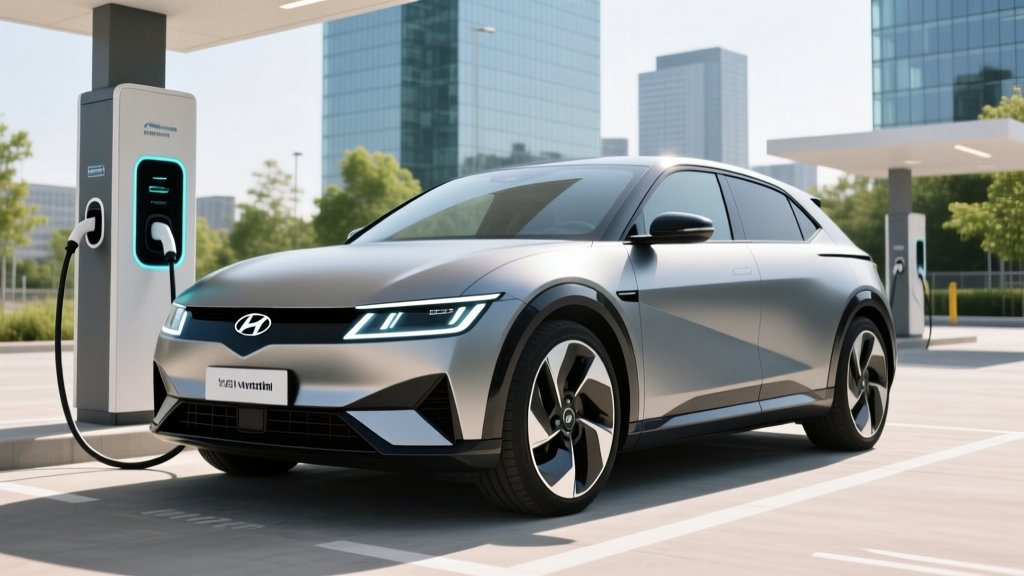
The Hyundai Ioniq 5 has been one of the most compelling electric crossovers since its 2022 debut, and the 2025 model year sharpens its edge with the addition of the NACS charge port (native Tesla Supercharger access) and the high-performance Ioniq 5 N. But with aggressive lease incentives frequently appearing on Hyundai's national offers, many shoppers are asking whether a 2025 Hyundai Ioniq 5 lease is the smartest path into this EV — or whether buying outright makes more financial sense in today's shifting incentive landscape.
This review dissects the 2025 Ioniq 5 with the numbers that matter: real-world range reconciliation, charging-curve behavior, total lease economics, and exactly who should consider signing on the dotted line.
2025 Ioniq 5 at a Glance: Full Spec Sheet
| Spec | SEL RWD | SEL AWD | Limited AWD | Ioniq 5 N |
|---|---|---|---|---|
| Base MSRP | $42,600 | $46,100 | $54,300 | $67,500 |
| EPA Range | 303 mi | 260 mi | 260 mi | 221 mi |
| Battery (usable) | 84 kWh (NMC) | 84 kWh (NMC) | 84 kWh (NMC) | 84 kWh (NMC) |
| Horsepower | 168 hp | 320 hp | 320 hp | 640 hp (N Grin Boost) |
| 0-60 mph | 7.2 sec | 4.5 sec | 4.5 sec | 3.25 sec |
| Max DC Fast Charge | ~240 kW | ~240 kW | ~240 kW | ~240 kW |
| 10-80% DC Time | ~18 min | ~18 min | ~18 min | ~18 min |
| Level 2 (240V/48A) | 10.9 kW | 10.9 kW | 10.9 kW | 10.9 kW |
| Combined MPGe | 114 MPGe | 101 MPGe | 98 MPGe | 85 MPGe |
| Efficiency (kWh/100mi) | 29 | 33 | 34 | 39 |
| Drivetrain | RWD | Dual-motor AWD | Dual-motor AWD | Dual-motor AWD |
Source: EPA fueleconomy.gov, Hyundai Motor America. Prices exclude $1,395 destination charge.
Real-World Range vs. EPA Sticker: What to Actually Expect
The Ioniq 5's 84 kWh NMC (nickel manganese cobalt) battery pack delivers competitive efficiency, particularly in the RWD configuration where the single rear motor and heat pump work together effectively. The heat pump — standard on all trims — is a significant cold-weather advantage over competitors that still rely on resistive PTC heaters. In our experience, the heat pump cuts winter range loss roughly in half compared to PTC-equipped rivals.
For the RWD SEL, the 29 kWh/100mi efficiency figure translates to roughly 3.4 miles per kWh in temperate conditions. That's slightly behind the Tesla Model Y RWD (~3.6 mi/kWh) but ahead of the Ford Mustang Mach-E Extended Range RWD (~3.2 mi/kWh). In real-world terms, you'll see this efficiency on suburban routes at 35-55 mph; highway speeds above 70 mph push consumption to 33-36 kWh/100mi depending on wind and terrain.
Charging Performance: 800V Architecture Pays Off
The Ioniq 5's E-GMP platform uses an 800-volt electrical architecture — one of the few mainstream EVs to do so alongside the Kia EV6, Porsche Taycan, and Lucid Air. This translates directly into charging speed advantages at compatible DC fast chargers.
| Charging Level | Power / Voltage | Miles Added per Hour | Notes |
|---|---|---|---|
| Level 1 (120V household) | ~1.4 kW | ~4-5 mi/hr | Emergency/top-up only; ~60+ hrs for full charge |
| Level 2 (240V/48A home) | 10.9 kW | ~36-40 mi/hr | Full charge in ~8 hrs; ideal overnight |
| DC Fast (350 kW station) | Peak ~240 kW | ~650-800 mi/hr (peak) | 10-80% in ~18 min; tapers significantly above 80% |
| DC Fast (150 kW station) | ~150 kW sustained | ~400-500 mi/hr | 10-80% in ~25 min; more common station type |
Charging curve reality: The Ioniq 5 peaks near 240 kW between roughly 10-40% state of charge, then tapers progressively. From 40-60%, expect ~180 kW; from 60-80%, roughly 120-140 kW. Above 80%, the rate drops to under 60 kW as the battery management system protects cell longevity. This means charging from 10-80% takes approximately 18 minutes at a 350 kW Electrify America or Tesla Supercharger (via NACS adapter or native port on 2025 models), but pushing from 80-100% adds another 25+ minutes. For road trips, the 10-80% strategy remains optimal.
The 2025 model year introduces the native NACS (North American Charging Standard) port on new production, granting direct access to Tesla's Supercharger network without an adapter. This is a major practical upgrade — Tesla's network remains the most reliable and geographically comprehensive DC fast-charging infrastructure in the US. Earlier 2022-2024 Ioniq 5 models with CCS ports can access Superchargers using Hyundai-provided NACS adapters.
For home Level 2 charging, the onboard 10.9 kW charger means you'll need a 240V/48A circuit (60A breaker) to achieve maximum speed. Most home installations use a hardwired Level 2 station like the ChargePoint Home Flex or Emporia Level 2. Expect installation costs of $800-$2,500 depending on panel proximity and whether your electrical panel needs an upgrade. A full overnight charge from near-empty takes approximately 8 hours — more than adequate for daily replenishment.
Lease Economics: Pricing, Incentives, and Monthly Costs
The strongest argument for a 2025 Hyundai Ioniq 5 lease often comes down to the incentive math. Here's why leasing can outperform buying in the current regulatory environment:
| Factor | Buying (Purchase/Finance) | Leasing |
|---|---|---|
| Federal §30D Credit | Up to $7,500 — subject to buyer income caps ($150K single / $300K joint), MSRP cap ($80K SUVs), and battery critical-mineral sourcing rules. Point-of-sale transfer available. | Lease credit (§45W commercial credit) goes to the lessor (Hyundai Motor Finance). Hyundai typically passes this through as a "lease cash" reduction, lowering monthly payments. |
| Incentive Certainty | Must verify sourcing compliance at time of purchase — eligibility varies by build date and battery supply chain. | Lease cash is generally available regardless of buyer income or battery sourcing; lessor claims the commercial credit. |
| Typical Monthly (36-mo, $3,500 down) | N/A (loan payment ~$650-$780/mo depending on rate) | $299-$449/mo depending on trim and Hyundai's current national offers |
| End of Term | You own the vehicle; full equity | Return or purchase at residual value (~48-52% of MSRP) |
The lease loophole advantage: Under IRS §30D rules, the purchase credit requires the buyer to meet income thresholds and the vehicle to satisfy battery-sourcing requirements that have tightened significantly. When you lease, however, the vehicle is technically purchased by the leasing company (Hyundai Motor Finance), which claims the §45W commercial clean vehicle credit — a $7,500 credit with no buyer income caps and no MSRP caps. Hyundai has historically passed most or all of this savings to the lessee as capitalized-cost reduction.
This means high-income buyers who are phased out of the purchase credit, or buyers whose preferred Ioniq 5 build doesn't meet critical-mineral sourcing thresholds, can still access the full $7,500 equivalent through a lease. It's the most reliable path to the incentive in the current regulatory environment.
Sample lease scenario (illustrative, based on typical Hyundai national offers):
- 2025 Ioniq 5 SEL RWD — MSRP $42,600 + $1,395 destination = $43,995
- Lease cash applied: $7,500
- Adjusted cap cost: ~$36,495
- 36-month / 10,000 miles per year
- Residual: ~50% ($21,998)
- Money factor: ~0.00225 (equiv. ~5.4% APR)
- Estimated payment: ~$370-$420/month with $2,500-$3,500 due at signing
Actual lease terms vary monthly. Check HyundaiUSA.com for current national offers and consult your dealer for localized pricing.
Performance, Interior, and Daily Livability
The Ioniq 5's retro-futuristic design hasn't aged since its debut, and the interior remains one of the most spacious in the compact electric crossover segment. Here's what the numbers look like for daily use:
- Cargo volume: 27.2 cu ft behind rear seats / 59.3 cu ft with rear seats folded (AWD trims; RWD includes a small frunk adding ~0.85 cu ft)
- Rear legroom: 39.4 inches — genuinely generous, enough for adult passengers on long trips
- Front legroom: 41.7 inches
- Wheelbase: 118.1 inches (longer than a Toyota RAV4, contributing to ride quality and interior space)
The dual-screen setup (12.3-inch digital cluster + 12.3-inch infotainment) runs Hyundai's latest software with wireless Apple CarPlay and Android Auto. The center console slides fore and aft — a unique feature Hyundai calls the "Universal Island" — creating flexible storage or easier front-seat pass-through. Physical buttons for climate control remain, which is a practical win over touch-only competitors.
Driver assistance: All 2025 Ioniq 5 trims include Hyundai SmartSense: forward collision avoidance, lane-keeping assist, blind-spot monitoring, and rear cross-traffic alert. Higher trims add Highway Driving Assist 2 (HDA2), which provides adaptive cruise control with lane centering on divided highways. This is an SAE Level 2 system — the driver must maintain hands-on-wheel awareness and full supervisory responsibility at all times. It performs comparably to Ford BlueCruise on marked highways but does not offer hands-free operation.
The Ioniq 5 also offers Vehicle-to-Load (V2L) capability, providing up to 3.6 kW of 120V AC power through an interior outlet and an external adapter. This powers laptops, camping equipment, or even small appliances during outages — a feature few competitors offer.
Battery Longevity and Warranty Coverage
Hyundai backs the Ioniq 5's battery pack with one of the industry's strongest warranties:
- Battery: 10 years / 100,000 miles (capacity retention above 70% of original)
- Powertrain (motors, reducer): 10 years / 100,000 miles
- New vehicle limited: 5 years / 60,000 miles
- Roadside assistance: 5 years / unlimited miles
The 84 kWh NMC pack uses an active liquid thermal management system that preconditioned the battery during DC fast charging and maintains optimal cell temperature during operation. Based on data from 2022-2024 Ioniq 5 fleets, degradation has been modest — most owners report 95-97% state of health after 30,000 miles. The 70% retention threshold at 10 years/100,000 miles is conservative; real-world projections suggest most packs will retain 85-90% capacity at that milestone under normal use.
For lessees on a 36-month lease, battery degradation is essentially a non-issue — you'll return the vehicle long before meaningful capacity loss occurs.
Pros and Cons: The Honest Assessment
✓ Pros
- 800V architecture delivers class-leading DC fast charging (~18 min, 10-80%)
- Native NACS port (2025+) unlocks Tesla Supercharger network
- Spacious interior with 39.4" rear legroom and versatile cargo area
- Standard heat pump preserves cold-weather range
- 10-year/100,000-mile battery warranty
- V2L capability for power output (3.6 kW)
- Lease incentive pathway avoids §30D income/sourcing restrictions
- Physical climate controls alongside modern infotainment
✗ Cons
- AWD range drops to 260 mi EPA — below Model Y Long Range (300+ mi)
- No front trunk (frunk) on AWD trims; tiny 0.85 cu ft frunk on RWD
- Rear wiper absent on pre-2025 builds (2025 adds it — confirm trim)
- HDA2 requires hands-on; no hands-free driving assist offered
- Infotainment can lag with heavy navigation + media multitasking
- Road noise at highway speeds is noticeable vs. luxury competitors
- Dealer markups still appear in some metro markets despite improving supply
Who Should Lease the 2025 Ioniq 5 — And Who Shouldn't
This EV is ideal for:
- Daily commuters driving 30-80 miles round trip who can charge at home overnight — the 260-303 mile range means charging 2-3 times per week at most.
- Young families needing rear-seat space for car seats plus cargo room for strollers and groceries — the 39.4" rear legroom and flat load floor excel here.
- Incentive-maximizing buyers whose income exceeds §30D caps ($150K single / $300K joint) and who want the full $7,500 equivalent through a lease structure.
- Road-trip-curious EV adopters who value the 800V fast-charging architecture for occasional long drives — 18-minute charging stops are genuinely practical.
Consider alternatives if:
- You regularly drive 200+ miles one-way in cold climates — the AWD's ~175-200 mile cold-weather range may require mid-trip charging. The Tesla Model Y Long Range or Hyundai Ioniq 5 RWD offers more buffer.
- You want hands-free highway driving — Ford's BlueCruise and GM's Super Cruise offer hands-off operation on mapped highways; Hyundai's HDA2 does not.
- You plan to keep the vehicle 8+ years — buying may be more economical than successive leases, especially if you drive under 12,000 miles annually and can utilize the purchase credit.
Frequently Asked Questions
What is the real-world range of the 2025 Hyundai Ioniq 5?
The RWD SEL achieves 303 miles EPA, delivering approximately 255-275 miles in real-world highway driving and 210-230 miles in freezing temperatures. AWD trims rated at 260 miles EPA typically return 220-240 miles highway and 175-200 miles in cold weather. City and suburban driving with regenerative braking often matches or slightly exceeds EPA estimates.
How fast does the 2025 Ioniq 5 charge at home and on the road?
At home on a 240V/48A Level 2 charger, the Ioniq 5 adds roughly 36-40 miles of range per hour, achieving a full charge overnight in ~8 hours. On a 350 kW DC fast charger, it peaks at ~240 kW and charges from 10-80% in approximately 18 minutes. At more common 150 kW stations, 10-80% takes roughly 25 minutes.
Does the 2025 Ioniq 5 qualify for the federal EV tax credit?
When purchased, the Ioniq 5 may qualify for up to $7,500 under IRS §30D, but eligibility depends on the buyer's adjusted gross income (capped at $150K single / $300K joint), the vehicle's MSRP (under the $80K SUV cap), and battery critical-mineral and component sourcing requirements that change periodically. When leased, the lessor claims the §45W commercial credit and typically passes savings to the lessee as lease cash — bypassing income and sourcing restrictions. Always verify current eligibility on IRS.gov and with your dealer.
Is it better to lease or buy the 2025 Ioniq 5?
Leasing is advantageous if you want the $7,500 incentive without income/sourcing restrictions, prefer lower monthly payments, drive under 12,000 miles per year, and like upgrading every 3 years. Buying makes more sense if you drive 15,000+ miles annually (lease mileage penalties add up), plan to keep the car 6+ years, qualify for the full purchase credit, and want to build long-term equity. Hyundai's 10-year battery warranty protects buyers through extended ownership.
How does the Ioniq 5 compare to the Tesla Model Y and Ford Mach-E?
The Ioniq 5 charges faster than both (800V architecture), offers more rear legroom than the Mach-E, and provides a more distinctive design. The Model Y Long Range AWD still leads in range (300+ mi EPA) and has the most mature Supercharger ecosystem. The Mach-E offers a sportier driving feel and available hands-free BlueCruise. On price and lease value, the Ioniq 5 frequently undercuts both with aggressive Hyundai incentives.
Can I charge the 2025 Ioniq 5 at Tesla Superchargers?
Yes. The 2025 Ioniq 5 is built with the native NACS charge port, granting direct access to Tesla's Supercharger network without an adapter. For 2022-2024 models with CCS ports, Hyundai provides a NACS adapter that enables Supercharger access. This significantly expands the available DC fast-charging infrastructure for road trips.