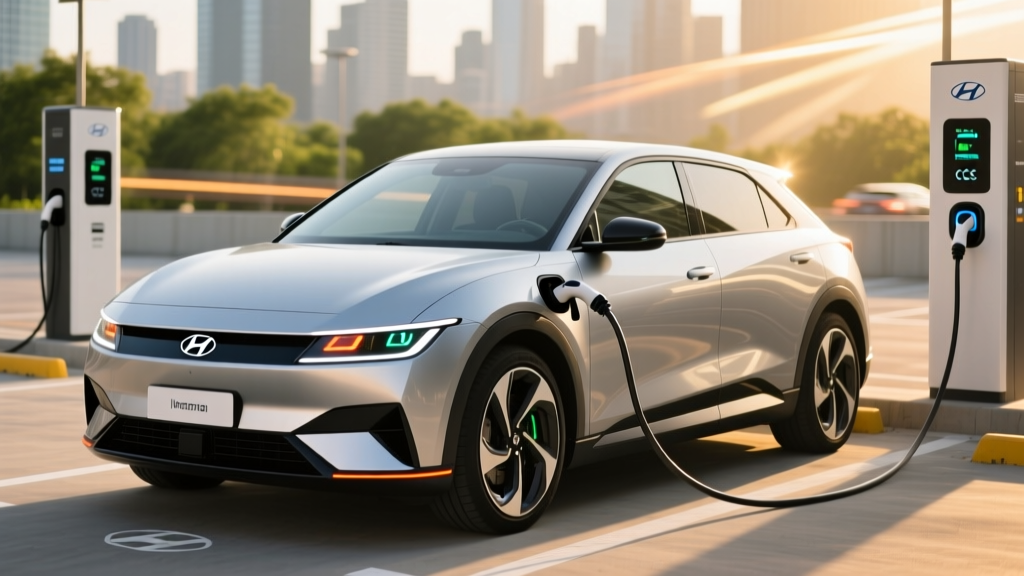
If you've been tracking EV incentives, you've likely seen aggressive offers on Hyundai's retro-futuristic crossover. The 2025 Hyundai Ioniq 5 has become a staple in the midsize electric SUV segment, but dissecting a 2025 Hyundai Ioniq 5 lease deal requires looking past the monthly payment. You need to understand the 800V architecture, the real-world efficiency, and how the shift to U.S. assembly in Savannah, Georgia, impacts your wallet via federal tax credits.
As we evaluate the EV landscape in 2026, the Ioniq 5 remains a benchmark for charging speed and interior versatility. Below is a data-driven profile of what you're actually leasing, driving, and paying for.
2025 Hyundai Ioniq 5 Core Specifications
Before analyzing the lease terms, we must establish the hardware. The 2025 model year introduced the NACS (Tesla-style) charge port natively, eliminating the need for adapters at Superchargers, alongside a slightly larger battery pack for Extended Range models.
| Feature | Standard Range (RWD) | Extended Range (RWD) | Extended Range (AWD) | Ioniq 5 N (Performance) |
|---|---|---|---|---|
| EPA Range | 245 miles | 318 miles | 290 miles | 221 miles |
| Battery (Usable) | 58.0 kWh | 80.0 kWh | 80.0 kWh | 80.0 kWh |
| Chemistry | NMC (Nickel Manganese Cobalt) | NMC | NMC | NMC |
| Horsepower | 168 hp | 225 hp | 320 hp | 641 hp (650 w/ NGS) |
| 0-60 mph | ~7.5 sec | ~6.8 sec | ~4.5 sec | ~3.25 sec |
| Max DC Charge Rate | ~150 kW | ~238 kW | ~238 kW | ~250 kW |
| MPGe (Combined) | 110 MPGe | 114 MPGe | 101 MPGe | 83 MPGe |
Real-World Range and Efficiency Reality Check
The EPA sticker is a starting point, not a guarantee. The Ioniq 5's boxy design and 20-inch wheels (on Limited trims) create aerodynamic drag that impacts highway efficiency more than city driving.
Real-World Range Expectations
EPA Estimate: 318 miles (Extended Range RWD)
AutoEdgeView Observed: Expect 280–295 miles in mixed driving at 70°F. On a pure highway road trip at 75+ mph, range drops to approximately 240–260 miles. In freezing winter conditions (below 32°F), plan for a 20–25% reduction, bringing effective range down to 220–240 miles unless you precondition the battery and cabin while plugged in.
Efficiency hovers around 29–31 kWh/100 miles in mixed driving. The heat pump, standard on most trims, is essential for preserving range in cold climates, as it scavenges waste heat from the powertrain rather than drawing heavily from the 80 kWh battery pack.
Charging Performance: The 800V Advantage
The primary reason to choose the Ioniq 5 over rivals is its 800V electrical architecture. While competitors like the Ford Mustang Mach-E or Volkswagen ID.4 operate on 400V systems (peaking around 115–170 kW), the Ioniq 5 can sustain much higher charge rates, provided you find a capable 350 kW charger.
| Charging Level | Power / Rate | Time / Added Range |
|---|---|---|
| Level 1 (120V Household) | ~1.2 kW | ~3–4 miles per hour |
| Level 2 (240V Home/Public) | 10.9 kW (Max) | ~32 miles per hour (0-100% in ~8 hrs) |
| DC Fast Charge (350 kW) | Peak ~238 kW | 10–80% in ~18 minutes |
| DC Fast Charge (150 kW) | Sustained ~110 kW | 10–80% in ~30 minutes |
Note: The 18-minute 10–80% claim requires a 350 kW CCS or NACS dispenser and optimal battery temperatures. On a standard 150 kW Electrify America or Tesla Supercharger stall, you will still see respectable speeds, but the curve will taper earlier.
Is the Ioniq 5 Worth Leasing in 2026?
Leasing an EV is often a strategic play to avoid depreciation risk and navigate the complex landscape of the federal tax credit. For the 2025 Hyundai Ioniq 5, the lease deal structure is unique because of the "lease loophole" (IRC 45W), which allows Hyundai to pass the $7,500 commercial credit to you as a lease rebate, regardless of your personal income or the vehicle's battery sourcing.
Tax Credit and Lease Math
Because the Ioniq 5 is now assembled in Georgia (Metaplant America), it qualifies for the $7,500 federal incentive if you purchase it, provided you meet the IRS income and MSRP caps. However, on a lease, the $7,500 is typically applied as a capitalized cost reduction, instantly lowering the amount you're financing.
| Scenario | Base MSRP (SE Std Range) | Incentive Applied | Effective Starting Price |
|---|---|---|---|
| Purchase (Eligible) | $42,600 | $7,500 (§30D) | $35,100 |
| Lease (IRC 45W) | $42,600 | $7,500 (Lease Cash) | $35,100 (Cap Cost) |
Lease deals often advertise payments as low as $299–$399/month depending on the region and down payment, but always verify if the $7,500 lease cash is included in the advertised payment or if it requires a higher money factor.
Interior, Tech, and Daily Usability
The Ioniq 5's 118.1-inch wheelbase translates to limousine-like rear legroom (39.4 inches), which actually exceeds the Hyundai Palisade SUV. The flat floor and sliding center console ("Universal Island") make the cabin feel more like a lounge than a car.
- Cargo Volume: 27.2 cu ft (rear seats up) / 59.3 cu ft (rear seats folded).
- Frunk: The RWD models offer a generous 2.0 cu ft front trunk; AWD models are smaller at 0.85 cu ft due to the front motor.
- Tech: Dual 12.3-inch panoramic displays running Hyundai's latest infotainment with native wireless CarPlay and Android Auto.
- V2L (Vehicle-to-Load): An internal and external port allows you to power appliances or even charge another EV at up to 3.6 kW.
ADAS and Safety
Hyundai's Highway Driving Assist 2 (HDA2) is a robust Level 2 system. It includes lane-centering and adaptive cruise with machine-learning-based curve speed management. It is not "self-driving," but it is one of the more natural-feeling systems on the market.
Warning: HDA2 requires hands-on-wheel supervision. The Ioniq 5 does not currently support hands-free driving on divided highways like GM's Super Cruise or Ford's BlueCruise.
Pros, Cons, and Verdict
Pros
- 800V architecture enables 18-min 10-80% charging.
- Massive rear-seat legroom and flat floor.
- NACS port native (no Supercharger adapter needed).
- Excellent ride quality and cabin isolation.
Cons
- No rear wiper (a major issue in rain/snow for some owners).
- Frunk space is minimal on AWD trims.
- Range drops significantly at 80+ mph highway speeds.
- Infotainment learning curve for climate controls (touch-capacitive sliders).
Frequently Asked Questions
What is the best trim for a 2025 Hyundai Ioniq 5 lease deal?
The SEL trim with Extended Range RWD offers the best value. It includes the larger 80 kWh battery, heated/ventilated seats, and HDA2, while avoiding the 20-inch wheels of the Limited trim that reduce range by roughly 10–15 miles.
Does the Ioniq 5 qualify for the $7,500 tax credit?
Yes. Because it is assembled in Savannah, Georgia, it meets the North American assembly requirement. For purchases, you must meet income and MSRP caps. For leases, the $7,500 is typically passed through as a rebate regardless of your income.
How does the Ioniq 5 compare to the Tesla Model Y?
The Model Y offers more cargo space and a slightly more extensive proprietary Supercharger network (though the gap is closing with NACS adoption). The Ioniq 5 counters with faster peak charging speeds (on 350 kW stalls), a more comfortable ride, and physical buttons for critical functions.
What is the battery warranty?
Hyundai covers the high-voltage battery for 10 years or 100,000 miles, whichever comes first, with a capacity retention threshold of 70%.