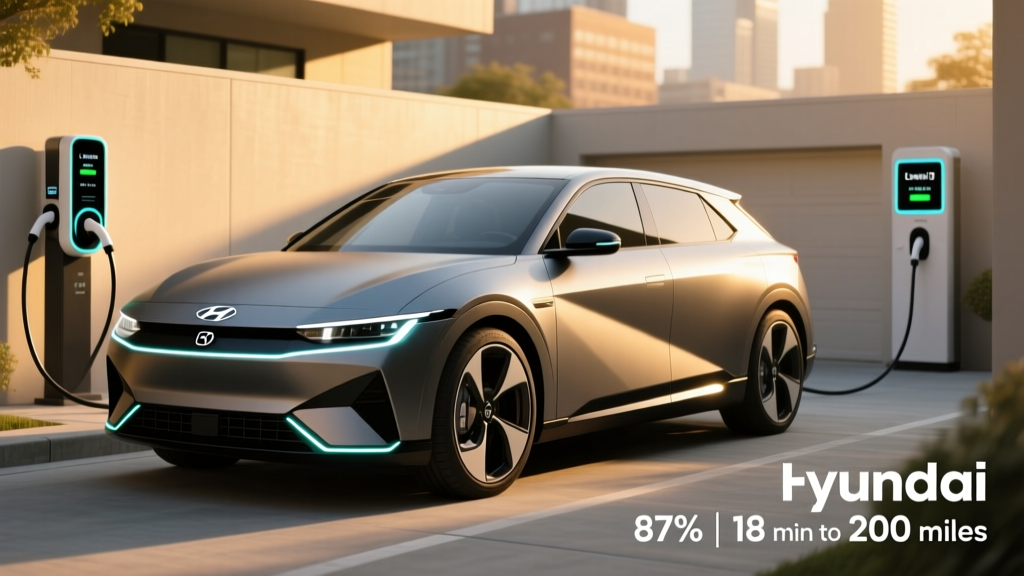
The Hyundai Ioniq 5 continues to anchor the mainstream EV crossover segment in the 2025 model year, offering retro-modern styling, 800-volt architecture, and a usable 84 kWh battery that delivers an EPA-estimated 318 miles of range in its most efficient configuration. For buyers hunting 2025 Hyundai Ioniq 5 deals, the calculus now involves more than sticker price: federal tax credit eligibility under IRS §30D, dealer point-of-sale transfers, and Hyundai's aggressive lease incentives all factor into the out-of-pocket number. This profile breaks down the exact specs, real-world efficiency, charging behavior, and ownership economics you need before signing.
Range and Efficiency: EPA Numbers vs. the Real World
The 2025 Ioniq 5 is offered with two battery configurations. The Standard Range RWD uses a 58 kWh (usable) lithium-ion polymer pack, while the Long Range models—available in both RWD and AWD—step up to an 84 kWh usable battery. Hyundai sources NMC (nickel-manganese-cobalt) cells supplied by SK On for the Long Range variant, prioritizing energy density over the LFP chemistry found in some competitors like the Tesla Model 3 RWD.
- Long Range RWD: EPA 318 mi — expect ~265–285 mi sustained highway driving at 70 mph; ~220–245 mi in sub-30°F cold without preconditioning.
- Long Range AWD: EPA 290 mi — expect ~245–260 mi highway; ~200–225 mi in freezing conditions.
- Standard Range RWD: EPA 244 mi — expect ~200–215 mi highway; ~170–185 mi in deep cold.
These estimates reflect the Ioniq 5's heat pump (standard on Long Range trims), which mitigates cold-weather losses compared to EVs without active thermal management. Highway efficiency drops noticeably above 75 mph due to the boxy aero profile (Cd 0.284).
Efficiency ratings from fueleconomy.gov place the Long Range RWD at 114 MPGe combined (29 kWh/100 mi), while the AWD variant returns 101 MPGe combined (33 kWh/100 mi). For context, that puts the Ioniq 5 RWD roughly on par with the Tesla Model Y Long Range RWD in energy consumption per mile, though the Model Y's more slippery shape gives it a slight highway edge.
Charging Speed: 800-Volt Architecture in Practice
The Ioniq 5's defining technical advantage remains its E-GMP platform with native 800-volt capability. This allows peak DC fast-charging rates up to 240 kW on a compatible 350 kW charger—meaning you'll see the vehicle accept electrons at nearly twice the rate of a 400-volt competitor like the Ford Mustang Mach-E or Volkswagen ID.4 under optimal conditions.
| Charging Level | Power / Rate | Time or Miles Added |
|---|---|---|
| DC Fast Charge (peak) | 240 kW (10%–55% SoC) | 10%–80% in ~18 min (Long Range) |
| DC Fast Charge (sustained avg.) | ~175 kW average (10–80%) | ~210 mi added in 18 min |
| Level 2 (home/public AC) | 10.9 kW (48A onboard charger) | ~35 mi/hr; full charge in ~8.5 hr (Long Range) |
| Level 1 (120V outlet) | 1.4 kW (12A) | ~4–5 mi/hr; emergency/trickle only |
Charge curve reality check: The 240 kW peak is not sustained across the full session. The Ioniq 5 holds near-peak power from roughly 10% to 55% state of charge, then tapers progressively—dropping to ~150 kW by 70% and below 80 kW past 85%. This is normal behavior for NMC cells managed conservatively to protect long-term health. If you're road-tripping, plan your stops around the 10%–80% window for maximum throughput; charging from 80% to 100% on DC can take nearly as long as the 10%–80% leg.
On the connector front, the 2025 Ioniq 5 uses the CCS1 standard for DC fast charging. Hyundai has confirmed that NACS adoption arrives with the 2026 model-year refresh, so 2025 buyers will need a CCS-to-NACS adapter to access Tesla Supercharger stalls (which Hyundai provides complimentary through its dealer network for a limited period). At home, the 10.9 kW onboard charger is competitive—it's slightly behind the 11.5 kW charger in the Model Y, but ahead of the ID.4's 11 kW unit.
Performance and Drivetrain
The Ioniq 5 lineup offers three powertrain configurations for 2025:
| Trim / Drivetrain | Horsepower | Torque (lb-ft) | 0–60 mph | Battery (usable) |
|---|---|---|---|---|
| Standard Range RWD | 168 hp | 258 | ~7.5 sec | 58 kWh |
| Long Range RWD | 225 hp | 258 | ~6.5 sec | 84 kWh |
| Long Range AWD (dual-motor) | 320 hp | 446 | ~4.5 sec | 84 kWh |
The AWD model's 4.5-second 0–60 time makes it genuinely quick—on par with a Golf R and quicker than most buyers in this segment need. The RWD Long Range, at 6.5 seconds, offers more than adequate passing power and is the efficiency sweet spot. Regenerative braking is adjustable via paddle shifters (four levels including i-Pedal one-pedal mode), and the system is among the smoothest in the segment, with none of the grabby feel that plagues some competitors at maximum regen.
Towing capacity is rated at 2,300 lbs for the AWD Long Range (with trailer brakes)—adequate for a small utility trailer or a pair of dirt bikes, but not enough for a camper. The RWD models are not rated for towing in the US market.
Interior Space, Tech, and Daily Livability
The Ioniq 5 rides on a 118.1-inch wheelbase—longer than a Toyota RAV4—and Hyundai uses that E-GMP skateboard to deliver a surprisingly spacious cabin. Rear legroom measures 39.4 inches, which is limousine-tier for this segment and a full 2.5 inches more than the Model Y's second row. Cargo volume behind the rear seats is 27.2 cu ft, expanding to 59.3 cu ft with the rear seats folded. The front trunk (frunk) adds 0.85 cu ft on AWD models and 2.0 cu ft on RWD—enough for a charging cable bag but not much more.
Tech highlights include dual 12.3-inch displays (instrument cluster and infotainment in a single curved housing), wireless Apple CarPlay and Android Auto, Hyundai's Digital Key 2 (NFC/BLE phone-as-key), and a vehicle-to-load (V2L) feature that can output up to 3.6 kW through an interior outlet or exterior adapter—handy for powering a tailgate or running a laptop during an outage.
On the driver-assistance side, the Ioniq 5 comes standard with Hyundai SmartSense: forward collision-avoidance assist, lane-keeping assist, blind-spot monitoring, and rear cross-traffic collision-avoidance. The available Highway Driving Assist 2 (HDA2) provides SAE Level 2 semi-automated driving with lane-centering and adaptive cruise on divided highways. This is not self-driving—the driver must keep hands on the wheel and eyes on the road at all times. The system is competent and less aggressive than Tesla Autopilot in lane-change behavior, but it lacks the hands-free capability of GM's Super Cruise or Ford's BlueCruise on approved highways.
Pricing, Trims, and Federal Tax Credit Eligibility
The 2025 Ioniq 5 is offered in SE, SEL, and Limited trims. Here is the MSRP breakdown (destination included):
| Trim | MSRP (incl. destination) | Est. Federal Credit (§30D) | Effective Price (if eligible) |
|---|---|---|---|
| SE Standard Range RWD | $42,600 | Up to $7,500 | ~$35,100 |
| SE Long Range RWD | $46,100 | Up to $7,500 | ~$38,600 |
| SEL Long Range RWD | $48,650 | Up to $7,500 | ~$41,150 |
| SEL Long Range AWD | $52,150 | Up to $7,500 | ~$44,650 |
| Limited Long Range AWD | $57,250 | Up to $7,500 | ~$49,750 |
- MSRP cap: SUVs/crossovers must have an MSRP at or below $80,000. All Ioniq 5 trims qualify.
- Income cap: Modified AGI must not exceed $150,000 (single), $225,000 (head of household), or $300,000 (joint). Check IRS.gov §30D guidance for phase-out details.
- Battery sourcing: The $7,500 credit is split into two $3,750 halves—one for critical-minerals sourcing and one for battery-component manufacturing. The Ioniq 5's SK On cells are manufactured in Georgia (via the BlueOval SK joint venture), but critical-mineral sourcing compliance varies by production batch. Verify the specific VIN's credit status on the DOE/IRS qualifying vehicle list before purchase.
- Point-of-sale transfer: As of 2024, buyers can transfer the credit to the dealer at purchase, reducing the sale price directly rather than waiting for a tax refund. This requires dealer registration with the IRS Energy Credits portal.
Consult a tax professional before relying on credit eligibility. Rules are subject to change, and sourcing compliance is determined per-VIN at time of delivery.
Deals and incentives beyond the federal credit: Hyundai frequently layers $1,000–$3,000 in dealer cash or customer rebates on the Ioniq 5, particularly on Long Range AWD and Limited trims where inventory has been deepest. Lease deals through Hyundai Motor Finance have appeared as low as $299–$399/month with $3,000–$4,000 due at signing on 36-month terms, often with the $7,500 federal credit baked into the lease as a capitalized-cost reduction (since the leasing company claims the commercial clean vehicle credit under §45W and passes savings to the lessee). Always ask the dealer for the "lease cash" bulletin for the current month.
Warranty and Long-Term Ownership
Hyundai's warranty coverage is a key value differentiator:
- Limited vehicle warranty: 5 years / 60,000 miles
- Powertrain warranty: 10 years / 100,000 miles
- Battery warranty: 10 years / 100,000 miles, guaranteeing at least 70% state-of-health (capacity retention) over the coverage period
- Roadside assistance: 5 years / unlimited miles
- Complimentary maintenance: 3 years / 36,000 miles (oil changes irrelevant, but covers tire rotations, cabin filter, multi-point inspections)
The 70% battery SoH threshold over 10 years is industry-standard (matching Tesla and Ford), though Hyundai's 10-year term is longer than most competitors' 8-year battery warranties. Real-world degradation data from early 2022–2023 Ioniq 5 owners suggests NMC packs in the E-GMP platform are holding up well, with most high-mileage drivers reporting 93%–96% SoH at the 30,000–50,000 mile mark. Long-term replacement cost for the 84 kWh pack is estimated at $12,000–$16,000 out of warranty, though this is expected to decline as cell pricing continues to fall.
Pros, Cons, and Who Should Buy
- Class-leading 800V DC fast charging (~18 min 10–80%)
- Spacious rear seat (39.4 in legroom) and flat floor
- V2L capability (3.6 kW output)
- 10-year/100,000-mi battery and powertrain warranty
- Competitive pricing with federal + dealer incentives
- Smooth, adjustable regen with true one-pedal mode
- Standard heat pump on Long Range (cold-weather efficiency)
- CCS1 connector in 2025 requires adapter for Tesla Superchargers
- Highway range loss is significant above 75 mph (boxy aero)
- HDA2 is competent but not hands-free like BlueCruise/Super Cruise
- Frunk is tiny (0.85–2.0 cu ft depending on drivetrain)
- No rear wiper (a persistent complaint in rain/snow)
- Infotainment can lag; no physical volume knob
- Towing limited to 2,300 lbs (AWD only)
- Choose the Ioniq 5 Long Range RWD if: You prioritize range and efficiency, commute 30–60 miles daily, and want the lowest cost per mile. The SEL RWD at ~$41,150 after credit is the value sweet spot.
- Choose the Ioniq 5 Long Range AWD if: You live in a snowy or mountainous region, need the 4.5-second 0–60 for highway merging confidence, or tow light loads occasionally.
- Look elsewhere if: You need hands-free highway driving (consider Ford Mach-E with BlueCruise), maximum cargo space (Model Y offers 76 cu ft), or a frunk large enough for a week's groceries.
- Consider leasing if: You want to avoid the §30D sourcing uncertainty—Hyundai's lease structures typically pass the full $7,500 savings through regardless of battery-component origin.
2025 Hyundai Ioniq 5 Deals FAQ
What is the real-world range of the 2025 Hyundai Ioniq 5?
The EPA rates the Long Range RWD at 318 miles, but expect 265–285 miles on sustained highway drives at 70 mph, and 220–245 miles in sub-freezing temperatures. The AWD version drops to roughly 245–260 miles highway. The Standard Range RWD delivers about 200–215 real-world highway miles.
How fast does the Ioniq 5 charge at home and on the road?
On a 350 kW DC fast charger, the Ioniq 5 peaks at 240 kW and charges from 10% to 80% in approximately 18 minutes. At home on a Level 2 (240V/48A) charger, it accepts 10.9 kW and adds about 35 miles of range per hour, fully recharging the 84 kWh Long Range battery in roughly 8.5 hours.
Does the 2025 Hyundai Ioniq 5 qualify for the $7,500 federal EV tax credit?
Most Ioniq 5 trims qualify for up to $7,500 under IRS §30D, but eligibility depends on buyer income (≤$300,000 joint AGI), the vehicle's MSRP (all trims are under the $80,000 SUV cap), and battery sourcing compliance. The SK On cells are manufactured in Georgia, but critical-minerals sourcing varies. Verify your specific VIN on the DOE qualifying list and consult a tax professional.
Is the Ioniq 5 worth buying over the Tesla Model Y or Ford Mach-E?
The Ioniq 5 wins on charging speed (800V architecture), rear-seat space, and warranty length. The Model Y wins on cargo volume, Supercharger network access, and software ecosystem. The Mach-E wins on driving dynamics and hands-free BlueCruise availability. If DC fast-charging speed and passenger comfort are your top priorities, the Ioniq 5 is the strongest pick in this segment.
What are the best deals on the 2025 Ioniq 5 right now?
Look for Hyundai's monthly lease cash incentives (often $1,500–$3,000 on AWD/Limited trims), stack with the $7,500 federal credit via point-of-sale transfer, and negotiate 3%–5% off MSRP on dealer lots with 60+ day supply. SEL Long Range RWD with dealer cash and full credit can land near $39,000 out the door in competitive markets.
Does the 2025 Ioniq 5 have a NACS (Tesla) charging port?
No. The 2025 Ioniq 5 uses the CCS1 connector. Hyundai is switching to NACS for the 2026 model year. In the meantime, Hyundai has offered a complimentary CCS-to-NACS adapter through participating dealers, allowing access to Tesla Supercharger V3/V4 stalls equipped with the Magic Dock or through the adapter.