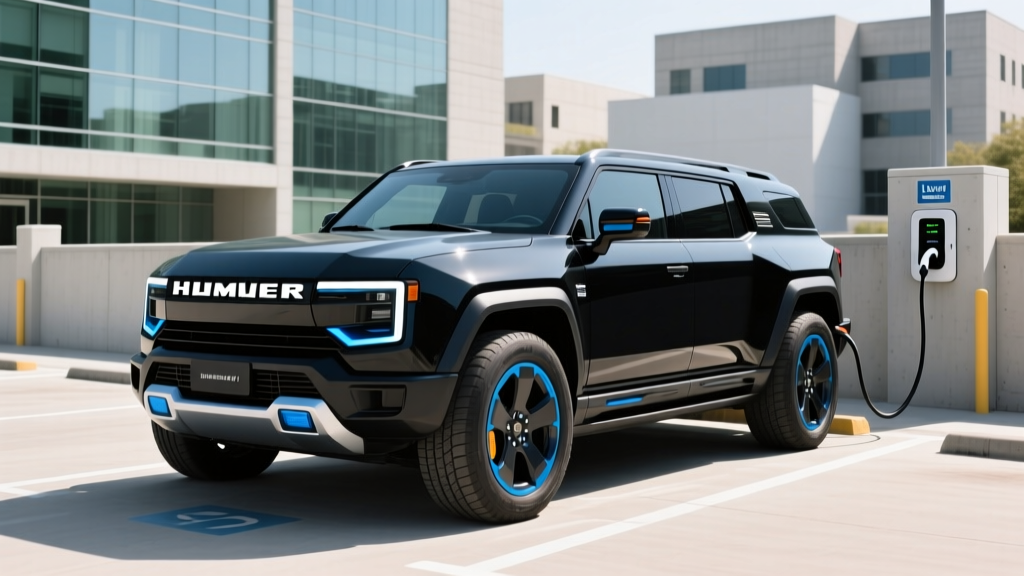
If you've been searching for 2025 Hummer EV lease deals, you've likely seen monthly payment quotes that look almost reasonable for a 9,000-pound electric supertruck. But a lease payment is only the surface. The GMC Hummer EV — with its 24-module Ultium battery, available 830 horsepower, and EPA-estimated range up to 381 miles — carries a total cost of ownership profile that differs sharply from both gas trucks and more mainstream EVs. This guide dissects the real numbers behind leasing versus buying, the current federal tax credit landscape, and what you'll actually spend (and save) over five years.
2025 Hummer EV Lease Deals: What the Numbers Actually Look Like
GMC positions the Hummer EV in two body styles — the Pickup and the SUV — across trims from 2X to the range-topping Edition 1. MSRP spans roughly $98,000 to $112,000 depending on configuration and options, putting it firmly in luxury-truck territory. Lease deals on vehicles in this bracket typically work differently than mainstream EV leases:
- Money factor and residual value drive the monthly payment. The Hummer EV's strong brand cachet has supported residuals around 55–62% at 36 months, which helps suppress monthly costs.
- Lease cash and dealer incentives from GM Financial periodically reduce capitalized cost, sometimes by $2,000–$5,000 depending on the quarter.
- The §30D tax credit loophole: Leased EVs technically qualify for the commercial clean vehicle credit (§45W), which the lessor (GM Financial) receives — and may pass through as a capitalized cost reduction. This is not guaranteed and varies by lessor.
A realistic 36-month lease on a 2025 Hummer EV Pickup 2X (MSRP ~$99,945) with $7,500 capitalized cost reduction, 10,000 miles/year, and a 60% residual lands in the $1,150–$1,450/month range before taxes and fees. That's substantial — and it's only the starting point for understanding true cost.
Total Cost of Ownership: 5-Year Breakdown
Whether you lease or finance, the full ownership picture includes energy, insurance, maintenance, and depreciation. Below is a 5-year / 60,000-mile projection for a Hummer EV Pickup 2X compared against a similarly priced gas full-size truck (e.g., a high-trim Ford F-150 or Ram 1500 at ~$75,000 MSRP).
| Category | Hummer EV Pickup 2X | Gas Full-Size Truck (~$75K) |
|---|---|---|
| Purchase / Lease Payments | ~$78,000 (lease) or ~$105,000 (finance) | ~$52,000 (finance) |
| Fuel / Energy | ~$5,400 (home charging avg.) | ~$12,600 (17 MPG, $3.50/gal) |
| Insurance (5 yr cumulative) | ~$18,000–$22,000 | ~$10,500–$13,000 |
| Maintenance | ~$1,800 | ~$4,200 |
| Depreciation (est. 5 yr) | ~$42,000–$48,000 | ~$28,000–$32,000 |
| Total (5 yr) | ~$145,000–$157,000 | ~$107,000–$113,000 |
The Hummer EV costs significantly more to own over five years than a gas truck — primarily because of the higher purchase price, elevated insurance premiums, and steeper depreciation in dollar terms. Where it fights back is in energy and maintenance savings, which we'll break down next.
Charging Cost vs. Gas: The Per-Mile Math
The Hummer EV Pickup 2X carries a 246 kWh Ultium battery pack (the largest in any production passenger vehicle) and achieves an EPA-estimated 47 MPGe combined (Pickup 2X; the 3X and Edition 1 vary slightly). That translates to roughly 2.1 kWh per mile — an enormous energy appetite by EV standards, but still cheaper per mile than gasoline in most scenarios.
| Scenario | Hummer EV | Gas Truck (17 MPG) |
|---|---|---|
| Home charging (Level 2, $0.14/kWh national avg.) | $0.29/mile | — |
| Public DC fast charging ($0.40/kWh avg.) | $0.84/mile | — |
| Gasoline ($3.50/gallon) | — | $0.21/mile |
| Gasoline ($4.50/gallon) | — | $0.26/mile |
At home on Level 2, the Hummer EV costs about $0.29 per mile — slightly more than a 17-MPG gas truck at $3.50/gallon. This is a critical reality check: the Hummer EV's massive battery and 9,000-pound curb weight erode much of the per-mile cost advantage that lighter EVs enjoy. If you charge primarily on public DC fast chargers at $0.40/kWh, the Hummer EV actually costs more per mile than the gas truck.
However, owners with access to off-peak utility rates (as low as $0.06–$0.08/kWh in some regions) can push the per-mile cost down to $0.13–$0.17/mile, which meaningfully undercuts gasoline. Time-of-use rate plans are essential for Hummer EV owners charging at home.
For real-world range context: the Edition 1 Pickup carries an EPA estimate of 329 miles, while the 2X with the smaller (but still enormous) battery configuration reaches up to 381 miles EPA. Expect 280–320 miles in mixed highway driving, and potentially 220–260 miles in cold weather (below 30°F) due to battery resistance and cabin heating demands. Source: fueleconomy.gov.
Federal Tax Credit: §30D Eligibility and the Lease Loophole
The federal EV tax credit under IRS §30D offers up to $7,500 for qualifying new clean vehicles. But eligibility for the Hummer EV is far from guaranteed, and the rules have tightened significantly.
§30D Eligibility Checklist (Current Rules)
- MSRP cap: Vans, SUVs, and pickups must have an MSRP at or below $80,000. The Hummer EV starts above $98,000 — it does not qualify for the purchase credit.
- Buyer income limits: AGI must not exceed $300,000 (joint), $225,000 (head of household), or $150,000 (single).
- Battery sourcing: Critical minerals and battery components must meet phased-in domestic/free-trade sourcing thresholds that increase annually.
- Point-of-sale transfer: Qualified buyers can transfer the credit to the dealer at purchase for an immediate price reduction — but only if the vehicle itself qualifies.
- Lease exception (§45W): Leased vehicles fall under the commercial clean vehicle credit, which has no MSRP cap and no buyer income limit. The lessor receives the credit and may (but is not required to) pass savings to the lessee.
This is why 2025 Hummer EV lease deals attract so much attention: leasing is currently the only realistic path to capturing any federal incentive on this vehicle. When GM Financial applies the $7,500 §45W credit as a capitalized cost reduction, it can lower monthly payments by roughly $200–$230/month over a 36-month term. Always confirm with the dealer whether the lessor is passing the credit through — it is not automatic.
State, Local, and Utility Incentives
Important: State and local incentives vary dramatically by jurisdiction and change frequently. The figures below are examples — always verify with your state energy office and utility provider before committing to a purchase or lease.
Beyond the federal credit, several states and utilities offer additional incentives that can stack with a lease:
- California: The Clean Fuel Reward (if active) and CVRP rebates have historically offered $1,000–$7,000, though income caps and funding availability fluctuate.
- Colorado: The state EV tax credit offers up to $5,000 for vehicles with an MSRP under $80,000 — the Hummer EV would not qualify due to price, but the lease structure may interact differently with state commercial credits.
- Utility rebates: Many utilities offer $500–$1,500 rebates for home Level 2 charger installation, and some provide discounted EV-specific time-of-use rates. Xcel Energy, PG&E, and Con Edison have historically offered programs in this range.
- HOV lane access: Several states grant EVs solo carpool lane access, which has real economic value for commuters — often worth $1,500–$5,000/year in time savings.
For the Hummer EV specifically, the MSRP cap disqualifies it from most state purchase rebates. Your best bets are utility charger rebates and EV electricity rate plans.
Maintenance Savings: Where the EV Advantage Is Real
The Hummer EV eliminates several recurring maintenance items that gas truck owners budget for annually. With three electric motors, a single-speed reduction gear, and no internal combustion components, the maintenance profile is meaningfully simpler.
| Service | Hummer EV | Gas Truck |
|---|---|---|
| Oil changes (5 yr) | $0 | $600–$900 |
| Transmission fluid | $0 (no traditional transmission) | $200–$400 |
| Brake pads/rotors | $200–$400 (regen extends life 2–3x) | $800–$1,500 |
| Air filters, spark plugs | $0 | $300–$500 |
| Coolant, cabin filter, wipers, tires | $1,200–$1,600 | $1,200–$1,500 |
| 5-Year Total | ~$1,400–$2,000 | ~$3,100–$4,800 |
Regenerative braking is the biggest maintenance story. The Hummer EV's one-pedal driving mode and aggressive regen mean the friction brakes see far less use — many EV owners report original brake pads lasting 80,000–100,000+ miles. GMC's 8-year / 100,000-mile battery and powertrain warranty provides additional long-term protection on the most expensive components.
One caveat: tires. At 9,000+ pounds with instant torque from up to 830 horsepower, the Hummer EV is exceptionally hard on tires. Expect to replace the 35-inch all-terrain tires every 25,000–35,000 miles rather than the 45,000–60,000 miles typical for gas trucks. Budget $1,200–$2,000 per set.
Insurance Costs: The Premium Reality
EV insurance premiums run 15–30% higher than equivalent gas vehicles on average, and the Hummer EV sits at the upper end of that range. Annual premiums of $3,600–$4,400 are common depending on your driving record, location, and coverage level.
Why the premium?
- Repair costs: The Ultium battery pack, three-motor drivetrain, and specialized suspension (including available Extract Mode and 4-Wheel Steer) require certified technicians and proprietary parts.
- Vehicle value: A $100,000+ vehicle carries higher comprehensive and collision exposure.
- Weight and collision severity: At 9,046 pounds (Edition 1 Pickup), the Hummer EV causes more damage in multi-vehicle collisions, which insurers price into liability premiums.
- Limited historical data: Insurers have less actuarial data on low-volume EVs, leading to conservative pricing.
Shop quotes from EV-friendly insurers (GEICO, Progressive, State Farm, and specialty carriers like Lemonade or Root have varying EV experience). Bundling home and auto, maintaining a clean record, and choosing higher deductibles can bring premiums down by 10–20%.
Depreciation and Resale Value
EV depreciation has been volatile. The Hummer EV is a special case: limited production volumes and high demand initially propped up resale values, with some 2022–2023 Edition 1 examples selling above MSRP in the used market. However, as GMC has increased production and the novelty premium fades, depreciation is normalizing.
Current projections suggest the Hummer EV will retain approximately 50–55% of its MSRP after 5 years / 60,000 miles — comparable to high-end gas trucks but below the 60–65% retention of mainstream pickups like the F-150 or Silverado. In dollar terms, that's $48,000–$55,000 in depreciation on a ~$100,000 vehicle.
Factors working against long-term value:
- Rapid EV battery technology advancement (solid-state, higher-density cells) may make current Ultium packs feel dated faster than gas powertrains age.
- The $80,000+ used EV market is thin — fewer buyers can absorb a six-figure used electric truck.
- Charging infrastructure expansion may reduce the "early adopter" premium current owners enjoy.
Factors supporting value:
- GMC's limited production strategy maintains scarcity.
- The Hummer nameplate carries collector and enthusiast appeal.
- The Ultium platform's modularity may support future battery upgrades (though GMC has not confirmed this).
Hummer EV Key Specifications at a Glance
| Specification | 2X | Edition 1 / 3X |
|---|---|---|
| Battery Capacity | ~246 kWh (Ultium, NMC) | ~246 kWh (Ultium, NMC) |
| EPA Range | Up to 381 mi | Up to 329 mi |
| Real-World Range (highway/cold) | ~280–320 mi / ~220–260 mi | ~250–290 mi / ~200–240 mi |
| DC Fast Charge (peak) | ~350 kW (800V capable) | ~350 kW (800V capable) |
| 10–80% DC Charge Time | ~30–35 min (at capable station) | ~30–35 min |
| Level 2 Charge Rate | 11.5 kW (est. 19–21 hr full charge) | 11.5 kW |
| Horsepower | 625 hp | 830 hp (Watts to Freedom) |
| 0–60 mph | ~4.5 sec | ~3.0 sec |
| Base MSRP | ~$99,945 | ~$112,095 |
| Battery Warranty | 8 yr / 100,000 mi | 8 yr / 100,000 mi |
A note on charging: the Hummer EV's 800-volt architecture supports peak rates up to 350 kW at compatible DC fast chargers, but sustained rates taper significantly above 60% state of charge. A 10–80% session takes approximately 30–35 minutes at a 350 kW station (e.g., Electrify America or Tesla Supercharger V4 with NACS adapter). On 150 kW chargers, expect 45–55 minutes. The massive 246 kWh battery means even "fast" charging is a longer affair than in lighter EVs with smaller packs. Always precondition the battery via the navigation system before arriving at a DC charger to minimize taper.
Should You Lease or Buy the Hummer EV?
Lease the Hummer EV If:
- You want to capture the §45W commercial credit ($7,500) that the purchase path disqualifies you from due to the MSRP cap.
- You plan to keep the vehicle 2–4 years and don't want exposure to long-term EV depreciation uncertainty.
- You want lower monthly cash outflow versus financing $100,000+ at current interest rates.
- You drive under 10,000–12,000 miles/year (lease mileage limits).
Buy the Hummer EV If:
- You plan to keep it 7+ years, spreading the high purchase cost over a longer horizon.
- You drive high annual miles (15,000+) where lease penalties would erode value.
- You want to customize the vehicle (lift kits, wraps, aftermarket accessories — leases restrict modifications).
- You believe production scarcity will support long-term collector value.
Frequently Asked Questions
How much does it really cost to own a Hummer EV over 5 years?
Between $145,000 and $157,000 over 5 years / 60,000 miles when including lease or finance payments, energy, insurance, maintenance, and depreciation. This is $35,000–$45,000 more than a comparably equipped gas full-size truck over the same period, driven primarily by the higher purchase price and insurance costs.
Do I qualify for the federal tax credit on the Hummer EV?
For a purchase, no — the Hummer EV's MSRP exceeds the §30D cap of $80,000 for trucks/SUVs. For a lease, the §45W commercial credit may apply, and the lessor may pass through up to $7,500 as a capitalized cost reduction. Confirm with the dealer that GM Financial is passing the credit to lessees. Income limits do not apply under §45W. See IRS guidance for current rules.
How much do I save on fuel and maintenance with the Hummer EV?
Fuel savings range from $3,000–$7,200 over 5 years depending on your electricity rate and gas prices. Maintenance savings add another $1,300–$2,800 over the same period. Combined, that's roughly $4,300–$10,000 in operational savings — significant, but not enough to close the gap with a gas truck that costs $30,000+ less to purchase.
Are EVs more expensive to insure, and why?
Yes, typically 15–30% more. The Hummer EV's high repair costs (specialized Ultium battery, multi-motor drivetrain), vehicle value (~$100K), and extreme weight (9,000+ lbs contributing to higher collision severity) push premiums to $3,600–$4,400 annually. Shop multiple carriers and consider higher deductibles to manage costs.
How well does the Hummer EV hold its value?
Projected 5-year retention is approximately 50–55% of MSRP, translating to $48,000–$55,000 in depreciation. Early production scarcity supported values, but as volumes increase and EV technology advances, depreciation is normalizing toward luxury-truck norms. GMC's 8-year / 100,000-mile battery warranty provides some floor for used values.
What home charging setup does the Hummer EV require?
The 246 kWh battery demands a robust Level 2 setup. A 48-amp (11.5 kW) Level 2 charger on a 60-amp dedicated circuit is recommended. Expect a full charge to take 19–21 hours — meaning daily partial charging is the practical approach. Installation costs range from $800–$2,500 depending on your electrical panel capacity; a 200-amp panel upgrade can add $1,500–$3,000. Consult a licensed electrician for a site assessment.