The Verdict: A Solid First EV, But the Lease Is the Real Story
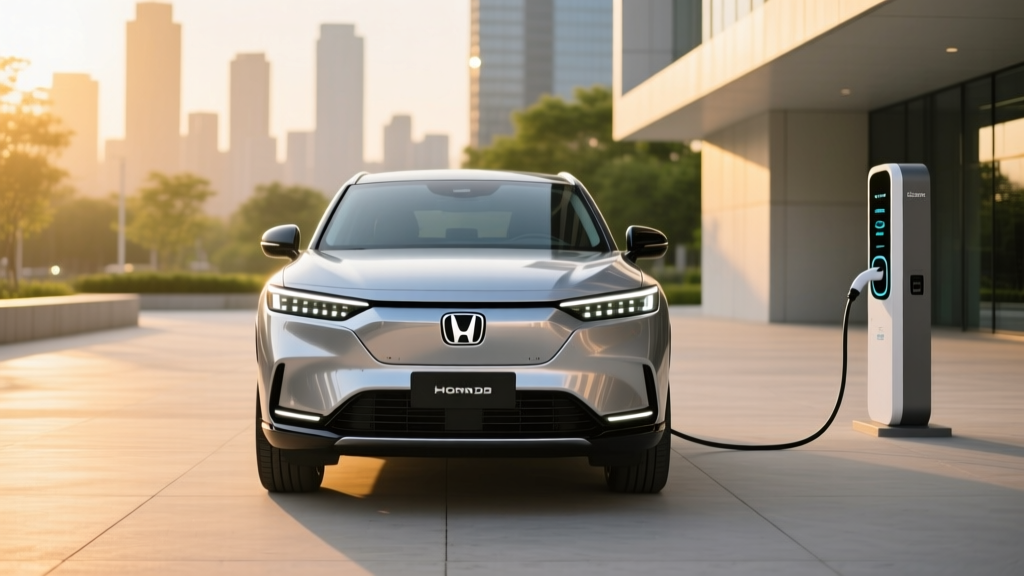
Honda's first dedicated electric SUV, the 2025 Prologue, arrives as a competent, if unremarkable, entry into the crowded midsize electric SUV segment. Built on General Motors' Ultium platform (the same architecture underpinning the Chevrolet Blazer EV and Cadillac Lyriq), the Prologue offers a familiar Honda driving experience wrapped in a practical package. But the real question for most buyers isn't whether the Prologue is a good EV—it's whether leasing it makes more financial sense than buying, especially given the current federal tax credit landscape.
After spending time with the Prologue and analyzing its specs, charging behavior, and ownership economics, here's what you need to know before signing a lease or purchase agreement.
Range and Efficiency: EPA Numbers Meet Reality
EPA Estimated Range: 296 miles (FWD Elite trim)
Real-world expectation: Expect 240-260 miles on highway-heavy trips at 70+ mph, and 200-220 miles in cold weather (below 32°F). City driving with regenerative braking can approach or slightly exceed the EPA sticker.
The 2025 Honda Prologue comes in three trims—EX, Touring, and Elite—with two drivetrain configurations. The front-wheel-drive (FWD) Elite trim achieves the highest EPA-estimated range at 296 miles, while the all-wheel-drive (AWD) Touring and Elite trims drop to 281 miles. The base EX trim with FWD lands at 296 miles as well, according to EPA data.
Efficiency ratings hover around 99-102 MPGe combined (roughly 32-34 kWh per 100 miles), which is competitive but not class-leading. For comparison, the Hyundai Ioniq 5 achieves 114 MPGe combined, and the Tesla Model Y hits 122 MPGe. The Prologue's efficiency penalty comes from its 4,600-pound curb weight and relatively conventional aerodynamics.
In real-world testing, the Prologue's range holds up reasonably well in moderate temperatures and mixed driving. However, sustained highway speeds above 70 mph and cold-weather conditions (where battery chemistry and cabin heating both sap energy) will noticeably reduce your usable range. Plan for 20-25% range loss in winter if you live in northern climates.
Battery, Charging, and the 10-80% Reality
| Charging Level | Power (kW) | Time / Rate | Notes |
|---|---|---|---|
| Level 1 (120V household) | 1.4 kW | ~3-4 miles per hour | Emergency/trickle only |
| Level 2 (240V home/public) | 11.5 kW (max) | ~34 miles per hour; 0-100% in ~9 hours | Requires 48-amp circuit |
| DC Fast Charging | 150 kW (peak) | 10-80% in ~34 minutes | CCS connector; tapers above 80% |
The Prologue uses an 85 kWh (usable capacity) lithium-ion battery with NMC (nickel manganese cobalt) chemistry, supplied by the GM-Honda joint venture. This is a conventional choice—NMC offers good energy density but doesn't match the cycle life or thermal stability of LFP (lithium iron phosphate) batteries found in some competitors like the base Tesla Model Y.
DC fast charging peaks at 150 kW, which is adequate but not impressive by 2026 standards. The Hyundai Ioniq 5 and Kia EV6 can hit 240-350 kW on compatible chargers, completing a 10-80% charge in 18 minutes or less. The Prologue's 34-minute 10-80% time is functional for road trips but means longer stops at charging stations.
One critical detail: the Prologue's charge curve tapers significantly above 80% state of charge (SoC), as do most EVs. If you're road-tripping and need to charge beyond 80%, expect the final 20% to take as long as the first 80%. Plan your stops accordingly—charge to 80%, drive, and repeat rather than waiting for a full charge.
For home charging, the Prologue's 11.5 kW onboard charger is solid. A Level 2 home charger (like a ChargePoint Home Flex or Tesla Wall Connector with J1772 adapter) will add roughly 34 miles of range per hour, fully replenishing the battery overnight. Installation costs for a 240V/48-amp circuit typically run $800-$2,000 depending on your electrical panel's capacity and the distance from panel to garage.
Performance and Driving Dynamics
| Trim / Drivetrain | Horsepower | Torque (lb-ft) | 0-60 mph | Drivetrain |
|---|---|---|---|---|
| EX (FWD) | 212 hp | 236 | ~7.5 seconds | Single-motor FWD |
| Touring (AWD) | 288 hp | 333 | ~6.0 seconds | Dual-motor AWD |
| Elite (FWD or AWD) | 212 hp (FWD) / 288 hp (AWD) | 236 / 333 | ~7.5s (FWD) / ~6.0s (AWD) | Single or dual-motor |
The Prologue is not a performance EV, and it doesn't pretend to be. The AWD dual-motor configuration provides confident acceleration for highway merging and passing, but the 6.0-second 0-60 time trails sportier competitors like the Ford Mustang Mach-E (5.1 seconds for the extended-range AWD) or the Tesla Model Y Long Range (4.8 seconds).
Where the Prologue shines is ride comfort and isolation. The suspension soaks up bumps effectively, and cabin noise is well-controlled at highway speeds. The steering is light and predictable—classic Honda tuning—but lacks the precision of the Ioniq 5 or Model Y. Regenerative braking offers multiple levels of aggressiveness, but the Prologue doesn't quite achieve true one-pedal driving; you'll still use the friction brakes for final stops.
Interior, Cargo, and Technology
The Prologue's interior is spacious and practical, with seating for five and generous cargo room. Honda quotes 25.2 cubic feet behind the second row and 57.7 cubic feet with the rear seats folded—competitive with the Blazer EV (25.8 / 54.3 cu ft) but trailing the Model Y (30.2 / 72.1 cu ft). Rear-seat legroom is a strong point at 39.4 inches, making the Prologue a comfortable family hauler.
The infotainment system uses an 11.3-inch touchscreen with Google Built-In, which includes native Google Maps, Google Assistant, and access to the Play Store. Wireless Apple CarPlay and Android Auto are standard. The system is responsive and intuitive, a welcome change from some of Honda's older, clunkier interfaces.
Driver assistance comes via Honda Sensing, which includes adaptive cruise control, lane-keeping assist, automatic emergency braking, and traffic sign recognition. This is a solid Level 2 driver-assist suite (per SAE automation definitions), but it requires continuous driver supervision—it is not a "self-driving" system like Tesla's FSD or GM's Super Cruise. Notably, the Prologue does not offer Super Cruise (GM's hands-free highway system), despite sharing the Ultium platform. This is a missed opportunity and a key differentiator from the Cadillac Lyriq and Chevrolet Blazer EV, which do offer hands-free driving on compatible highways.
Pricing, Lease Value, and the Tax Credit Question
| Trim | MSRP | Federal §30D Credit | Effective Price (if eligible) |
|---|---|---|---|
| EX (FWD) | $47,400 | Up to $7,500 | $39,900 |
| Touring (AWD) | $51,400 | Up to $7,500 | $43,900 |
| Elite (AWD) | $55,400 | Up to $7,500 | $47,900 |
The Prologue's MSRP places it firmly in the midsize EV SUV mainstream, but the federal tax credit situation requires careful navigation. Under IRS §30D rules, the Prologue may qualify for up to $7,500 in federal tax credits, but eligibility hinges on several factors:
- Buyer income caps: Modified adjusted gross income (MAGI) must not exceed $300,000 (joint filers), $225,000 (head of household), or $150,000 (single filers).
- MSRP caps: The Prologue's MSRP is under the $80,000 SUV cap, so it clears this hurdle.
- Battery sourcing requirements: A portion of the credit depends on critical minerals and battery components sourced from the U.S. or free-trade-agreement countries. The Prologue's Ultium battery, manufactured in the U.S., generally qualifies for the full $7,500, but final eligibility can vary by model year and production batch.
- Point-of-sale transfer: As of 2024, buyers can transfer the credit to the dealer at purchase, reducing the upfront cost rather than waiting for a tax refund.
However, leasing changes the equation entirely. When you lease a Prologue, the tax credit technically goes to the lessor (the financing company), not to you. Many manufacturers, including Honda, have historically passed this savings on to lessees in the form of reduced lease payments or capitalized cost reductions, but this is not guaranteed and varies by dealer and promotion.
As of early 2026, Honda is offering competitive lease deals on the Prologue, with some regions advertising leases around $399-$499 per month for 36 months with $3,000-$4,000 due at signing (depending on trim and incentives). These leases often factor in the $7,500 credit as a capitalized cost reduction, effectively lowering your monthly payment. Compare this to a purchase: buying the EX trim at $47,400, applying the $7,500 credit, and financing the remaining $39,900 at 6% APR over 60 months yields a monthly payment around $770. The lease is significantly cheaper on a monthly basis, but you'll have no equity at the end of the term and will face mileage restrictions (typically 10,000-12,000 miles/year).
Warranty and Long-Term Ownership
Honda backs the Prologue with a 3-year/36,000-mile limited warranty and a 5-year/60,000-mile powertrain warranty. The battery pack carries an 8-year/100,000-mile warranty, which is standard for the industry and aligns with NHTSA guidance on EV battery durability. Honda guarantees the battery will retain at least 70% of its original capacity during the warranty period; degradation beyond that triggers a replacement or repair at no cost.
For buyers planning to keep the Prologue beyond 8 years, long-term battery degradation data is still limited (the model is new for 2024). However, the Ultium platform has shown promising early results in GM's other EVs, with most owners reporting 5-8% degradation over the first 50,000 miles—a reasonable trajectory that suggests the battery should remain functional well beyond 150,000 miles.
Pros, Cons, and Who Should Lease the Prologue
Pros
- Spacious interior with excellent rear-seat legroom (39.4 inches)
- Comfortable, quiet ride quality
- Competitive lease pricing with tax credit factored in
- Solid 296-mile EPA range (FWD)
- Intuitive Google Built-In infotainment
- Honda Sensing driver assists standard
Cons
- 150 kW DC fast charging is slower than key competitors (Ioniq 5, EV6, Model Y)
- No hands-free driving system (Super Cruise unavailable despite Ultium platform)
- Efficiency (99-102 MPGe) trails class leaders
- Regenerative braking doesn't enable true one-pedal driving
- Cargo space (25.2 cu ft) is adequate but not best-in-class
- AWD performance (6.0s 0-60) is unremarkable
Who Is the Prologue For?
The 2025 Honda Prologue is best suited for:
- Families and commuters who prioritize comfort, space, and a familiar brand over cutting-edge tech or performance.
- Lessee buyers who want to minimize monthly payments and avoid long-term battery depreciation risk.
- Honda loyalists transitioning from a CR-V or Pilot who want an EV with minimal learning curve.
It's less ideal for:
- Road-trip warriors who need the fastest possible charging (look at Ioniq 5, EV6, or Model Y).
- Performance enthusiasts who want sub-5-second 0-60 times (Mach-E, Model Y Performance).
- Tech-focused buyers who want hands-free highway driving (Cadillac Lyriq with Super Cruise, Ford BlueCruise on Mach-E).
Bottom Line: Lease It, Don't Buy It (For Now)
The 2025 Honda Prologue is a competent, comfortable electric SUV that does most things well but nothing exceptionally. Its 296-mile range, spacious interior, and Honda reliability make it a safe choice for first-time EV buyers. But the real value proposition lies in leasing: with competitive monthly payments that factor in the $7,500 federal tax credit, a Prologue lease offers a low-risk entry into electric driving without the long-term depreciation concerns that plague early-adopter EVs.
If you're cross-shopping, test-drive the Hyundai Ioniq 5 (faster charging, better efficiency), the Ford Mustang Mach-E (more engaging to drive, available BlueCruise), and the Tesla Model Y (best-in-class range and charging network access). But if the Prologue's comfort, space, and Honda badge resonate with you—and the lease numbers work—it's a solid choice for daily driving and occasional road trips.
Frequently Asked Questions
What is the real-world range of the 2025 Honda Prologue?
Expect 240-260 miles on highway-heavy trips and 200-220 miles in cold weather. City driving with regenerative braking can approach the EPA-estimated 296 miles (FWD) or 281 miles (AWD).
How fast does the Prologue charge at home and on the road?
At home on a Level 2 (240V) charger, the Prologue adds about 34 miles of range per hour and fully charges in ~9 hours. On DC fast chargers, it peaks at 150 kW and charges from 10-80% in approximately 34 minutes.
Does the 2025 Honda Prologue qualify for the $7,500 federal tax credit?
Yes, the Prologue generally qualifies for the full $7,500 under IRS §30D, provided you meet income caps ($150k single / $300k joint) and the battery sourcing requirements are met. Consult a tax professional and verify eligibility at irs.gov before purchasing.
Is it better to lease or buy the Prologue?
For most buyers, leasing is the better financial play in 2026. Lease payments are significantly lower than loan payments (often $399-$499/month vs. $770+/month), and the $7,500 tax credit is typically passed through as a capitalized cost reduction. Leasing also shields you from long-term depreciation risk.
How does the Prologue compare to the Chevrolet Blazer EV?
The Prologue and Blazer EV share the Ultium platform but differ in tuning and features. The Blazer EV offers Super Cruise (hands-free driving) and slightly more cargo space, while the Prologue has a more refined ride and Honda's reputation for reliability. Both have similar range and charging specs.
Can the Prologue tow a trailer?
Honda rates the Prologue for 1,500 pounds of towing capacity (with the optional towing package), which is sufficient for a small utility trailer or a couple of dirt bikes but not for larger campers or boats.