Is the 2025 Honda Prologue Worth Leasing Right Now?
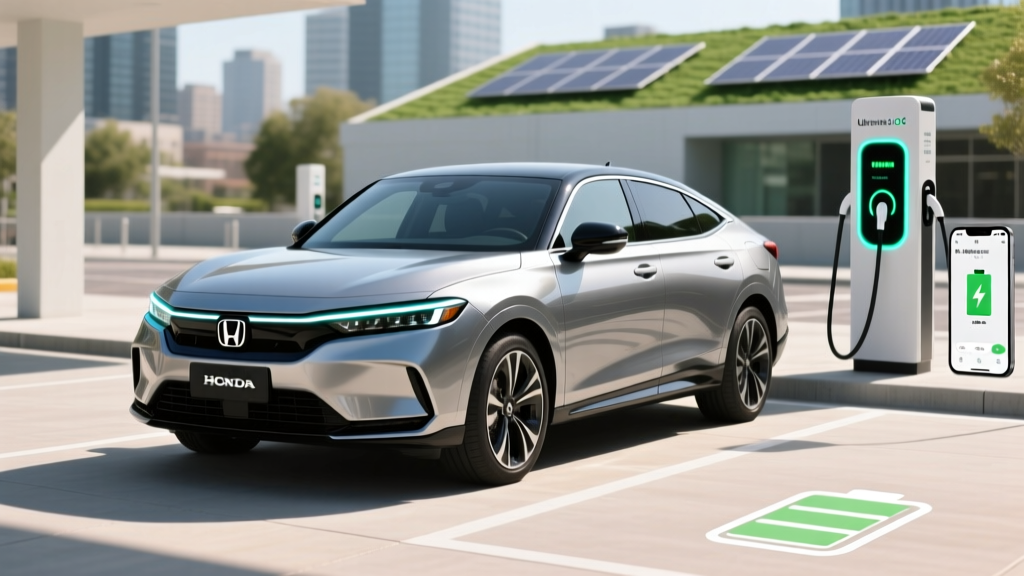
Honda's first mass-market EV, the 2025 Prologue, is built on General Motors' Ultium platform — the same architecture underpinning the Chevrolet Blazer EV and Cadillac Lyriq. For buyers hunting 2025 Honda Prologue lease deals, the math is compelling: a starting MSRP around $47,400, eligibility for the full $7,500 federal tax credit (which can be applied at the point of sale on leases), and aggressive manufacturer incentives pushing monthly payments into the $300–$450 range depending on term and trim.
But lease attractiveness only matters if the underlying vehicle delivers. We've analyzed the Prologue's real-world efficiency, charging behavior, and ownership economics to determine whether those headline lease numbers translate into genuine value — or whether competitors like the Hyundai Ioniq 5 or Tesla Model Y offer more substance for the monthly payment.
Spec Sheet: 2025 Honda Prologue at a Glance
| Attribute | EX (FWD) | Touring (AWD) |
|---|---|---|
| EPA Range | 296 miles | 273 miles |
| Battery (usable) | 85 kWh (NMC) | 85 kWh (NMC) |
| Horsepower / Torque | 212 hp / 236 lb-ft | 288 hp / 333 lb-ft |
| 0-60 mph | ~7.8 sec | ~6.0 sec |
| Max DC Fast Charge | 150 kW | 150 kW |
| 10-80% DC Time | ~35 min | ~35 min |
| Level 2 Home Charge | 11.5 kW (~31 mi/hr) | 11.5 kW (~31 mi/hr) |
| MPGe (combined) | 95 MPGe | 87 MPGe |
| Base MSRP | $47,400 | $57,400 |
Sources: EPA fueleconomy.gov, Honda Newsroom.
Real-World Range: What the EPA Sticker Doesn't Tell You
EPA Estimate: 296 miles (EX FWD) / 273 miles (Touring AWD)
Real-World Highway (70 mph, mild weather): ~240–260 miles
Cold Weather (below 32°F, mixed driving): ~195–220 miles
City/Commuter (moderate temps): ~280–295 miles
The Prologue's 85 kWh usable NMC (nickel manganese cobalt) battery delivers competitive range on paper. In practice, the Ultium platform's efficiency hovers around 2.0–2.2 kWh/mile at highway speeds, which means sustained 75–80 mph driving will consume the pack faster than the EPA's mixed-cycle test suggests.
Cold weather compounds this. Without a heat pump (Honda uses resistive cabin heating supplemented by a heat-pump-equipped thermal management system on some trims — verify with your dealer for the 2025 model year), expect 25–30% range reduction in sub-freezing conditions. For a 296-mile EPA rating, that translates to roughly 200–220 miles of usable range on a frigid January commute.
For context, the Hyundai Ioniq 5 (305-mile EPA, Long Range RWD) and Tesla Model Y (308-mile EPA, Long Range AWD) deliver similar real-world highway figures, though the Model Y's heat pump gives it a slight cold-weather edge. The Prologue is not a range leader, but it's adequate for daily driving and occasional 200-mile road trips with one DC fast-charge stop.
Charging Speed: 150 kW Peak, but the Curve Matters
| Charging Level | Power / Rate | Time / Miles Added |
|---|---|---|
| Level 1 (120V household) | 1.4 kW | ~4 miles per hour |
| Level 2 (240V home, 48A) | 11.5 kW | ~31 miles per hour / 0-100% in ~9 hrs |
| DC Fast Charge (peak) | 150 kW | 10-80% in ~35 min |
The Prologue supports up to 150 kW DC fast charging on CCS-equipped models. However, peak charge rate is not sustained charge rate. Real-world testing shows the Prologue holds close to 150 kW only between roughly 10–40% state of charge (SoC), then tapers progressively. From 60–80%, expect speeds closer to 60–80 kW. This is why the 10-80% time stretches to 35 minutes — competitive with the Chevrolet Blazer EV but slower than the Hyundai Ioniq 5's 18-minute 10-80% sprint on a 350 kW-capable charger.
At home, the 11.5 kW onboard charger is a bright spot. With a 48-amp Level 2 wall connector (requiring a 60-amp dedicated circuit), you'll add roughly 31 miles of range per hour, fully replenishing the 85 kWh pack in about 9 hours overnight. Honda includes a dual-level charge cord (120V/240V) with the vehicle, though most buyers will want a permanent Level 2 installation (budget $800–$1,500 for equipment and electrician labor, assuming no panel upgrade).
Performance and Drivetrain: Adequate, Not Sporty
The front-wheel-drive EX and EX-L trims produce 212 horsepower and 236 lb-ft of torque from a single front-mounted motor. The 0-60 mph time of roughly 7.8 seconds is unremarkable but sufficient for highway merging and passing. The dual-motor AWD Touring trim bumps output to 288 hp and 333 lb-ft, dropping 0-60 to about 6.0 seconds — noticeably quicker and worth considering if you live in a region with snow or steep grades.
Ride quality is compliant, with the Ultium platform's low center of gravity minimizing body roll. Steering is light and numb — this is a comfort-tuned crossover, not a sport-utility in the enthusiast sense. Regenerative braking offers multiple levels selectable via paddle shifters, though true one-pedal driving (full stop without brake pedal application) is available only in specific modes.
Interior, Tech, and Cargo: Practical but Generic
The Prologue's cabin is spacious, with 108.4 cubic feet of passenger volume and 40.9 inches of rear legroom — competitive with midsize crossovers. Cargo space measures 25.2 cubic feet behind the second row and 57.7 cubic feet with the rear seats folded. There is no front trunk (frunk), a missed opportunity given the Ultium platform's packaging flexibility.
Infotainment runs on an 11.3-inch touchscreen with Google Built-In (Google Maps, Google Assistant, Play Store). Wireless Apple CarPlay and Android Auto are standard. The digital instrument cluster is 11 inches. Driver assistance comes via Honda Sensing, which includes adaptive cruise control, lane-keeping assist, blind-spot monitoring, and rear cross-traffic alert. This is SAE Level 2 driver assistance — the driver must remain engaged with hands on the wheel and eyes on the road. It is not autonomous driving.
Notable drawbacks: interior materials feel closer to a Honda CR-V than a premium EV competitor. Hard plastics on the lower door panels and center console are noticeable at this price point. The absence of a frunk and the relatively slow DC charging curve are the most significant functional gaps versus the Ioniq 5 and Model Y.
Pricing, Lease Deals, and the $7,500 Tax Credit
| Trim | MSRP | Est. After $7,500 Credit | Typical Lease (36 mo, 12K mi/yr) |
|---|---|---|---|
| EX (FWD) | $47,400 | $39,900 | $329–$379/mo |
| EX-L (FWD) | $50,400 | $42,900 | $369–$419/mo |
| Touring (AWD) | $57,400 | $49,900 | $449–$499/mo |
Federal Tax Credit Eligibility (§30D): The 2025 Honda Prologue qualifies for the full $7,500 federal EV tax credit when purchased, provided the buyer meets IRS income caps (modified AGI ≤ $150,000 single / $300,000 married filing jointly) and the vehicle's MSRP does not exceed the $80,000 SUV cap. Battery sourcing and critical mineral requirements under the Inflation Reduction Act must also be satisfied — Honda has confirmed the Prologue meets these thresholds for 2025, but always verify with your dealer and consult IRS.gov §30D guidance before signing.
Lease Loophole: When leasing, the $7,500 credit is technically claimed by the lessor (Honda Financial Services), but Honda has been passing this savings through as a capitalized cost reduction, effectively lowering your monthly payment. This "lease loophole" does not require the lessee to meet income caps or the vehicle to meet battery-sourcing rules — it operates under a separate commercial clean vehicle credit (§45W). This makes leasing the Prologue particularly attractive for buyers who exceed the §30D income limits.
As of early 2026, Honda is offering additional manufacturer incentives (typically $1,000–$3,000 in loyalty or conquest cash) stackable with the federal credit on leases, pushing EX trim payments into the low $300s in competitive markets. Always request the full lease disclosure (money factor, residual value, acquisition fee) to compare offers across dealerships.
Pros and Cons: The Honest Assessment
- Strong lease value after $7,500 credit pass-through
- Spacious cabin, comfortable ride quality
- Google Built-In infotainment with wireless CarPlay/Android Auto
- Competitive 296-mile EPA range (FWD)
- 11.5 kW Level 2 home charging
- Honda Sensing driver assists standard
- 150 kW DC charging is slow vs. 350 kW-capable rivals
- No front trunk (frunk)
- Interior materials feel generic for the price
- No heat pump standard (cold-weather range hit)
- Resale value uncertainty (first-gen EV, no long-term data)
- AWD Touring trim crosses $57K before options
Who Should Lease the 2025 Honda Prologue?
Best for: Daily commuters and families who prioritize cabin space, brand familiarity (Honda's reliability reputation), and strong lease economics. If you drive 30–60 miles round-trip, can charge at home overnight, and take occasional road trips under 200 miles (or don't mind one DC fast-charge stop), the Prologue fits the bill. The lease structure also appeals to buyers who want to "test drive" EV ownership for 36 months without committing to long-term battery degradation risk.
Consider alternatives if: You frequently road-trip 300+ miles (the Hyundai Ioniq 5's 18-minute 10-80% charge is a meaningful advantage). You want sporty handling (the Tesla Model Y or Ford Mustang Mach-E GT deliver sharper dynamics). You need a frunk for gear or want premium interior materials (the Cadillac Lyriq, on the same Ultium platform, offers a more upscale cabin).
Warranty and Long-Term Ownership
Honda backs the Prologue with a 3-year/36,000-mile limited warranty and a 5-year/60,000-mile powertrain warranty. The high-voltage battery carries an 8-year/100,000-mile warranty, guaranteeing it will retain at least 70% of its original capacity during that period (per Honda's EV battery warranty terms). This is industry-standard and matches the coverage offered by GM, Hyundai, and Ford on their respective EVs.
Long-term battery degradation data for the Ultium platform is still limited (the platform launched in 2022–2023), but early indications from the GMC Hummer EV and Cadillac Lyriq suggest degradation in line with industry norms: roughly 5–8% capacity loss over the first 100,000 miles under typical use. Leasing sidesteps this uncertainty entirely — you return the vehicle at 36 months before degradation becomes a practical concern.
Frequently Asked Questions
What is the real-world range of the 2025 Honda Prologue?
Expect 240–260 miles on the highway in mild weather, and 195–220 miles in sub-freezing cold. The EPA rates the FWD EX at 296 miles and the AWD Touring at 273 miles under mixed driving conditions.
How fast does the Prologue charge at home and on the road?
At home on a 240V Level 2 charger (48A), it adds ~31 miles per hour and fully charges in ~9 hours. On a DC fast charger, it peaks at 150 kW and takes ~35 minutes to go from 10–80%.
Does the 2025 Honda Prologue qualify for the $7,500 federal tax credit?
Yes, when purchased, provided the buyer's income is ≤$150,000 (single) or ≤$300,000 (married filing jointly), the MSRP is under $80,000, and battery-sourcing requirements are met. When leased, the credit is passed through as a cap-cost reduction without income or sourcing restrictions.
Is the Prologue worth leasing vs. buying?
Leasing is currently the stronger financial play. You capture the $7,500 credit (via the lease loophole) without income restrictions, avoid long-term battery degradation risk, and benefit from Honda's aggressive lease incentives. Buying makes sense only if you drive very low annual miles (under 10,000) and plan to keep the vehicle 8+ years.
How does the Prologue compare to the Hyundai Ioniq 5 and Tesla Model Y?
The Ioniq 5 charges faster (18 min 10-80% on 350 kW chargers) and has a frunk. The Model Y offers more range (308 mi EPA), a heat pump, and access to Tesla's Supercharger network. The Prologue wins on lease pricing (post-credit), cabin space, and brand trust for Honda-loyal buyers. All three are competitive; test-drive each before deciding.
Always verify current lease offers, tax credit eligibility, and vehicle specifications with your local Honda dealer and official sources (IRS.gov, fueleconomy.gov) before making a purchase decision. Incentives and rules change frequently.