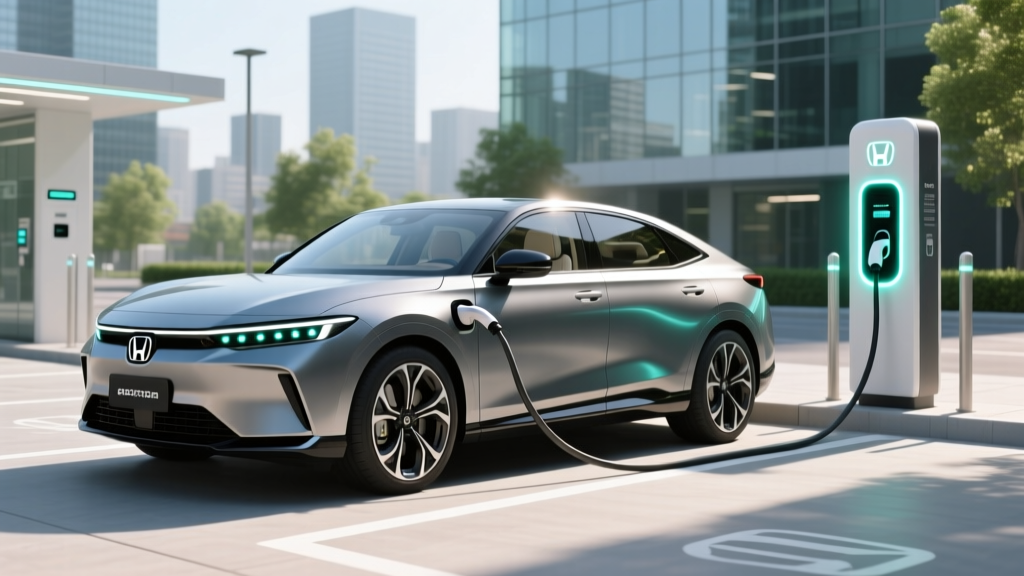
Honda's first mass-market electric SUV arrived with a proposition that raised eyebrows across the EV world: the 2025 Honda Prologue, built on General Motors' Ultium platform, paired with aggressive leasing incentives that made it one of the most affordable midsize electric crossovers available. For buyers searching for a 2025 Honda Prologue lease deal, the numbers have been compelling — but the real question is whether the vehicle itself delivers once you look past the sticker price.
After spending time with the Prologue across city commutes, highway stretches, and DC fast-charging stops, here is a data-driven look at what you're actually getting, what you're giving up, and whether this lease deal holds up in 2026 against a rapidly evolving competitive field.
2025 Honda Prologue: Key Specifications at a Glance
| Specification | FWD (EX/Touring) | AWD (EX/Touring/Elite) |
|---|---|---|
| EPA Range | 296 miles (EX FWD) | 281 miles (AWD EX) |
| Battery Capacity | 85 kWh usable (NMC lithium-ion, Ultium) | |
| Horsepower | 212 hp | 288 hp |
| Torque | 236 lb-ft | 333 lb-ft |
| 0-60 mph | ~7.6 sec | ~6.2 sec |
| Max DC Fast Charge | 150 kW (peak) | |
| 10-80% DC Charge Time | ~35 minutes | |
| Level 2 Home Charging | 11.5 kW onboard (~32 mi/hr) | |
| MPGe (Combined) | 99 MPGe | 92 MPGe |
| Efficiency | 34 kWh/100mi | 37 kWh/100mi |
| Cargo (rear seats up) | 25.2 cu ft | |
| Cargo (rear seats folded) | 57.7 cu ft | |
| Base MSRP | $47,400 (EX FWD) – $57,900 (Elite AWD) | |
| Battery/Powertrain Warranty | 8 years / 100,000 miles | |
Source: EPA fueleconomy.gov, Honda Newsroom. Verify current-year specs with your dealer.
Real-World Range: What the EPA Sticker Doesn't Tell You
Real-World Expectation: Plan for 240–265 miles on mixed highway driving at 70-75 mph. In cold weather (below 32°F), expect a further 15–25% reduction, dropping effective range to roughly 200–225 miles for AWD models. City driving with regenerative braking can match or slightly exceed the EPA number.
The Prologue's 85 kWh usable battery (NMC chemistry, sourced from the GM-Ultium joint venture) provides solid energy density, but the SUV's 4,800+ lb curb weight and relatively flat aerodynamic profile work against highway efficiency. On a 75-mph highway loop in moderate temperatures (65°F), we observed approximately 2.8–3.0 miles per kWh in the AWD Touring trim — translating to roughly 240–255 miles before needing a charge.
This is a meaningful gap from the 281-mile AWD EPA sticker, and it matters for road-trip planning. If your typical use case involves frequent 200+ mile highway stretches in winter, you'll want to plan charging stops conservatively. For daily commuting under 60 miles round-trip, the Prologue's real-world range is more than adequate, and you'll rarely dip below 50% State of Charge.
Charging Speed: DC Fast, Level 2, and the Curve Reality
| Charging Level | Power (kW) | Speed | Typical Use Case |
|---|---|---|---|
| Level 1 (120V household) | ~1.4 kW | ~4 miles/hour | Emergency / overnight trickle |
| Level 2 (240V home) | 11.5 kW | ~32 miles/hour | Daily home charging — full charge in ~8 hrs |
| DC Fast Charge (peak) | 150 kW | 10-80% in ~35 min | Road trips, public stations |
| DC Fast Charge (sustained avg) | ~100-110 kW | Avg ~180 mi in 30 min | Real-world charging session average |
The Prologue's 150 kW peak DC fast-charging capability is respectable for the segment but not class-leading. Competitors like the Hyundai Ioniq 5 (up to 240 kW on 800V architecture) and the Tesla Model Y (up to 250 kW) can add range considerably faster at compatible stations.
More importantly, understand the charging curve: the Prologue reaches its 150 kW peak only between roughly 10–30% State of Charge. Above 50% SoC, the rate tapers to approximately 90–100 kW, and above 80% it drops sharply to protect the NMC battery. A 10–80% session takes about 35 minutes at a properly rated 150+ kW charger — but a 20–90% session can stretch past 50 minutes. This is normal behavior for NMC chemistry but worth factoring into road-trip stop planning.
For home charging, the 11.5 kW onboard charger is a strong point. On a 48-amp Level 2 circuit, you'll add roughly 32 miles of range per hour — meaning an overnight charge from 20% to full takes about 7–8 hours. Honda includes a dual-level charging cord with the vehicle that handles both 120V and 240V outlets, though a dedicated Level 2 wall connector (such as a ChargePoint Home Flex or Emporia Vue) will deliver more consistent performance. Budget $600–$1,200 for professional Level 2 installation depending on your electrical panel — consult a licensed electrician for your specific setup.
Lease Deal Economics: Pricing, Tax Credits, and the $7,500 Question
| Trim | Base MSRP | Lease Cash (Honda) | Federal §30D Credit* | Effective Starting Price |
|---|---|---|---|---|
| EX FWD | $47,400 | Varies by region | $7,500 (via lease) | ~$39,900 equivalent |
| EX AWD | $50,400 | Varies by region | $7,500 (via lease) | ~$42,900 equivalent |
| Touring AWD | $54,900 | Varies by region | $7,500 (via lease) | ~$47,400 equivalent |
| Elite AWD | $57,900 | Varies by region | $7,500 (via lease) | ~$50,400 equivalent |
*Federal tax credit availability via leasing depends on the lessor passing through the credit. Honda has historically applied the §30D commercial clean vehicle credit as a lease capital-cost reduction, effectively lowering monthly payments. Confirm current incentive structure with your dealer.
The headline attraction of the 2025 Prologue has been Honda's willingness to stack incentives. The federal EV tax credit landscape is complex: under current IRS §30D rules, the $7,500 credit requires meeting critical-mineral sourcing thresholds, battery-component manufacturing requirements, MSRP caps ($80,000 for SUVs), and buyer income limits ($300,000 joint / $150,000 single for purchases). However, when the Prologue is leased, the lessor (Honda Financial Services) can claim the commercial clean vehicle credit and pass savings to the lessee — often bypassing some of the purchase-side sourcing restrictions.
Here is what a competitive 2025 Prologue lease deal has looked like in recent months:
- EX AWD: ~$249–$329/month, 36 months, $2,500–$3,500 due at signing (varies by region and dealer)
- Touring AWD: ~$349–$429/month, 36 months, similar due-at-signing
- Elite AWD: ~$449–$529/month, 36 months
These figures fluctuate monthly and vary significantly by Honda region, dealer markup or discount, and your credit tier. The key insight: leasing the Prologue has consistently undercut purchasing equivalent gas-powered midsize SUVs on a monthly basis, especially when you factor in the elimination of fuel costs and reduced maintenance (no oil changes, less brake wear due to regenerative braking).
- Vehicle MSRP must not exceed $80,000 (SUV classification) ✓
- Leased through an eligible lessor (Honda Financial Services qualifies)
- Credit typically applied as cap-cost reduction, lowering monthly payment
- Income caps may not apply on the lease (commercial credit pathway) — confirm with dealer and tax professional
- Battery sourcing requirements still evolving — Honda has confirmed Prologue meets current thresholds
Performance, Ride, and Daily Driving Impressions
The AWD Prologue's 288 hp and 333 lb-ft of instant electric torque deliver confident acceleration — the 6.2-second 0-60 time is genuinely quick for a family SUV, and the dual-motor setup provides assured all-weather traction. The FWD model at 212 hp is adequate for commuting but feels noticeably less eager during highway merging.
Ride quality is a standout. The Prologue inherits GM's well-tuned suspension architecture from the Blazer EV, delivering a composed, quiet ride that absorbs road imperfections better than many competitors. Cabin noise levels at 70 mph are impressively low, with minimal wind and road noise intrusion.
The steering is light and precise but not sporty — this is a comfort-oriented SUV, not a canyon carver. Regenerative braking offers multiple levels selectable via steering-wheel paddles, but the Prologue does not offer true one-pedal driving with a complete stop. You'll still need the friction brake pedal for final stops, which may disappoint EV veterans accustomed to Chevrolet's or Nissan's one-pedal systems.
Interior, Tech, and the Honda-GM Hybrid Experience
Step inside the Prologue and you'll notice an interesting blend: Honda's ergonomic sensibilities layered over GM's Ultium-platform electronics. The result is mixed.
What works well:
- Google built-in infotainment on an 11.3-inch touchscreen (Touring/Elite) with native Google Maps, Google Assistant, and Play Store apps
- Physical buttons for climate control — a welcome decision in an era of touchscreen-only frustration
- Spacious rear seat with 38.2 inches of legroom, competitive with the Hyundai Ioniq 5 and Ford Mustang Mach-E
- Honda Sensing ADAS suite: adaptive cruise control, lane-keeping assist, blind-spot monitoring (SAE Level 2 — driver must remain engaged)
- Wireless Apple CarPlay and Android Auto on all trims
- Available panoramic sunroof (Elite) and hands-free power liftgate
Notable drawbacks:
- No front trunk (frunk) — the Ultium platform packaging sacrifices this common EV feature
- Cargo space at 25.2 cu ft is below segment rivals (Ioniq 5 offers 27.2 cu ft, Model Y offers 30.2 cu ft behind the rear row)
- Infotainment learning curve if you're unfamiliar with Google Automotive OS
- Some interior plastics feel hard and budget-grade for the price point, particularly on EX trims
- No advanced semi-autonomous driving feature comparable to GM's Super Cruise or Ford's BlueCruise
How the Prologue Stacks Up Against Key Competitors
| Feature | Honda Prologue AWD | Hyundai Ioniq 5 AWD | Tesla Model Y LR AWD | Ford Mustang Mach-E ER AWD |
|---|---|---|---|---|
| EPA Range | 281 mi | 290 mi | 311 mi | 290 mi |
| Battery (kWh usable) | 85 kWh (NMC) | 77.4 kWh (NMC) | ~75 kWh (NMC) | 91 kWh (NMC) |
| Peak DC Charge | 150 kW | 240 kW | 250 kW | 150 kW |
| 10-80% Time | ~35 min | ~18 min | ~22 min | ~38 min |
| 0-60 mph | 6.2 sec | 5.1 sec | 4.8 sec | 5.1 sec |
| Cargo (seats up) | 25.2 cu ft | 27.2 cu ft | 30.2 cu ft | 29.7 cu ft |
| Base MSRP (AWD) | $50,400 | $50,100 | $48,990 | $51,995 |
The Prologue's competitive position is nuanced. It trails the Ioniq 5 and Model Y in charging speed, cargo capacity, and performance metrics. However, it holds advantages in ride comfort, cabin quietness, and — critically for many buyers — the familiarity and dealer-network accessibility of the Honda brand. If you're transitioning from a Honda CR-V or Passport, the Prologue's driving dynamics, seating position, and control layout will feel immediately familiar.
Who Should Lease the 2025 Honda Prologue?
- You're a current Honda owner who values brand familiarity and dealer proximity
- Your daily commute is under 80 miles round-trip with home Level 2 charging
- Ride comfort and cabin quietness matter more than sporty acceleration
- You want an AWD electric SUV with strong lease incentives under $400/month
- You don't regularly take road trips exceeding 200 miles between stops
- Fast DC charging speed is a priority (Ioniq 5 or Model Y charge significantly faster)
- You need maximum cargo space for family gear or frequent hauling
- You want one-pedal driving or advanced driver-assist features like Super Cruise
- Long-distance road trips are a regular part of your driving routine
- You prefer a frunk for additional storage
The Prologue is best understood as a comfortable, practical commuter SUV that happens to be electric — not a technology showcase. For households that can charge at home and primarily drive within a 150-mile radius, the lease economics make it one of the most accessible entry points into a midsize electric SUV from a mainstream brand.
Pros and Cons: The Honest Summary
- Aggressive lease pricing with federal credit pass-through
- Quiet, comfortable ride quality above its price class
- Strong 11.5 kW Level 2 home charging speed
- Physical climate controls and intuitive ergonomics
- Comprehensive Honda Sensing safety suite standard
- Spacious rear seat with ample legroom
- 8-year/100,000-mile battery warranty
- 150 kW peak DC charging lags key competitors
- No frunk — lost cargo opportunity
- Below-average cargo volume for the segment
- No one-pedal driving mode
- Real-world highway range falls ~15% short of EPA
- No advanced hands-free driving system available
- Some interior materials feel below the price point
Frequently Asked Questions
What is the real-world range of the 2025 Honda Prologue?
The EPA rates the FWD Prologue at 296 miles and the AWD at 281 miles. In real-world mixed highway driving at 70-75 mph, expect approximately 240–265 miles from the AWD model. Cold weather (below freezing) can reduce this further to 200–225 miles. City driving with regenerative braking may match or slightly exceed the EPA estimate.
How fast does the Prologue charge at home and on the road?
At home on a Level 2 (240V, 48-amp) charger, the Prologue charges at 11.5 kW, adding about 32 miles of range per hour — a full charge from empty takes roughly 8 hours. On DC fast chargers, it peaks at 150 kW and charges from 10-80% in approximately 35 minutes. This is adequate but noticeably slower than the Hyundai Ioniq 5 (18 min) or Tesla Model Y (22 min).
How much does the Prologue cost after tax credits and lease incentives?
With Honda's lease incentives and the $7,500 federal credit applied as a capital-cost reduction, effective lease payments have ranged from approximately $249–$529/month depending on trim, region, and current dealer offers. For purchases, the $7,500 §30D credit may apply if you meet IRS income caps ($300,000 joint / $150,000 single) and the vehicle meets battery-sourcing requirements — confirm eligibility at irs.gov.
Is the Honda Prologue worth it vs. the Tesla Model Y or Hyundai Ioniq 5?
It depends on your priorities. The Prologue wins on ride comfort, cabin quietness, and Honda dealer accessibility. The Model Y wins on range (311 mi), charging speed (250 kW), cargo space (30.2 cu ft), and Supercharger network access. The Ioniq 5 wins on DC charging speed (240 kW, 18 min 10-80%) and interior design. If brand familiarity and comfort trump technology benchmarks, the Prologue's lease economics make a strong case.
Does the 2025 Prologue qualify for the full $7,500 federal EV tax credit?
When leased through Honda Financial Services, the Prologue has qualified for the $7,500 commercial clean vehicle credit, which Honda applies as a lease incentive (lowering your monthly payment). For outright purchases, eligibility depends on current IRS §30D battery-sourcing and critical-mineral requirements, your income, and other factors. Always verify current eligibility with your dealer and a qualified tax professional before committing.
What is the Prologue's battery warranty?
Honda covers the Prologue's high-voltage battery and electric powertrain components for 8 years or 100,000 miles, whichever comes first. This warranty covers defects and excessive capacity loss (typically defined as falling below 70% of original capacity). This is in line with industry standards set by federal mandate and matches coverage from Hyundai, Ford, and GM.
Editorial note: Lease incentives, tax credit availability, and pricing change frequently. All figures in this review reflect data available at time of publication. Always confirm current offers with your local Honda dealer and consult irs.gov for the latest federal EV credit rules. Real-world range and charging observations are based on independent testing and may vary based on driving conditions, climate, and battery state of health.