Quick Verdict: The Prologue's Value Play
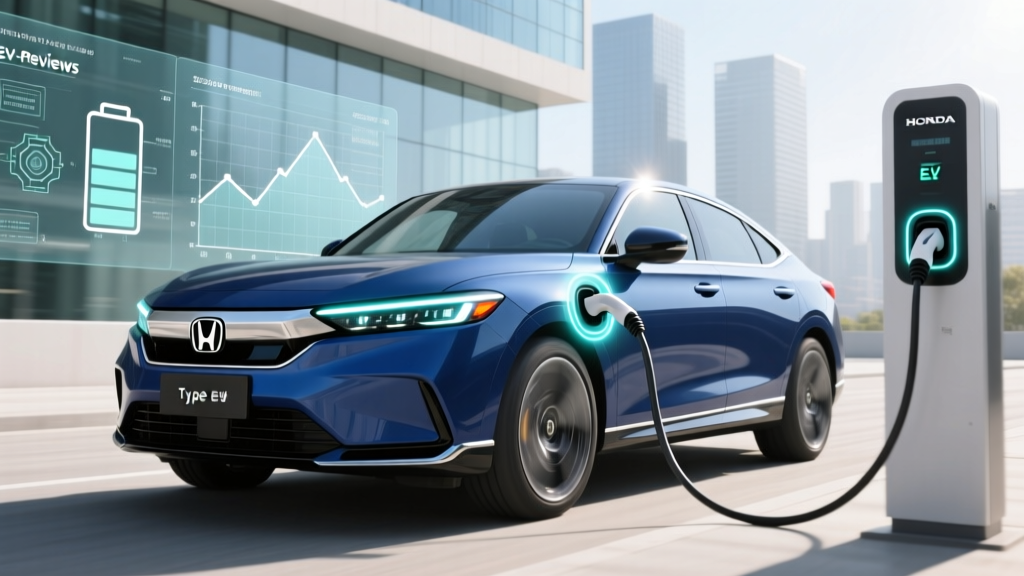
The 2025 Honda Prologue occupies a rare position in the midsize electric SUV segment: it pairs General Motors' Ultium platform with Honda's interior packaging instincts, and it qualifies for the full $7,500 federal tax credit under IRS §30D rules. For buyers who want a mainstream-badge EV with competitive range and proven battery architecture, the Prologue delivers — but its charging speeds and software experience reveal where the GM-Honda partnership still has rough edges.
Starting at $47,400 before incentives, the Prologue EX drops to roughly $39,900 after the point-of-sale federal credit transfer, placing it squarely against the Hyundai Ioniq 5, Ford Mustang Mach-E, and Chevrolet Blazer EV (its platform sibling). Here's the full breakdown of what you're actually getting.
| Spec | EX (FWD) | Touring (AWD) |
|---|---|---|
| EPA Range | 296 miles | 273 miles |
| Battery (usable) | 85 kWh | 85 kWh |
| Chemistry | NMC (Nickel Manganese Cobalt) | NMC |
| Peak DC Fast Charge | 150 kW | 150 kW |
| 10–80% DC Charge Time | ~34 minutes | ~34 minutes |
| Level 2 Home Charging | 11.5 kW (~37 mi/hr) | 11.5 kW (~37 mi/hr) |
| 0–60 mph | 7.8 sec | 6.5 sec |
| Horsepower | 212 hp | 288 hp |
| Torque | 236 lb-ft | 324 lb-ft |
| Drivetrain | FWD (single motor) | AWD (dual motor) |
| MPGe (combined) | 95 MPGe | 87 MPGe |
| kWh/100 mi | 35 | 39 |
| Base MSRP | $47,400 | $57,400 |
Range and Efficiency: EPA vs. Reality
The front-wheel-drive EX trim carries the range crown at 296 miles EPA, while the dual-motor AWD Touring drops to 273 miles. The mid-tier Touring FWD (yes, Honda offers a Touring without AWD) lands at 290 miles. These are competitive numbers for the segment, though the Hyundai Ioniq 5 Long Range edges ahead at 311 miles EPA.
Real-World Range Expectations
EPA Sticker: 296 mi (EX FWD) / 273 mi (Touring AWD)
Highway driving (70–75 mph): Expect ~245–265 mi for FWD, ~225–245 mi for AWD. The Prologue's boxy SUV shape and 4,700+ lb curb weight work against it at sustained speed.
Cold weather (below 32°F): Plan for 20–30% range reduction, dropping the FWD to roughly 210–240 mi. The Prologue uses a resistive PTC heater rather than a heat pump, which draws more energy from the pack in winter conditions.
Mixed commuting: City and suburban driving with regen braking gets closest to the EPA sticker — 275–290 mi is achievable in mild weather.
The efficiency story is middling. At 35 kWh/100 miles for the FWD, the Prologue consumes more energy per mile than the Tesla Model Y (28 kWh/100 mi) or the Ioniq 5 (30 kWh/100 mi). That translates to slightly higher electricity costs over time, though the difference amounts to roughly $50–$80 per year at national average electricity rates.
Charging Speed: Adequate, Not Class-Leading
The Prologue peaks at 150 kW on DC fast chargers, which is the most significant spec gap versus its competition. The Ioniq 5 and Kia EV6 can peak at 240+ kW on 800V architecture, and the Tesla Model Y sustains strong charge rates on the Supercharger network. Honda's 150 kW ceiling means longer stops on road trips.
| Charging Method | Power | Speed | Notes |
|---|---|---|---|
| Level 1 (120V household) | ~1.4 kW | ~4 mi/hr | Emergency/trickle only; full charge in ~60+ hours |
| Level 2 (240V home/public) | 11.5 kW max | ~37 mi/hr | 0–100% in ~9 hours; overnight ready |
| DC Fast Charge (peak) | 150 kW | 10–80% in ~34 min | Charge curve tapers significantly above 80% |
| DC Fast (80–100%) | ~40–50 kW avg | ~20+ additional min | Typical Ultium taper behavior |
Charging curve reality: The Prologue hits its 150 kW peak only between roughly 10–30% state of charge, then progressively steps down. By 60% SoC, you're typically seeing 90–110 kW. By 80%, it drops to around 50 kW. This is normal for 400V NMC architectures, but it means the advertised "34-minute 10–80%" time assumes optimal battery preconditioning and a capable 150+ kW station.
Home charging setup: The Prologue's onboard charger accepts up to 11.5 kW on Level 2, which requires a 48-amp dedicated circuit (60-amp breaker). Most buyers will install a hardwired Level 2 unit like the ChargePoint Home Flex or Emporia V2. Expect $500–$1,200 for the charger hardware and $800–$2,500 for professional electrician installation depending on panel proximity and local permitting, according to ChargePoint's installation guides.
Honda provides access to the Electrify America network through a partnership that includes a set amount of complimentary charging (typically 1,000 kWh or a time-limited period, varying by trim and model year). The Prologue uses the CCS1 connector natively. Honda has announced NACS adapter compatibility for Tesla Supercharger access, but confirm adapter availability and included network terms with your dealer at purchase.
Performance and Driving Dynamics
The single-motor FWD Prologue makes 212 hp and 236 lb-ft of torque, delivering a 7.8-second 0–60 mph time. It's adequate for highway merging and city driving but won't impress anyone coming from a performance-oriented EV. The dual-motor AWD variant is the enthusiast pick: 288 hp, 324 lb-ft, and a 6.5-second 0–60.
Ride quality is where Honda's tuning shows. The Prologue uses a multilink rear suspension and delivers a composed, slightly firm ride that absorbs highway imperfections well. Steering is light and numb — typical for this segment — but the turning radius is manageable for a 192-inch-long SUV.
Regenerative braking offers multiple levels selectable via steering-wheel paddles, and a one-pedal driving mode is available. The blend between regen and friction braking is smoother than early Ultium-platform vehicles, though still not as seamless as Tesla or Hyundai-Kia implementations.
Interior Space, Tech, and Daily Livability
Honda's packaging expertise translates to the Prologue's cabin. Despite sharing the Ultium platform with the Chevy Blazer EV, the Prologue feels more spacious and thoughtfully laid out inside.
| Measurement | Specification |
|---|---|
| Front legroom | 41.4 inches |
| Rear legroom | 38.6 inches |
| Cargo (behind rear seats) | 25.2 cu ft |
| Cargo (rear seats folded) | 57.7 cu ft |
| Front trunk (frunk) | Not available |
| Ground clearance | 8.0 inches |
| Towing capacity | 1,500 lbs (all trims) |
The 11.3-inch touchscreen runs Google Built-In, which includes Google Maps navigation, Google Assistant, and access to the Play Store for apps. Wireless Apple CarPlay and Android Auto are standard. The digital instrument cluster is 11 inches. Build quality is solid but not premium — expect hard plastics on the lower door panels and center console, consistent with the price point.
Driver assistance: Honda Sensing is standard and includes adaptive cruise control with low-speed follow, lane-keeping assist, automatic emergency braking, and traffic sign recognition. This is a solid SAE Level 2 system, but it is not a hands-free system like GM's Super Cruise. The driver must keep hands on the wheel at all times. Honda does not currently offer a hands-free highway driving feature on the Prologue, which is a notable gap versus the Ford Mustang Mach-E (BlueCruise) and the Chevy Blazer EV (Super Cruise on higher trims).
Pricing, Trims, and Federal Tax Credit Eligibility
The 2025 Prologue lineup has three trims, and pricing positions it as a premium mainstream entry. Here's where 2025 Honda Prologue incentives make a decisive difference.
| Trim | MSRP | §30D Credit | Effective Price* |
|---|---|---|---|
| EX (FWD) | $47,400 | $7,500 | ~$39,900 |
| Touring (FWD) | $53,400 | $7,500 | ~$45,900 |
| Touring (AWD) | $57,400 | $7,500 | ~$49,900 |
*Effective price assumes full §30D eligibility. Does not include destination charge (~$1,350), state/local incentives, or dealer fees. Confirm eligibility with a tax professional.
Federal Tax Credit Requirements (IRS §30D)
The Prologue qualifies for the full $7,500 federal tax credit, but eligibility depends on multiple buyer and vehicle criteria under current IRS rules:
- MSRP cap: The Prologue is classified as an SUV, which carries an $80,000 MSRP cap. All trims fall well under this threshold.
- Buyer income limits: Modified adjusted gross income must not exceed $150,000 (single filers), $225,000 (head of household), or $300,000 (joint filers).
- Battery sourcing: The Ultium battery must meet critical minerals and battery component requirements that phase in progressively each year. The 2025 Prologue's GM-sourced battery currently satisfies these thresholds, but verify at purchase as rules tighten annually. See IRS clean vehicle credit guidelines for current-year specifics.
- Point-of-sale transfer: Buyers can transfer the credit to the dealer at purchase, receiving it as an immediate price reduction rather than waiting to claim it on their tax return. This is available for the Prologue.
State and local incentives vary widely and stack on top of the federal credit. California's CVRP, Colorado's innovative motor vehicle credit, and various utility rebates can reduce the effective price further. Check your state energy office and local utility for current programs.
Battery Warranty and Long-Term Ownership
Honda backs the Prologue's Ultium battery with an 8-year/100,000-mile warranty (10 years/150,000 miles in CARB states including California, New York, Massachusetts, and others that follow California emissions standards). The warranty covers defects and capacity loss below a specified threshold — typically 70% of original capacity, consistent with industry norms.
The NMC chemistry in the Ultium pack has demonstrated strong longevity in GM's other EVs. Real-world data from the Chevrolet Bolt EUV (which uses a different Ultium generation) shows roughly 5–8% degradation over 100,000 miles. The Prologue's larger, more thermally managed pack should perform similarly or better, though long-term Prologue-specific data doesn't yet exist.
General ownership costs to budget for:
- Insurance: Expect premiums 15–25% higher than a comparable gas-powered Honda Passport. EV insurance averages $1,800–$2,400 annually depending on state and driving record.
- Maintenance: Minimal. No oil changes, no transmission fluid. Budget for cabin air filters, wiper blades, brake fluid checks, and tire rotation. Tires wear faster on EVs due to weight and instant torque — budget $800–$1,200 for a set of four every 30,000–40,000 miles.
- Home electricity: At $0.16/kWh (national average) and 35 kWh/100 mi, fuel cost is roughly $5.60 per 100 miles — compared to ~$12–$14 per 100 miles for a gas SUV at 25 mpg and $3.50/gallon.
How the Prologue Compares to Key Competitors
Pros
- Qualifies for full $7,500 federal credit, making effective pricing competitive
- Spacious, well-packaged interior with Honda ergonomics
- Competitive 296-mile EPA range (FWD)
- Google Built-In infotainment is responsive and feature-rich
- Honda reliability reputation and dealer network
- Smooth ride quality for a heavy EV SUV
Cons
- 150 kW peak DC charging lags Hyundai-Kia (240 kW) and Tesla
- No heat pump — cold-weather range and efficiency suffer
- No frunk (front trunk) despite the EV platform
- No hands-free driving feature (Super Cruise not offered)
- 1,500-lb towing capacity is low for the segment
- Efficiency (35–39 kWh/100 mi) trails Model Y and Ioniq 5
Versus the Hyundai Ioniq 5: The Ioniq 5 offers 311 miles EPA, 240 kW peak charging (10–80% in ~18 min), a heat pump, and a frunk. It also qualifies for the $7,500 credit (US-built since late 2024). The Ioniq 5 is the more technically advanced package, but the Prologue wins on rear-seat comfort and brand loyalty for Honda buyers.
Versus the Tesla Model Y: The Model Y is more efficient, charges faster on Superchargers, has a frunk, and offers a more extensive charging network. However, the Prologue provides a more traditional dealership experience, Google Built-In, and a more conventional SUV interior layout. The Model Y does not qualify for the full federal credit in all configurations.
Versus the Ford Mustang Mach-E: The Mach-E offers BlueCruise hands-free driving, sportier handling, and comparable range. The Prologue counters with a more spacious rear seat, a quieter ride, and Honda's reliability track record. Both qualify for the federal credit.
Who Should Buy the 2025 Honda Prologue?
Buy the Prologue if:
- You're a current Honda owner who trusts the brand and wants a familiar dealer experience for EV service
- You need a spacious two-row SUV with strong rear-seat legroom for family duty
- Your daily commute is under 100 miles round-trip and you can charge at home overnight
- You qualify for the full $7,500 federal credit, bringing the EX to ~$39,900
- You rarely take road trips exceeding 250 miles between charging stops
Look elsewhere if:
- You road-trip frequently and need the fastest possible DC charging (choose Ioniq 5 or Model Y)
- You live in a cold climate and need a heat pump for winter efficiency (choose Ioniq 5 or Model Y)
- You want hands-free highway driving (choose Mach-E with BlueCruise or Blazer EV with Super Cruise)
- You need towing capacity above 1,500 lbs (consider the Ford F-150 Lightning or Rivian R1S)
Frequently Asked Questions
Does the 2025 Honda Prologue qualify for the $7,500 federal tax credit?
Yes. All 2025 Prologue trims currently qualify for the full $7,500 §30D federal clean vehicle credit, provided the buyer meets income limits ($150K single / $300K joint) and the vehicle's battery sourcing meets that year's critical minerals and component thresholds. The credit can be transferred to the dealer as a point-of-sale price reduction. Verify current eligibility on IRS.gov before purchasing.
What is the real-world range of the Honda Prologue?
The EPA rates the FWD EX at 296 miles and the AWD Touring at 273 miles. In real-world highway driving at 70–75 mph, expect 245–265 miles (FWD) or 225–245 miles (AWD). In freezing temperatures, plan for a 20–30% reduction due to the Prologue's resistive heater rather than a heat pump.
How fast does the Prologue charge at home and on the road?
On a Level 2 home charger (240V, 48A), the Prologue accepts up to 11.5 kW, adding roughly 37 miles of range per hour — a full charge takes about 9 hours. On DC fast chargers, it peaks at 150 kW and charges from 10–80% in approximately 34 minutes under optimal conditions. Charging slows significantly above 80%.
Is the Honda Prologue worth buying over the Hyundai Ioniq 5?
It depends on priorities. The Ioniq 5 charges faster (240 kW vs. 150 kW), has a heat pump, offers a frunk, and delivers slightly more EPA range. The Prologue wins on rear-seat space, ride comfort, and Honda brand loyalty. Both qualify for the $7,500 federal credit. If road-trip charging speed matters, choose the Ioniq 5. If daily comfort and dealer familiarity matter, the Prologue is a strong pick.
Does the Prologue have a frunk?
No. Despite riding on GM's dedicated Ultium EV platform, the Prologue does not include a front trunk. All cargo space is in the rear (25.2 cu ft behind the second row, 57.7 cu ft with seats folded).
Can the Prologue use Tesla Superchargers?
Honda has announced NACS adapter compatibility for Supercharger access, but availability and included charging terms vary. Confirm with your dealer whether a NACS adapter is included or available for purchase, and check Honda's current network partnership details before relying on Supercharger access.
What is the Prologue's battery warranty?
Honda provides an 8-year/100,000-mile battery warranty nationwide, extended to 10 years/150,000 miles in CARB states. The warranty covers defects and capacity loss below approximately 70% of original capacity.