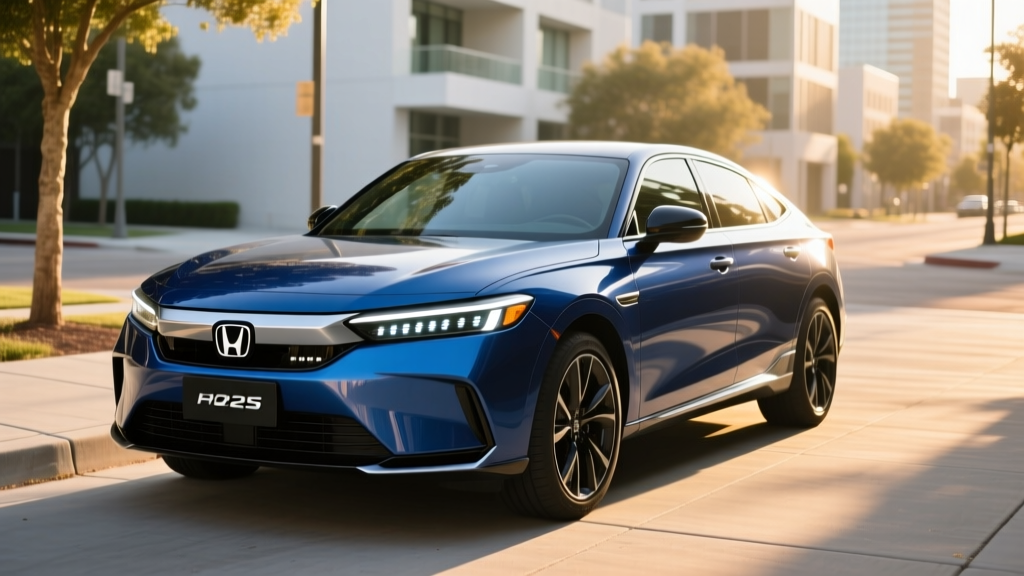
Honda's first mass-market electric SUV arrived with a familiar formula: borrow a proven platform and layer on your own design and tuning philosophy. The 2025 Honda Prologue EV rides on General Motors' Ultium architecture—the same bones under the Chevrolet Blazer EV and Cadillac Lyriq—but wears unmistakably Honda styling and offers a cabin tuned for the family-SUV crowd. After spending time with the specs, the charging curves, and the real-world ownership equation, here is everything you need to know before putting money down.
Quick Verdict: Who the Prologue Is For
The Prologue targets buyers who want a midsize two-row electric crossover with mainstream-brand familiarity, strong cargo space, and access to GM's Super Cruise hands-on-wheel highway assist. It is not the fastest-charging or longest-range EV in its class, but it delivers a comfortable 250–296-mile EPA envelope, respectable DC fast-charging speeds, and a cabin that feels more premium than its Honda badge might suggest. If you want a comfortable daily driver with occasional road-trip capability and value dealer familiarity over bleeding-edge EV tech, the Prologue earns a spot on your shortlist.
Range, Efficiency & Real-World Expectations
| Spec | FWD (EX/Touring) | AWD (EX/Elite/Touring) |
|---|---|---|
| EPA Range | 296 miles | 273–281 miles |
| Battery (usable) | 85 kWh (NMC lithium-ion, Ultium) | |
| MPGe (combined) | 94 MPGe | 87–91 MPGe |
| Efficiency | ~36 kWh/100 mi | ~38–40 kWh/100 mi |
| Drivetrain | Single-motor FWD | Dual-motor AWD |
The 85 kWh usable Ultium pack uses NMC (nickel manganese cobalt) chemistry, which delivers higher energy density than LFP but requires more careful state-of-charge management for long-term health. Honda recommends daily charging to 80–90% and saving 100% for road trips—a common NMC best practice. According to fueleconomy.gov, the FWD Prologue achieves 94 MPGe combined, placing it mid-pack among rivals like the Hyundai Ioniq 5 (114 MPGe) but ahead of heavier competitors like the Jeep Wrangler 4xe.
Charging Speed: DC Fast, Level 2 & Home Setup
| Charging Level | Power | Speed / Time |
|---|---|---|
| Level 1 (120V household) | ~1.4 kW | ~4 miles per hour |
| Level 2 (240V home/public) | Up to 11.5 kW | ~32 miles per hour; 0–100% in ~9.5 hours |
| DC Fast Charge (peak) | Up to 150 kW | 10–80% in ~34 minutes |
The Prologue's 150 kW peak DC fast-charge rate is adequate but not class-leading. Competitors like the Hyundai Ioniq 5 and Kia EV6, built on 800-volt architectures, accept up to 240+ kW and complete a 10–80% session in roughly 18 minutes. The Prologue's 34-minute 10–80% session is closer to the Ford Mustang Mach-E and Volkswagen ID.4 in real-world pace.
One important charging-curve detail: the Prologue sustains its peak 150 kW rate only through roughly 30–40% state of charge before tapering. From 60% upward, speeds drop noticeably—this is standard NMC behavior, but it means the second half of your charging session takes proportionally longer. For road trips, hopping off at 80% rather than waiting for a full charge saves significant time.
At home, the 11.5 kW onboard charger is a strong point. A full overnight replenishment from near-empty takes about 9.5 hours on a 48-amp Level 2 circuit. Most Prologue owners will need a 60-amp dedicated circuit installed by a licensed electrician. Expect home installation costs between $500 and $2,000 depending on panel proximity and local permit requirements. Honda offers a charging equipment partnership, but many buyers opt for a universal Wallbox or ChargePoint unit for flexibility.
Performance & Driving Dynamics
| Trim / Config | Horsepower | Torque (lb-ft) | 0–60 mph |
|---|---|---|---|
| FWD (EX, Touring) | 212 hp | 236 | ~8.1 sec |
| AWD (EX, Elite, Touring) | 288 hp | 324 | ~6.2 sec |
The dual-motor AWD Prologue delivers a meaningful performance upgrade, cutting the 0–60 time by nearly two seconds and adding the all-weather traction that northern-climate buyers want. Ride quality leans comfort-oriented—Honda's tuning prioritizes absorbent damping over sporty firmness, which suits the family-SUV mission well. The steering is light and direct, and the turning radius is manageable for a crossover on this wheelbase.
Regenerative braking offers multiple levels selectable via steering-wheel paddles. The strongest setting enables near one-pedal driving in city traffic, though it does not bring the vehicle to a complete hold without touching the brake pedal—a distinction from some competitors.
Pricing, Trims & Federal Tax Credit Eligibility
| Trim | Drivetrain | MSRP | Est. After §30D Credit* |
|---|---|---|---|
| EX | FWD | $47,400 | ~$39,900 |
| EX | AWD | $50,400 | ~$42,900 |
| Touring | FWD | $51,400 | ~$43,900 |
| Touring | AWD | $54,400 | ~$46,900 |
| Elite | AWD only | $57,900 | ~$50,400 |
*Prices include destination. Tax credit estimates assume full $7,500 §30D eligibility. Actual credit depends on buyer income, vehicle MSRP cap, battery sourcing, and critical-mineral requirements. Consult a tax professional and verify at IRS.gov.
- MSRP Cap: SUVs must be ≤$80,000. All Prologue trims qualify.
- Buyer Income Cap: AGI ≤$150K single / ≤$225K head of household / ≤$300K joint.
- Battery Sourcing: Critical minerals and battery components must meet phased-in domestic/free-trade sourcing thresholds. GM's Ultium supply chain has been actively restructured to meet these requirements, but confirm VIN eligibility at fueleconomy.gov before purchase.
- Point-of-Sale Transfer: The credit can be transferred to the dealer at purchase, reducing your out-of-pocket cost immediately—no need to wait until tax filing.
Interior, Cargo & Technology
The Prologue's cabin uses an 11.3-inch touchscreen running Honda's latest infotainment interface with wireless Apple CarPlay and Android Auto. A 11-inch digital instrument cluster sits ahead of the driver. The overall aesthetic borrows from Honda's clean, horizontal dash design, and material quality in the Elite trim—with its perforated leather seats and ambient lighting—punches above the brand's mainstream positioning.
| Dimension | Measurement |
|---|---|
| Cargo (behind 2nd row) | 25.2 cu ft |
| Cargo (2nd row folded) | 57.7 cu ft |
| Front legroom | 41.4 in |
| Rear legroom | 38.6 in |
| Wheelbase | 121.8 in |
Cargo volume is competitive with the Hyundai Ioniq 5 and slightly trails the Ford Mustang Mach-E. The flat load floor and wide hatch opening make it practical for strollers, groceries, and camping gear. However, the Prologue lacks a front trunk (frunk)—a missed opportunity given the Ultium platform's packaging flexibility.
On the driver-assistance front, the Prologue offers Honda Sensing as standard (adaptive cruise, lane-keeping, automatic emergency braking) and available Super Cruise on Touring and Elite trims. Super Cruise is a hands-off-wheel, eyes-on-road Level 2 system operational on over 750,000 miles of mapped divided highways in North America. It is genuinely excellent for long interstate hauls, but it is not autonomous driving—you must remain attentive and ready to resume control.
Pros, Cons & Competitive Position
- Comfortable, quiet ride tuned for family use
- Available Super Cruise is among the best Level 2 highway systems
- Strong 11.5 kW Level 2 onboard charging
- Spacious rear seat with 38.6 inches of legroom
- All trims under the $80K MSRP cap for §30D credit
- Honda dealer network familiarity and service access
- 150 kW DC peak charge rate trails 800V rivals
- No front trunk (frunk)
- Starting price higher than some competitors before credits
- FWD base model's 8.1-sec 0–60 is leisurely for an EV
- Efficiency (MPGe) trails the Ioniq 5 and Model Y
- Real-world highway range drops significantly in cold weather
- Choose the Prologue if: You want a comfortable, family-friendly electric SUV from a familiar brand, value Super Cruise for highway commuting, and have reliable home Level 2 charging access.
- Look elsewhere if: You prioritize the fastest DC charging for frequent road trips (consider Ioniq 5 or EV6), need maximum cargo space (consider the Kia EV9), or want the most efficient kWh/mi rating (Tesla Model Y or Ioniq 5).
Warranty & Long-Term Ownership
| Coverage | Term |
|---|---|
| Basic vehicle warranty | 3 years / 36,000 miles |
| Powertrain warranty | 5 years / 60,000 miles |
| Battery warranty | 8 years / 100,000 miles (70% capacity retention minimum) |
Honda's battery warranty matches the industry-standard 8-year/100,000-mile threshold mandated for emissions-related components, with a 70% state-of-health floor. NMC chemistry typically degrades 1–2% per year under normal use, meaning most owners will retain 85–90% capacity at the 8-year mark. Cold-climate buyers should precondition the battery before DC fast-charging sessions to minimize stress on the cells—a feature Honda includes via the infotainment system.
Frequently Asked Questions
What is the real-world range of the 2025 Honda Prologue EV?
The EPA rates the FWD Prologue at 296 miles and AWD at 273–281 miles. In real-world mixed driving, expect 250–270 miles from the FWD model and 230–250 from AWD. Sustained highway speeds above 70 mph and winter temperatures below freezing can reduce range by 20–30%, bringing practical range down to roughly 200–220 miles in the worst conditions.
How fast does the Prologue charge at home and on DC fast chargers?
On a Level 2 home charger (240V, 48 amps), the Prologue accepts up to 11.5 kW, adding roughly 32 miles of range per hour and fully recharging overnight in about 9.5 hours. On DC fast chargers, it peaks at 150 kW, completing a 10–80% session in approximately 34 minutes. Charge speed tapers noticeably above 60% state of charge.
Does the 2025 Honda Prologue qualify for the $7,500 federal EV tax credit?
All Prologue trims fall under the $80,000 SUV MSRP cap. Eligibility for the full $7,500 §30D credit depends on the buyer's adjusted gross income (≤$150K single, ≤$300K joint), battery-critical-mineral sourcing, and battery-component manufacturing requirements. GM has worked to meet sourcing thresholds for Ultium vehicles, but always verify the specific VIN at fueleconomy.gov and consult a tax professional before relying on the credit.
Is the Honda Prologue worth buying over the Hyundai Ioniq 5 or Tesla Model Y?
It depends on priorities. The Ioniq 5 charges faster (800V architecture, ~18 min 10–80%) and achieves better efficiency. The Model Y offers longer range and access to Tesla's Supercharger network natively. The Prologue's advantages are Super Cruise availability, a quieter and more comfort-focused ride, Honda dealer familiarity, and a strong onboard Level 2 charger. If comfort and highway assist matter most, the Prologue is competitive; if charging speed and efficiency lead your list, look to Hyundai or Tesla.
Does the Prologue have a frunk?
No. Despite the Ultium platform's packaging flexibility, Honda did not include a front trunk. All cargo space is in the rear hatch area (25.2 cu ft behind the second row, 57.7 cu ft folded).
What is the towing capacity?
Honda does not rate the Prologue for towing. If towing is a priority, consider the Ford Mustang Mach-E (up to 2,200 lbs with the GT) or a truck-based EV like the Rivian R1S.