Why the 2025 Honda Prologue EV Lease Dominates Headlines
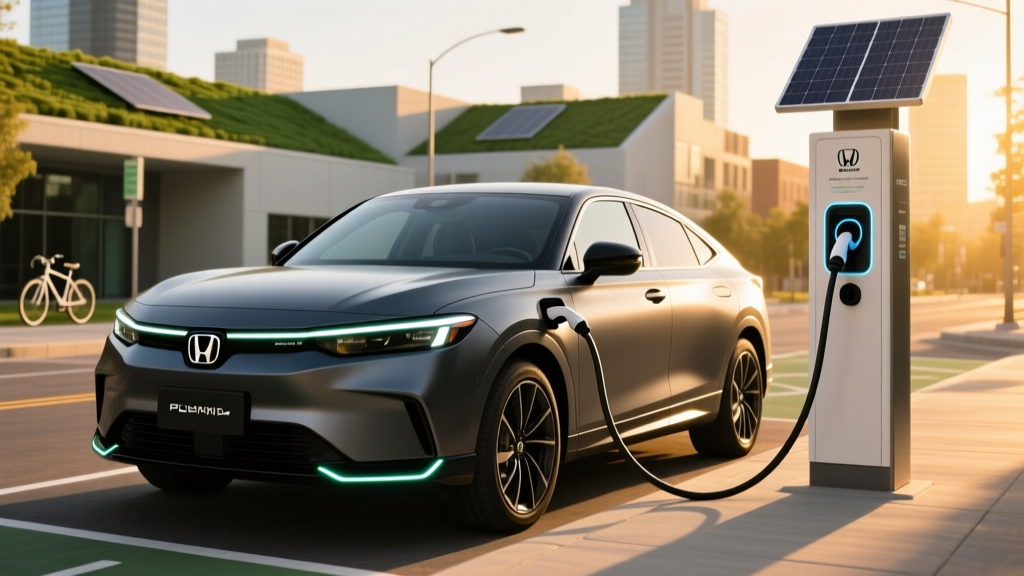
The 2025 Honda Prologue has become one of the most searched electric SUVs in America, and for a specific reason: aggressive lease pricing paired with a manufacturer-backed federal tax credit pass-through. Honda, leveraging its Ultium-platform partnership with General Motors, has structured Prologue leases so that the $7,500 federal incentive is applied directly as a lease cash rebate — a legal mechanism that sidesteps the buyer income caps and MSRP limits that disqualify many purchasers from claiming the credit at tax time. For a shopper evaluating a 2025 Honda Prologue EV lease, this single detail reshapes the entire cost-of-ownership equation.
But a low monthly payment doesn't tell the full story. The Prologue's 85 kWh (usable) Ultium lithium-ion battery, EPA-estimated 296 miles of range (FWD Elite trim), and 150 kW peak DC fast-charging rate are competitive — yet real-world ownership involves insurance premiums, electricity costs, maintenance savings, and the depreciation curve that EVs face in a maturing market. This guide dissects every line item so you can decide whether the Prologue lease math works for your household.
EPA Range: 296 mi (FWD) / 281 mi (AWD) — expect ~245–265 mi real-world highway
Battery: 85 kWh usable, NMC chemistry (Ultium platform)
Peak DC Fast Charge: 150 kW (10–80% in ~32 min)
Level 2 Rate: 11.5 kW (full charge in ~8.5 hours)
Motor Output: 220 hp (FWD) / 288 hp (AWD)
0–60 mph: ~7.6 sec (FWD) / ~6.2 sec (AWD)
MPGe: 99 combined (FWD) per fueleconomy.gov
The Lease-Loophole: How the Federal Tax Credit Works on a Prologue Lease
Under IRS §30D rules, the federal EV tax credit of up to $7,500 is available to qualifying purchasers — subject to buyer income limits, vehicle MSRP caps, and stringent battery-sourcing and critical-mineral requirements. However, when a vehicle is leased rather than purchased, the credit technically goes to the lessor (the financing entity, in this case Honda's captive finance arm). Honda has chosen to pass this benefit directly to the lessee as a capitalized-cost reduction, commonly marketed as "lease cash."
This is not a loophole in the pejorative sense — it is a well-established commercial-lease structure codified under IRC §179A and related leasing provisions. The practical impact is significant:
- Purchase (§30D): Buyer AGI must fall under $150K single / $300K joint / $225K head of household
- Purchase (§30D): Vehicle MSRP must not exceed $55,000 for sedans / $80,000 for SUVs and trucks
- Purchase (§30D): Battery must meet critical-mineral and battery-component sourcing thresholds (phased annually)
- Purchase (§30D): Credit is non-refundable — you must owe enough in federal tax to absorb it (unless using point-of-sale transfer)
- Lease: None of the above buyer-level restrictions apply to the lessee — the lessor claims the commercial credit and passes savings via lease cash
- Caution: Lease terms vary by dealer and region; confirm the $7,500 pass-through is written into your lease agreement before signing
The Prologue's base MSRP starts around $48,795 (EX FWD), which falls under the $80,000 SUV cap even for a purchase. But buyers earning above the AGI thresholds, or those with insufficient tax liability, are shut out of the purchase credit — making the lease route the most reliable way to capture the full $7,500 discount regardless of personal tax situation.
5-Year Total Cost of Ownership: Prologue FWD Elite by the Numbers
To model a realistic five-year ownership scenario, we assume 15,000 miles driven annually, home Level 2 charging at a national-average electricity rate of $0.16/kWh, and a gasoline comparison vehicle achieving 26 MPG combined at $3.50/gallon. The Prologue consumes approximately 34 kWh per 100 miles (derived from its 99 MPGe EPA rating).
| Category | Estimated Cost | Notes |
|---|---|---|
| Lease Payments (36 months + 24 months extended/renewal) | ~$18,500 | After $7,500 lease cash; varies by term and dealer |
| Electricity (75,000 mi) | ~$4,080 | 25,500 kWh at $0.16/kWh avg |
| Insurance (5 years) | ~$11,250 | ~$2,250/yr avg; EV premiums run 15–25% higher |
| Maintenance | ~$1,200 | Tire rotation, cabin filter, wipers — no oil/coolant |
| Depreciation / Lease Residual Risk | $0 (fixed) | Lease locks residual — lessee doesn't bear resale loss |
| Total 5-Year Cost | ~$35,030 |
For comparison, a similarly equipped gas-powered midsize SUV (e.g., Honda Passport) at 22 MPG combined would cost roughly $11,932 in fuel over the same 75,000 miles. That is a fuel-cost delta of approximately $7,850 in the Prologue's favor — though higher insurance premiums (~$1,500–$2,000 more over five years) partially offset the savings.
Charging vs. Gasoline: The Per-Mile Cost Math
The single largest ongoing savings in any EV ownership scenario is energy cost. Here is how the Prologue's electricity expense compares to a gasoline equivalent on a per-mile basis:
Honda Prologue (FWD): 34 kWh/100 mi × $0.16/kWh = $0.054/mile (home charging)
Honda Prologue (DC fast charging): 34 kWh/100 mi × $0.40/kWh avg = $0.136/mile
Gas SUV (22 MPG combined, $3.50/gal): $0.159/mile
At 15,000 miles/year, home-charging the Prologue saves approximately $1,575 annually versus gasoline. If you rely heavily on public DC fast charging, savings narrow to roughly $345/year — an important consideration for apartment dwellers without home-charging access.
The Prologue's 150 kW peak DC fast-charge rate means a 10–80% session takes approximately 32 minutes at a compatible station. However, sustained charge rates taper above 60% state of charge (SoC), a characteristic of the Ultium NMC chemistry. On a road trip, plan for 25–30 minute stops rather than the peak-rate ideal. Preconditioning the battery via the Prologue's navigation-routed charging feature improves cold-weather charge speeds by warming the pack to optimal temperature before arrival.
Maintenance Savings: Where EVs Genuinely Cost Less
Electric vehicles eliminate several routine maintenance items that gasoline vehicles require throughout their lifespan. The Prologue's single-speed reduction-gear drivetrain has far fewer moving parts than an internal-combustion powertrain.
| Service Item | Prologue EV | Gas SUV |
|---|---|---|
| Oil Changes | $0 | ~$450 (9 changes) |
| Transmission Fluid | $0 | ~$250 |
| Brake Pads/Rotors | ~$0 (regen extends life) | ~$600–$900 |
| Spark Plugs / Engine Air Filter | $0 | ~$200 |
| Coolant Flush | ~$0 (sealed system) | ~$150 |
| Cabin Air Filter / Wipers / Tires | ~$1,200 | ~$1,200 |
| 5-Year Total | ~$1,200 | ~$2,850–$3,150 |
Regenerative braking is the unsung cost-saver: the Prologue's one-pedal driving mode uses the electric motor to decelerate, sending energy back into the 85 kWh pack rather than wearing friction brake pads. Many EV owners report original brake pads lasting well beyond 80,000 miles. The maintenance savings of roughly $1,650–$1,950 over five years is real but should be viewed in context — it offsets a portion of the higher insurance cost, not all of it.
Insurance Reality: The Cost Line Item That Catches Buyers Off Guard
EV insurance premiums run 15–25% higher than comparable gasoline vehicles, according to industry data. The reasons are structural, not arbitrary:
- Higher repair costs: Battery pack replacement on the Ultium platform can exceed $15,000. Even minor collision damage near the pack requires specialized high-voltage safety protocols and certified technicians.
- Total-loss thresholds: Insurers may declare an EV a total loss at lower damage levels than a gas car if the battery enclosure is compromised, because battery replacement cost approaches or exceeds vehicle residual value.
- Parts availability: EV-specific body panels and drivetrain components have shorter supply chains than mass-market ICE parts, extending rental-car reimbursement periods.
- Vehicle MSRP: The Prologue's starting price near $48,795 places it in a higher insurance tier than a comparably sized gas crossover.
For the Prologue specifically, expect annual premiums in the $2,000–$2,500 range for a driver with a clean record, depending on state, ZIP code, and coverage level. That is approximately $300–$500 more per year than an equivalently priced gas SUV. Over five years, the insurance surcharge totals roughly $1,500–$2,500 — a meaningful offset to fuel savings that must be part of any honest TCO calculation.
Mitigation strategy: Shop quotes from insurers with dedicated EV programs (e.g., Tesla Insurance where available, or carriers that weight battery-warranty coverage differently). Bundling home and auto, increasing deductibles, and maintaining a clean driving record narrow the gap.
Depreciation and Resale: Why Leasing Shifts the Risk
EV depreciation has been steeper than gasoline-vehicle depreciation in recent years, driven by three converging forces:
- Price wars and incentive shifts: Aggressive new-EV pricing (including Tesla's repeated cuts and new entrants like the Prologue itself) compresses used-EV values by making newer models more affordable.
- Battery-health uncertainty: While modern NMC packs like the Prologue's Ultium unit are engineered for 200,000+ miles of usable life, the used-EV market still prices in battery-degradation risk. Honda covers the battery with an 8-year/100,000-mile warranty (capacity retention above 70%), but second- and third-owners inherit uncertainty.
- Technology obsolescence: Charge-speed improvements, NACS connector adoption, and software-defined features make 2–3-year-old EVs feel dated faster than gas vehicles of the same age.
Industry data from Kelley Blue Book and Edmunds shows mainstream EVs retaining roughly 40–50% of MSRP after three years, compared to 50–60% for popular gas crossovers. For a Prologue purchased at ~$52,000 (Elite FWD with destination), that translates to a potential 3-year depreciation hit of $26,000–$31,200.
This is precisely why the 2025 Honda Prologue EV lease structure is compelling: the lease contract locks in a residual value at signing. If the EV market continues to depreciate faster than projected, that is Honda's financial problem at lease-end, not yours. You walk away (or buy out at the predetermined residual if values have held). For risk-averse buyers in a volatile EV resale market, leasing transfers the depreciation gamble to the manufacturer.
State, Local, and Utility Incentives: The Variable Layer
Beyond the federal lease-cash credit, many Prologue lessees can stack additional incentives — though availability varies enormously by jurisdiction and utility district. These are not guaranteed and should be researched individually:
- California (CVRP): Up to $2,000 rebate for income-qualified buyers; may or may not apply to leases — check program rules
- Colorado: State tax credit up to $5,000 for EVs under certain MSRP thresholds (rules updated annually)
- New York (Drive Clean Rebate): Point-of-sale rebate up to $2,000 based on income and vehicle price
- Utility rebates: Many investor-owned utilities (PG&E, ConEd, Xcel Energy) offer $250–$1,000 rebates for home Level 2 charger installation, plus time-of-use rate plans that reduce per-kWh charging costs to $0.08–$0.12 during off-peak hours
- HOV lane access: Several states grant single-occupant carpool-lane access to EVs — a non-monetary benefit worth hundreds in time savings for commuters
These incentives can reduce effective ownership cost by $1,000–$7,000+ depending on location, but they should be treated as bonus savings rather than baseline assumptions in your TCO model.
Frequently Asked Questions
How much does it really cost to own a 2025 Honda Prologue over 5 years?
Based on our modeling — 15,000 miles/year, home Level 2 charging, average insurance — a Prologue FWD Elite lease costs approximately $35,000 over five years including lease payments, electricity, insurance, and maintenance. That compares to roughly $39,000–$42,000 for a similarly equipped gas midsize SUV over the same period, making the Prologue lease $4,000–$7,000 cheaper net despite higher insurance premiums.
Do I qualify for the federal tax credit if I lease the Prologue?
When you lease, the lessor (Honda Financial Services) claims the commercial EV credit and passes it to you as lease cash — typically $7,500 applied as a cap-cost reduction. Unlike a purchase, this does not require you to meet IRS income caps, MSRP limits, or have sufficient tax liability. Confirm the lease cash amount in writing with your dealer before signing, as promotional terms can change monthly.
How much do I save on fuel and maintenance with the Prologue?
Home-charging the Prologue at $0.16/kWh costs approximately $0.054 per mile, versus $0.159 per mile for a 22 MPG gas SUV. Over 75,000 miles, that is roughly $7,850 in fuel savings. Maintenance savings add another $1,650–$1,950 (no oil, no transmission fluid, minimal brake wear). Combined operational savings of ~$9,500–$9,800 over five years are realistic — partially offset by ~$1,500–$2,500 in additional insurance costs.
Are EVs more expensive to insure than gas cars?
Yes, typically 15–25% more. Higher vehicle MSRP, expensive battery-pack repairs, specialized labor requirements, and elevated total-loss rates all contribute. Expect Prologue insurance to run $2,000–$2,500 annually for a clean-record driver. The premium gap is narrowing as EV repair infrastructure matures, but it remains a real cost factor in 2026.
How well does the Honda Prologue hold its value?
Mainstream EVs currently retain approximately 40–50% of MSRP after three years, below the 50–60% typical for gas crossovers. The Prologue benefits from Honda's brand reputation and Ultium battery warranty (8 years/100,000 miles), but EV market-wide depreciation pressures remain. Leasing eliminates personal exposure to this risk — the locked-in residual value means you are insulated from further value drops at lease-end.
What is the real-world range of the 2025 Honda Prologue?
The EPA rates the Prologue FWD Elite at 296 miles. In real-world highway driving at 70+ mph, expect 245–265 miles. In cold weather (below 30°F), range can drop to 210–230 miles due to battery chemistry limitations and cabin-heating energy draw. The Prologue uses a resistive PTC heater rather than a heat pump, which increases winter energy consumption compared to EVs equipped with heat-pump HVAC systems.
Can I charge the Prologue at Tesla Superchargers?
The 2025 Prologue ships with a CCS1 connector. Honda has confirmed that future models will adopt the NACS (Tesla) connector, and GM — the Prologue's Ultium platform partner — has begun enabling Supercharger access for Ultium-based vehicles via a NACS adapter. Verify current adapter availability and Supercharger network compatibility with your dealer before relying on Tesla infrastructure for road trips.
Sources: EPA fuel economy data via fueleconomy.gov; IRS §30D credit rules via irs.gov; Honda Prologue specifications via American Honda Motor Co. press materials. Tax credit rules, incentive programs, and vehicle pricing are subject to change. Consult a tax professional for personal eligibility determination.