Quick Verdict: Honda's Electric Crossover Arrives With Substance
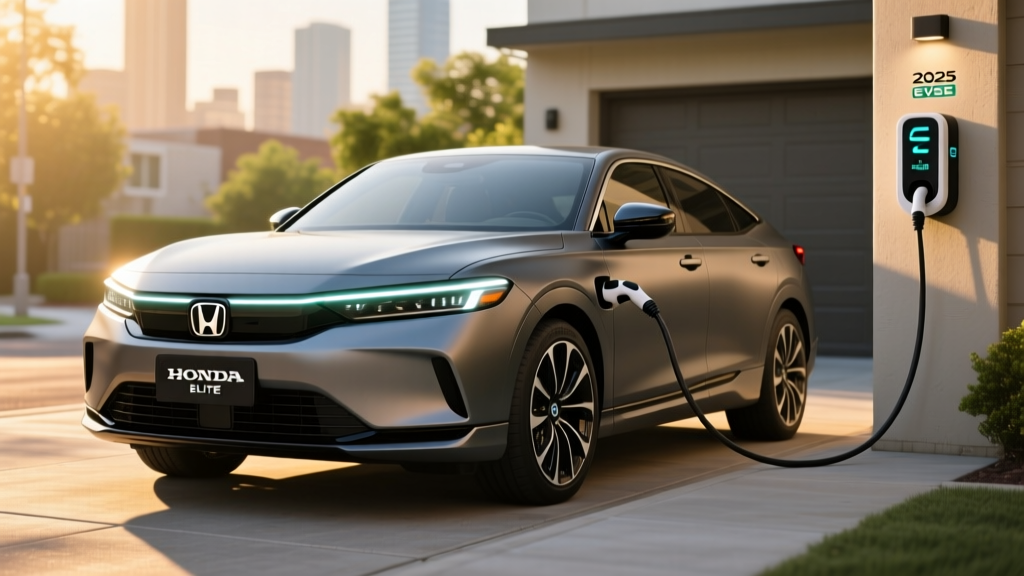
The 2025 Honda Prologue Elite represents Honda's first serious all-electric offering for the U.S. market, built on General Motors' Ultium platform through a partnership that gives this midsize SUV access to proven battery and motor hardware. The Elite trim sits at the top of a three-trim lineup and bundles dual-motor all-wheel drive, a 283-mile EPA range estimate, and Honda's well-regarded driver-assistance suite. It's a credible entry, though it lands in a segment where the Hyundai Ioniq 5, Tesla Model Y, and Ford Mustang Mach-E have already set high bars for charging speed and efficiency.
For buyers transitioning from a Honda Passport or CR-V who want electric power without leaving the Honda ecosystem, the Prologue Elite makes a strong case. For spec-shoppers comparing across brands, the details below will help you decide whether the numbers justify the MSRP.
Range and Efficiency: What the EPA Says vs. What You'll Actually Get
| Metric | 2025 Honda Prologue Elite (AWD) |
|---|---|
| EPA Estimated Range | 283 miles |
| Battery Capacity (Usable) | ~85 kWh (NMC chemistry) |
| EPA Efficiency | 95 MPGe combined (35 kWh/100 mi) |
| Drivetrain | Dual-motor AWD |
| Heat Pump | Yes (standard on all trims) |
The Prologue Elite's NMC (nickel-manganese-cobalt) battery chemistry offers strong energy density, which is how Honda fits 85 usable kWh into a midsize SUV footprint. However, NMC cells are more sensitive to sustained high states of charge and extreme temperatures than LFP alternatives — so daily charging to 80% and preconditioning before fast-charging sessions are recommended practices for longevity.
According to fueleconomy.gov, the Prologue Elite's 95 MPGe combined rating places it behind the Hyundai Ioniq 5 AWD (110 MPGe) and Tesla Model Y Long Range (117 MPGe) in efficiency. That translates to slightly higher electricity costs per mile, though the gap is measured in pennies rather than dollars for most commuters.
Charging Speed and Home Setup
| Charging Level | Power | Speed / Time |
|---|---|---|
| Level 1 (120V household) | ~1.4 kW | ~3–4 miles per hour |
| Level 2 (240V home/public) | Up to 11.5 kW | ~26 miles per hour; full charge in ~9 hours |
| DC Fast Charging (peak) | Up to 150 kW | 10–80% in approximately 32 minutes |
The Prologue Elite's 150 kW peak DC fast-charging rate is the most significant limitation in this vehicle's spec sheet. Competitors like the Hyundai Ioniq 5 (peak 240 kW, 10–80% in ~18 minutes) and the Kia EV6 (peak 233 kW) charge roughly 40% faster at compatible stations. The Prologue's charging curve also tapers noticeably above 80% state of charge, meaning a 10–90% session will take closer to 48–52 minutes.
On a 350 kW Electrify America or EVgo station, the Prologue will not pull more than 150 kW — the vehicle's onboard charge management caps the rate. For road-trippers who frequently cover 300+ mile stretches in a single day, this adds meaningful time at each stop.
For home charging, the 11.5 kW onboard charger is competitive and will replenish the battery from near-empty overnight on a properly installed 48-amp Level 2 circuit. Honda recommends a dedicated 60-amp breaker for Level 2 installation. Expect home installation costs between $800 and $2,200 depending on panel proximity and whether a service upgrade is needed — consult a licensed electrician for a site-specific quote.
The Prologue uses the CCS1 connector standard for DC fast charging. Honda has confirmed that future Prologue model years will adopt the NACS (Tesla) connector, and adapters will be available for current owners to access Tesla Supercharger stations. As of early 2026, Supercharger access requires a Honda-approved CCS-to-NACS adapter.
Performance and Driving Dynamics
| Spec | Value |
|---|---|
| Powertrain | Dual-motor AWD |
| Horsepower | 288 hp |
| Torque | 324 lb-ft |
| 0–60 mph | ~5.8 seconds |
| Top Speed | ~115 mph (electronically limited) |
| Towing Capacity | Not rated for towing |
The Elite's dual-motor AWD system provides confident acceleration and all-weather traction. The 5.8-second 0–60 time is adequate for merging and passing but trails the Tesla Model Y Long Range (4.8 seconds) and the Ford Mustang Mach-E GT (3.5 seconds). Where the Prologue distinguishes itself is ride comfort — the suspension tuning prioritizes compliance over sportiness, absorbing highway imperfections with a smoothness that rivals the Honda Passport.
Regenerative braking offers adjustable levels via steering-wheel paddles, including a one-pedal driving mode that brings the vehicle to a complete stop. The transition between regen and friction braking is well-calibrated, avoiding the abrupt grab that plagues some competitors.
Interior, Cargo, and Technology
The Prologue Elite's cabin borrows heavily from Honda's recent design language, with an 11.3-inch touchscreen running Google Built-In (Google Maps, Google Assistant, and Play Store apps). Wireless Apple CarPlay and Android Auto are standard. A 11-inch digital driver display replaces traditional gauges, and a head-up display projects speed and navigation onto the windshield.
Notable Elite-exclusive features include:
- Heated and ventilated front seats with memory settings
- Heated steering wheel
- Bose premium 12-speaker audio system
- Wireless phone charging pad
- Hands-free power liftgate
- Panoramic moonroof
| Dimension | Measurement |
|---|---|
| Cargo Volume (rear seats up) | 27.7 cu ft |
| Cargo Volume (rear seats folded) | 57.7 cu ft |
| Front Legroom | 41.4 inches |
| Rear Legroom | 38.4 inches |
| Front Headroom | 39.6 inches |
| Rear Headroom | 38.1 inches |
Cargo space is competitive for the segment but trails the Tesla Model Y (30.2 cu ft behind the second row, 72.1 cu ft folded). The Prologue does not offer a front trunk (frunk), which is a missed opportunity for additional storage that most EV competitors provide.
Driver Assistance and Safety
The Prologue Elite includes Honda Sensing 360, which bundles:
- Adaptive cruise control with low-speed follow
- Lane-keeping assist and lane-centering
- Blind-spot monitoring with rear cross-traffic alert
- Traffic sign recognition
- Automatic emergency braking with pedestrian detection
- Front and rear parking sensors with low-speed automatic braking
The system is competent for highway cruising and stop-and-go traffic, but it does not offer hands-free driving on mapped highways the way GM's Super Cruise or Ford's BlueCruise do. For buyers who prioritize advanced hands-free capability, this is a notable gap in the Prologue's tech portfolio.
Safety ratings from the NHTSA and IIHS should be consulted for the latest crash-test results, as the Prologue is a new model and testing timelines vary.
Pricing, Trims, and Federal Tax Credit
| Trim | MSRP | Estimated Price After §30D Credit* |
|---|---|---|
| Prologue EX (FWD) | $47,400 | Varies — see eligibility below |
| Prologue Touring (FWD/AWD) | $50,400 | Varies — see eligibility below |
| Prologue Elite (AWD) | $57,900 | Varies — see eligibility below |
*Pricing reflects 2025 MSRP before destination charges. Federal tax credit eligibility depends on multiple factors — see checklist below.
- MSRP Cap: SUVs must have an MSRP at or below $80,000. The Prologue Elite at $57,900 qualifies.
- Buyer Income Cap: Adjusted gross income must not exceed $150,000 (single), $225,000 (head of household), or $300,000 (joint). Verify against your tax situation.
- Battery Sourcing: A percentage of critical minerals and battery components must meet U.S. free-trade-agreement or domestic-sourcing thresholds. These thresholds increase annually. Check IRS.gov for current-year sourcing requirements before purchase.
- Point-of-Sale Transfer: Eligible buyers can transfer the credit to the dealer at purchase, reducing the upfront price rather than waiting for a tax refund.
- Assembly: The vehicle must undergo final assembly in North America. The Prologue is assembled in Ramos Arizpe, Mexico, which qualifies under USMCA.
Consult a tax professional for personalized eligibility confirmation. Credit amounts can be up to $7,500, but partial credits ($3,750) may apply if only one of the two sourcing requirements (critical minerals or battery components) is met.
At $57,900 MSRP, the Prologue Elite commands a premium over the EX and Touring trims. The value proposition hinges on whether the Elite-exclusive features (Bose audio, ventilated seats, panoramic roof, head-up display) justify the ~$7,500 step up from the Touring AWD. For buyers who would option a competing SUV to a similar level, the Prologue Elite's all-in pricing is defensible.
Warranty and Long-Term Ownership
| Coverage | Term |
|---|---|
| Limited Vehicle Warranty | 3 years / 36,000 miles |
| Powertrain Warranty | 5 years / 60,000 miles |
| Battery Warranty | 8 years / 100,000 miles (retains ≥70% capacity) |
| Corrosion Warranty | 5 years / unlimited miles |
| Roadside Assistance | 3 years / 36,000 miles |
Honda's battery warranty guarantees that the high-voltage pack will retain at least 70% of its original capacity over 8 years or 100,000 miles. This is industry-standard but trails Hyundai's 10-year/100,000-mile battery warranty. NMC batteries typically degrade 1–2% per year under normal use, meaning most Prologue owners will see 85–90% state of health at the 5-year mark — well within the warranty threshold.
Honda has not published official battery replacement costs for the Prologue, but Ultium-platform packs from GM are estimated in the $12,000–$18,000 range for out-of-warranty replacement, including labor. This figure is based on current GM service data and should be confirmed with a Honda dealer as parts become available.
Pros, Cons, and Who Should Buy
- Comfortable, compliant ride quality
- Spacious rear seat with strong legroom
- Google Built-In infotainment is responsive
- Comprehensive Honda Sensing 360 suite
- Heat pump standard (improves cold-weather range)
- Honda dealer network for service familiarity
- 150 kW peak DC charging is slower than key rivals
- No front trunk (frunk)
- No hands-free highway driving mode
- Elite trim is expensive relative to feature set
- Efficiency (95 MPGe) trails segment leaders
- Not rated for towing
- You're a current Honda owner who values brand loyalty and dealer familiarity
- Your daily commute is under 80 miles round-trip and you charge at home
- You prioritize ride comfort and cabin quietness over sporty acceleration
- You rarely take road trips exceeding 250 miles between stops
- You frequently road-trip and need the fastest possible DC charging (look at Ioniq 5 or EV6)
- You want hands-free highway driving (GM Super Cruise on the Cadillac Lyriq, Ford BlueCruise on the Mach-E)
- You need maximum cargo space or a frunk (Tesla Model Y)
- You want to tow (Ford Mustang Mach-E is rated up to 2,700 lbs with certain trims)
Frequently Asked Questions
What is the real-world range of the 2025 Honda Prologue Elite?
The EPA rates the Prologue Elite at 283 miles. In real-world highway driving at 70–75 mph, expect 240–260 miles. In cold weather (below freezing), range may drop to 210–230 miles. City driving with regen braking can yield 285–300 miles in mild temperatures.
How fast does the Prologue Elite charge at home and on DC fast chargers?
At home on a 240V Level 2 charger (11.5 kW), the Prologue adds approximately 26 miles per hour, reaching a full charge from near-empty in about 9 hours. On a DC fast charger, it peaks at 150 kW and charges from 10–80% in roughly 32 minutes. Charging above 80% slows significantly to protect battery health.
Does the 2025 Honda Prologue Elite qualify for the $7,500 federal EV tax credit?
The Prologue Elite's $57,900 MSRP falls under the $80,000 SUV cap for the §30D credit. However, eligibility also depends on your income (caps apply), battery sourcing compliance (which changes annually), and final assembly location. The Prologue is assembled in Mexico, which qualifies under USMCA rules. Verify current sourcing requirements on IRS.gov and consult a tax professional before relying on the credit.
Is the Prologue Elite worth buying over the Hyundai Ioniq 5 or Tesla Model Y?
It depends on priorities. The Ioniq 5 charges faster (240 kW peak vs. 150 kW), offers better efficiency (110 MPGe vs. 95 MPGe), and starts at a lower price for comparable AWD trims. The Model Y offers more cargo space, access to the Supercharger network, and higher efficiency (117 MPGe). The Prologue Elite wins on ride comfort, Honda brand loyalty, and a strong standard feature set at the Elite level. If charging speed and efficiency are top concerns, the Ioniq 5 or Model Y are stronger choices. If you value a composed ride and Honda's dealer network, the Prologue is competitive.
Does the Prologue Elite have a frunk (front trunk)?
No. The Prologue does not offer a front trunk. All cargo space is in the rear cargo area (27.7 cu ft behind the second row, 57.7 cu ft with seats folded).
Can the Prologue Elite use Tesla Superchargers?
As of early 2026, the Prologue uses a CCS1 connector. Honda has indicated that a CCS-to-NACS adapter will be offered to enable Supercharger access, but availability and compatibility should be confirmed with your dealer before purchase. Future Prologue model years are expected to adopt NACS natively.
What is the battery warranty on the Prologue Elite?
Honda covers the high-voltage battery for 8 years or 100,000 miles, guaranteeing it will retain at least 70% of its original capacity during that period. This is standard for the industry but shorter than Hyundai/Kia's 10-year/100,000-mile battery warranty.