Quick Verdict: Honda's First EV Is a Competent but Conservative Cruiser
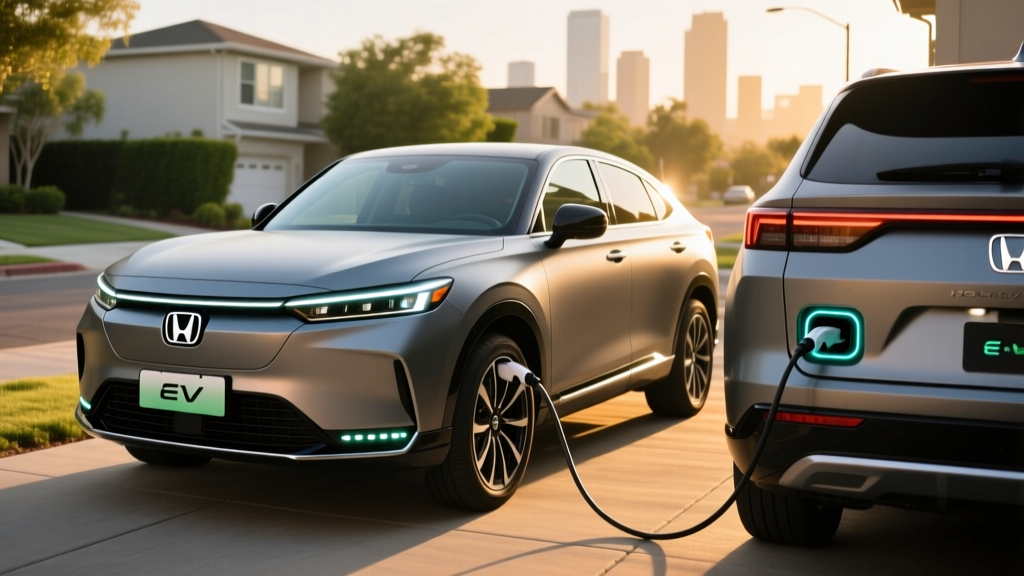
The 2025 Honda Prologue electric SUV arrives as Honda's first mass-market battery-electric vehicle, built on General Motors' Ultium platform shared with the Chevrolet Blazer EV and Cadillac Lyriq. It's a midsize two-row crossover aimed squarely at families transitioning from the CR-V or Passport who want zero tailpipe emissions without learning an entirely new ecosystem. After spending time with the Prologue across city commutes, highway stretches, and DC fast-charging stops, the picture is clear: Honda has delivered a comfortable, spacious, and well-built EV — but one that plays it safe on charging speed and driving dynamics.
If you're cross-shopping the 2025 Honda Prologue against the Hyundai Ioniq 5, Tesla Model Y, or Ford Mustang Mach-E, this review gives you the exact numbers you need to decide.
Range, Efficiency, and Real-World Expectations
| Spec | EX (FWD) | EX (AWD) | Touring (AWD) |
|---|---|---|---|
| EPA Range | 296 mi | 281 mi | 273 mi |
| Battery (usable) | 85 kWh (NMC lithium-ion, Ultium) | ||
| MPGe (combined) | 101 MPGe | 96 MPGe | 94 MPGe |
| kWh / 100 mi | 33 | 35 | 36 |
| Drivetrain | Single-motor FWD | Dual-motor AWD | Dual-motor AWD |
The 85 kWh usable capacity sits on the higher end for this class — larger than the Ioniq 5's 77.4 kWh and roughly on par with the Model Y Long Range. Honda uses NMC (nickel manganese cobalt) chemistry via the GM Ultium platform, which prioritizes energy density over the cycle-life longevity of LFP (lithium iron phosphate). For most owners, this means strong range per charge but a recommendation to keep daily charging at 80–90% rather than regularly topping to 100%.
Efficiency at 33–36 kWh/100mi is respectable but not class-leading. The Hyundai Ioniq 5 RWD achieves 30 kWh/100mi thanks to its lighter curb weight and more aerodynamic profile. The Prologue's boxier SUV shape and 4,800+ lb curb weight (AWD) work against it on the highway.
Charging Speed: DC Fast, Level 2, and the Curve
| Charging Level | Power / Rate | Speed | Notes |
|---|---|---|---|
| Level 1 (120V) | 1.4 kW | ~4 mi/hr | Emergency/trickle only |
| Level 2 (240V, 48A) | 11.5 kW | ~34 mi/hr | Full charge in ~8.5 hrs |
| DC Fast Charge | Peak 155 kW | 10–80% in ~35 min | CCS connector (NACS adapter available) |
The Prologue's 155 kW peak DC fast-charge rate is where honest expectations matter most. While competitors like the Ioniq 5 (peak 240 kW, 10–80% in ~18 minutes) and the Kia EV6 (peak 239 kW) leverage 800V architectures for dramatically faster charging, the Prologue runs on GM's 400V Ultium architecture. In practice, you'll see 150+ kW only briefly between 10–30% state of charge. From 50% onward, the charge curve tapers significantly, dropping to 80–90 kW and eventually below 50 kW past 80%. A realistic 10–80% stop takes roughly 35 minutes at a capable 150+ kW station.
For home Level 2 charging, the onboard 11.5 kW charger is solid — it replenishes the 85 kWh battery in about 8.5 hours on a 48-amp hardwired unit. Honda includes a dual-level charge cord (120V/240V) with a NEMA 14-50 plug adapter, though a dedicated Level 2 wall unit from ChargePoint or Emporia will deliver more reliable, faster daily charging. Plan on a 240V/50A circuit installation running $600–$1,800 depending on your panel proximity and local permitting.
Connector note: The 2025 Prologue ships with a CCS1 port. Honda has confirmed a NACS (Tesla Supercharger) adapter, enabling access to Tesla's V3 and V4 Supercharger network — a significant practical advantage for road-trip charging reliability. Check Honda's official Prologue page for current adapter availability.
Performance and Driving Impressions
| Trim | Horsepower | Torque | 0–60 mph | Drivetrain |
|---|---|---|---|---|
| EX / EX-L (FWD) | 212 hp | 236 lb-ft | ~7.5 sec | Single-motor FWD |
| EX / EX-L / Touring (AWD) | 288 hp | 325 lb-ft | ~6.0 sec | Dual-motor AWD |
The AWD dual-motor Prologue delivers adequate acceleration for highway merging and passing, with the 288 hp output feeling appropriate for a 4,800-pound family hauler. It's not a performance EV — the Tesla Model Y Long Range hits 60 mph in roughly 4.8 seconds with 384 hp — but the Prologue's thrust is linear, smooth, and never feels underpowered in daily driving.
Ride quality is where the Prologue shines. The suspension tuning is firmly comfort-oriented, soaking up highway expansion joints and broken pavement with composure that rivals the CR-V and beats the firmer-riding Ioniq 5. Steering is light and numb by enthusiast standards, but predictable and confidence-inspiring for the target buyer. Regenerative braking offers adjustable levels via paddle shifters, though one-pedal driving (full regen to a stop) requires selecting the strongest setting and still creeps slightly at very low speeds.
Towing capacity is rated at 1,500 lbs across all trims — enough for a small utility trailer or a pair of dirt bikes, but well short of the Model Y's 3,500-lb rating or the F-150 Lightning's 7,700+ lbs. If you need serious towing, look elsewhere.
Interior, Cargo, and Technology
The Prologue's cabin is clean, material-rich for the segment, and immediately familiar if you've sat in a recent CR-V or Accord. Soft-touch surfaces cover the dash and door uppers, and the available Elite package on the Touring trim adds perforated leather, a 12-speaker Bose audio system, and a heated steering wheel.
Cargo and passenger dimensions:
- Cargo volume (behind rear seats): 25.2 cu ft
- Cargo volume (rear seats folded): 57.7 cu ft
- Rear legroom: 38.6 inches
- Front legroom: 41.4 inches
- No front trunk (frunk) — the Ultium platform packaging leaves no under-hood storage
The 25.2 cu ft behind the second row is competitive with the Blazer EV (25.5 cu ft) but trails the Model Y (30.2 cu ft with the rear sub-trunk). The absence of a frunk is a missed opportunity for stowing charging cables or a small bag.
Infotainment: An 11.3-inch touchscreen running Honda's latest interface anchors the dash, with wireless Apple CarPlay and Android Auto standard on all trims. A 11-inch digital instrument cluster replaces the traditional gauge cluster. The system is responsive and logically laid out, with physical knobs for volume and tuning — a welcome choice over touchscreen-only climate controls.
Driver assistance: Honda Sensing is standard across the lineup, bundling adaptive cruise control with low-speed follow, lane-keeping assist, lane-departure warning, forward collision warning, and automatic emergency braking. The Touring trim adds low-speed braking control and traffic jam assist. This is SAE Level 2 driver assistance — it supports you on highways but requires hands on the wheel and eyes on the road at all times. It is not autonomous driving.
Pricing, Trims, and Federal Tax Credit Eligibility
| Trim | MSRP (incl. destination) | Est. After §30D Credit* |
|---|---|---|
| EX (FWD) | $47,400 | ~$39,900 |
| EX (AWD) | $50,400 | ~$42,900 |
| EX-L (FWD) | $50,600 | ~$43,100 |
| EX-L (AWD) | $53,600 | ~$46,100 |
| Touring (AWD) | $57,900 | ~$50,400 |
*Estimated pricing assumes full $7,500 federal EV tax credit under IRS §30D. Eligibility depends on multiple factors — see checklist below. As of 2025, the credit can be transferred to the dealer at point of sale, reducing your purchase price directly.
Federal tax credit eligibility checklist (2025 rules):
- MSRP cap: SUVs must be ≤$80,000 — all Prologue trims qualify.
- Buyer income cap: Modified AGI must not exceed $150,000 (single), $225,000 (head of household), or $300,000 (joint).
- Battery component sourcing: Critical minerals and battery components must meet phased-in North American sourcing thresholds. The Ultium platform's sourcing has been evolving — verify current-year eligibility on fueleconomy.gov before purchasing.
- Point-of-sale transfer: You can transfer the credit to the dealer for an immediate price reduction, but you must still meet income requirements at tax-filing time or repay the credit.
The Prologue's pricing places it in direct competition with the Hyundai Ioniq 5 ($42,600–$58,200), the Ford Mustang Mach-E ($42,995–$59,995), and the Tesla Model Y ($44,990–$52,490). The FWD EX at roughly $39,900 after the credit is a compelling entry point for a midsize electric SUV with this much interior space.
Battery Warranty and Long-Term Ownership
Honda backs the Prologue's battery pack and electric drive components with an 8-year / 100,000-mile warranty (whichever comes first), consistent with the industry standard for EV powertrains. The battery warranty covers defects and excessive capacity loss — Honda defines this as dropping below a specified state-of-health threshold, though the exact percentage has not been publicly detailed beyond "abnormal" degradation.
The limited vehicle warranty covers 3 years / 36,000 miles bumper-to-bumper. Given the Ultium platform's shared use across GM, Honda, and Acura, long-term reliability data will benefit from the larger combined fleet of Blazer EV, Lyriq, and Acura ZDX owners.
NMC battery chemistry in the Ultium platform is proven but does benefit from careful charging habits: set your daily charge limit to 80–90%, use DC fast charging for road trips rather than daily top-ups, and precondition the battery (via the vehicle's navigation-to-charger feature) before fast-charging stops to optimize charge speed and reduce stress on the cells.
Pros, Cons, and Who Should Buy
- Spacious, comfortable cabin with premium materials
- 296-mile EPA range (FWD) is genuinely road-trip capable
- Smooth, quiet ride quality — best in class for comfort
- NACS adapter unlocks Tesla Supercharger network
- Honda Sensing ADAS is standard on every trim
- Physical knobs and intuitive infotainment layout
- 155 kW peak DC charging is slow vs 800V competitors (35 min vs 18 min 10–80%)
- No frunk for cable/bag storage
- 1,500-lb towing limit is low for the segment
- AWD 0–60 of ~6.0 sec feels leisurely vs Model Y or EV6
- Higher starting price than Ioniq 5 or Mach-E base trims
- Regen braking doesn't achieve full one-pedal stop in all conditions
Who the 2025 Honda Prologue electric SUV suits best:
- Daily commuters (20–60 miles round trip): Excellent fit. Home Level 2 charging covers daily needs easily, and the cabin comfort makes traffic bearable.
- Families needing space: Strong choice. The 38.6 inches of rear legroom and 25+ cu ft of cargo handle car seats, strollers, and weekend gear.
- Road trippers: Viable with planning. The 296-mile range handles most stretches, and NACS adapter access to Superchargers helps. But 35-minute charge stops require patience vs the Ioniq 5's 18-minute stops.
- Towing buyers: Look elsewhere. The 1,500-lb limit won't handle most campers or boat trailers.
- Performance seekers: Not this EV. The Prologue prioritizes comfort over corner-carving or stoplight drag races.
Frequently Asked Questions
What is the real-world range of the 2025 Honda Prologue?
The FWD EX achieves an EPA-estimated 296 miles. In real-world mixed driving at moderate temperatures, expect 270–290 miles. Highway-only driving at 75 mph drops this to roughly 245–265 miles. In sub-freezing weather, plan for 190–240 miles depending on trim and conditions.
How fast does the Prologue charge at home and on the road?
At home on a 240V Level 2 charger (48A), the Prologue charges at 11.5 kW, adding about 34 miles of range per hour and fully replenishing in ~8.5 hours. On DC fast chargers, it peaks at 155 kW, reaching 10–80% in approximately 35 minutes at a capable station.
Does the 2025 Honda Prologue qualify for the $7,500 federal EV tax credit?
All Prologue trims fall under the $80,000 SUV MSRP cap. However, buyer eligibility under IRS §30D depends on your income (≤$300,000 joint / ≤$150,000 single) and the vehicle's battery sourcing compliance. Confirm eligibility on fueleconomy.gov and consult a tax professional before relying on the credit. The credit can be transferred to the dealer at point of sale as of 2024 onward.
Is the Prologue worth buying over the Hyundai Ioniq 5 or Tesla Model Y?
Choose the Prologue if ride comfort, interior material quality, and Honda dealership familiarity matter most to you. Choose the Ioniq 5 if faster DC charging (18 min 10–80%) and lower starting price are priorities. Choose the Model Y if you want maximum cargo space, Supercharger-native access, and stronger acceleration. The Prologue wins on comfort; it gives up charging speed and performance.
What battery chemistry does the Prologue use?
The Prologue uses NMC (nickel manganese cobalt) lithium-ion cells as part of GM's Ultium platform. NMC offers higher energy density than LFP, enabling the 296-mile range from a 85 kWh pack. For longevity, keep daily charging between 20–90% and use DC fast charging sparingly.
Does the Prologue have a frunk?
No. The Ultium platform packaging does not provide front-trunk storage. All cargo must go in the rear cargo area (25.2 cu ft behind the second row, 57.7 cu ft with seats folded).
Can the Prologue use Tesla Superchargers?
Yes, with Honda's NACS adapter. The Prologue ships with a CCS1 port, but the adapter enables access to Tesla's V3 and V4 Supercharger network, significantly expanding reliable fast-charging options for road trips.