Quick Verdict: A Solid Midsize EV SUV With Real Deal Potential
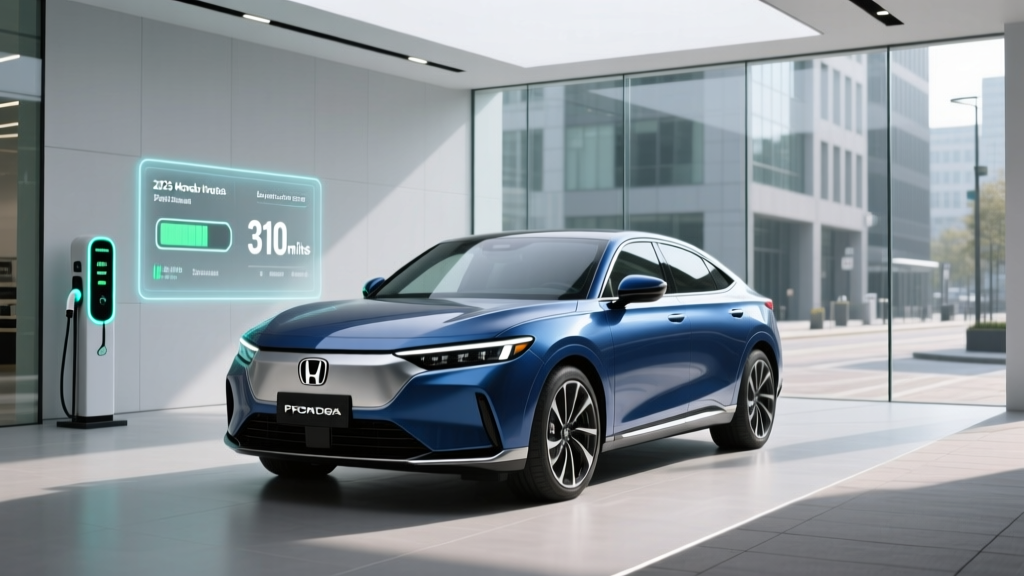
The 2025 Honda Prologue occupies a specific niche: it's a midsize electric SUV built on General Motors' Ultium platform, sold through Honda dealers with Honda's interior design language and Honda Sensing safety suite. For buyers who want an EV but prefer the Honda dealership experience over Chevrolet or Cadillac, it fills a genuine gap. But the real story in 2025 isn't the vehicle itself—it's the deals stacking up around it.
With a base MSRP of $47,400 (before destination), the Prologue initially priced itself out of impulse-buy territory. However, aggressive manufacturer incentives, the full §30D federal tax credit of $7,500, and competitive lease offers have brought effective prices down substantially. This review breaks down the real numbers—range, charging, pricing by trim, and what you can actually expect to pay in 2025.
Range, Efficiency, and the Real-World Reality Check
Real-World Expectation: ~240–265 miles highway; ~210–235 miles in cold weather (below 32°F)
Usable Battery Capacity: 85 kWh (NMC lithium-ion, Ultium platform)
Efficiency: 99 MPGe combined (FWD) / 95 MPGe combined (AWD)
The Prologue's 85 kWh NMC (nickel manganese cobalt) battery pack is shared with the Chevrolet Blazer EV and Cadillac Lyriq, though Honda tunes the powertrain and thermal management differently. The EPA's 296-mile estimate for front-wheel-drive trims is competitive for the segment, sitting between the Hyundai Ioniq 5 (303 mi Long Range) and the Ford Mustang Mach-E Extended Range (312 mi).
But EPA estimates assume a mix of city and highway driving at moderate temperatures. On a sustained 70 mph highway run in 75°F weather, expect roughly 240–265 miles before you need to find a charger. Drop the temperature to freezing or below, and lithium-ion chemistry slows, cabin heating draws significant power, and you're looking at 210–235 miles of practical range. This isn't a Honda-specific issue—it's physics affecting every EV without a heat pump (the Prologue uses a conventional resistive heater for cabin warmth, which is less efficient than a heat pump system).
Efficiency lands at roughly 34–36 kWh per 100 miles in mixed driving. That's mid-pack for a 4,800-pound SUV—not as efficient as the Ioniq 5's ~30 kWh/100mi, but comparable to the Blazer EV and Volkswagen ID.4.
Charging Speed: DC Fast, Level 2, and What to Expect
| Charging Level | Power / Rate | Time / Miles Added | Notes |
|---|---|---|---|
| Level 1 (120V household) | 1.4 kW | ~3–4 miles per hour | Emergency/trickle only; full charge in ~60+ hours |
| Level 2 (240V home/public) | 11.5 kW (onboard charger) | ~30–33 miles per hour; full charge ~8–9 hours | Requires 48A+ circuit; 60A breaker recommended |
| DC Fast Charging | 150 kW peak | 10–80% in ~35 minutes | CCS connector; tapers significantly above 80% |
The Prologue's 150 kW peak DC fast-charge rate is its most debated spec. In a segment where the Hyundai Ioniq 5 and Kia EV6 hit 240 kW (10–80% in ~18 minutes) and the Tesla Model Y peaks around 250 kW, the Prologue's 35-minute 10–80% session feels a generation behind. On a road trip from Denver to Kansas City, that extra 15–20 minutes per stop adds up.
The charging curve matters as much as the peak number. The Prologue sustains roughly 130–150 kW up to about 50% state of charge, then progressively tapers. Above 80%, speeds drop sharply—to under 50 kW—making it impractical to charge past 80% on a road trip unless absolutely necessary. Plan your stops around 10–80% sessions.
At home, the 11.5 kW onboard charger is more competitive. With a properly installed Level 2 wall connector on a 60-amp circuit, you'll add roughly 30 miles of range per hour of charging. A full overnight session (8–9 hours) replenishes the battery completely. Installation costs for a Level 2 home setup typically run $800–$2,500 depending on panel proximity and whether your electrical panel needs an upgrade to support a 60A circuit.
The Prologue uses a CCS1 connector for DC fast charging. Honda has confirmed that future models will adopt NACS (Tesla's connector), and adapters are expected to enable Supercharger access, but as of 2025, the Prologue relies on Electrify America, EVgo, ChargePoint, and other CCS-compatible networks.
Performance and Drivetrain by Trim
| Spec | EX / EX-L (FWD) | EX-L / Touring (AWD) |
|---|---|---|
| Drivetrain | Single motor, front-wheel drive | Dual motor, all-wheel drive |
| Horsepower | 212 hp | 288 hp |
| Torque | 236 lb-ft | 333 lb-ft |
| 0–60 mph | ~7.6 seconds | ~5.9 seconds |
| Towing Capacity | 1,500 lbs | 1,500 lbs |
| EPA Range | 296 miles | 281 miles (Touring) |
The FWD Prologue delivers adequate acceleration for commuting and highway merging, but the 7.6-second 0–60 time won't excite anyone coming from a Tesla or even a Mustang Mach-E. The AWD dual-motor variant is noticeably more responsive, with the 5.9-second sprint feeling genuinely quick for a family SUV.
Ride quality is where the Ultium platform earns its keep. The Prologue rides smoothly over rough pavement, with a compliant suspension tune that Honda has calibrated to feel more comfort-oriented than the Blazer EV. Steering is light and low-effort—ideal for parking lots, less engaging on back roads. This is a cruiser, not a sport-tuned handler, and that's fine for its target buyer.
The 1,500-pound towing capacity is modest—enough for a small utility trailer or a pair of dirt bikes, but not a camper. If towing is a priority, the Ford F-150 Lightning or Rivian R1S are in a different league.
Pricing, Trim Levels, and 2025 Honda Prologue Deals
| Trim | MSRP (incl. destination) | Est. Dealer Incentive | Federal Tax Credit (§30D) | Effective Price |
|---|---|---|---|---|
| EX (FWD) | $48,795 | –$2,000 to –$5,000 | –$7,500 | ~$36,295–$39,295 |
| EX-L (FWD) | $51,295 | –$2,000 to –$5,000 | –$7,500 | ~$38,795–$41,795 |
| EX-L (AWD) | $53,795 | –$2,000 to –$5,000 | –$7,500 | ~$41,295–$44,295 |
| Touring (AWD) | $59,295 | –$2,000 to –$5,000 | –$7,500 | ~$46,795–$49,795 |
The 2025 Honda Prologue deals landscape is shaped by three stacked discounts: Honda's own manufacturer incentives (which have ranged from $2,000 to $5,000 depending on the month and region), the $7,500 federal clean vehicle credit under IRS §30D, and competitive dealer-level negotiation in a market with growing EV inventory.
The Prologue qualifies for the full $7,500 federal tax credit because its battery components and critical minerals meet the IRS sourcing requirements, and its MSRP falls under the $80,000 SUV cap. However, buyer income limits apply: modified adjusted gross income cannot exceed $300,000 (joint filers), $225,000 (head of household), or $150,000 (single). As of 2024, the credit can be transferred to the dealer at point of sale, reducing your purchase price directly rather than waiting for a tax refund.
Lease deals have been particularly aggressive, with some Honda dealers advertising $399–$499/month on EX-L trims with $3,999 due at signing. Under current IRS rules, leased EVs can benefit from the commercial clean vehicle credit (§45W), which has no MSRP or income caps—a workaround for buyers who exceed the §30D income limits. The leasing company claims the credit and typically passes a portion through as a capitalized-cost reduction.
Interior, Cargo, Technology, and Daily Livability
The Prologue's cabin is where Honda's influence is most visible. The 11.3-inch infotainment touchscreen runs Google Built-In (Google Maps, Google Assistant, Play Store apps), a significant upgrade over Honda's older infotainment systems. Wireless Apple CarPlay and Android Auto are standard on all trims. The digital instrument cluster is a clean 11-inch display, and the Touring trim adds a head-up display.
Material quality is solid for the segment—soft-touch surfaces on the dashboard and door uppers, though lower panels use harder plastics consistent with the price point. The EX-L and Touring trims add leather-trimmed seats, with the Touring offering ventilated front seats and a heated steering wheel.
Cargo and passenger space are genuine strengths:
- Cargo volume: 25.2 cu ft behind the second row; 57.7 cu ft with rear seats folded
- Rear legroom: 38.6 inches (competitive with the Ioniq 5 and Model Y)
- Front legroom: 41.4 inches
- No frunk: The Ultium platform packaging does not include a front trunk
The Honda Sensing suite includes adaptive cruise control, lane-keeping assist, automatic emergency braking, and blind-spot monitoring. This is SAE Level 2 driver assistance—meaning you must keep your hands on the wheel and eyes on the road at all times. It's competent for highway cruising but is not "self-driving" in any sense.
Warranty and Long-Term Ownership Costs
| Coverage | Term |
|---|---|
| Basic (bumper-to-bumper) | 3 years / 36,000 miles |
| Powertrain | 5 years / 60,000 miles |
| Battery (high-voltage) | 8 years / 100,000 miles |
| Corrosion perforation | 5 years / unlimited miles |
| Roadside assistance | 3 years / 36,000 miles |
The 8-year/100,000-mile battery warranty is the industry standard for EVs, and it guarantees that the battery will retain at least 70% of its original capacity during the coverage period. Based on Ultium platform data from the GMC Hummer EV and Cadillac Lyriq, early degradation appears modest—typically 5–8% loss over the first 50,000 miles, though long-term data is still accumulating.
Insurance costs for the Prologue run roughly $1,800–$2,400 annually depending on your driving record and location—moderately higher than a comparable gas-powered Honda Passport, reflecting EV repair costs and parts pricing. Maintenance costs are substantially lower than a gas vehicle: no oil changes, no transmission fluid, no spark plugs, and regenerative braking extends pad life significantly. Expect $300–$500 annually for cabin air filters, tire rotations, and wiper fluid.
How the Prologue Compares to Key Competitors
The Prologue doesn't exist in a vacuum. Here's how it stacks up against the midsize electric SUVs it competes with on showroom floors:
| Spec | 2025 Honda Prologue EX-L (AWD) | 2025 Hyundai Ioniq 5 SEL (AWD) | 2025 Ford Mustang Mach-E Premium (AWD ER) | 2025 Tesla Model Y Long Range (AWD) |
|---|---|---|---|---|
| MSRP | $53,795 | $54,100 | $52,995 | $48,590 |
| EPA Range | 281 mi | 290 mi | 312 mi | 320 mi |
| Battery | 85 kWh (NMC) | 77.4 kWh (NMC) | 91 kWh (NMC) | 75 kWh (est. NMC) |
| Peak DC Charge | 150 kW | 240 kW | 150 kW | 250 kW |
| 10–80% Time | ~35 min | ~18 min | ~38 min | ~22 min |
| 0–60 mph | 5.9 sec | 5.0 sec | 5.1 sec | 4.8 sec |
| Federal Tax Credit | $7,500 | $7,500 | $7,500 (varies) | $7,500 |
| Supercharger Access | Adapter (expected) | Adapter available | Adapter available | Native NACS |
The Prologue's 150 kW charging speed is its most significant competitive disadvantage. On road trips, the Ioniq 5's 240 kW capability and the Model Y's Supercharger network access are meaningfully better experiences. For daily commuting and home-charging-dominant owners, this matters far less.
Where the Prologue wins is dealership familiarity. Honda's dealer network is extensive, service departments are trusted, and the buying process is conventional—no direct-to-consumer pricing models, no app-based ordering. For buyers transitioning from a CR-V or Pilot, the Prologue feels like a known quantity, and that comfort has real value.
Who Should Buy the 2025 Honda Prologue (and Who Shouldn't)
- You want an EV from a trusted brand with a conventional dealership experience
- You charge primarily at home and road-trip infrequently (1–2 times per year)
- You qualify for the $7,500 federal tax credit and can stack manufacturer incentives
- You need a spacious midsize SUV with comfortable rear seating for adults
- You value ride comfort over sporty handling or acceleration
- You road-trip frequently and need the fastest possible DC charging
- You want Tesla Supercharger access without adapters or uncertainty
- Performance (0–60 under 5 seconds) is a priority
- You need more than 1,500 lbs of towing capacity
- You want a front trunk (frunk) for additional storage
Pros and Cons at a Glance
- Spacious cabin with 38.6" rear legroom and 57.7 cu ft cargo
- Full $7,500 federal tax credit eligibility
- Comfortable, compliant ride quality
- Google Built-In infotainment is responsive and feature-rich
- Honda dealer network and familiar purchase process
- Competitive effective pricing after stacked incentives
- 150 kW peak DC charging is slow for the segment
- No front trunk (frunk)
- Resistive cabin heater (no heat pump) reduces cold-weather range
- 1,500-lb towing limit is below some competitors
- FWD base model feels underpowered for the weight
- CCS connector limits current Supercharger access
Frequently Asked Questions
What is the real-world range of the 2025 Honda Prologue?
The EPA rates the FWD Prologue at 296 miles and the AWD Touring at 281 miles. In real-world highway driving at 70 mph in moderate temperatures, expect 240–265 miles. In cold weather (below freezing), plan for 210–235 miles. These figures assume you're driving to near-empty; in practice, most owners charge at 15–20% remaining.
How fast does the Prologue charge at home and on DC fast chargers?
On a Level 2 home charger (240V, 48A+), the Prologue adds about 30 miles of range per hour, reaching a full charge in 8–9 hours. On DC fast chargers, it peaks at 150 kW and charges from 10–80% in approximately 35 minutes. This is slower than the Hyundai Ioniq 5 (18 minutes) or Tesla Model Y (22 minutes).
How much does the 2025 Honda Prologue cost after tax credits?
After the $7,500 federal tax credit and estimated dealer incentives of $2,000–$5,000, the effective price ranges from roughly $36,295 (EX FWD) to $49,795 (Touring AWD). Lease deals have been advertised as low as $399/month with reasonable drive-offs in some markets.
Does the 2025 Honda Prologue qualify for the $7,500 federal EV tax credit?
Yes, the Prologue qualifies for the full $7,500 under IRS §30D, meeting both battery component and critical mineral sourcing requirements. However, buyer income caps apply: $300,000 for joint filers, $225,000 for heads of household, and $150,000 for single filers. The credit can be transferred to the dealer at point of sale as an upfront price reduction. Always verify current eligibility at IRS.gov, as rules can change.
Is the Honda Prologue worth buying over the Hyundai Ioniq 5 or Tesla Model Y?
It depends on your priorities. If fast DC charging, Supercharger access, or sporty performance are critical, the Ioniq 5 or Model Y are stronger choices. If you value Honda's dealership experience, a comfortable ride, spacious rear seating, and aggressive post-incentive pricing, the Prologue is a compelling option—especially if you charge at home 90% of the time and road-trip rarely.
What are the biggest drawbacks of the Prologue?
The 150 kW peak charging speed is the primary limitation, adding time to road-trip stops. The lack of a front trunk, resistive cabin heating (no heat pump), and 1,500-lb towing cap are secondary concerns that may matter depending on your use case.