Quick Verdict: A Full-Size Electric Truck Built for Daily Drivers
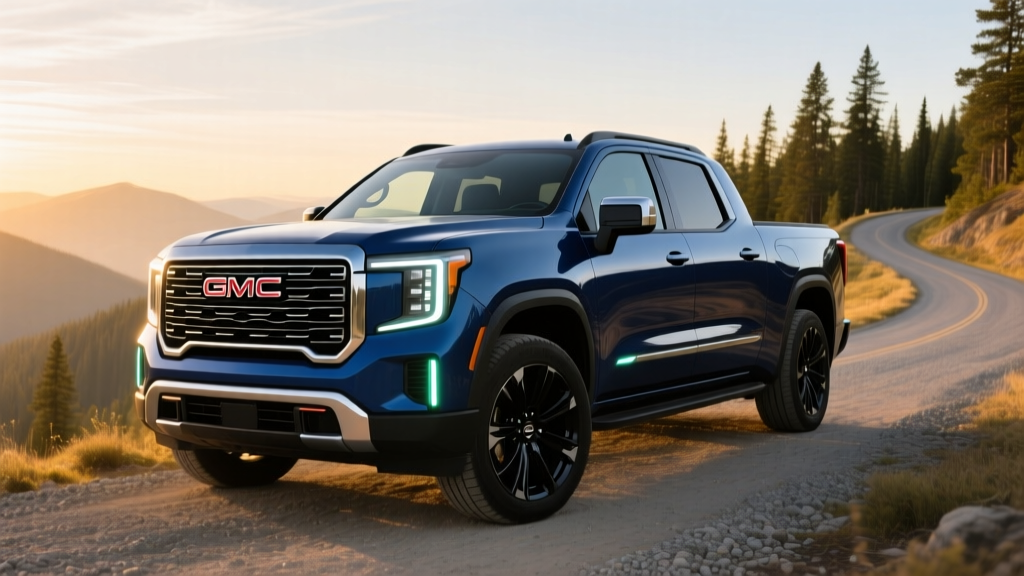
The 2025 GMC Sierra EV Elevation occupies a rare position in the electric truck market: it offers genuine full-size pickup utility wrapped in a package tuned more for daily commuting and light work than hardcore towing. Built on GM's BT1 electric platform — the same architecture underpinning the Chevrolet Silverado EV and Hummer EV — the Elevation trim serves as the Sierra EV's accessible entry point, trading the Denali's luxury surplus for a more pragmatic price while retaining the massive Ultium battery that gives this truck its headline range figure.
At an EPA-estimated 390 miles of range with the available Max Range battery, the Sierra EV Elevation outdistances nearly every electric truck competitor on paper. But range stickers don't tell the whole story. This review breaks down the real-world efficiency, charging behavior, ownership economics, and practical trade-offs you need to evaluate before committing to a $70,000-plus electric pickup.
| Specification | Elevation (Standard Range) | Elevation (Max Range) |
|---|---|---|
| EPA Range | ~285 miles | ~390 miles |
| Battery Capacity (usable) | ~120 kWh (est.) | ~200 kWh |
| Battery Chemistry | NMC (Nickel Manganese Cobalt) | NMC |
| Horsepower | 510 hp | 510 hp |
| Torque | 615 lb-ft | 615 lb-ft |
| 0-60 mph | ~5.5 seconds | ~5.5 seconds |
| Drivetrain | Dual-motor AWD | Dual-motor AWD |
| Max DC Fast Charge | 350 kW (peak) | 350 kW (peak) |
| 10-80% DC Charge Time | ~28 min (est.) | ~45 min (est.) |
| Level 2 Home Charging | 19.2 kW (up to 52 mi/hr) | 19.2 kW (up to 52 mi/hr) |
| MPGe (combined, est.) | ~62 MPGe | ~62 MPGe |
| Efficiency | ~54 kWh/100 mi | ~54 kWh/100 mi |
| Max Towing (est.) | ~9,500 lbs | ~9,500 lbs |
| Bed Length | 5'11" (MultiPro MidGate) | 5'11" (MultiPro MidGate) |
| Starting MSRP | ~$69,900 | ~$79,900 |
| Battery/Powertrain Warranty | 8 years / 100,000 miles | 8 years / 100,000 miles |
Range and Efficiency: What 390 Miles Actually Means
GMC's headline 390-mile EPA estimate applies to the Max Range battery configuration. That figure places the Sierra EV Elevation among the longest-range electric vehicles sold in the United States, let alone trucks. But EPA estimates represent controlled laboratory cycles, and a 7,000-pound electric pickup behaves differently in real-world conditions.
- EPA Estimate: ~390 miles
- Highway (70 mph, 75°F): Expect 310-340 miles. Aerodynamic drag dominates at speed, and the Sierra's tall, flat profile works against it.
- City/Suburban mixed driving: 360-380 miles is realistic. Regenerative braking recovers energy in stop-and-go traffic.
- Cold weather (20°F, highway): Plan for 240-280 miles. NMC chemistry loses roughly 25-35% range in sustained freezing temps, even with the Sierra EV's heat pump preconditioning.
- Towing (5,000 lb trailer): Range drops to approximately 180-220 miles depending on trailer profile and terrain.
The efficiency figure — approximately 54 kWh per 100 miles — means this truck consumes more energy per mile than any sedan or crossover. That's physics: moving 7,000+ pounds of steel and battery requires electrons. For context, the Ford F-150 Lightning Extended Range posts roughly 48-50 kWh/100mi, while the Rivian R1T Dual-Motor Max lands around 51 kWh/100mi. The Sierra EV's larger battery compensates for its appetite, but efficiency-conscious buyers should note the trade-off between range and consumption.
The Standard Range battery (~285 miles EPA) will serve most daily commuters and suburban owners well, cutting thousands off the purchase price while still covering round-trip commutes of 60+ miles with room to spare. Reserve the Max Range pack for buyers who regularly drive 200+ miles between charging opportunities or who want cold-weather buffer.
Charging Speed: Peak kW vs. Sustained Reality
The Sierra EV supports DC fast charging at up to 350 kW on compatible CCS or NACS chargers — a headline number shared with the Hummer EV and Silverado EV. But peak rate is not sustained rate, and the charging curve tells the real story.
| Charging Method | Power (kW) | Rate | Notes |
|---|---|---|---|
| Level 1 (120V household) | ~1.4 kW | ~3-4 miles/hour | Emergency/top-off only. Full charge takes days. |
| Level 2 (240V home, 48A) | 11.5 kW | ~30 miles/hour | Typical home wall connector. Overnight charge in 10-13 hrs. |
| Level 2 (240V home, 80A) | 19.2 kW | ~52 miles/hour | Requires 100A dedicated circuit. Full charge in 6-8 hrs. |
| DC Fast Charge (50 kW) | 50 kW | ~130 miles/hour | Older public chargers. 10-80% in ~2.5 hrs (Max Range). |
| DC Fast Charge (150 kW) | 150 kW | ~300+ miles/hour (peak) | Common EA/EVgo stations. 10-80% in ~55-65 min. |
| DC Fast Charge (350 kW) | 350 kW peak | ~500+ miles/hour (peak) | Rare infrastructure. 10-80% in ~45 min (Max Range). Sustained rate drops above 60% SoC. |
With the Max Range 200 kWh battery, expect a 10-80% session on a 350 kW charger to take roughly 45 minutes. The Standard Range pack charges faster in absolute time — approximately 28 minutes for 10-80% — because there are fewer cells to fill. In both cases, the charging curve tapers significantly above 60-65% state of charge. You'll see peak rates only in the 10-40% SoC window; above 80%, speeds drop to under 50 kW to protect battery longevity.
Home charging reality: Most Sierra EV owners will install a Level 2 wall connector rated for 48 amps (11.5 kW). At this rate, the Max Range battery refills overnight in roughly 13 hours from near-empty — adequate for daily use since most drivers rarely deplete below 30%. Upgrading to an 80-amp charger (19.2 kW) requires a 100-amp dedicated circuit and a panel that can support it; budget $1,500-$3,500 for the electrician work depending on your home's existing service. Check with a licensed electrician before committing to the higher-amperage setup.
GM has adopted the NACS (Tesla-style) connector for newer production, and adapters are available for CCS and CHAdeMO networks. Tesla Supercharger access is included via adapter, significantly expanding the usable fast-charging network for road trips. Source: GMC Sierra EV official page.
Performance and Driving Dynamics
The Elevation's dual-motor all-wheel-drive powertrain produces 510 horsepower and 615 lb-ft of torque. That's substantially less than the Sierra EV Denali Edition 1's 754 hp, but 510 hp in a pickup still delivers confident acceleration: 0-60 mph in approximately 5.5 seconds, per GM estimates. For reference, a gas-powered Sierra 1500 with the 5.3L V8 posts 0-60 times around 6.5-7.0 seconds.
The instant torque delivery characteristic of electric motors makes the Elevation feel quicker than the numbers suggest, particularly in the 0-30 mph range where most city driving happens. The low center of gravity — courtesy of the under-floor Ultium battery pack — reduces body roll compared to a conventional pickup, though the Sierra EV's 7,000+ pound curb weight is noticeable during aggressive cornering and emergency braking.
Ride quality benefits from the available adaptive air suspension (standard on higher trims, optional on Elevation). The truck absorbs highway imperfections well and maintains composure over rough pavement. Steering is light and numb — typical for full-size trucks — but the turning circle is surprisingly manageable thanks to available four-wheel steering, which reduces the effective wheelbase at low speeds.
Towing and payload: The Elevation is rated for approximately 9,500 pounds of towing capacity — adequate for a boat, horse trailer, or mid-size camper but below the 10,000+ lb ratings of the F-150 Lightning and Silverado EV. Payload capacity sits around 1,300-1,400 pounds. If towing is your primary use case, note that towing cuts range roughly in half, making the Max Range battery essential for any trip beyond 100 miles with a trailer.
Interior, Cargo, and Technology
The Sierra EV's cabin is dominated by a 16.8-inch diagonal infotainment touchscreen running GM's latest Ultifi software platform. The system supports wireless Apple CarPlay and Android Auto, over-the-air updates, and built-in Google services (Maps, Assistant, Play Store). Response times are quick, though the sheer screen size can mean longer reach distances from the driver's seat.
A 11-inch digital instrument cluster sits behind the steering wheel, and an available head-up display projects speed and navigation onto the windshield. The Elevation trim uses synthetic leather (leather-appointed seats are available), and material quality is solid if not luxurious — this is where the Denali trim justifies its premium.
Cargo and utility:
- Bed length: 5'11" standard, expandable to approximately 9' with the MultiPro MidGate folded (allows pass-through from bed into cabin)
- Front trunk (e-trunk/frunk): Approximately 10.7 cubic feet — large enough for a carry-on suitcase or charging cables, with a power-operated lid
- Rear-seat legroom: ~43.4 inches (competitive with crew-cab gas trucks)
- Behind rear seat (in-cabin): ~48 cubic feet with seats up
- MultiPro Tailgate: Six-function tailgate with load-stop, step, and work-surface modes
The MidGate is the Sierra EV's standout utility feature. Folding it down creates a continuous flat load floor from the tailgate through the cabin, accommodating items up to roughly 9 feet long while still seating a front passenger. It's a clever solution to the shorter bed length imposed by the battery-dominant platform.
Driver assistance: The Elevation comes standard with GM's Super Cruise-compatible hardware, though hands-free Super Cruise activation requires a subscription ($25/month or included for a limited period depending on trim). Super Cruise is an SAE Level 2 driver-assistance system — it handles steering, acceleration, and braking on pre-mapped divided highways, but the driver must remain attentive and ready to take over. An infrared camera monitors driver gaze. This is not autonomous driving; it is supervised automation on compatible roads. See NHTSA guidance on ADS for context on automation levels.
Pricing, Trims, and Federal Tax Credit Eligibility
The 2025 Sierra EV lineup is structured around several trims, with Elevation serving as the volume-oriented base:
| Trim | Est. Base MSRP | Est. As-Tested | Federal §30D Credit Eligible? |
|---|---|---|---|
| Elevation (Standard Range) | $69,900 | $72,000-$75,000 | Yes — subject to income and sourcing rules |
| Elevation (Max Range) | $79,900 | $82,000-$87,000 | Yes — subject to income and sourcing rules |
| AT4 (Max Range) | $85,000+ | $90,000+ | Yes — subject to rules |
| Denali (Max Range) | $97,400+ | $100,000+ | Yes — subject to rules |
Federal tax credit — IRS §30D — key rules for 2025:
- Vehicle MSRP cap: Trucks, SUVs, and vans must have an MSRP ≤ $80,000. Sedans ≤ $55,000. The Sierra EV Elevation Standard Range ($69,900) qualifies on MSRP. The Max Range Elevation ($79,900) is right at the cap — confirm with your dealer that as-equipped MSRP doesn't push over.
- Buyer income cap: Modified AGI must not exceed $150,000 (single), $225,000 (head of household), or $300,000 (joint filing).
- Battery sourcing: The credit phases in critical-mineral and battery-component requirements sourced from the US or FTA-trade partners. GM's Ultium batteries use domestically assembled cells (Ultium Cells LLC, joint venture with LG), but the exact credit amount ($3,750 or $7,500) depends on current-year sourcing compliance. Always verify on IRS.gov §30D page before purchasing.
- Point-of-sale transfer: Buyers can transfer the credit to the dealer at purchase, reducing the sale price directly rather than waiting for a tax refund. This requires dealer participation and IRS registration.
- Lease loophole: Commercial clean vehicle credit (§45W) may allow the full $7,500 on leases regardless of MSRP/income caps, passed through as a lease incentive. Consult a tax professional.
The Sierra EV Elevation Standard Range is the strongest tax-credit candidate: at $69,900 MSRP, it clears the $80,000 truck cap with room to spare. Buyers near the MSRP boundary should request a detailed window sticker from the dealer to confirm the as-built price before finalizing.
Warranty and Long-Term Ownership
GM backs the Sierra EV's battery and electric powertrain components with an 8-year / 100,000-mile limited warranty, matching the industry standard for electric drivetrains. The warranty covers battery capacity retention — GM guarantees the Ultium pack will maintain a minimum threshold (typically 60-70% of original capacity, though the exact retention percentage should be confirmed in your purchase agreement).
The bumper-to-bumper limited warranty covers 3 years / 36,000 miles, which is shorter than some competitors (Hyundai offers 5/60,000). Corrosion coverage extends to 6 years / 100,000 miles.
Battery degradation expectations: Based on data from GM's earlier Ultium deployments and industry-wide NMC chemistry performance, expect approximately 8-12% capacity loss over the first 100,000 miles under normal use. The 200 kWh Max Range pack provides a substantial buffer: even at 85% state of health after 100,000 miles, usable range would still exceed 330 miles. LFP chemistry — used in some competitor base trims — degrades more slowly but offers lower energy density, which is why GM uses NMC for the Sierra EV's range-maximizing pack.
Long-term maintenance costs are a clear EV advantage. No oil changes, no transmission fluid, no spark plugs, no exhaust system. Brake wear is minimal thanks to regenerative braking. Expect annual maintenance to run $200-$400 (cabin filter, wiper fluid, tire rotation) versus $800-$1,500 for a comparable gas truck.
Sierra EV Elevation vs. Key Competitors
The electric truck segment is growing, and the Elevation faces direct competition from three established rivals:
| Spec | GMC Sierra EV Elevation (Max Range) | Ford F-150 Lightning (Ext. Range) | Rivian R1T (Dual Max) | Chevy Silverado EV 4WT |
|---|---|---|---|---|
| EPA Range | ~390 mi | ~320 mi | ~352 mi | ~390 mi |
| Battery (usable) | ~200 kWh | ~131 kWh | ~149 kWh | ~200 kWh |
| HP / Torque | 510 hp / 615 lb-ft | 580 hp / 775 lb-ft | 665 hp / 829 lb-ft | 510 hp / 615 lb-ft |
| 0-60 mph | ~5.5 sec | ~4.5 sec | ~3.5 sec | ~5.5 sec |
| Max Tow | ~9,500 lbs | ~10,000 lbs | ~11,000 lbs | ~9,500 lbs |
| Max DC Charge | 350 kW | 150 kW | 220 kW | 350 kW |
| Starting MSRP | ~$79,900 | ~$69,995 | ~$83,900 | ~$79,900 |
- Maximum range is your top priority (390 mi EPA leads the segment)
- You want 350 kW DC fast-charging capability for road trips
- The MultiPro MidGate utility system appeals to your workflow
- You prefer a traditional truck brand with a large dealer network
- Performance matters more than range — the Rivian R1T is dramatically quicker
- Budget is tight — the F-150 Lightning Extended Range offers 320 mi at ~$10K less
- You need maximum towing — the Lightning and R1T edge out the Sierra
- You want a startup's tech-forward ownership experience — Rivian's OTA updates and service model differ significantly
Pros and Cons
- Class-leading 390-mile EPA range (Max Range)
- 350 kW peak DC charging — among the fastest in any electric truck
- MultiPro MidGate adds genuine cargo flexibility
- Spacious e-trunk (10.7 cu ft) with power lid
- Super Cruise hands-free driving on 400,000+ miles of mapped highways
- Low running costs vs. gas Sierra (no oil, minimal brake wear)
- Strong federal tax credit candidacy (MSRP under $80K cap on Standard Range)
- Heavy — 7,000+ lbs impacts tire wear, efficiency, and braking distances
- Towing cuts range roughly in half; 9,500-lb rating trails some rivals
- Level 2 home charging requires significant electrical infrastructure (100A circuit for 19.2 kW)
- Base MSRP still high — $69,900-$79,900 before credits
- Elevation trim lacks Denali's premium materials and air suspension standard
- NMC battery chemistry degrades faster than LFP over very high cycle counts
- Real-world highway range significantly below EPA (expect 310-340 mi)
Who Should Buy the Sierra EV Elevation?
The Elevation trim targets buyers who want electric-truck economics without the Denali luxury premium. It's best suited for:
- Daily commuters with home charging: If you drive 40-80 miles round-trip and charge overnight on Level 2, you'll rarely visit a public charger and save $2,000-$4,000/year in fuel vs. a gas Sierra.
- Light-duty truck users: Weekend hauling, home-improvement runs, and the occasional trailer tow are well within the Elevation's capabilities.
- Range-priority buyers: If the thought of a 230-mile electric truck gives you pause, the 390-mile Max Range option provides psychological and practical buffer.
It's less ideal for heavy commercial towing, off-road enthusiasts (the AT4 trim fills that role), or buyers who prioritize outright acceleration — the Rivian R1T and F-150 Lightning are quicker off the line.
Frequently Asked Questions
What is the real-world range of the 2025 GMC Sierra EV Elevation?
The EPA estimates approximately 390 miles for the Max Range battery and 285 miles for the Standard Range. In real-world highway driving at 70 mph, expect 310-340 miles (Max Range) and 220-250 miles (Standard Range). Cold weather (below 30°F) reduces range by 25-35%.
How fast does the Sierra EV Elevation charge?
On a 350 kW DC fast charger, the Max Range battery charges from 10-80% in approximately 45 minutes; the Standard Range pack takes about 28 minutes. At home on a 48-amp Level 2 charger (11.5 kW), expect roughly 30 miles of range added per hour, meaning a full overnight charge is realistic for daily driving needs.
How much does the Sierra EV Elevation cost after tax credits?
The Standard Range Elevation starts at approximately $69,900. If you qualify for the full $7,500 federal §30D credit (income under $150K-$300K depending on filing status, and the vehicle meets battery-sourcing requirements), the effective price drops to roughly $62,400. State incentives may reduce this further — check your local programs. The Max Range model at $79,900 sits right at the MSRP cap, so confirm eligibility with your dealer and the IRS before purchase.
Does the Sierra EV Elevation qualify for the federal EV tax credit?
Yes, it is eligible — but qualification depends on your income, the vehicle's as-equipped MSRP (must be ≤ $80,000 for trucks), and current battery-sourcing compliance. The Standard Range model at $69,900 MSRP has the most headroom under the cap. Always verify current eligibility on the IRS Clean Vehicle Credit page and with a tax professional.
Is the Sierra EV Elevation worth buying vs. the F-150 Lightning?
It depends on your priorities. The Sierra EV wins on range (390 vs. 320 miles EPA) and DC charging speed (350 vs. 150 kW peak). The Lightning wins on price ($10,000 less for Extended Range), towing capacity (10,000 vs. 9,500 lbs), and acceleration (4.5 vs. 5.5 seconds 0-60). Both are strong trucks; the Sierra is the range play, the Lightning is the value/performance play.
What is the battery warranty on the Sierra EV?
GM covers the Ultium battery and electric drivetrain for 8 years or 100,000 miles, whichever comes first. This warranty includes a capacity-retention guarantee — if the battery degrades below a specified threshold (typically 60-70% of original capacity) within the warranty period, GM will repair or replace it.
Can the Sierra EV Elevation power my home during an outage?
GM has indicated that the Sierra EV supports bidirectional charging (V2H — vehicle-to-home) capability, which would allow the truck's battery to power essential home circuits during an outage via a compatible bidirectional charger and home energy management system. This requires additional hardware (estimated $3,000-$5,000 installed) and utility compatibility. Confirm availability for your specific model year and trim with your dealer.
Sources: GMC Sierra EV official specifications, fueleconomy.gov (EPA), IRS §30D Clean Vehicle Credit. All specifications based on manufacturer data available at time of publication; verify with your dealer for the latest figures.