The Electric Behemoth: What the 2025 GMC Hummer EV SUV Actually Delivers
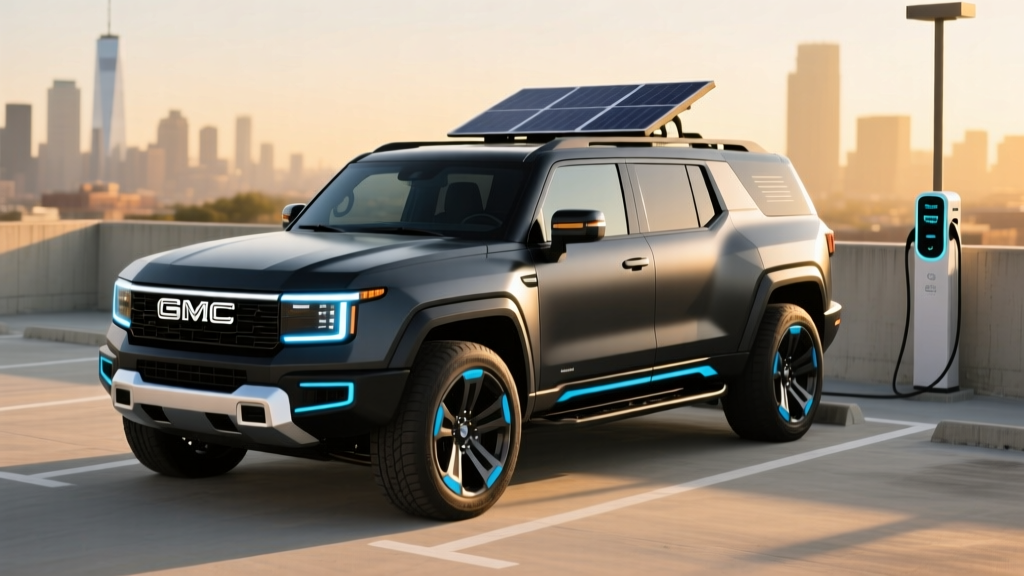
The GMC Hummer EV SUV is not a subtle vehicle — and that's the point. Built on GM's Ultium battery platform, this full-size electric SUV combines extreme capability (830 hp, 314 miles of EPA range, and genuine off-road hardware) with a starting price near $100,000. For 2025, GMC has refined the lineup, dropping the Edition 1 launch model and restructuring trims around the 2X and 3X configurations, while adding the Omega Edition as a high-end halo.
After spending time with the Hummer EV SUV on highway drives, off-road trails, and at DC fast chargers, the picture is clear: this is the most capable electric off-roader on the market, but its sheer size, weight, and energy consumption make it a specialized tool, not a daily-driver-for-everyone proposition. Here's exactly what you're getting — and what the numbers actually mean for ownership.
| Specification | 2X Trim | 3X Trim |
|---|---|---|
| EPA Range | 314 miles | 314 miles |
| Battery (Usable) | ~212 kWh (NMC, Ultium) | ~212 kWh (NMC, Ultium) |
| Drivetrain | Dual-Motor AWD | Tri-Motor AWD (e4WD) |
| Horsepower | 625 hp | 830 hp |
| Torque | 7,400 lb-ft* | 11,500 lb-ft* |
| 0-60 mph | ~4.5 sec | ~3.5 sec (Watts to Freedom) |
| Max DC Fast Charge | 350 kW (peak) | 350 kW (peak) |
| 10-80% DC Charge Time | ~35 min | ~35 min |
| Level 2 Home Charge | 11.5 kW (80A) | 11.5 kW (80A) |
| MPGe (Combined) | 47 MPGe | 47 MPGe |
| Efficiency | 72 kWh/100 mi | 72 kWh/100 mi |
| Towing Capacity | 7,500 lbs | 7,500 lbs |
| Base MSRP | $99,445 | $106,095 |
*GM's wheel-torque figure, not motor-output torque — the industry-standard motor torque figure is significantly lower.
Real-World Range: What 314 EPA Miles Actually Means
Real-World Highway (70 mph): ~240–265 miles
Cold Weather (below 32°F, mixed driving): ~200–230 miles
Off-Road/Low-Speed Trail: Range varies wildly; expect high consumption in 4Lo modes
The Hummer EV SUV's 212 kWh (usable) Ultium battery pack is the largest in any production passenger vehicle. That massive capacity is what enables a 314-mile EPA rating despite the vehicle's 9,000+ pound curb weight and aerodynamic profile that could charitably be described as a rolling wall.
In real-world highway driving at 70–75 mph, expect to see roughly 240–265 miles before needing to charge. The Hummer's boxy shape creates significant aero drag at speed, and energy consumption climbs to 80+ kWh/100 mi on flat interstate runs. In city driving with frequent regenerative braking opportunities, you'll get closer to the EPA figure — sometimes exceeding it in stop-and-go traffic where the Hummer's mass works in its favor during regen capture.
Cold weather hits this battery hard in percentage terms simply because the pack is so large that thermal management draws substantial energy. Expect a 25–35% range reduction in sub-freezing conditions, bringing usable range to roughly 200–230 miles. The Hummer EV's heat pump helps, but it's fighting physics with a 9,000-pound vehicle and a battery that requires significant thermal conditioning.
For context, fueleconomy.gov lists the Hummer EV SUV at 47 MPGe combined — the lowest of any current production EV. That efficiency figure is the trade-off for the capability and presence this vehicle offers.
Charging Speed: 350 kW Peak, But Read the Curve
| Charging Level | Power / Rate | Miles Added Per Hour | Notes |
|---|---|---|---|
| Level 1 (120V, 12A) | ~1.4 kW | ~2 mi/hr | Emergency/trickle only — a full charge takes ~6+ days |
| Level 2 (240V, 80A) | 11.5 kW (accepts up to 19.2 kW) | ~18–30 mi/hr | Full charge ~12–14 hrs; overnight is practical |
| DC Fast (peak) | 350 kW | N/A | Peak rate only at low SoC; sustained avg ~200–250 kW |
| DC Fast 10-80% | ~35 min | N/A | Best on 350 kW chargers; 150 kW stations add ~10 min |
The Hummer EV SUV supports up to 350 kW peak DC fast charging on compatible stations (like Electrify America's 350 kW stalls). In practice, you'll see peak rates near 300–325 kW at very low state of charge (under 15%), with the charge curve tapering progressively. The sustained average rate across a 10–80% session is roughly 200–250 kW, yielding a 10–80% charge time of approximately 35 minutes.
That 35-minute figure sounds long compared to a Hyundai Ioniq 5's 18 minutes, but context matters: the Hummer is filling a 212 kWh battery — roughly triple the Ioniq 5's pack. The actual energy throughput per minute is impressive; the time is a function of the enormous capacity.
At home on Level 2, the Hummer EV's onboard charger can accept up to 19.2 kW (at 80 amps on a hardwired 100A circuit), though most home installations at 48–60 amps will deliver 11.5–14.4 kW. Even at 19.2 kW, a full 0–100% charge takes roughly 11–12 hours. Plan your overnight charging accordingly — this is not a vehicle you can "top off" in an hour.
A critical ownership note: the Hummer EV's battery size means home electricity costs are significant. At the U.S. average residential rate of $0.17/kWh, a full charge costs approximately $36. That's still cheaper than gassing up a comparable Hummer H2, but it's the highest per-fill cost of any EV on the market.
Performance and Driving Dynamics: 830 HP in a 9,000-lb Package
The 3X trim's tri-motor powertrain (one front, two rear) produces 830 horsepower and enables a 0–60 mph time of roughly 3.5 seconds when Watts to Freedom mode is engaged. That launch mode preconditions the battery, lowers the adaptive air suspension, and delivers a haptic and auditory pre-launch sequence that is genuinely theatrical.
The 2X dual-motor trim (one front, one rear) produces 625 hp and hits 60 mph in approximately 4.5 seconds — still supercar-adjacent acceleration in a vehicle that weighs as much as two Honda Civics.
Driving dynamics are dominated by the Hummer's mass. Body roll is well-controlled thanks to the low-slung battery pack and standard adaptive air suspension with Extract Mode (which raises the ride height 5.8 inches for off-road obstacles). Steering is precise but heavy, and the 45.6-foot turning circle (reduced to 20.2 feet with available 4-Wheel Steer, where the rear wheels turn up to 10 degrees) is a genuine engineering achievement for a vehicle this size.
The available CrabWalk feature — where all four wheels turn in the same direction for diagonal movement — is more than a party trick. It's useful on tight trails and in parking situations where the Hummer's 205.5-inch length and 96.1-inch width (without mirrors) would otherwise be a liability.
Off-Road Capability
This is where the Hummer EV SUV justifies its existence. Standard equipment includes:
- Underbody armor and skid plates
- Adaptive air suspension with 15.9 inches of ground clearance (Extract Mode)
- Front and rear electronic locking differentials (3X)
- Torque vectoring via twin rear motors (3X)
- 35-inch Goodyear Wrangler Territory MT tires (standard)
- Approach/departure/breakover angles: 49.7°/38.4°/32.2° (Extract Mode)
On moderate to difficult trails, the Hummer EV's instant electric torque and precise throttle control make it a remarkably capable crawler. The UltraVision camera system (up to 18 views, including underbody cameras) provides visibility that no traditional off-roader can match.
Pricing, Trims, and Federal Tax Credit Reality
| Trim | Base MSRP | As-Tested (Typical) | §30D Federal Credit Eligible? |
|---|---|---|---|
| 2X | $99,445 | $104,000–$110,000 | No — exceeds $80,000 SUV MSRP cap |
| 3X | $106,095 | $112,000–$125,000 | No — exceeds $80,000 SUV MSRP cap |
| 3X Omega Edition | $126,495 | $130,000+ | No — exceeds $80,000 SUV MSRP cap |
Here's the unvarnished truth on tax credits: the 2025 GMC Hummer EV SUV does not qualify for the $7,500 federal EV tax credit under IRS §30D. The reason is straightforward — the law caps eligible SUVs at an $80,000 MSRP, and every Hummer EV SUV trim starts well above that threshold. No trim, no configuration, no dealer workaround changes this.
For buyers who were counting on the credit to offset the purchase price, this is a meaningful $7,500 gap. However, at the income levels typically associated with a $100,000+ vehicle purchase, the credit's income caps ($300,000 joint / $225,000 head of household / $150,000 single) would also disqualify many buyers regardless of MSRP.
Some states offer additional incentives that may apply regardless of MSRP — check your state and local incentive databases for specifics, as these vary by jurisdiction and change frequently.
Interior Space, Cargo, and Daily Practicality
The Hummer EV SUV seats five across two rows. Despite its massive exterior dimensions, interior space is good rather than class-leading, largely because the enormous battery pack raises the floor height significantly.
- Front legroom: 45.6 inches
- Rear legroom: 38.9 inches
- Cargo behind rear seats: 35.9 cu ft
- Cargo with rear seats folded: 81.8 cu ft
- Frunk (front trunk): 11.3 cu ft (includes eTrunk with power operation)
The rear seat is comfortable for adults on longer trips, though the high floor creates a knees-up seating position that some passengers find fatiguing over several hours. The infinity roof with removable panels (stored in the frunk) adds an open-air experience that no competitor can match, though reinstallation requires two people and patience.
The 13.4-inch infotainment touchscreen runs GM's latest Ultifi software with wireless Apple CarPlay and Android Auto. Google Built-in provides native Maps, Assistant, and Play Store access. A 12.3-inch driver display and available 6.8-inch rear-seat entertainment screen round out the tech suite.
Driver Assistance
Standard Super Cruise enables hands-free driving on over 750,000 miles of mapped roads in the U.S. and Canada. This is an SAE Level 2 system — despite the hands-free capability, you must remain attentive, and the driver monitoring camera will alert and disengage if your attention wanders. Super Cruise is excellent for long highway stretches but does not handle unmapped roads, construction zones, or city driving.
Warranty and Long-Term Battery Outlook
GMC covers the Hummer EV's battery and powertrain with an 8-year / 100,000-mile limited warranty, which includes coverage against battery capacity loss below 60% of original capacity. The bumper-to-bumper limited warranty runs 3 years / 36,000 miles.
The Ultium NMC (nickel-manganese-cobalt) battery pack is liquid-cooled with an active thermal management system that preconditioning during charging and driving. Given the pack's enormous size (212 kWh usable), even significant degradation in percentage terms leaves substantial range. A 10% loss — which would be considered high for an 8-year-old pack — still leaves 283 miles of EPA-rated range.
Replacement cost for the Ultium pack is not published by GM, but industry estimates for packs of this size suggest $25,000–$35,000+ out of warranty. This is a long-tail risk worth factoring into total cost of ownership projections, though the 8-year warranty provides substantial coverage during the highest-depreciation ownership period.
Who Should Buy the Hummer EV SUV — And Who Shouldn't
- You need genuine off-road capability in an electric vehicle
- You want maximum presence, space, and towing capacity (7,500 lbs)
- You have home Level 2 charging and can accommodate 12+ hour charge cycles
- Budget allows $100,000+ without relying on federal tax credits
- You value Super Cruise for long highway commutes and road trips
- Efficiency and low energy cost per mile are priorities (72 kWh/100 mi is expensive)
- You need to fit in a standard single-car garage (96.1" width is tight)
- You want a three-row family hauler (only two rows / 5 seats)
- Tax credit eligibility is a deciding factor
- Urban parking and maneuverability are daily concerns
- Class-leading off-road EV capability with Extract Mode and CrabWalk
- 830 hp and 3.5-second 0-60 (3X) is absurd fun for a 9,000-lb vehicle
- 314-mile EPA range is strong for a vehicle this size
- Super Cruise hands-free highway driving is standard
- Removable roof panels and eTrunk add versatility
- 4-Wheel Steer dramatically reduces turning radius
- No federal tax credit eligibility (MSRP exceeds $80K cap)
- 47 MPGe / 72 kWh/100 mi — the least efficient EV on the market
- Only two rows / five seats in a vehicle this large
- 12+ hour home charge time demands overnight planning
- $100,000+ starting price with no budget-friendly trim
- Width and length make urban use challenging
Key Competitors: How the Hummer EV SUV Stacks Up
The Hummer EV SUV occupies a unique niche, but it competes with several high-end electric SUVs:
- Rivian R1S (Tri-Motor): 410-mile range, 850 hp, starts ~$99,900. Three rows, more efficient, but less extreme off-road hardware. Also ineligible for the federal credit at most trims.
- Tesla Model X Plaid: 326-mile range, 1,020 hp, starts ~$94,990. Faster, more efficient, but no serious off-road capability. Three rows standard.
- Mercedes EQS 580 SUV: 305-mile range, 536 hp, starts ~$105,550. More refined luxury, far less capable off-road.
- Cadillac Escalade IQ: 460-mile range (est.), 750 hp, starts ~$130,000+. Three rows, more luxury, similar size, but unibody without dedicated off-road hardware.
The Hummer EV SUV's closest rival is arguably the Rivian R1S, which offers similar capability with better efficiency and three rows. The Hummer wins on raw off-road hardware (locking diffs, Extract Mode, skid plates) and sheer presence. The R1S wins on practicality and road-trip efficiency.
Frequently Asked Questions
What is the real-world range of the 2025 GMC Hummer EV SUV?
The EPA rates the Hummer EV SUV at 314 miles. In real-world highway driving at 70 mph, expect 240–265 miles. In cold weather (below 32°F), range drops to roughly 200–230 miles. City driving with regenerative braking can match or slightly exceed the EPA estimate.
How fast does the Hummer EV SUV charge at home and on the road?
On a 350 kW DC fast charger, the Hummer EV SUV charges from 10–80% in approximately 35 minutes, with peak rates near 300–325 kW at low SoC tapering to ~150 kW above 70%. At home on Level 2 (240V), the onboard charger accepts up to 19.2 kW, adding roughly 18–30 miles of range per hour. A full 0–100% home charge takes 11–14 hours depending on your circuit amperage.
Does the 2025 Hummer EV SUV qualify for the $7,500 federal EV tax credit?
No. Under IRS §30D rules, SUVs must have an MSRP at or below $80,000 to qualify. Every 2025 Hummer EV SUV trim starts above $99,000, making all configurations ineligible regardless of buyer income or battery sourcing. Check your state's incentive programs for possible local credits that may not have MSRP caps.
How much does it cost to charge the Hummer EV SUV at home?
With a ~212 kWh usable battery and the U.S. average residential electricity rate of ~$0.17/kWh, a full charge costs approximately $36. At the Hummer's real-world efficiency of ~72 kWh/100 mi, you're spending roughly $12.24 per 100 miles of driving — still less than gasoline for a comparable vehicle, but the highest per-mile energy cost of any current EV.
Can the Hummer EV SUV tow, and how does towing affect range?
The Hummer EV SUV is rated to tow 7,500 pounds. When towing near max capacity, expect range to decrease by 40–55%, bringing usable range down to roughly 140–180 miles depending on trailer aerodynamics, terrain, and speed. This is a significant limitation for long-distance towing.
Is the Hummer EV SUV worth buying over the Rivian R1S?
It depends on your priorities. The Hummer EV SUV offers more extreme off-road capability (Extract Mode, locking differentials, CrabWalk), a larger battery, and greater presence. The Rivian R1S offers three rows, better efficiency (~65 kWh/100 mi), 410 miles of range (Dual-Motor Max), and a slightly lower starting price. For serious trail use, the Hummer wins. For family road trips, the R1S is more practical.
What is the battery warranty on the Hummer EV SUV?
GMC covers the Ultium battery pack for 8 years or 100,000 miles, whichever comes first. The warranty covers defects and capacity loss below 60% of original capacity during the coverage period. The powertrain (motors, inverters, reduction gears) is also covered under the same 8-year/100,000-mile term.