Quick Verdict: The 2025 GMC Hummer EV SUV 2X in Context
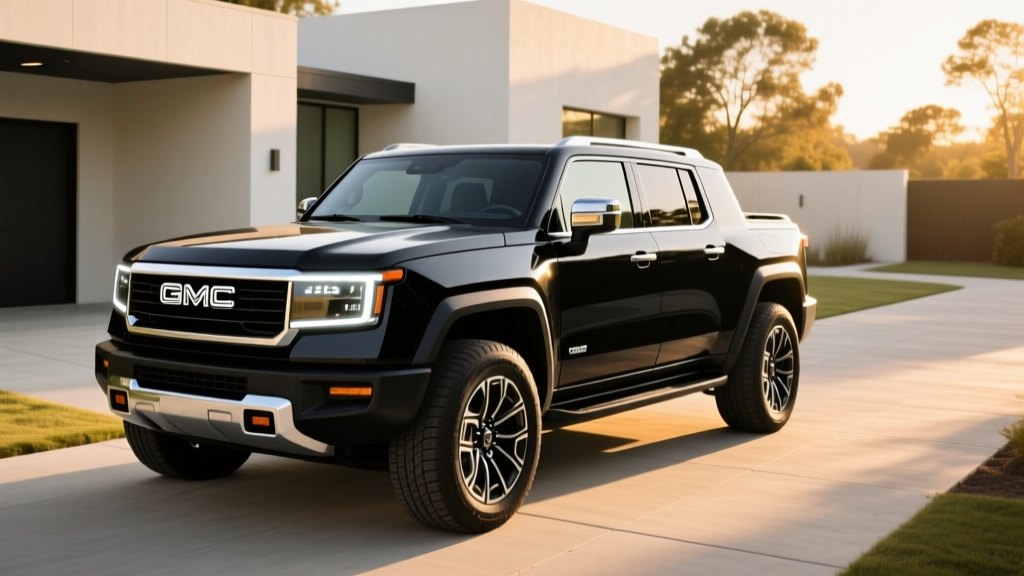
The 2025 GMC Hummer EV SUV 2X occupies a rare space in the electric vehicle market: a full-size, body-on-frame SUV that delivers genuine off-road capability alongside competitive electric range. With an EPA-estimated 314 miles of range, a dual-motor AWD powertrain producing 655 horsepower, and DC fast-charging capability up to 350 kW, the 2X trim sits in the middle of the Hummer EV SUV lineup — offering the adaptive air suspension and four-wheel steering that define the platform without stepping up to the range-topping Edition 1 or 3X trims.
Starting at $99,995 (including destination), the 2X is not an impulse purchase. But for buyers who need three rows of seating, serious towing capacity, and the ability to tackle trails without burning fossil fuels, it competes directly with the Rivian R1S, Cadillac Escalade IQ, and the upcoming electric Jeep Wagoneer. Here's what the numbers actually look like in daily use.
| Spec | Value |
|---|---|
| EPA Range | 314 miles |
| Battery (Usable) | ~212 kWh, NMC (Ultium, 24 modules) |
| Drivetrain | Dual-motor AWD (e4WD) |
| Horsepower / Torque | 655 hp / 7,400 lb-ft (wheel torque) |
| 0–60 mph | ~4.5 seconds |
| Max DC Fast Charge | 350 kW (peak) |
| 10–80% DC Charge Time | ~34 minutes (est.) |
| Level 2 Home Charging | 19.2 kW (~52 mi/hr) |
| MPGe (Combined) | 47 MPGe |
| Efficiency | ~72 kWh/100 mi |
| Towing Capacity | 7,500 lbs |
| Cargo (Behind 3rd / 2nd / 1st) | 11.5 / 45.6 / 81.8 cu ft |
| Base MSRP (incl. dest.) | $99,995 |
| Federal Tax Credit (§30D) | Up to $7,500 (eligibility varies) |
| Battery Warranty | 8 years / 100,000 miles |
Range & Efficiency: What the EPA Number Doesn't Tell You
Real-World Expectation: Plan for ~250–280 miles on sustained highway driving at 70+ mph. In cold weather (below 32°F), expect a 20–30% reduction — roughly 220–250 miles — due to battery heating demands and cabin climate load. City driving with regenerative braking can approach or slightly exceed the EPA figure.
The Hummer EV SUV 2X carries one of the largest battery packs in any production passenger vehicle: GM's 24-module Ultium pack with approximately 212 kWh of usable capacity. This massive energy store is what enables the 314-mile EPA figure despite the vehicle's 9,000+ pound curb weight and boxy aerodynamics. The tradeoff is efficiency — at roughly 72 kWh per 100 miles (47 MPGe combined per fueleconomy.gov), the Hummer consumes nearly twice the energy per mile of a midsize crossover like the Hyundai Ioniq 5.
For context, that means a full charge at the national average residential electricity rate of ~$0.17/kWh costs approximately $36 — equivalent to about 3.5 gallons of gasoline. The cost-per-mile is still lower than a comparable gas-powered full-size SUV, but the Hummer EV is not an efficiency play. It's a capability-and-comfort play that happens to be electric.
Charging Speeds: DC Fast, Level 2, and the Charge Curve Reality
GMC equips the Hummer EV SUV with an 800-volt architecture capable of accepting up to 350 kW at a DC fast charger — putting it in the upper tier of charging capability alongside the Porsche Taycan and Hyundai Ioniq 5. But peak rate is only part of the story.
| Charging Level | Power | Speed (Approx.) | Notes |
|---|---|---|---|
| Level 1 (120V) | ~1.4 kW | ~4 mi/hr | Emergency/trickle only; full charge in 6+ days |
| Level 2 (240V, 80A) | 19.2 kW | ~52 mi/hr | Full charge in ~11–12 hours; requires hardwired 100A circuit |
| Level 2 (240V, 48A) | 11.5 kW | ~31 mi/hr | Standard NEMA 14-50 or common wall charger; full charge in ~18 hours |
| DC Fast (peak) | 350 kW | ~100+ mi in 10 min | At 350 kW-capable station (e.g., Electrify America, Tesla Supercharger V4 w/ adapter) |
| DC Fast (10–80%) | Avg ~200 kW | ~34 minutes | Charge curve tapers significantly above 80% SoC |
| DC Fast (150 kW station) | 150 kW | ~45 min (10–80%) | More common at older EA or ChargePoint stations |
The 350 kW peak is achievable at the newest high-power stations, but the charge curve matters enormously with a pack this large. Expect the Hummer to sustain roughly 250–300 kW between 10–40% state of charge, tapering to ~150 kW by 60%, and dropping further above 80%. The 10–80% time of approximately 34 minutes is competitive for a battery this size, but you won't see 350 kW sustained throughout the session.
Preconditioning tip: The Hummer EV's navigation system will precondition the battery when you route to a DC fast charger — warming or cooling the pack to optimize charge acceptance. Always use the built-in nav for charge stops to take advantage of this, especially in cold weather, where preconditioning can shave 10+ minutes off your session.
For home charging, the 19.2 kW onboard charger is a genuine asset. With a hardwired Level 2 station on a dedicated 100-amp circuit, you can recover the full battery overnight. Most homes will require an electrical panel assessment — and potentially a panel upgrade — to support a 100A circuit. A more common 48A/11.5 kW setup still adds enough range overnight for most daily needs.
Performance & Drivetrain: 655 HP and Off-Road Hardware
The 2X trim features GM's dual-motor e4WD system — one motor per axle — delivering 655 horsepower and a claimed 7,400 lb-ft of wheel torque (note: this is torque at the wheels after gear reduction, not motor shaft torque, which is the industry-standard way GM reports it). The result is a 0–60 mph time of approximately 4.5 seconds, which is remarkable for a vehicle weighing over 9,000 pounds.
Unlike the 3X and Edition 1 trims, the 2X does not include the tri-motor "Watts to Freedom" launch mode (which bumps output to 830 hp). For most buyers, the 655 hp dual-motor setup is more than sufficient — the difference is felt primarily in drag-strip scenarios, not in daily driving or trail use.
The 2X includes the hardware that matters off-road:
- Adaptive Air Suspension: Extract Mode raises the ride height by nearly 6 inches for obstacle clearance. The system also enables entry/exit lowering for easier access.
- Four-Wheel Steering (CrabWalk): The rear wheels can turn up to 10 degrees, enabling diagonal "crab" movement on trails and dramatically reducing the turning circle on pavement.
- Underbody Armor: Steel skid plates protect the battery and drivetrain.
- 35-inch Goodyear Wrangler Territory tires: Standard on 2X, providing all-terrain capability without aftermarket modification.
Towing capacity is rated at 7,500 pounds — adequate for most boat, camper, or utility trailers. Note that towing significantly impacts range; expect a 30–50% reduction depending on trailer weight, aerodynamics, and terrain. A heavily loaded 7,000-lb trailer at highway speeds could drop effective range to 150–180 miles between charges.
Interior, Tech & Cargo: Full-Size SUV Practicality
The Hummer EV SUV seats five standard (two rows) with an available third-row option that brings seating to seven. With the third row folded, cargo volume is a generous 45.6 cubic feet behind the second row, expanding to 81.8 cubic feet with both rear rows folded. The available power-folding third row is tight for adults on long trips but works well for children or occasional use.
The infotainment system centers on a 13.4-inch diagonal touchscreen running GM's latest Ultifi software platform, supplemented by a 12.3-inch driver instrument cluster. Wireless Apple CarPlay and Android Auto are standard. The system is responsive, though the sheer number of off-road and vehicle-config menus can require some learning.
Standout tech features:
- UltraVision camera system: Up to 18 camera views, including underbody cameras for trail navigation — a genuine off-road aid, not a gimmick.
- Super Cruise (available): GM's Level 2 hands-free driver-assistance system works on over 750,000 miles of mapped roads in the US and Canada. It is not autonomous driving — the driver must remain attentive and an infrared camera monitors eye gaze. Think of it as the best highway cruise system available, not a replacement for a driver.
- Power frunk: The front trunk offers additional sealed storage, though it's smaller than the Rivian R1S frunk due to the Hummer's front-mounted drive motor and HVAC hardware.
- ProGrade trailering system: Integrated trailer brake controller, hitch guidance, and trailer tire-pressure monitoring.
Notable drawbacks: The Hummer EV's width (over 96 inches including mirrors) makes it challenging in tight parking garages and narrow urban streets. Visibility is compromised by thick A-pillars and the high hood line — the camera system partially compensates but doesn't eliminate the issue. The brake pedal feel, common to heavy EVs blending regenerative and friction braking, takes some acclimation.
Pricing, Tax Credits & Ownership Costs
The 2025 GMC Hummer EV SUV 2X starts at $99,995 including destination charge. Key options include the Extreme Off-Road Package (~$5,000), third-row seating (~$2,500), and the available Super Cruise subscription.
- MSRP Cap: SUVs/vans/pickups must be ≤ $80,000 MSRP. The Hummer EV SUV 2X at $99,995 exceeds this cap and does NOT qualify for the §30D new-vehicle credit.
- Buyer Income Cap: AGI ≤ $150K single / $225K head of household / $300K joint (even if MSRP qualified).
- Battery Sourcing: Critical minerals and battery components must meet phased-in percentages from US/FTA countries.
- Point-of-Sale Transfer: Eligible credits can be transferred to the dealer at purchase for an upfront price reduction.
This is a critical point many buyers miss: the Hummer EV SUV does not qualify for the $7,500 federal tax credit because its MSRP exceeds the $80,000 SUV cap established under the Inflation Reduction Act. State and local incentives may still apply — check your state's energy office or DMV for details, as these vary widely and change frequently.
| Category | Hummer EV SUV 2X | Gas SUV (e.g., Tahoe 4WD) |
|---|---|---|
| Purchase Price | $99,995 | $72,000 |
| Federal Tax Credit | $0 (MSRP cap) | $0 |
| Fuel/Energy (5 yr, 75K mi) | ~$9,000 (home charging) | ~$18,750 ($3.75/gal, 17 MPG) |
| Maintenance (5 yr) | ~$2,500 | ~$5,500 |
| Insurance (5 yr est.) | ~$18,000 | ~$12,000 |
| Depreciation (est.) | ~$45,000 | ~$30,000 |
| Est. 5-Year Total | ~$184,495 | ~$138,250 |
The Hummer EV saves substantially on fuel and maintenance over five years — roughly $12,750 combined — but the higher purchase price, insurance premiums (typical for six-figure EVs), and steeper depreciation offset those savings against a comparably equipped gas SUV. Buyers choosing the Hummer EV are paying a premium for the electric powertrain's instant torque, off-road silence, and home-fueling convenience, not for total-cost-of-ownership superiority.
Battery Warranty & Longevity
GM backs the Hummer EV's Ultium battery pack with an 8-year / 100,000-mile warranty against defects and capacity loss below 60% of original capacity (some sources indicate 70% — confirm with your dealer at purchase). The powertrain carries the same 8-year/100,000-mile coverage.
The Ultium platform uses NMC (nickel manganese cobalt) chemistry, which offers higher energy density than LFP (lithium iron phosphate) — necessary to hit 314 miles in a vehicle this heavy. NMC batteries historically show slightly faster degradation than LFP over very high cycle counts, but GM's thermal management system and the sheer size of the pack (which means shallower depth-of-discharge in daily use) should mitigate long-term concerns. For a 212 kWh pack, even 10% degradation still leaves ~190 kWh usable — plenty for daily driving.
Best practice for longevity: For daily use, charge to 80% and avoid frequent 100% charges unless needed for a long trip. The battery management system includes a buffer, but habitual shallow cycling remains the best practice for NMC chemistry.
How It Compares: Rivian R1S, Escalade IQ, and the Market
The Hummer EV SUV 2X doesn't have a direct apples-to-apples rival, but several vehicles compete in adjacent space:
- Rivian R1S Dual-Motor ($84,900+): More efficient, lighter, better third-row space, qualifies for the $7,500 federal credit (on eligible trims/battery configs). Less off-road hardware standard. Max range up to 410 miles (Large Pack). Better for families who prioritize daily efficiency over trail capability.
- Cadillac Escalade IQ (~$130,000+): Shares the Ultium platform but prioritizes luxury over off-road. Longer range (~450 mi EPA est.), more refined ride, significantly higher price. Better for buyers who want a premium full-size EV without trail aspirations.
- Mercedes EQS SUV ($105,000+): Car-based unibody, smoother ride, 305-mile EPA range. No serious off-road capability. Better for on-road luxury and efficiency.
Pros
- 314-mile EPA range is competitive for a full-size SUV
- 350 kW DC fast-charging capability (800V architecture)
- Genuine off-road hardware: air suspension, CrabWalk, skid plates
- 19.2 kW Level 2 onboard charger enables overnight home charging
- UltraVision camera system is a real trail aid
- Super Cruise available for hands-free highway driving (Level 2)
- 7,500-lb towing capacity
Cons
- $99,995 MSRP — does NOT qualify for §30D federal tax credit (over $80K cap)
- Low efficiency (~47 MPGe / 72 kWh/100 mi) means higher electricity cost per mile
- Extreme width makes urban parking and narrow roads challenging
- Towing drastically cuts range (potentially to 150–180 mi)
- Heavy (~9,000+ lbs) — tire and brake wear may be elevated
- Third row is tight for adults; best for children or occasional use
- Insurance premiums are higher than average for the segment
Who Should Buy the 2025 GMC Hummer EV SUV 2X?
- You need a full-size, three-row SUV with genuine off-road capability
- You want to tow up to 7,500 lbs without tailpipe emissions
- You have home charging access (ideally a 240V/48A+ circuit) and rarely drive more than 250 miles between charge stops
- You value the air suspension, four-wheel steering, and underbody protection as daily-driver features, not just trail toys
- Your budget accommodates a ~$100K vehicle without relying on the federal tax credit
- You prioritize efficiency and low cost-per-mile (consider the Rivian R1S or Hyundai Ioniq 5)
- You need the federal $7,500 tax credit to make the math work
- Your daily driving is primarily urban — the Hummer's width and weight are liabilities in tight spaces
- You frequently tow long distances — range while towing remains a real limitation for all EVs
Frequently Asked Questions
What is the real-world range of the 2025 GMC Hummer EV SUV 2X?
The EPA rates it at 314 miles. In real-world highway driving at 70–80 mph, expect roughly 250–280 miles. In cold weather (below freezing), plan for 220–250 miles due to battery thermal management and cabin heating demands. City driving with regenerative braking can approach the EPA figure or slightly exceed it.
How fast does the Hummer EV SUV 2X charge?
At a 350 kW-capable DC fast charger, the 10–80% session takes approximately 34 minutes, with peak rates around 250–300 kW in the lower state-of-charge range tapering above 60%. At home on a 19.2 kW Level 2 charger, a full charge takes about 11–12 hours. On a more common 11.5 kW (48A) Level 2 charger, expect roughly 18 hours for a full charge.
Does the 2025 Hummer EV SUV qualify for the federal EV tax credit?
No. The Hummer EV SUV 2X has an MSRP of $99,995, which exceeds the $80,000 cap for SUVs, vans, and pickup trucks under IRS §30D rules. It is not eligible for the $7,500 new clean vehicle credit. State and local incentives may still apply — check your state's energy office. Consult a tax professional for your specific situation.
Is the Hummer EV SUV 2X worth buying over the Rivian R1S?
It depends on your priorities. The R1S is more efficient, lighter, offers a usable third row, and (on eligible configurations) qualifies for the $7,500 federal credit. The Hummer EV SUV 2X offers more aggressive off-road hardware, four-wheel steering, a larger battery, and a more commanding road presence. If trail capability and the air-suspension/CrabWalk system matter to you, the Hummer justifies its premium. If daily family efficiency is the priority, the R1S is the more practical choice.
How does towing affect range?
Towing a loaded trailer can reduce range by 30–50%. With a 7,000-lb trailer at highway speeds, expect effective range of approximately 150–180 miles. Plan charge stops accordingly and use the Hummer's built-in trailering range estimation tools. DC fast-charging infrastructure near your destination or along your route is essential for longer tows.
What is the battery warranty?
GM provides an 8-year / 100,000-mile warranty on the Ultium battery pack and electric powertrain components, covering defects and significant capacity loss. Confirm the exact capacity-retention threshold (typically 60–70%) with your dealer at purchase.
Is Super Cruise self-driving?
No. Super Cruise is an SAE Level 2 driver-assistance system. It provides hands-free steering, acceleration, and braking on mapped divided highways, but the driver must remain attentive at all times. An infrared camera monitors driver eye gaze, and the system will alert and disengage if attention lapses. It is not autonomous driving (Level 4/5).