Quick Verdict: The 2025 GMC Hummer EV Pickup 2X at a Glance
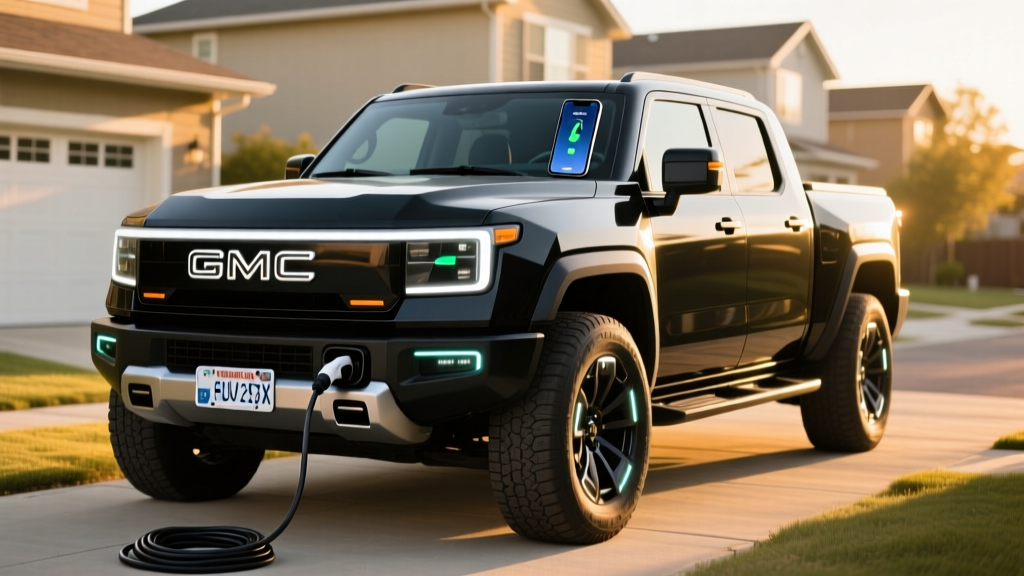
The 2025 GMC Hummer EV Pickup 2X is a 9,000-pound electric supertruck that somehow delivers a 314-mile EPA range, a sub-4-second 0-60 time, and genuine off-road capability — all while consuming more electricity per mile than almost any other EV on the market. It's an engineering paradox: a battery-electric vehicle with the footprint of a full-size diesel dually, powered by one of the largest battery packs ever fitted to a production car. For buyers who want maximum presence, Watts to Freedom launch mode, and four-wheel steer, nothing else in the EV truck segment quite matches the package. But at over $100,000 before incentives, and with real-world highway range closer to 250 miles, the 2X demands buyers who value capability over efficiency.
| Spec | Value |
|---|---|
| EPA Range | 314 miles |
| Battery Capacity | ~205 kWh usable (24-module Ultium, NMC) |
| Drivetrain | Dual-motor AWD (e4WD) |
| Horsepower | 625 hp / 7,400 lb-ft wheel torque |
| 0-60 mph | ~3.7 seconds |
| Max DC Fast Charge | 350 kW peak (800V architecture) |
| 10-80% DC Time | ~34 minutes |
| Level 2 Home Charge | 11.5 kW onboard (~19 kW capable w/ Ultium Power Station Pro) |
| MPGe (Combined) | 47 MPGe |
| Efficiency | 72 kWh/100 mi |
| Towing Capacity | 7,500 lbs |
| Payload | 1,300 lbs |
| Bed Length | 5 ft (60 in) |
| Base MSRP (2X trim) | $104,500 (incl. destination) |
| Battery Warranty | 8 years / 100,000 miles |
Range & Efficiency: EPA Sticker vs. Real-World Reality
The Hummer EV's 24-module Ultium battery pack is rated at approximately 205 kWh of usable capacity — for context, that's roughly double the battery in a Tesla Model 3 Long Range. GMC leverages this massive energy reservoir to achieve a 314-mile EPA combined range estimate on the 2X trim, which is respectable given the vehicle's 9,063-pound curb weight and boxy aerodynamics.
- EPA Combined: 314 miles
- Highway (70-80 mph, 75°F): Expect ~240–265 miles. The Hummer's 0.41 Cd drag coefficient and 9,000+ lb mass hit efficiency hard at sustained speed.
- City / Mixed Driving: 290–310 miles achievable thanks to regen braking recapturing energy at low speeds.
- Cold Weather (20°F, heater on): 200–230 miles. NMC chemistry and the thermal management system mitigate some loss, but heating a cabin this large consumes significant energy.
- Towing (~5,000 lb trailer): 140–170 miles. Aerodynamic drag from a trailer compounds the Hummer's already-high consumption.
Efficiency is the Hummer EV's weakest metric. At 47 MPGe combined (72 kWh/100 mi), it consumes nearly twice the energy per mile of a Rivian R1T Dual-Motor (70 MPGe, ~48 kWh/100 mi). That translates to higher charging costs whether you're plugging in at home or paying per-kWh at DC fast chargers. According to fueleconomy.gov, the Hummer EV Pickup's annual electricity cost is estimated at approximately $1,850 based on 15,000 miles of driving and average utility rates — roughly 40% more than the R1T.
Charging Speed: 800V Architecture and the 350 kW Advantage
GMC equipped the Hummer EV with an 800-volt electrical architecture, enabling peak DC fast-charge rates up to 350 kW at compatible stations (Electrify America 350 kW stalls, Tesla Supercharger V4 with CCS adapter). That peak rate is among the highest of any production EV truck, but — as always — peak is not sustained.
| Charge Level | Power | Speed / Notes |
|---|---|---|
| Level 1 (120V household) | ~1.4 kW | ~2 miles per hour — impractical for a 205 kWh pack; full charge would take 6+ days |
| Level 2 (240V home, standard) | 11.5 kW | ~16 miles per hour — full charge in ~18 hours from empty |
| Level 2 (240V, Ultium Power Station Pro) | Up to 19.2 kW | ~27 miles per hour — full charge in ~11 hours; requires optional $2,000+ accessory and 100A circuit |
| DC Fast (350 kW station) | 350 kW peak | 10-80% in ~34 min; peak rate holds to ~25-30% SoC then tapers progressively |
| DC Fast (150 kW station) | ~150 kW sustained | 10-80% in ~55 min; common at many Electrify America and EVgo locations |
The charge curve on the Hummer EV reflects its massive pack. The 350 kW peak is achievable only at low states of charge (roughly 5-25% SoC) and at chargers capable of delivering that power. As SoC climbs past 50%, the rate tapers to approximately 150-180 kW, and above 80% it drops further to protect cell longevity. Plan road-trip stops around 10-80% charges — the last 20% adds significant time.
For home charging, the standard 11.5 kW onboard charger means an overnight session (10 hours) adds roughly 160 miles of range. That's adequate for most daily driving but means a full recharge from near-empty spans two nights. Buyers should budget for a 60A or 100A dedicated circuit installation, which typically costs $800-$2,500 depending on panel proximity, according to licensed electrician estimates.
Performance: 625 HP and the Watts to Freedom Factor
The 2X trim uses a dual-motor e4WD configuration — one motor per axle — producing 625 horsepower and 7,400 lb-ft of wheel torque (GMC's measurement methodology, which multiplies through the gear reduction; motor torque at the shaft is approximately 775 lb-ft). The result is a 0-60 mph time of approximately 3.7 seconds, verified by multiple automotive publications. That puts the 9,000-pound Hummer EV in the same acceleration bracket as a Porsche 911 Carrera.
The party trick is Watts to Freedom (WTF) mode: a launch-control sequence that lowers the air suspension, haptics rumble through the seat, audio plays a cinematic sound effect, and the truck unleashes full torque. It's theatrical and undeniably effective. Beyond straight-line speed, the Hummer EV's four-wheel steer system (CrabWalk) allows diagonal movement at low speeds — useful on tight trails — and a rear-steer function that gives the long-wheelbase truck a turning circle comparable to a midsize sedan.
Adaptive air suspension provides up to 16.3 inches of ground clearance in Extract Mode (an additional 6 inches above standard off-road height), with approach/departure/breakover angles that rival dedicated off-road vehicles. However, on-road ride quality is merely acceptable rather than plush — the solid rear axle and heavy mass produce noticeable body motion over broken pavement compared to independent-suspension competitors like the Rivian R1T.
Pricing, Trims & Federal Tax Credit Eligibility
The 2025 GMC Hummer EV Pickup lineup spans three trims, with the 2X positioned as the mid-tier option:
| Trim | Base MSRP | Key Additions Over 2X |
|---|---|---|
| 2X (dual-motor) | $104,500 | Base for this review — 625 hp, air suspension, CrabWalk, Super Cruise |
| 3X (tri-motor) | $124,500 | 830 hp, tri-motor AWD, 0-60 ~3.0s, adaptive damping |
| Edition 1 (sold out) | $112,595 | Limited-run launch edition, tri-motor, unique badging — no longer orderable |
Options on the 2X can add $5,000-$15,000 quickly. The Extreme Off-Road Package ($9,995) adds front and rear eLockers, underbody armor, 35-inch mud-terrain tires, and front/rear underbody cameras. The Infinity Roof with modular sky panels costs $3,995. A fully optioned 2X can approach $120,000.
Federal Tax Credit: Does the Hummer EV Qualify?
Under IRS §30D rules effective for 2025, the Hummer EV Pickup 2X faces significant eligibility hurdles:
- MSRP Cap: The §30D credit caps eligible pickups at $80,000 MSRP. The 2X at $104,500 exceeds this limit — the Hummer EV Pickup does NOT qualify for the $7,500 federal tax credit.
- Buyer Income Limits: Even if MSRP qualified, modified AGI caps apply ($150K single / $300K joint).
- Battery Sourcing: Critical minerals and battery component sourcing requirements must be met (moot here due to MSRP cap).
- Point-of-Sale Transfer: Available for eligible vehicles — but again, the Hummer EV's MSRP disqualifies it.
Buyers should consult the IRS clean vehicle credit page and a tax professional for personalized guidance. Some state-level incentives (California's CVRP, Colorado's state credit) may offer partial rebates regardless of MSRP, but these vary by jurisdiction and income.
Interior, Tech & Driver Assistance
The Hummer EV's cabin matches its price point with premium materials — perforated leather seats, metal switchgear, and a 13.4-inch infotainment touchscreen running GM's latest Ultifi-based interface. A 12.3-inch digital instrument cluster handles driver information. Wireless Apple CarPlay and Android Auto are standard, as is a 14-speaker Bose audio system.
Super Cruise — GM's hands-off-wheel Level 2 driver-assistance system — comes standard on the 2X and operates on over 750,000 miles of mapped divided highways in the US and Canada. Per NHTSA's SAE automation framework, Super Cruise is a Level 2 system: the driver must remain attentive, and the cabin camera monitors eye and head position. It is not self-driving. Where available, Super Cruise is one of the most refined highway-assist systems on the market, with smooth lane changes and confident merge handling.
Notable tech features include:
- CrabWalk: Four-wheel steer enabling diagonal movement — practical for trail obstacles, a showpiece at Cars & Coffee.
- Extract Mode: Air suspension raises the truck 6 additional inches for extreme clearance.
- Underbody Cameras: Front and rear "underhood" views for rock-crawling visibility (with washer nozzles to clean lenses).
- Power Station Pro: Optional bi-directional charging enables the Hummer EV to power tools, a campsite, or (with appropriate home integration) a house during outages — up to 19.2 kW output.
- Infinity Roof: Removable modular panels stored in the frunk for open-air driving.
Super Cruise is a Level 2 driver-assist system. It does not navigate unmapped roads, handle construction zones autonomously, or operate without an attentive driver. You must keep your eyes on the road. It will disengage and alert you if the cabin camera detects inattention. It is not a Level 4 autonomous system like Waymo's robotaxi service.
Cargo, Passenger Space & Practicality
The Hummer EV Pickup's 5-foot bed (60 inches long) is shorter than most full-size truck beds, limiting its utility for long lumber or large cargo. The bed features a MultiPro tailgate with six configurations and a built-in speaker system. A front trunk (frunk) provides approximately 11.3 cubic feet of lockable storage — large enough for the Infinity Roof panels or a substantial gear load.
Interior passenger volume is generous, consistent with a full-size crew-cab pickup:
- Front legroom: 45.6 inches
- Rear legroom: 43.4 inches
- Front headroom: 42.5 inches (39.8 in. w/ Infinity Roof)
- Seating: 5 passengers across two rows
Width is the Hummer EV's defining practicality challenge. At 86.7 inches wide (excluding mirrors), it exceeds standard parking spaces (typically 84-96 inches) and will not fit in many automated car washes, some garage door openings, or narrow urban streets. Plan your parking accordingly.
Warranty & Long-Term Ownership
GMC backs the Hummer EV's battery and drive unit with an 8-year / 100,000-mile warranty, with a capacity retention threshold of 60% — meaning GMC guarantees the pack will hold at least 60% of its original capacity during the warranty period. This is consistent with industry norms (Tesla, Ford, and Rivian offer similar 8-year terms), though some competitors guarantee 70% retention.
The limited bumper-to-bumper warranty covers 3 years / 36,000 miles, and the powertrain warranty extends to 5 years / 60,000 miles. For a vehicle with this much technology — air suspension, four-wheel steer, three screens, powered tailgate — long-term reliability data is still limited given the platform's 2022 launch. Early owner forums report occasional software glitches and air suspension calibration issues, though no systemic battery degradation concerns have emerged.
Insurance costs run high: expect $2,500-$4,000 annually depending on your profile, reflecting the Hummer EV's repair costs, performance, and price. According to IIHS, crash-test data for the Hummer EV Pickup was limited at time of publication — NHTSA ratings should be monitored as testing progresses.
Pros, Cons & Who Should Buy the 2025 Hummer EV Pickup 2X
- 314-mile EPA range from a massive 205 kWh pack — genuine road-trip capability
- 350 kW peak DC charging on 800V architecture — among the fastest-charging trucks available
- Sub-4-second 0-60 with 625 hp — supercar acceleration in a 9,000-lb truck
- CrabWalk and Extract Mode offer real off-road differentiation
- Super Cruise standard — one of the best Level 2 highway systems
- Bi-directional charging capability (Power Station Pro) for home/trailside power
- Commanding road presence — nothing else looks or feels like it
- $104,500+ MSRP disqualifies it from the $7,500 federal tax credit
- 47 MPGe — the least efficient EV truck on the market, driving up charging costs
- Real-world highway range drops to ~250 miles; towing cuts it to under 170
- 86.7-inch width causes parking, garage, and car-wash headaches
- 5-foot bed limits utility compared to standard full-size pickups
- Solid rear axle produces a firmer, less refined ride than independent-suspension rivals
- No federal tax credit + high insurance = steep total cost of ownership
- Choose the Hummer EV 2X if: You want the most capable, most theatrical electric truck on the market, budget is flexible, you have garage space for an 87-inch-wide vehicle, and you value off-road capability and road presence over efficiency.
- Choose the Rivian R1T Dual-Motor instead if: You want a more practical daily-driver EV truck — better efficiency (70 MPGe), a more usable 4.5-foot bed with gear tunnel, independent suspension for on-road comfort, and a starting price ~$30,000 lower.
- Choose the Ford F-150 Lightning Lariat if: You need a full-size truck bed (5.5 or 6.5 ft), want Pro Power Onboard, prefer a more conventional truck experience, and need to stay under the $80,000 MSRP cap for tax-credit eligibility.
Frequently Asked Questions
What is the real-world range of the 2025 GMC Hummer EV Pickup 2X?
The EPA rates the 2X at 314 miles combined. In real-world highway driving at 70-80 mph in moderate temperatures, expect 240-265 miles. City driving with regenerative braking can approach the EPA figure. Cold weather (below 30°F) reduces range to approximately 200-230 miles. Towing a 5,000-lb trailer cuts range to roughly 140-170 miles.
How fast does the Hummer EV 2X charge at home and on the road?
On a 350 kW DC fast charger, the 2X charges from 10-80% in approximately 34 minutes, with peak rates reaching 350 kW at low states of charge. At a standard 150 kW public charger, expect 10-80% in about 55 minutes. At home on a Level 2 (240V) charger at 11.5 kW, you'll add roughly 16 miles of range per hour — a full charge from empty takes about 18 hours. The optional Power Station Pro accessory enables 19.2 kW Level 2 charging, reducing full-charge time to approximately 11 hours.
Does the 2025 Hummer EV Pickup qualify for the federal EV tax credit?
No. Under IRS §30D rules, the federal clean vehicle credit caps eligible pickup trucks at $80,000 MSRP. The Hummer EV 2X starts at $104,500, exceeding this limit. Buyers will not receive the $7,500 credit. Some state-level incentives may apply depending on your jurisdiction — check your state's energy office or consult a tax professional for details.
How much does the Hummer EV 2X cost after incentives?
With no federal tax credit available, the 2X's effective price remains at or near its $104,500 MSRP plus options and dealer fees. A well-optioned 2X with the Extreme Off-Road Package and Infinity Roof can reach $118,000-$120,000 before any state incentives. Factor in $2,500-$4,000 annual insurance and home charger installation ($800-$2,500) for a realistic first-year cost.
Is the Hummer EV 2X worth buying over the Rivian R1T or F-150 Lightning?
It depends on priorities. The Hummer EV 2X wins on raw performance, off-road capability, charging speed, and road presence. The Rivian R1T Dual-Motor (~$73,000) is more efficient, more practical daily, and roughly $30,000 cheaper. The Ford F-150 Lightning (~$60,000-$80,000) offers a conventional full-size truck experience with tax-credit eligibility on lower trims. If budget is secondary and you want the most extreme electric truck, the Hummer EV is unmatched. If practicality and value matter, the R1T or Lightning are stronger choices.
What battery chemistry does the Hummer EV use?
The Hummer EV uses GM's Ultium platform with NMC (nickel manganese cobalt) pouch cells supplied by Ultium Cells LLC (a GM-LG Energy Solution joint venture). NMC offers high energy density suited to the Hummer's range and performance demands, though it is more expensive and has a slightly lower cycle life than LFP (lithium iron phosphate) chemistry used in some competitors' standard-range models.
Can the Hummer EV power my home during an outage?
Yes, with the optional Power Station Pro accessory and a compatible home energy management system (such as the GM Energy V2H enablement kit), the Hummer EV can supply up to 19.2 kW of bi-directional power to your home. Given the 205 kWh battery, this could sustain an average home for several days during an outage. Professional installation of the V2H system by a licensed electrician is required and typically costs $3,000-$7,000 including equipment.