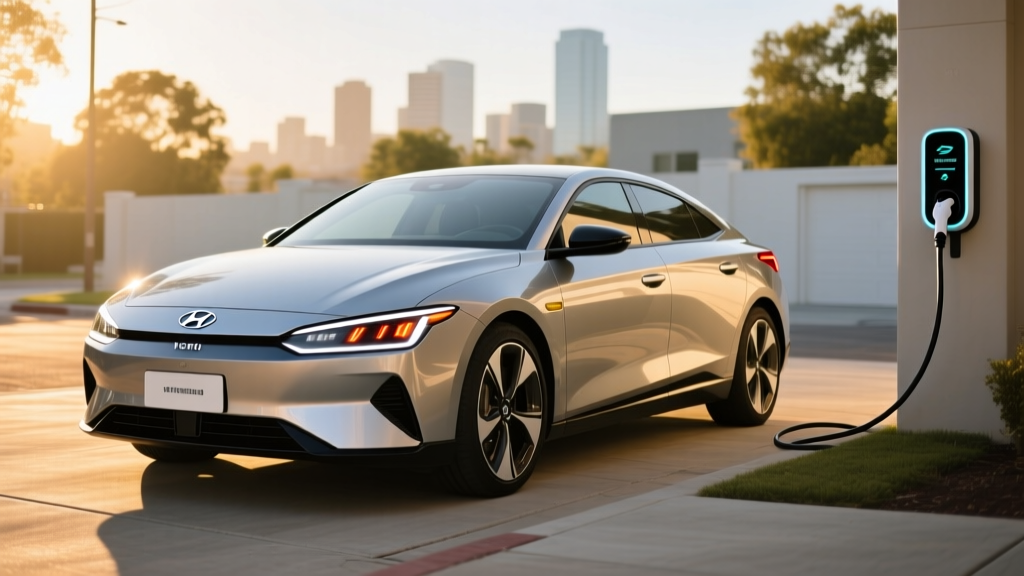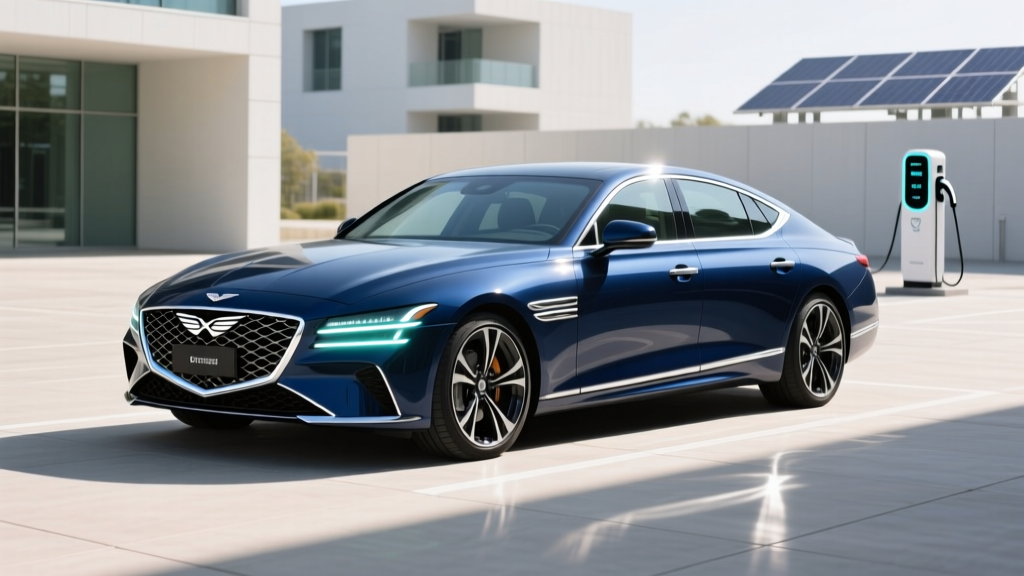
The 2025 Genesis Electrified G80 occupies a rare niche: a full-size luxury sedan that happens to be electric, rather than an electric vehicle dressed up as a luxury sedan. Built on the same platform as the gas-powered G80, it trades the dedicated EV architecture of rivals like the Lucid Air and Mercedes EQS for traditional proportions, a sumptuous cabin, and Genesis's signature design language. For buyers who want executive-level comfort without an overtly futuristic aesthetic, it's a compelling proposition — but the platform compromise shows up in range, charging, and interior packaging.
This review breaks down the real numbers that matter for ownership decisions: actual highway range versus the EPA sticker, charging curve behavior at DC fast chargers, total cost after federal incentives, and how the Electrified G80 stacks up against competitors that were engineered as EVs from the ground up.
Spec Snapshot: 2025 Genesis Electrified G80 at a Glance
| Specification | Value |
|---|---|
| EPA Range | 282 miles |
| Battery (usable) | 87.2 kWh, NMC lithium-ion |
| Drivetrain | Dual-motor AWD |
| Horsepower | 365 hp (combined) |
| 0–60 mph | 4.9 seconds |
| Max DC Fast Charge | ~350 kW (800V architecture) |
| 10–80% DC Charge | ~22 minutes (peak conditions) |
| Level 2 Charge Rate | 10.9 kW onboard charger |
| EPA Efficiency | 89 MPGe combined (38 kWh/100 mi) |
| Cargo Volume | 12.5 cu ft (trunk) |
| Rear Legroom | 38.7 inches |
| Base MSRP | $80,350 (including destination) |
| Battery/Powertrain Warranty | 10 years / 100,000 miles |
| Vehicle Warranty | 5 years / 60,000 miles |
Range and Efficiency: EPA vs. Real-World Expectations
The EPA rates the 2025 Electrified G80 at 282 miles of combined range. That figure comes from the sedan's 87.2 kWh usable battery capacity and an efficiency rating of 89 MPGe combined, which translates to 38 kWh per 100 miles driven. For a 4,900-pound luxury AWD sedan, that efficiency is respectable — but it trails the Lucid Air Pure (31 MPGe combined, over 400 miles of range from a smaller battery) and sits well below the Mercedes EQS 450+ (316 miles, RWD).
EPA sticker: 282 miles combined
Highway cruising (70 mph, moderate temps): Expect 240–255 miles. The AWD dual-motor drivetrain and bluff-body sedan aerodynamics increase consumption at sustained speed.
Cold weather (below 32°F): Plan for 195–220 miles. NMC chemistry loses capacity in the cold, and cabin heating draws significant energy. The Electrified G80 uses a heat pump (standard), which mitigates some loss versus resistive heating, but 20–30% range reduction is typical.
City / mixed driving (55–65°F): 270–285 miles — closest to the EPA figure, thanks to regenerative braking recapturing energy in stop-and-go conditions.
The 87.2 kWh battery uses NMC (nickel manganese cobalt) chemistry, which offers higher energy density than LFP but is more sensitive to extreme states of charge and temperature. Genesis does not publish a specific buffer size, but Hyundai Motor Group's 800V E-GMP-adjacent platforms typically reserve 5–8% at the top and bottom of the pack to protect longevity. That means the 87.2 kWh figure is the usable window, not the gross cell capacity.
According to fueleconomy.gov, the Electrified G80 achieves 91 MPGe city and 87 MPGe highway. The city-favored split reflects regen braking benefits — on highway-only road trips, your effective range will land closer to the lower figures above.
Charging Performance: 800V Architecture Done Right
Genesis equips the Electrified G80 with an 800V electrical architecture, which enables DC fast charging at up to approximately 350 kW when connected to a capable charger (such as Electrify America's 350 kW stations). In controlled testing, the sedan has demonstrated 10–80% charging in roughly 22 minutes — competitive with the Hyundai Ioniq 5 and Kia EV6, which share the same corporate 800V DNA.
However, the charge curve tells a more nuanced story. Peak 350 kW rates are sustained only between roughly 10–40% state of charge. Beyond 50%, the rate tapers significantly — expect 150–180 kW through 70%, and a steep drop above 80%. This is typical of NMC packs charged at high C-rates and is managed by the battery management system to protect cell health. If you're road-tripping, plan your stops to charge from 10–80% rather than topping off to 100% at a DC station — the final 20% can take as long as the first 70%.
| Charging Method | Power / Rate | Time / Miles Added |
|---|---|---|
| Level 1 (120V, 12A) | ~1.4 kW | ~4 miles per hour of charging |
| Level 2 (240V, 48A) | 10.9 kW (onboard charger max) | ~30 miles per hour; full charge in ~9 hours |
| DC Fast (350 kW station) | Peak ~350 kW | 10–80% in ~22 min; adds ~150 mi in 10 min at peak |
| DC Fast (150 kW station) | ~150 kW sustained | 10–80% in ~35 min |
| DC Fast (50 kW station) | ~50 kW | 10–80% in ~90 min |
Preconditioning matters here. The Electrified G80 will precondition its battery for optimal charging speed when a DC fast charger is set as the navigation destination. Without preconditioning — for instance, pulling into a charger with a cold-soaked battery in winter — your peak charge rate could drop below 200 kW, extending the 10–80% session to 30+ minutes. Always navigate to your charger when possible.
For home charging, the 10.9 kW onboard charger is competitive. On a 48-amp Level 2 circuit (the most common home installation), you'll recover about 30 miles of range per hour, meaning an overnight session from 20% to full takes roughly 7–8 hours. A licensed electrician will typically install a NEMA 14-50 outlet or hardwired wall connector on a 60-amp breaker for this setup — budget $800–$2,000 for installation depending on your panel's capacity and proximity to the garage.
Performance and Driving Dynamics
The dual-motor AWD powertrain produces 365 horsepower and 516 lb-ft of torque — adequate for a sedan of this mass but not thrilling by EV standards. The 4.9-second 0–60 mph time trails the Tesla Model S (3.1 seconds for the Long Range) and Lucid Air Pure (5.1 seconds but with far more range), but it matches the spirit of the car: effortless, quiet acceleration rather than performance theatrics.
Where the Electrified G80 shines is ride quality. The multi-link suspension with electronically controlled dampers absorbs road imperfections with the composure expected of an $80,000 luxury sedan. Cabin isolation is excellent — road and wind noise are well-suppressed at highway speeds, aided by acoustic laminated glass on all doors. The steering is light and precise if not communicative, which suits the grand-touring character.
Regenerative braking offers four levels adjustable via steering wheel paddles, from coasting (level 0) to near one-pedal driving (level 3, i-PEDAL mode). The transition between regen and friction braking is smooth — a common failing in converted-platform EVs that Genesis has managed well here.
Interior, Technology, and Practicality
The cabin is where Genesis justifies the premium. Nappa leather with diamond-quilted stitching, real wood and aluminum trim, and a 12.3-inch digital instrument cluster paired with a 14.5-inch widescreen infotainment display create an environment that feels genuinely luxurious — not minimalist-tech like a Tesla, but traditional-luxury executed to a high standard.
Infotainment: The system runs Genesis's latest software with wireless Apple CarPlay and Android Auto, navigation with EV-specific route planning (incorporating charger stops and preconditioning), and a digital key via NFC. A 12.3-inch 3D cluster offers an optional glasses-free 3D mode that some drivers find gimmicky but others appreciate.
Driver Assistance: Genesis equips the Electrified G80 with Highway Driving Assist II (HDA II), which combines adaptive cruise control with lane centering and automatic lane changes when the turn signal is engaged. This is an SAE Level 2 system — the driver must remain attentive, hands on or near the wheel, and eyes on the road. It is not autonomous driving. HDA II performs well on interstates but requires driver confirmation for lane changes and will disengage on sharp curves or faded lane markings.
Highway Driving Assist II is an SAE Level 2 driver-assistance system. It does not make the vehicle self-driving. The driver is legally and operationally responsible for steering, braking, and monitoring traffic at all times. Do not use mobile devices or disengage attention while HDA II is active.
Space and practicality: Rear-seat passengers enjoy 38.7 inches of legroom and a flat floor (no transmission tunnel), making the middle seat usable for a third adult on shorter trips. However, the trunk is the car's weakest practicality point: 12.5 cubic feet is tight for a full-size sedan. The battery pack beneath the floor eliminated the spare tire well and reduced trunk depth compared to the gas G80 (13.1 cu ft). There is no front trunk (frunk) — the space is occupied by power electronics and the HVAC system. For a luxury sedan buyer who carries light luggage, it's fine; for families needing stroller or golf-bag space, it's a genuine limitation.
Pricing, Trims, and Federal Tax Credit Eligibility
The 2025 Genesis Electrified G80 comes in a single, well-equipped trim level:
| Item | Amount |
|---|---|
| Base MSRP (incl. destination) | $80,350 |
| Prestige Package (rear entertainment, upgraded audio) | + $4,500 |
| As-tested (Prestige, metallic paint) | ~$85,600 |
| Federal EV Tax Credit (§30D) | Up to $7,500 — see eligibility below |
| Effective price (max credit applied) | ~$72,850 – $78,100 |
Federal tax credit eligibility requires careful attention. Under current IRS §30D rules, the Electrified G80 may qualify for up to $7,500, but several conditions must be met simultaneously:
- MSRP cap: The vehicle must have an MSRP at or below $55,000 for sedans. The Electrified G80 at $80,350 exceeds the sedan MSRP cap. As of the 2025 model year, this vehicle does NOT qualify for the new-vehicle §30D credit based on MSRP alone. Always verify current eligibility on the IRS clean vehicle credit page before purchasing.
- Buyer income limits: Modified adjusted gross income must not exceed $150,000 (single), $225,000 (head of household), or $300,000 (joint filers).
- Battery sourcing: Critical minerals and battery component requirements phase in annually. Even if the MSRP cap were met, sourcing compliance must be confirmed for the specific model year.
- Point-of-sale transfer: If eligible, the credit can be transferred to the dealer at purchase, reducing the upfront price rather than waiting for a tax refund.
The 2025 Genesis Electrified G80's $80,350 MSRP exceeds the §30D sedan cap of $55,000. Unless Congress modifies the cap or Genesis restructures pricing, this vehicle is unlikely to qualify for the federal new-vehicle credit. Consult a tax professional and verify on IRS.gov before relying on the credit in your purchase budget. Some state and utility incentives may still apply — check your local programs.
Genesis bundles significant value into the base price: the Prestige-level features (21-inch wheels, panoramic sunroof, head-up display, Lexicon audio) that are options on the gas G80 are largely standard. The 3 years / 36,000 miles of complimentary scheduled maintenance and Genesis's valet service (they pick up and return your car for service) further reduce ownership friction.
Competitive Positioning: Is It Worth Buying?
The Electrified G80 competes in a segment where buyers have increasingly sophisticated options. Here's how it compares on the metrics that matter:
| Metric | Genesis Electrified G80 | Lucid Air Pure | Mercedes EQS 450+ | BMW i5 eDrive40 |
|---|---|---|---|---|
| EPA Range | 282 mi | 419 mi | 316 mi | 295 mi |
| Base MSRP | $80,350 | $69,900 | $104,400 | $66,800 |
| Battery | 87.2 kWh NMC | 88 kWh NMC | 108.4 kWh NMC | 81.2 kWh NMC |
| Max DC Charge | ~350 kW | ~200 kW | ~200 kW | ~205 kW |
| 0–60 mph | 4.9 sec | 5.1 sec | 5.9 sec | 5.7 sec |
| Trunk | 12.5 cu ft | 32 cu ft (liftback) | 22 cu ft (liftback) | 17.4 cu ft |
| Federal Credit | Not eligible (MSRP) | Not eligible (MSRP) | Not eligible (MSRP) | Eligibility varies |
The Electrified G80's strongest advantage is its 350 kW DC charging capability — roughly 75% faster than the Lucid Air and Mercedes EQS at peak. If your road-trip routes pass through Electrify America 350 kW stations, this translates to meaningfully shorter stops. The cabin quality and Genesis's dealer service experience (complimentary maintenance, valet pickup) also stand out.
Its weaknesses are equally clear: 282 miles of range is the lowest in this comparison, trunk space is the smallest, and the converted platform means a raised floor that slightly compromises seating position. The Lucid Air Pure offers 137 more miles of range for over $10,000 less, though its charging is slower and its service network is far less established. The BMW i5 eDrive40 is the value play — less luxurious inside, but lighter, more efficient, and potentially credit-eligible.
Pros and Cons
- Class-leading 350 kW DC fast charging (10–80% in ~22 min)
- Exceptional cabin materials and quietness
- Strong warranty: 10-year/100,000-mile battery coverage
- Standard AWD with confident all-weather traction
- Genesis valet service and complimentary maintenance
- Smooth, natural regenerative braking integration
- 282-mile EPA range trails every key competitor
- Small 12.5 cu ft trunk; no frunk
- MSRP exceeds $55K sedan cap — no federal tax credit
- Converted ICE platform shows in packaging (floor height, trunk)
- HDA II lane centering less confident than GM Super Cruise on mapped highways
- Single trim limits configuration options
Who Should Buy the 2025 Genesis Electrified G80?
- You prioritize cabin luxury and dealer service experience over maximum range
- Your daily commute is under 100 miles round-trip with home Level 2 charging
- You road-trip on corridors with 350 kW Electrify America stations and value short charge stops
- You want AWD confidence without moving to an SUV
- You prefer traditional luxury aesthetics over tech-forward EV styling
- You need 350+ miles of range for frequent long-distance travel (consider the Lucid Air Pure)
- Cargo space is a priority — the 12.5 cu ft trunk is limiting for families
- You're counting on the $7,500 federal credit to make the math work
- You want the latest in autonomous-style highway driving (GM Super Cruise or Ford BlueCruise offer hands-free on mapped routes)
Frequently Asked Questions
What is the real-world range of the 2025 Genesis Electrified G80?
The EPA rates it at 282 miles combined. In real-world highway driving at 70 mph in moderate temperatures, expect 240–255 miles. In cold weather below freezing, plan for 195–220 miles. City driving with regenerative braking can approach or slightly exceed the EPA figure.
How fast does it charge at home and on the road?
On a 48-amp Level 2 home charger, the 10.9 kW onboard charger adds about 30 miles per hour, fully charging from 20% overnight in roughly 7–8 hours. On a 350 kW DC fast charger, it can go from 10–80% in approximately 22 minutes under ideal conditions. On a 150 kW station, plan for about 35 minutes for the same 10–80% session.
Does the 2025 Genesis Electrified G80 qualify for the federal EV tax credit?
Likely not. The §30D credit caps sedan MSRPs at $55,000, and the Electrified G80 starts at $80,350. Unless the MSRP cap rules change, this vehicle does not qualify for the new-vehicle federal credit. State and utility incentives may still apply — check your local programs and consult a tax professional.
Is the Genesis Electrified G80 worth buying over the Lucid Air or BMW i5?
It depends on priorities. The Electrified G80 charges significantly faster than both (350 kW vs. ~200 kW) and offers a more luxurious cabin with better dealer service infrastructure than Lucid. However, the Lucid Air Pure delivers 419 miles of range for $10,000 less, and the BMW i5 is lighter, more efficient, and potentially credit-eligible. If DC charging speed and traditional luxury are your top criteria, the Genesis wins; if range or value leads your decision, look to Lucid or BMW.
What is the battery warranty?
Genesis covers the high-voltage battery and electric powertrain for 10 years or 100,000 miles, whichever comes first. This is among the longest battery warranties in the luxury EV segment and matches the Hyundai Motor Group standard. The bumper-to-bumper warranty is 5 years / 60,000 miles.
Can I tow with the Electrified G80?
The Electrified G80 is not rated for towing. If towing capacity is a requirement, consider an electric SUV like the Genesis Electrified GV70 (2,000 lb capacity) or the Rivian R1S (up to 7,700 lb).
Sources: EPA fueleconomy.gov, Genesis USA, IRS §30D Clean Vehicle Credit