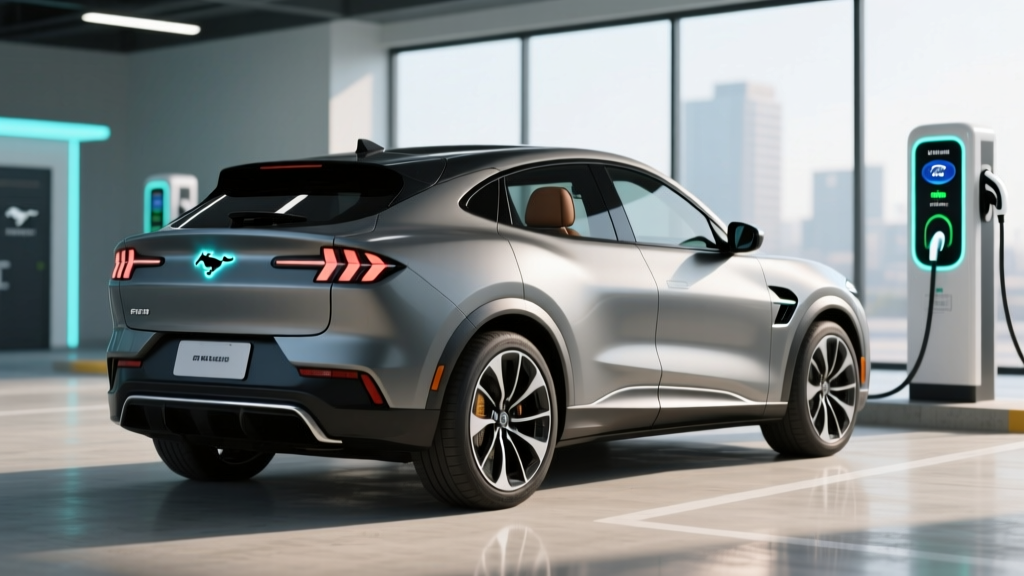
The 2025 Ford Mustang Mach-E SUV enters its fifth model year with a significant mid-cycle refresh: a larger battery, faster DC charging, and the addition of a Tesla Supercharger (NACS) port as standard equipment. For buyers cross-shopping the Tesla Model Y, Hyundai IONIQ 5, and Chevrolet Equinox EV, the Mach-E now closes its most glaring gaps while retaining the driving dynamics that set it apart from the crossover-EV pack.
We've spent time with the updated Mach-E across multiple trims to give you the exact numbers that matter — real-world range, charging curves, cargo dimensions, and whether the federal tax credit actually applies to your purchase. Here's everything you need before you sign.
Range, Battery, and Real-World Efficiency
The 2025 Mach-E lineup uses two battery packs, both lithium-ion NMC (nickel manganese cobalt) chemistry:
- Standard Range (SR): 75.7 kWh usable — available on Select and Premium trims
- Extended Range (ER): 91.0 kWh usable — available on Premium, GT, and Rally trims
Ford ditched the LFP (lithium iron phosphate) chemistry that appeared in the 2023 Standard Range model, returning to NMC across the board for better energy density and cold-weather performance.
| Trim | Drivetrain | Battery (kWh) | EPA Range (mi) | MPGe (City/Hwy/Comb) | kWh/100 mi |
|---|---|---|---|---|---|
| Select SR | RWD | 75.7 | 250 | 111 / 94 / 103 | 33 |
| Premium SR | AWD | 75.7 | 240 | 105 / 89 / 97 | 35 |
| Premium ER | RWD | 91.0 | 320 | 111 / 96 / 104 | 32 |
| Premium ER | AWD | 91.0 | 300 | 103 / 88 / 96 | 35 |
| GT ER | AWD | 91.0 | 280 | 91 / 80 / 86 | 39 |
| Rally ER | AWD | 91.0 | 265 | 88 / 76 / 82 | 41 |
The EPA 320-mile figure on the Premium ER RWD is achievable in mixed city/suburban driving at moderate temperatures. On sustained 75-mph highway runs, expect 270–285 miles before needing a charger. In freezing conditions (below 30°F), range drops 20–30% — plan for roughly 220–250 miles of usable range on the ER pack. The GT and Rally, with their stickier tires and higher power draw, lose range faster at highway speeds; budget for 230–240 miles real-world on a road trip.
Efficiency-wise, the Mach-E Premium ER RWD at 32 kWh/100 mi is competitive with the Model Y Long Range (31 kWh/100 mi) but trails the IONIQ 5's 30 kWh/100 mi. The AWD models are thirstier — the GT's 39 kWh/100 mi reflects its performance-first tuning. (Source: EPA / fueleconomy.gov)
Charging Speed: DC Fast, Level 2, and the NACS Advantage
The 2025 refresh brings the Mach-E's most important charging upgrade: a native NACS (North American Charging Standard) port, replacing the CCS1 connector used on 2021–2024 models. This means direct access to Tesla Superchargers without an adapter — a major practical improvement for road-trip charging reliability.
| Charging Level | Connector | Peak Power | Speed / Time |
|---|---|---|---|
| Level 1 (120V) | NACS / J1772 adapter | 1.4 kW | ~3 mi/hr |
| Level 2 (240V, 48A) | NACS / J1772 adapter | 11.5 kW | ~30 mi/hr; 0–100% in ~9.5 hr (ER) |
| Level 2 (240V, 32A mobile) | NACS | 7.7 kW | ~20 mi/hr; 0–100% in ~13 hr (ER) |
| DC Fast Charge | NACS | 150 kW peak | 10–80% in ~36 min (ER); ~28 min (SR) |
Let's address the elephant in the room: 150 kW peak DC charging is the Mach-E's weakest competitive metric. The Hyundai IONIQ 5 peaks at 240 kW (10–80% in ~18 min on a 350 kW charger), and the Kia EV6 matches it. The Tesla Model Y peaks around 250 kW. On a long road trip, that translates to roughly 15–18 extra minutes per charging stop in the Mach-E versus the IONIQ 5.
However, the charging curve matters more than the peak number. The Mach-E sustains close to 140–150 kW from roughly 15% to 55% SoC before tapering to ~100 kW through 70%, then drops sharply above 80%. Ford's navigation-based battery preconditioning warms the pack when a DC fast charger is set as your destination, which helps you hit that peak rate on arrival — use it every time.
For daily home charging, the 11.5 kW onboard charger (with a hardwired 48-amp Level 2 station) is excellent. You'll add roughly 30 miles of range per hour, meaning even a fully depleted Extended Range pack tops off overnight. Most owners will rarely need more than a 4–5 hour session to replenish a day's driving.
Performance and Driving Dynamics
| Trim | Motor Config | Horsepower | Torque (lb-ft) | 0–60 mph |
|---|---|---|---|---|
| Select SR | Single motor (RWD) | 266 hp | 317 | 6.3 sec |
| Premium SR | Dual motor (AWD) | 325 hp | 500 | 5.1 sec |
| Premium ER RWD | Single motor (RWD) | 290 hp | 317 | 6.1 sec |
| Premium ER AWD | Dual motor (AWD) | 365 hp | 500 | 4.8 sec |
| GT | Dual motor (AWD) | 480 hp | 634 | 3.5 sec |
| Rally | Dual motor (AWD) | 480 hp | 700 | 3.7 sec |
The Mach-E has always been the driver's choice in the electric crossover segment, and the 2025 model continues that tradition. The steering is communicative by EV standards, body roll is well-controlled, and the GT's 3.5-second 0–60 time is genuinely thrilling. The Rally trim adds 1.2 inches of ground clearance, MagneRide dampers, and a rally-inspired drive mode for unpaved roads — it's a niche play, but no competitor offers anything like it.
One note for GT buyers: the Performance Upgrade (included on the GT) unlocks the full 480 hp and 634 lb-ft. Without it, you're looking at 418 hp. Verify the upgrade is active on any used or dealer-lot GT you're considering.
Pricing, Trims, and Federal Tax Credit Eligibility
| Trim | Base MSRP | Est. As-Tested | §30D Credit Eligible? |
|---|---|---|---|
| Select SR RWD | $39,995 | $41,500 | Yes (up to $7,500) |
| Premium SR AWD | $44,995 | $47,000 | Yes (up to $7,500) |
| Premium ER RWD | $46,995 | $49,500 | Yes (up to $7,500) |
| Premium ER AWD | $49,995 | $52,000 | Yes (up to $7,500) |
| GT ER AWD | $55,995 | $59,000 | Yes (up to $7,500) |
| Rally ER AWD | $57,995 | $61,500 | Yes (up to $7,500) |
All trims fall under the IRS §30D MSRP cap of $80,000 for SUVs, making them potentially eligible for the full $7,500 federal tax credit. However, eligibility is not automatic — several conditions apply:
- Buyer income caps: AGI must not exceed $300,000 (joint), $225,000 (head of household), or $150,000 (single). (Source: IRS.gov)
- Battery sourcing: The vehicle must meet critical-mineral and battery-component requirements that phase in progressively. Ford has confirmed the 2025 Mach-E meets both thresholds for the full $7,500, but always verify the VIN on the IRS qualified-vehicles list before purchase.
- Point-of-sale transfer: You can transfer the credit to the dealer at purchase for an immediate $7,500 price reduction, rather than waiting to claim it on your tax return. The dealer must register the sale through the IRS Energy Credits Online portal.
- Transfer limitation: You can claim a maximum of two transferred credits per three-year period (one new, one used, or two new).
After the maximum $7,500 credit, the Select SR RWD effectively starts at roughly $32,495 — a compelling entry point into a practical, well-built electric SUV. The Premium ER RWD drops to approximately $39,495, putting it head-to-head with the Model Y Long Range on price while offering more interior materials quality.
Interior, Cargo, and Technology
The 2025 Mach-E's cabin gets a minor refresh with updated soft-touch materials and a redesigned center console. The 15.5-inch portrait touchscreen running SYNC 4A remains the centerpiece — it's responsive, supports wireless Apple CarPlay and Android Auto, and includes native Google Maps integration with real-time charging station availability.
Cargo and passenger dimensions:
- Cargo volume behind rear seats: 29.7 cu ft
- Cargo volume with rear seats folded: 59.7 cu ft
- Front trunk (frunk): 4.7 cu ft (drainable — useful for tailgating or wet gear)
- Front legroom: 43.3 in
- Rear legroom: 38.9 in
- Rear headroom: 38.2 in
Compared to the Model Y, the Mach-E gives up some cargo space (the Model Y offers 30.2 cu ft rear / 76.2 cu ft folded with its optional third row removed). But the Mach-E's cabin feels more traditionally luxurious — padded armrests, physical climate controls (finally restored for 2025), and better seat bolstering on long drives.
Standout tech:
- BlueCruise 1.5 (SAE Level 2): Hands-free highway driving on 130,000+ miles of pre-mapped divided highways. Requires an active subscription after the included trial period (~$75/month or $800/year). The driver must remain attentive — an infrared camera monitors eye gaze.
- Phone-as-a-Key: Your phone unlocks and starts the car via Bluetooth. Works well but keep a physical key fob as backup — phone battery death locks you out.
- Ford PowerUp OTA updates: Over-the-air software improvements have added range optimizations and new features to existing Mach-E owners post-purchase.
BlueCruise is an SAE Level 2 driver-assistance system. It does NOT make the Mach-E self-driving. You must remain alert, keep your eyes on the road, and be prepared to take over instantly. Only Level 4 robotaxi services (Waymo, Zoox) operate without a human driver. Never treat BlueCruise as an autopilot substitute.
Notable drawbacks:
- Rear visibility is compromised by the sloping roofline and thick C-pillars — the 360-degree camera is nearly essential.
- No rear wiper (a common complaint carried over from prior years; rain and road spray accumulate on the liftback glass).
- BlueCruise subscription cost adds up — budget $800/year if you plan to use it regularly on commutes.
- Regenerative braking is mild compared to one-pedal-driving EVs like the BMW iX. You'll still use the friction brake pedal regularly.
Ownership: Warranty, Insurance, and Who It's For
Warranty coverage:
- Bumper-to-bumper: 3 years / 36,000 miles
- Powertrain (motors, reduction gear): 5 years / 60,000 miles
- High-voltage battery: 8 years / 100,000 miles (replaced if capacity falls below 70% of original)
- Corrosion perforation: 5 years / unlimited miles
The battery warranty's 70% retention threshold is industry-standard (Tesla uses the same). Real-world degradation data from 2021–2023 Mach-E owners shows roughly 5–8% capacity loss at 60,000 miles, well within the warranty buffer. NMC chemistry tends to degrade slightly faster than LFP in high-heat climates, so Arizona and Texas owners should avoid frequent 100% charges and DC fast charging when possible.
Insurance: Expect premiums 15–25% higher than a comparably priced gas SUV. Average annual cost runs $1,800–$2,400 depending on state, driving record, and trim (the GT costs more to insure than the Select).
Towing: The Mach-E is rated for 1,500 lbs with the towing package (available on Premium and GT). That's enough for a small utility trailer or a pair of dirt bikes, but not a camper. The Model Y tows up to 3,500 lbs — a decisive advantage for boat or trailer owners.
- Engaging driving dynamics — best handling in the segment
- Native NACS port opens full Tesla Supercharger network
- Federal tax credit eligible across all trims
- Strong real-world range on ER RWD (270+ mi highway)
- Quality interior with physical climate controls restored
- Drainable frunk is genuinely useful
- 150 kW DC charging trails IONIQ 5 / EV6 / Model Y
- No rear wiper on the liftback glass
- BlueCruise subscription adds ~$800/year
- Rear visibility limited by roofline design
- Towing capped at 1,500 lbs
- GT and Rally trims sacrifice significant range
Verdict: Is the 2025 Mach-E Worth Buying?
Choose the Mach-E if: You prioritize driving feel over maximum charging speed, want Supercharger access without an adapter, value a more traditional SUV interior, and your daily driving stays under 250 miles. The Premium ER RWD at ~$39,495 after the tax credit is the value sweet spot.
Look at the Model Y if: You need maximum cargo space, 3,500-lb towing, or the fastest DC charging for frequent road trips.
Look at the IONIQ 5 if: Charging speed is your top priority (240 kW DC, 18-min 10–80%), and you prefer retro-futuristic styling and an ultra-flat floor.
The 2025 Ford Mustang Mach-E SUV is the most complete version of this electric crossover yet. The NACS port alone makes it a dramatically better road-trip companion, and the pricing — especially after the federal credit — makes it one of the most accessible premium electric SUVs available. Its charging speed remains a weak point versus Korean and Tesla competitors, but for the majority of buyers who charge at home and road-trip a few times a year, the Mach-E's driving character, build quality, and Supercharger compatibility make it a compelling daily driver.
Frequently Asked Questions
What is the real-world range of the 2025 Ford Mustang Mach-E?
The EPA rates the Mach-E Premium ER RWD at 320 miles. In real-world highway driving at 75 mph, expect 270–285 miles. In freezing winter conditions, plan for 220–250 miles. The AWD trims and GT deliver 230–260 miles in mixed real-world use.
How fast does the 2025 Mach-E charge?
DC fast charging peaks at 150 kW, achieving a 10–80% charge in approximately 36 minutes on the Extended Range battery. At home on a 48-amp Level 2 charger (11.5 kW), you'll add about 30 miles of range per hour, with a full charge taking roughly 9.5 hours on the ER pack.
Does the 2025 Mach-E qualify for the $7,500 federal EV tax credit?
Yes — all trims fall under the $80,000 SUV MSRP cap and Ford has confirmed the battery meets critical-mineral and component sourcing requirements. However, buyer income caps apply ($300K joint / $150K single), and you should verify the specific VIN on the IRS qualified-vehicles list. The credit can be transferred to the dealer at point of sale for an immediate price reduction.
Can I use Tesla Superchargers with the 2025 Mach-E?
Yes. The 2025 Mach-E comes with a native NACS port, meaning you can plug directly into any Tesla Supercharger without an adapter. Ford's SYNC 4A navigation includes Supercharger locations with real-time availability.
How does the Mach-E compare to the Tesla Model Y?
The Model Y offers more cargo space (76.2 vs 59.7 cu ft), faster DC charging (~250 kW vs 150 kW), and higher towing capacity (3,500 vs 1,500 lbs). The Mach-E counters with better interior materials, a more engaging driving experience, a drainable frunk, physical climate controls, and — after the tax credit — comparable or lower pricing on equivalent trims.
What's the battery warranty on the 2025 Mach-E?
Ford covers the high-voltage battery for 8 years or 100,000 miles, whichever comes first. If the battery degrades below 70% of its original capacity within that period, Ford will replace or repair it at no cost.