Quick Verdict: Still a Top-Tier Electric Crossover for 2025
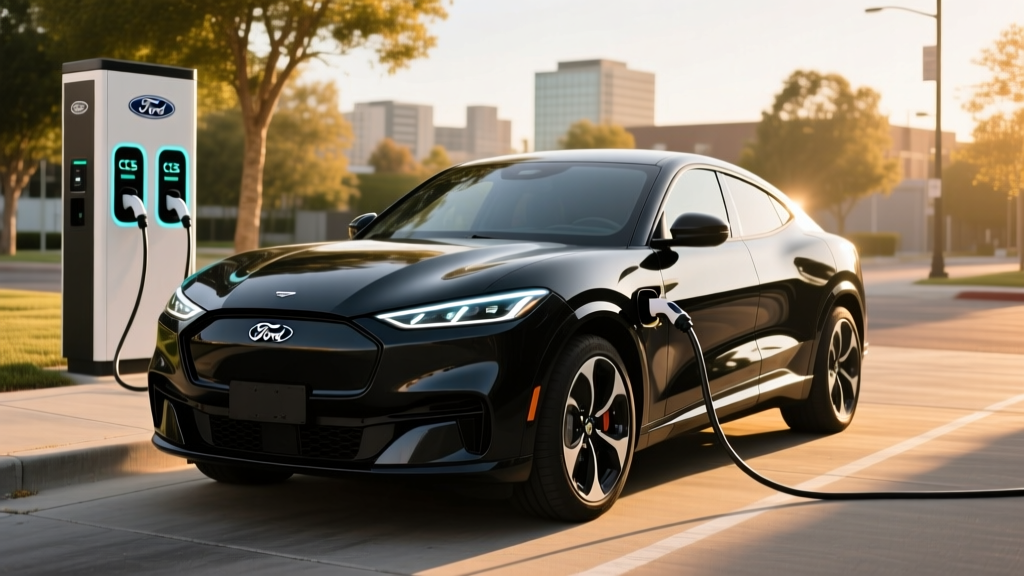
The 2025 Ford Mustang Mach-E enters its fifth model year with a matured platform, competitive pricing, and one of the most usable EV ecosystems on the market. Ford's decision to adopt the NACS charge port as standard equipment this year unlocks Tesla Supercharger access natively—no adapter required—fundamentally changing the road-trip calculus for Mach-E owners. With EPA range reaching 320 miles on the Extended Range RWD model, a starting MSRP of $37,995, and available BlueCruise hands-free driving, the Mach-E remains a serious alternative to the Tesla Model Y, Hyundai Ioniq 5, and Chevrolet Blazer EV.
But the Mach-E isn't without compromises. Rear-seat headroom is tighter than rivals, the base Standard Range battery delivers only 250 EPA miles, and real-world highway efficiency falls short of the sticker. This review breaks down every spec that matters—battery chemistry, sustained charging speeds, cold-weather range loss, and exact tax-credit eligibility—so you can decide whether the 2025 Mach-E fits your driveway.
Range, Battery & Efficiency: The Numbers That Matter
| Configuration | Usable Battery (kWh) | Chemistry | EPA Range (mi) | MPGe (Combined) | kWh/100 mi |
|---|---|---|---|---|---|
| Standard Range RWD | 70 kWh | LFP | 250 | 100 | 34 |
| Standard Range AWD (eAWD) | 70 kWh | LFP | 230 | 93 | 36 |
| Extended Range RWD | 91 kWh | NMC | 320 | 104 | 32 |
| Extended Range AWD (eAWD) | 91 kWh | NMC | 290 | 95 | 35 |
| GT (AWD, Extended Range) | 91 kWh | NMC | 280 | 86 | 39 |
The Standard Range models use lithium iron phosphate (LFP) cells, which trade energy density for longer cycle life and the ability to charge routinely to 100% without accelerating degradation. The Extended Range and GT trims use nickel manganese cobalt (NMC) chemistry, which packs more energy per kilogram but benefits from daily charging limits of 80-90% for long-term health.
Real-World Range Reality Check
EPA Sticker: 320 miles (Extended Range RWD)
Expect in practice: ~265-285 miles at sustained 70-75 mph highway speeds in mild weather. In freezing temperatures (below 32°F), plan for 200-230 miles of usable range due to cabin heating demands and increased battery resistance. City and suburban driving with regenerative braking can match or slightly exceed the EPA figure, reaching ~310-330 miles.
Bottom line: The 320-mile EPA figure is achievable in mixed suburban driving but optimistic for long interstate road trips or winter commutes. Budget ~260 miles for highway trip planning.
According to fueleconomy.gov, the Extended Range RWD Mach-E achieves 104 MPGe combined (32 kWh/100 mi). The GT drops to 86 MPGe, reflecting its performance-oriented tuning and higher curb weight. For comparison, the Tesla Model Y Long Range AWD posts 117 MPGe combined—still the efficiency benchmark in this segment.
Charging Speed: DC Fast, Level 2 & NACS Access
| Charge Level | Connector | Max Power (kW) | 10-80% Time | Miles Added/Hour |
|---|---|---|---|---|
| Level 1 (120V household) | NACS (J3400) | 1.4 kW | N/A (overnight top-up) | ~3-5 mi/hr |
| Level 2 (240V home/public) | NACS (J3400) | 10.5 kW (48A) | ~9.5 hrs (0-100%, ER) | ~32 mi/hr |
| DC Fast Charge | NACS (J3400) | 150 kW peak | ~36 min (10-80%) | ~150 mi in 20 min (peak) |
The 2025 Mach-E's headline charging upgrade is the native NACS (J3400) charge port, replacing the CCS1 connector used on 2021-2024 models. This means direct plug-in at Tesla Superchargers—now the largest and most reliable DC fast-charging network in North America—without fumbling with a CCS-to-NACS adapter. Ford's FordPass app integrates Supercharger routing and payment, though some users report the experience still lags behind Tesla's native plug-and-charge simplicity.
Peak DC fast-charging rate is 150 kW on Extended Range models (Standard Range peaks around 115 kW). In real-world testing at ambient temperatures of 65-80°F, the Mach-E sustains approximately 120-140 kW between 10-40% state of charge, tapering to ~80 kW by 60% and ~40 kW above 80%. A 10-80% session takes roughly 36 minutes on a 150+ kW station. Preconditioning—activating battery thermal management via navigation routing to a charger—is essential for achieving peak rates; without it, expect 30-50% slower charging in cool weather.
At home on a 48-amp Level 2 circuit (requiring a 60-amp breaker), the onboard 10.5 kW charger adds approximately 32 miles of range per hour. A full 0-100% charge on the 91 kWh Extended Range battery takes about 9.5 hours—feasible overnight for most owners. The Ford Mobile Power Cord is included and can serve as a Level 1 trickle charger or, with the appropriate 240V adapter plug, deliver up to 30 amps (7.2 kW) on Level 2.
Performance: 0-60 Times, Horsepower & Drivetrain
| Trim / Drivetrain | Horsepower | Torque (lb-ft) | 0-60 mph (sec) | Top Speed (mph) |
|---|---|---|---|---|
| Select / Premium RWD | 266 hp | 387 | 6.1 | 112 |
| Select / Premium eAWD | 325 hp | 500 | 5.1 | 112 |
| GT (eAWD) | 480 hp | 634 | 3.8 | 124 |
| Rally (eAWD) | 480 hp | 700 | 3.7 | 130 |
The base RWD powertrain's 266 hp and 6.1-second 0-60 time are adequate for commuting and highway merging but feel modest next to dual-motor rivals. The eAWD upgrade to 325 hp and a 5.1-second sprint is the sweet spot for most buyers—confident passing power without the GT's price premium and range penalty.
The GT's 3.8-second 0-60 time puts it in sports-car territory, and the Rally trim adds raised suspension, underbody protection, and rally-tuned damping for unpaved roads. All trims feature one-pedal driving with adjustable regenerative braking intensity, and the eAWD system can send up to 100% of torque to either axle depending on traction needs. Towing capacity is limited to 1,500 pounds across all trims—adequate for a small utility trailer but not a camping trailer.
Pricing, Trims & Federal Tax Credit Eligibility
| Trim | Base MSRP | AWD Add | Est. As-Tested | §30D Credit Eligible? |
|---|---|---|---|---|
| Select (Standard Range) | $37,995 | +$3,000 | $41,000-$44,000 | Yes (up to $7,500) |
| Premium (Std or Ext Range) | $43,495 | +$3,000 | $46,500-$53,000 | Yes (up to $7,500) |
| GT (Extended Range AWD) | $57,995 | Included | $59,000-$63,000 | Yes (up to $7,500) |
| Rally (Extended Range AWD) | $61,995 | Included | $63,000-$65,000 | Yes (up to $7,500) |
All trims of the 2025 Mach-E fall under the $80,000 MSRP cap for SUVs under IRS §30D, making them potentially eligible for the full $7,500 federal tax credit. The credit is available as a point-of-sale transfer to the dealer, effectively reducing your purchase price at signing rather than waiting for a tax refund.
Federal Tax Credit Eligibility Checklist (§30D, 2025 Rules)
- Income caps: AGI ≤ $150,000 (single), $225,000 (head of household), $300,000 (joint)
- MSRP cap: ≤ $80,000 for SUVs (all Mach-E trims qualify)
- Battery sourcing: Must meet critical minerals and battery component requirements that phase in annually — confirm current-year compliance on IRS.gov before purchasing
- Assembly: Must be assembled in North America (Mach-E is built in Cuautitlán, Mexico — qualifies)
- Transfer option: Buyer can transfer the credit to the dealer for an immediate price reduction at point of sale
Note: Battery component and critical mineral sourcing rules tighten each year. A trim that qualifies in January may face partial credit reduction ($3,750 instead of $7,500) if supply chain composition changes mid-year. Always verify with your dealer and a tax professional before finalizing.
With the full $7,500 credit applied, a Select RWD effectively starts at ~$30,495—competitive with gas-powered compact SUVs on price while delivering dramatically lower per-mile energy costs. A Premium Extended Range RWD with the credit lands around $38,995, positioning it as a strong value play against the Tesla Model Y Long Range.
Interior, Cargo, Tech & Driver Assistance
The Mach-E's cabin centers on a 15.5-inch vertical touchscreen running Ford's SYNC 4A system with wireless Apple CarPlay and Android Auto, over-the-air updates, and a customizable home screen. The digital instrument cluster is a 10.2-inch display behind the steering wheel. Physical buttons are minimal—climate controls, drive modes, and most vehicle settings live in the touchscreen, which some drivers find distracting.
| Measurement | Specification |
|---|---|
| Front legroom | 43.3 in |
| Rear legroom | 38.9 in |
| Front headroom | 40.4 in |
| Rear headroom | 38.5 in |
| Cargo (behind 2nd row) | 29.7 cu ft |
| Cargo (2nd row folded) | 59.7 cu ft |
| Front trunk (frunk) | 4.7 cu ft (drainable, with lid) |
Cargo space is competitive but not class-leading: 29.7 cubic feet behind the second row and 59.7 with seats folded. The Model Y offers significantly more (30.2 / 72.1 cu ft). The Mach-E's 4.7-cubic-foot frunk is drainable and useful for wet gear or groceries, a feature many rivals omit.
Rear headroom (38.5 in) is the Mach-E's most notable interior limitation—taller passengers will find it snug compared to the Ioniq 5 or Model Y, both of which exceed 39 inches. Rear legroom at 38.9 inches is adequate for adults on shorter trips but trails the Ioniq 5's generous 41.7 inches.
Ford BlueCruise (SAE Level 2 Hands-Free Driving)
The available Ford BlueCruise system enables hands-free driving on over 130,000 miles of pre-mapped divided highways across the U.S. and Canada. A driver-facing camera monitors eye gaze and head position; if you look away or close your eyes, the system escalates warnings and will bring the vehicle to a controlled stop. BlueCruise is included free for 90 days on equipped trims, then requires a subscription (~$75/month or $800/year).
SAE Automation Level: Level 2. BlueCruise is a driver-assistance system, not self-driving. You must remain alert, keep your eyes on the road, and be prepared to take over steering and braking at any moment. It does not navigate intersections, handle construction zones autonomously, or operate on unmapped roads. No production consumer vehicle currently offers SAE Level 4 or 5 autonomy.
Additional driver-assist features standard across all trims include automatic emergency braking with pedestrian detection, blind-spot monitoring, rear cross-traffic alert, lane-keeping assist, and adaptive cruise control with stop-and-go. The Mach-E earned an IIHS Top Safety Pick designation, with Good ratings across all crashworthiness tests.
Pros, Cons & Who Should Buy
Pros
- Native NACS port unlocks Tesla Supercharger network without adapter
- LFP battery on Standard Range allows routine 100% charging
- BlueCruise hands-free highway driving is polished and expanding
- Competitive pricing after $7,500 federal tax credit
- Engaging driving dynamics for an electric crossover; GT is genuinely fast
- Over-the-air updates continuously add features
- Drainable frunk adds practical utility
Cons
- Real-world highway range falls 10-15% below EPA estimates
- 150 kW peak DC charging is slower than Hyundai/Kia's 350 kW capability
- Rear headroom is tight for passengers over 6'0"
- Most vehicle controls buried in touchscreen — few physical buttons
- BlueCruise subscription adds $800/year after trial period
- Towing limited to 1,500 lbs — below some gas SUV competitors
- No heat pump standard (resistive heater increases cold-weather range loss)
Who the 2025 Mach-E Suits Best
Daily commuters with home charging: The Extended Range RWD's 320-mile EPA range and LFP-free overnight charging make it ideal for 30-80 mile round trips. If your commute is under 50 miles, the Standard Range LFP model offers exceptional value with its 100% charge tolerance.
Road trippers who want Supercharger access: The native NACS port is the Mach-E's strongest competitive advantage in 2025. Tesla's Supercharger network remains the most reliable and widespread DC fast-charging infrastructure, and the Mach-E integrates it seamlessly.
Performance-minded buyers on a budget: The GT's 3.8-second 0-60 time undercuts most sports cars at a ~$59,000 price point (before credit). The Rally variant adds legitimate off-road capability for adventure-oriented owners.
Less ideal for: Families needing maximum rear-seat space (consider the Ioniq 5 or Kia EV6), buyers in extreme cold climates without garage parking (no standard heat pump increases winter range loss), and those who tow frequently (1,500-lb limit).
Warranty & Ownership Costs
| Coverage Area | Term |
|---|---|
| Basic (bumper-to-bumper) | 3 years / 36,000 miles |
| Powertrain | 5 years / 60,000 miles |
| High-voltage battery | 8 years / 100,000 miles (≥70% capacity retention) |
| Corrosion perforation | 5 years / unlimited miles |
| Roadside assistance | 5 years / 60,000 miles |
The 8-year/100,000-mile battery warranty guarantees at least 70% of original capacity retention—a standard threshold shared with most EV manufacturers. Real-world data from early 2021-2022 Mach-E owners suggests degradation is tracking well within this envelope, with most vehicles showing 92-96% state of health after 40,000-60,000 miles. LFP-equipped Standard Range models are expected to show even slower degradation given the chemistry's inherent cycle-life advantage.
Ford does not publish a flat battery replacement cost. Industry estimates for the Extended Range 91 kWh pack place full replacement in the $14,000-$18,000 range out of warranty, though module-level repairs may be possible at lower cost. Insurance premiums for the Mach-E run 10-20% higher than comparable gas SUVs, reflecting repair cost data—get quotes before purchasing.
Frequently Asked Questions
What is the real-world range of the 2025 Ford Mustang Mach-E?
The Extended Range RWD model carries a 320-mile EPA estimate, but expect approximately 265-285 miles at sustained highway speeds in mild conditions, and 200-230 miles in freezing weather. City driving with regenerative braking can approach or slightly exceed the EPA figure. The Standard Range LFP model's 250-mile EPA rating translates to roughly 200-220 miles highway.
How fast does the 2025 Mach-E charge at home and on the road?
At home on a 240V/48A Level 2 circuit, the Mach-E charges at 10.5 kW, adding approximately 32 miles of range per hour (full charge in ~9.5 hours for Extended Range). On DC fast chargers, it peaks at 150 kW, achieving a 10-80% charge in approximately 36 minutes with proper battery preconditioning. The native NACS port provides direct access to Tesla Superchargers.
Does the 2025 Mach-E qualify for the $7,500 federal EV tax credit?
All trims fall under the $80,000 SUV MSRP cap and are assembled in North America, making them potentially eligible for the full $7,500 credit under IRS §30D. Eligibility depends on your adjusted gross income (≤$150K single / ≤$300K joint) and the vehicle's battery component and critical mineral sourcing compliance for the current year. Verify on IRS.gov and with your dealer before purchase. The credit can be transferred to the dealer for an immediate price reduction at point of sale.
Is the 2025 Mach-E worth buying over the Tesla Model Y or Hyundai Ioniq 5?
The Mach-E wins on native Supercharger access (no adapter), driving engagement, and BlueCruise hands-free capability. The Model Y still leads on efficiency (117 vs 104 MPGe), cargo volume, and software integration. The Ioniq 5 offers dramatically faster 350 kW DC charging (10-80% in ~18 min) and more rear-seat space but uses CCS1 (adapter needed for Superchargers). Choose the Mach-E if Supercharger access and driving dynamics matter most; choose the Ioniq 5 if fastest charging and interior room are priorities.
Does the Mach-E have a heat pump for cold weather?
No. The 2025 Mach-E uses a resistive cabin heater rather than a heat pump, which draws more energy from the traction battery in cold weather. This contributes to the 20-30% winter range loss observed in freezing temperatures. Competitors like the Hyundai Ioniq 5 and Tesla Model Y use heat pumps that are more efficient in cold conditions.
Can the 2025 Mach-E tow a trailer?
Yes, but the maximum towing capacity is 1,500 pounds across all trims. That's sufficient for a small utility trailer, a pair of dirt bikes, or a lightweight pop-up camper, but below the 2,000-3,500 lb ratings of some gas-powered compact SUVs and the 3,500-lb capacity of the Tesla Model Y.