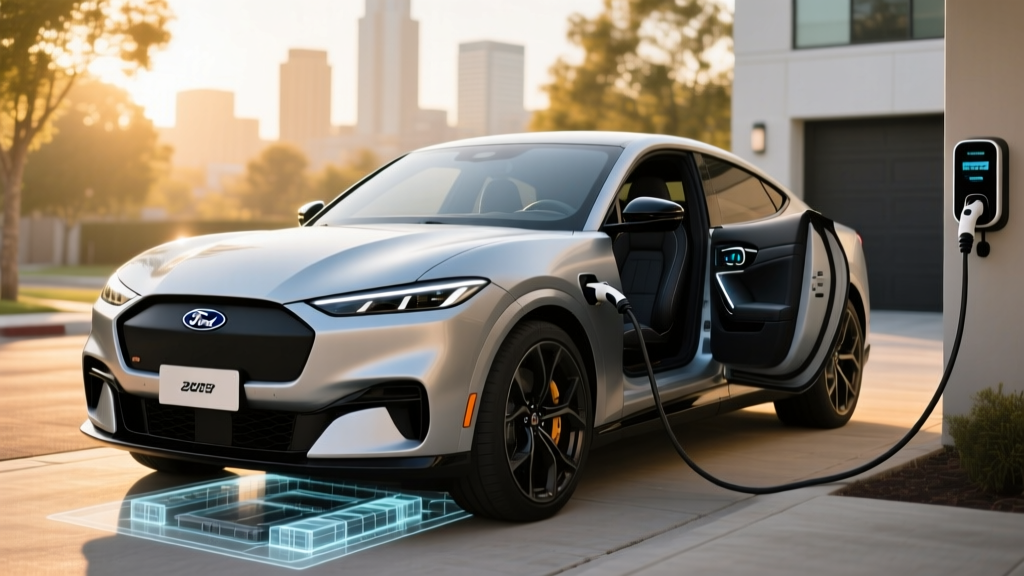
The Ford Mustang Mach-E remains one of the most recognizable electric crossovers on the road, blending Mustang-badged performance with practical SUV proportions. For buyers weighing a 2025 Ford Mustang Mach-E lease, the numbers tell a compelling story: EPA-estimated range up to 320 miles, DC fast charging to 150 kW, and a starting MSRP of $39,995 before incentives. But lease economics, real-world range, and charging practicality matter far more than brochure specs. This profile breaks down exactly what you're signing up for.
Quick Verdict: Is a Mach-E Lease the Right Move?
A 2025 Mach-E lease makes the most sense for buyers who want a mainstream electric crossover with strong public charging compatibility (now NACS-equipped for Tesla Supercharger access), competitive range, and a well-regarded infotainment system — without committing to long-term battery ownership. Lease terms also let you sidestep the worst of EV depreciation, which historically hits the Mach-E harder than rivals like the Tesla Model Y. The trade-off: you won't capture the full federal tax credit unless Ford structures the lease as a pass-through, and monthly payments can exceed equivalent gas-SUV leases depending on money factor and residual.
Range, Battery, and Real-World Efficiency
The 2025 Mach-E offers two battery packs across its lineup. The Standard Range (SR) pack uses a 75.7 kWh (usable ~70 kWh) lithium-ion NMC (nickel manganese cobalt) battery, while the Extended Range (ER) pack steps up to 91.0 kWh (usable ~84 kWh), also NMC chemistry. Ford does not currently offer an LFP (lithium iron phosphate) option in the Mach-E, unlike some competitors.
| Trim / Drivetrain | EPA Range | Real-World Expectation |
|---|---|---|
| Select SR RWD | 250 mi | ~210–230 mi (mixed); ~180 mi (cold/hwy) |
| Select ER RWD | 320 mi | ~270–290 mi (mixed); ~230 mi (cold/hwy) |
| Premium ER AWD | 290 mi | ~245–265 mi (mixed); ~210 mi (cold/hwy) |
| GT ER AWD | 280 mi | ~235–255 mi (mixed); ~200 mi (cold/hwy) |
Source: EPA fueleconomy.gov. Real-world estimates reflect 70 mph highway driving and 20–30% cold-weather reduction common to NMC packs without aggressive preconditioning.
Efficiency on the Extended Range RWD model lands at approximately 101 MPGe combined (33 kWh/100 mi), per EPA data. AWD and GT trims drop to the mid-80s MPGe range. For context, the Hyundai Ioniq 5 RWD achieves about 114 MPGe, and the Tesla Model Y Long Range AWD sits at 117 MPGe — both more efficient per mile driven.
Charging Speed: DC Fast, Level 2, and NACS Access
One of the Mach-E's biggest 2025 selling points is native NACS (North American Charging Standard) compatibility, granting access to Tesla's Supercharger network without an adapter. This dramatically improves road-trip charging reliability compared to CCS-only vehicles.
| Charging Level | Power | Speed / Time |
|---|---|---|
| Level 1 (120V household) | ~1.4 kW | ~3–4 mi/hr |
| Level 2 (240V, Ford Mobile Power Cord or wall unit) | 10.5 kW (48A) | ~30 mi/hr; full charge in ~9–10 hr (ER) |
| DC Fast Charge (NACS or CCS) | 150 kW peak | 10–80% in ~45 min (SR); ~52 min (ER) |
A critical reality check on DC fast charging: the Mach-E peaks at 150 kW but sustains that rate only in a narrow state-of-charge window (roughly 15–35% SoC). Above 50%, the charge curve tapers significantly, dropping below 60 kW past 70%. This means the advertised 10–80% time of roughly 45–52 minutes is accurate, but you won't see 150 kW on the display for most of the session. Preconditioning the battery (via the navigation-routed preconditioning feature) is essential to hitting peak rates — arrive at a charger cold and you may see less than 50 kW initially.
Compared to the Hyundai Ioniq 5 (which peaks at ~240 kW on 800V architecture and hits 10–80% in about 18 minutes), the Mach-E's charging speed is a clear weakness for frequent road trippers. For daily home charging on Level 2, however, 10.5 kW is perfectly adequate — most owners plug in overnight and wake up full.
Performance and Drivetrain
| Trim | Drivetrain | Horsepower | Torque (lb-ft) | 0–60 mph |
|---|---|---|---|---|
| Select SR RWD | RWD (single motor) | 266 hp | 387 | ~6.3 sec |
| Select/Premium ER RWD | RWD (single motor) | 290 hp | 387 | ~5.8 sec |
| Premium ER AWD | AWD (dual motor) | 346 hp | 428 | ~5.1 sec |
| GT ER AWD | AWD (dual motor) | 480 hp | 634 | ~3.5 sec |
| Rally (limited) | AWD (dual motor) | 480 hp | 700 | ~3.4 sec |
The GT trim delivers genuine sports-car acceleration that justifies the Mustang badge more than any other variant. The standard RWD models, while not slow, feel more like competent crossovers than muscle cars. Ride quality is firm but compliant, and Ford's MagneRide adaptive suspension (available on GT) smooths out rough pavement effectively.
Pricing, Lease Economics, and Tax Credits
The 2025 Mach-E lineup starts at $39,995 for the Select SR RWD and climbs to roughly $59,995 for the GT. Here's how the trims break down:
| Trim | Base MSRP | Federal §30D Credit Eligibility | Effective Price (if credit applies) |
|---|---|---|---|
| Select SR RWD | $39,995 | Up to $7,500* | ~$32,495 |
| Select ER RWD | $45,995 | Up to $7,500* | ~$38,495 |
| Premium ER RWD | $48,995 | Up to $7,500* | ~$41,495 |
| Premium ER AWD | $51,995 | Up to $7,500* | ~$44,495 |
| GT ER AWD | $59,995 | Up to $3,750–$7,500* | ~$52,495–$56,245 |
*Eligibility for the IRS §30D federal tax credit depends on multiple requirements: buyer AGI caps ($150K single / $300K joint), MSRP caps ($80K for SUVs), battery critical-mineral and component sourcing thresholds, and final assembly in North America. The Mach-E is assembled in Cuautitlán, Mexico, which has been a point of contention under evolving sourcing rules. Verify current eligibility on the IRS clean vehicle credit list before signing.
Lease-specific credit note: Under current IRS guidance, vehicles leased through a dealership may qualify for the commercial clean vehicle credit (§45W), which the leasing company can then pass through as a capitalized cost reduction — potentially lowering your monthly payment. This pathway sometimes sidesteps the §30D buyer income and sourcing restrictions. Ask your Ford dealer exactly how the credit is being applied to your lease structure.
Typical 36-month Mach-E lease offers in early 2025 have ranged from roughly $399–$549/month depending on trim, down payment ($2,500–$4,500 due at signing), money factor, and regional incentives. Ford Credit periodically offers lease cash bonuses that can reduce effective payments.
Interior, Cargo, and Technology
The Mach-E cabin is dominated by a massive 15.5-inch vertical touchscreen running Ford's SYNC 4A system. Wireless Apple CarPlay and Android Auto are standard. The interface is responsive, though the climate controls are buried in the touchscreen — a common complaint. A 10.2-inch digital instrument cluster sits behind the steering wheel.
Cargo space measures 29.7 cubic feet behind the rear seats and 59.7 cubic feet with the rear seats folded. A small front trunk (frunk) adds 4.7 cubic feet of lockable storage with a drain plug — handy for wet gear. Rear legroom is 38.1 inches, adequate for adults but tighter than the Hyundai Ioniq 5's 39.4 inches.
Driver-assistance features include Ford Co-Pilot360 2.0 with automatic emergency braking, blind-spot monitoring, lane-keeping, and adaptive cruise control. The optional BlueCruise system enables hands-free driving on pre-mapped divided highways — this is an SAE Level 2 system, meaning the driver must remain attentive and eyes on the road. BlueCruise is not self-driving and does not handle city streets or unmapped roads.
Warranty and Long-Term Ownership
| Component | Coverage |
|---|---|
| Basic bumper-to-bumper | 3 years / 36,000 mi |
| Powertrain | 5 years / 60,000 mi |
| Electric vehicle components (battery, motor) | 8 years / 100,000 mi |
| Battery capacity retention | 8 years / 100,000 mi (below 70% SoH) |
Ford's 70% state-of-health (SoH) threshold for the battery warranty is industry-standard, matching most competitors. Real-world degradation data from early Mach-E owners (2021–2023 models) suggests approximately 5–8% capacity loss over the first 60,000 miles under normal use, which is typical for NMC chemistry with active liquid thermal management. LFP packs in some competing vehicles degrade more slowly but sacrifice energy density.
Pros, Cons, and Competitor Comparison
- Native NACS — direct Tesla Supercharger access
- Up to 320 mi EPA range (ER RWD)
- GT trim: 480 hp, 3.5-sec 0–60
- BlueCruise hands-free highway driving available
- Strong infotainment (SYNC 4A, 15.5" screen)
- Frunk with drain plug
- DC fast charging limited to 150 kW — slow vs. Ioniq 5, EV6
- 10–80% charge takes ~45–52 min (longer than rivals)
- Efficiency trails Model Y and Ioniq 5 by 15+ MPGe
- Climate controls touchscreen-only
- Made in Mexico — verify §30D sourcing eligibility
- Historically steep depreciation (lease mitigates this)
- Choose the Mach-E if: You want Supercharger access via NACS, prefer Ford's dealership network for service, value the GT's performance, and want a lease to avoid depreciation risk.
- Choose the Tesla Model Y if: Maximum efficiency (117 MPGe), fastest charging network, and lowest total cost of ownership are your priorities.
- Choose the Hyundai Ioniq 5 if: Fastest DC charging (18 min 10–80%), best interior space, and highest MPGe in the segment matter most.
- Choose the Chevrolet Equinox EV if: Budget is the primary concern and you want a sub-$35K effective price after credits.
Frequently Asked Questions
What is the real-world range of the 2025 Mustang Mach-E?
The Extended Range RWD model is EPA-rated at 320 miles, but expect roughly 270–290 miles in mixed driving and as low as 230 miles in cold weather or sustained highway use at 70+ mph. Standard Range models deliver about 210–230 miles real-world.
How fast does the Mach-E charge at home and on the road?
On a 240V Level 2 charger at 10.5 kW, the Extended Range pack charges in about 9–10 hours, adding roughly 30 miles of range per hour. On DC fast chargers, it peaks at 150 kW and takes approximately 45 minutes (SR) to 52 minutes (ER) from 10–80%. This is slower than the Ioniq 5's 18-minute 10–80% time.
How much does a 2025 Mach-E lease cost per month?
Typical 36-month leases range from about $399/month (Select SR, with down payment) to $549/month (Premium AWD), depending on trim, money factor, residual value, and regional incentives. Check whether the dealer is applying the federal credit as a cap-cost reduction.
Does the 2025 Mach-E qualify for the $7,500 federal EV tax credit?
Potentially, but eligibility depends on IRS §30D rules including buyer income limits ($150K single / $300K joint), battery sourcing requirements, and North American final assembly. The Mach-E is assembled in Mexico. For leases, the §45W commercial credit pathway may apply regardless. Always verify on the IRS clean vehicle credit page and consult a tax professional.
Is the Mach-E worth leasing over buying?
Leasing is often the smarter financial move for the Mach-E because EVs have experienced steeper depreciation than gas vehicles, and a lease shields you from residual-value risk. You also potentially benefit from the tax credit as a cap-cost reduction. If you drive more than 12,000–15,000 miles/year or want to keep the vehicle long-term, buying may make more sense.
How does the Mach-E compare to the Tesla Model Y?
The Model Y Long Range AWD offers more range (320 mi EPA), higher efficiency (117 vs. ~101 MPGe), faster acceleration, and access to the Supercharger network natively. The Mach-E counters with a more traditional dealership experience, BlueCruise, a frunk with a drain, and — for 2025 — its own native NACS port for Supercharger access. The Model Y generally wins on total cost of ownership; the Mach-E appeals to buyers wary of Tesla's brand and service model.