The Short Answer
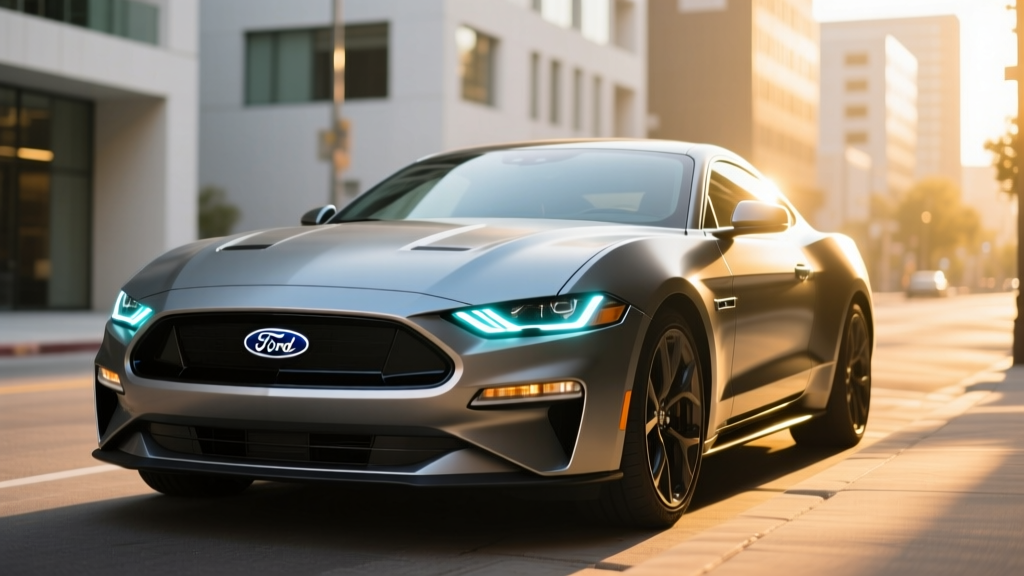
As of early 2026, Ford has not released a fully electric Mustang coupe or convertible for the 2025 model year. The vehicle most buyers searching for as the "2025 Ford Mustang electric" is the Ford Mustang Mach-E, Ford's electric crossover SUV that carries the Mustang badge. The 2025 Mach-E starts at approximately $42,495 (before incentives), offers up to 320 miles of EPA-estimated range (Extended Range RWD), and qualifies for up to $7,500 in federal tax credits via point-of-sale transfer — though eligibility depends on your income, the vehicle's MSRP classification, and battery-sourcing requirements under current IRS §30D rules. If you're specifically looking for an electric Mustang sports car, Ford has not confirmed one; the traditional Mustang coupe remains gas-only through the 2025 model year.
What the 2025 Ford Mustang Mach-E Actually Offers
The 2025 Mustang Mach-E continues into its fifth model year with incremental updates. Ford streamlined the lineup to four core trims: Select, Premium, GT, and Rally. Battery options remain the Standard Range (72 kWh usable, LFP chemistry) and Extended Range (91 kWh usable, NMC chemistry). Here's what the spec sheet looks like across the lineup:
| Spec | Select SR RWD | Premium ER RWD | GT ER AWD | Rally ER AWD |
|---|---|---|---|---|
| Base MSRP | $42,495 | $48,995 | $56,495 | $59,995 |
| Battery (usable kWh) | 72 kWh (LFP) | 91 kWh (NMC) | 91 kWh (NMC) | 91 kWh (NMC) |
| EPA Range | 250 mi | 320 mi | 280 mi | 265 mi |
| Horsepower | 266 hp | 290 hp | 480 hp | 480 hp |
| 0–60 mph | ~6.1 sec | ~5.6 sec | ~3.5 sec | ~3.5 sec |
| Peak DC Fast Charge | 150 kW | 150 kW | 150 kW | 150 kW |
| 10–80% DCFC Time | ~36 min | ~41 min | ~41 min | ~41 min |
| Level 2 (240V) Rate | 10.5 kW | 10.5 kW | 10.5 kW | 10.5 kW |
| MPGe (combined) | 101 MPGe | 98 MPGe | 84 MPGe | 82 MPGe |
| Drivetrain | RWD | RWD | AWD | AWD |
| Battery Warranty | 8 yr / 100k mi | 8 yr / 100k mi | 8 yr / 100k mi | 8 yr / 100k mi |
Source: EPA fueleconomy.gov, Ford.com 2025 Mach-E specs
Real-World Range Reality Check
The EPA rates the Premium ER RWD at 320 miles. In practice, expect 270–290 miles on mixed highway driving at 70+ mph, and as low as 220–240 miles in sustained freezing temperatures. LFP-equipped Standard Range models hold range more consistently across temperature swings but give you 70 fewer EPA miles to start with. Always plan road trips around ~80% of the EPA sticker to build in a safety buffer.
How the Mach-E Compares to a Gas Mustang (and Other EVs)
The Mustang badge invites comparison to the gas Mustang coupe, but the Mach-E is a fundamentally different vehicle — a 4,400-pound electric crossover, not a sports car. The more relevant comparison is against other electric SUVs in the $40K–$60K range.
| Attribute | 2025 Mach-E Premium ER RWD | 2025 Mustang EcoBoost Coupe | 2025 Tesla Model Y LR AWD |
|---|---|---|---|
| Starting Price | $48,995 | $32,515 | $46,630 |
| EPA Range / MPG | 320 mi / 98 MPGe | ~370 mi / 25 MPG combined | 320 mi / 111 MPGe |
| Fuel/Energy Cost per Mile | ~$0.045 (home charging) | ~$0.14 (gas at $3.50/gal) | ~$0.040 (home charging) |
| 0–60 mph | 5.6 sec | 5.5 sec | 4.8 sec |
| Cargo Volume | 29.7 cu ft (rear seats up) | 13.5 cu ft (trunk) | 30.2 cu ft |
| Fed. Tax Credit Eligible | Up to $7,500 (§30D) | No | Up to $7,500 (§30D) |
| Maintenance (5-yr est.) | ~$1,800 | ~$3,600 | ~$1,600 |
The Mach-E's energy cost per mile is roughly one-third that of the gas EcoBoost Mustang when charging at home on a national-average electricity rate of $0.16/kWh. Over 15,000 miles per year, that's approximately $1,425 in savings on energy alone. Maintenance savings add another ~$360/year (no oil changes, fewer brake replacements due to regenerative braking).
Real Costs and Savings: 5-Year Ownership Breakdown
Sticker price is only the starting point. Here's a realistic five-year cost-of-ownership estimate for the 2025 Mach-E Premium ER RWD versus the gas Mustang EcoBoost, assuming 15,000 miles/year, home Level 2 charging, and national-average rates.
| Cost Category (5 Years) | Mach-E Premium ER RWD | Mustang EcoBoost Coupe |
|---|---|---|
| Purchase Price (MSRP) | $48,995 | $32,515 |
| Federal Tax Credit (§30D) | –$7,500 (if eligible) | $0 |
| Effective Purchase Price | $41,495 | $32,515 |
| Home Charger Install (L2) | $1,200 (one-time) | $0 |
| Energy/Fuel (75,000 mi total) | $5,400 | $10,500 |
| Maintenance | $1,800 | $3,600 |
| Insurance (est. average) | $9,500 | $7,800 |
| Estimated Depreciation | $18,500 | $12,000 |
| 5-Year Total | ~$77,895 | ~$66,415 |
Notes: Tax credit eligibility requires modified adjusted gross income under $150K (single) or $300K (joint), vehicle MSRP under $80K for SUVs, and compliance with critical-mineral/battery-sourcing rules per IRS §30D. EV insurance premiums run 15–25% higher on average due to specialized repair costs. Depreciation estimates reflect current EV resale trends, which remain volatile.
The Mach-E's total cost of ownership remains higher over five years, primarily because of the steeper upfront price and EV depreciation. However, if you keep the vehicle 8–10 years, the energy and maintenance savings close the gap substantially — and you're insulated from gas-price volatility.
Tax Credit Eligibility: What You Actually Qualify For
The §30D Clean Vehicle Credit can reduce the Mach-E's effective price by up to $7,500, but it is not automatic. For 2025–2026 purchases, you must satisfy all of the following:
- Income cap: MAGI ≤ $150,000 (single), $225,000 (head of household), or $300,000 (married filing jointly)
- MSRP cap: Vehicle MSRP must not exceed $80,000 for SUVs/trucks/vans (the Mach-E qualifies as an SUV)
- Battery sourcing: At least 80% of critical minerals must be sourced from the US or FTA partners (2025+ requirement); 100% of battery components must be manufactured or assembled in North America (2025+ requirement)
- Point-of-sale transfer: You can elect to transfer the credit to the dealer at purchase, reducing your out-of-pocket cost immediately — but you'll need to attest to your income at the time of sale
- One credit per VIN: The credit applies once per vehicle, not per buyer — a used Mach-E does not re-qualify for the new-vehicle credit
Critical caveat: Battery-sourcing requirements tightened significantly in 2025. Ford has confirmed the Mach-E qualifies for the full $7,500 as of the current model year, but sourcing rules are subject to change. Always verify against the latest IRS clean vehicle credit page and consult a tax professional before relying on the credit in your purchase decision.
First-Time EV Buyer: What You Need to Know Before Committing
| Common Misconception | The Facts |
|---|---|
| "I'll never need to charge at home" | Public DC fast charging costs 2–4× more than home Level 2 (~$0.30–$0.48/kWh vs. $0.16/kWh). Relying solely on public charging eliminates most of the Mach-E's cost advantage and adds 30–45 minutes per session to your routine. |
| "320 miles means I can drive 320 miles" | EPA range assumes mixed driving at moderate speeds and temperatures. Sustained 75-mph highway driving reduces range by ~10–15%. Sub-freezing temperatures can cut range by 20–30% due to cabin heating and battery resistance. Plan for 220–280 real-world miles depending on conditions. |
| "The battery will need replacing in 5 years" | Ford warranties the Mach-E battery for 8 years/100,000 miles with a minimum 70% capacity retention threshold. Real-world degradation data from earlier Mach-E model years shows ~8–10% capacity loss after 100,000 miles — well within the warranty buffer. |
| "DC fast charging is always fast" | The Mach-E peaks at 150 kW but only sustains that rate up to approximately 40% state of charge. Above 80%, charging slows to under 50 kW to protect battery health. A 10–80% session takes ~36–41 minutes, not the "15 minutes" some marketing implies. |
| "Any electrician can install a Level 2 charger" | Level 2 charging on a 48-amp circuit requires a dedicated 60-amp breaker and 240V wiring. Older homes with 100-amp electrical panels may need a panel upgrade ($1,500–$3,500) before installation. Always get a load calculation from a licensed electrician first. |
Home Charging Setup Costs
| Item | Cost Range | Notes |
|---|---|---|
| Level 2 charger (48A, hardwired) | $400–$700 | Ford Connected Charge Station or third-party (ChargePoint, Emporia) |
| Electrician labor (240V/60A circuit) | $500–$1,500 | Depends on panel proximity and conduit run length |
| Permit and inspection | $50–$300 | Varies by municipality |
| Electrical panel upgrade (if needed) | $1,500–$3,500 | Only if existing panel is 100A or at capacity |
| Total (typical install) | $950–$2,500 | Without panel upgrade: $950–$1,800 |
For the Mach-E's 10.5 kW onboard charger, a full charge from 10% to 100% on Level 2 takes approximately 8.5 hours (Extended Range battery). Most owners charge overnight and wake up to a full battery every morning — effectively eliminating "range anxiety" for daily driving under 200 miles round-trip.
Decision Framework: Should You Buy the 2025 Mach-E?
Choose the 2025 Mustang Mach-E If:
- You have access to home Level 2 charging (garage, driveway, or workplace) and your daily commute is under 150 miles round-trip
- You qualify for the §30D tax credit (income under caps, can verify eligibility)
- You want a practical 4-door EV with SUV cargo space (29.7 cu ft rear, 59.7 cu ft with seats folded) and the Mustang brand cachet
- You value low running costs and are willing to accept a higher upfront price for long-term energy savings
- You take occasional road trips and are comfortable planning DC fast-charging stops (the Mach-E's 150 kW peak rate is adequate but not class-leading — the Hyundai Ioniq 5 charges at up to 240 kW)
Look Elsewhere If:
- You live in an apartment or condo with no charging access and your area has sparse public DC fast-charging infrastructure
- You regularly tow — the Mach-E's 2,200-lb max towing capacity (RWD) is limited for anything beyond a small utility trailer
- You want a true sports car experience — the Mach-E GT is quick (3.5 sec to 60) but its 4,800-lb curb weight and crossover ride height don't replicate a Mustang coupe's handling dynamics
- You need the fastest possible road-trip charging — consider the Hyundai Ioniq 5 (240 kW peak, 10–80% in ~18 min) or Tesla Model Y (250 kW peak on Superchargers)
- Your budget is strictly under $35,000 — look at the used EV market or the Chevrolet Equinox EV (starting ~$33,000)
Frequently Asked Questions
Is there a 2025 Ford Mustang electric coupe?
No. Ford has not announced an all-electric Mustang coupe or convertible for the 2025 model year. The gas-powered Mustang (EcoBoost, GT, Dark Horse) continues with its traditional 2-door body style. The "Mustang electric" name currently refers exclusively to the Mach-E crossover SUV. Ford executives have hinted at future electrified Mustang sports cars, but nothing has been confirmed with production dates or specifications.
Does the 2025 Mach-E qualify for the full $7,500 federal tax credit?
As of the current model year, the Mach-E qualifies for up to $7,500 under §30D, provided you meet the income caps ($150K single / $300K joint), the vehicle MSRP is under $80,000 (it is — all trims), and battery-sourcing requirements are met. You can transfer the credit to the dealer at point of sale, reducing your purchase price immediately. Verify current eligibility on the IRS website before purchasing, as sourcing rules can shift.
How long does the Mach-E battery last before needing replacement?
Ford warranties the high-voltage battery for 8 years or 100,000 miles, whichever comes first, guaranteeing at least 70% of original capacity. Based on degradation data from 2021–2024 Mach-E owners, most batteries retain 90–92% capacity at 50,000 miles and 85–90% at 100,000 miles. Full battery replacement out of warranty would cost an estimated $12,000–$18,000 (parts and labor), but this is uncommon within the first 150,000+ miles based on current data.
Can I charge the Mach-E on Tesla Superchargers?
Yes. Starting with the 2025 model year, the Mach-E comes equipped with a NACS (North American Charging Standard) port, giving it native access to Tesla's Supercharger network — over 25,000 stations in North America. Earlier Mach-E model years (2021–2024) with CCS ports can access Superchargers via Ford-provided adapters. This is a significant advantage for road-trip charging reliability compared to CCS-only vehicles in areas where Superchargers dominate.
What's the real-world charging cost vs. gas for the Mach-E?
At a national-average residential electricity rate of ~$0.16/kWh, charging the Mach-E Premium ER (91 kWh battery) from 10% to 90% at home costs approximately $11.65 and provides ~260 real-world miles — about $0.045 per mile. The gas Mustang EcoBoost at 25 MPG combined and $3.50/gallon costs $0.14 per mile. Over 15,000 miles/year, home-charging the Mach-E saves roughly $1,425 annually. Public DC fast charging at $0.35–$0.48/kWh narrows the gap to ~$0.09–$0.12 per mile.
Is the Mach-E a good first EV for someone new to electric cars?
It's a strong option, particularly if you can install home Level 2 charging. The NACS port gives you access to the most reliable fast-charging network in North America, the range (250–320 miles depending on trim) handles most daily needs comfortably, and the crossover form factor is practical for families. The main considerations are the ~$42K–$60K price range (which is above many first-time EV buyers' budgets) and the need to understand charging logistics if you lack home charging access. If budget is the primary concern, the Chevrolet Equinox EV or base Tesla Model Y offer similar utility at lower entry points.