2025 Ford F-150 Lightning at a Glance
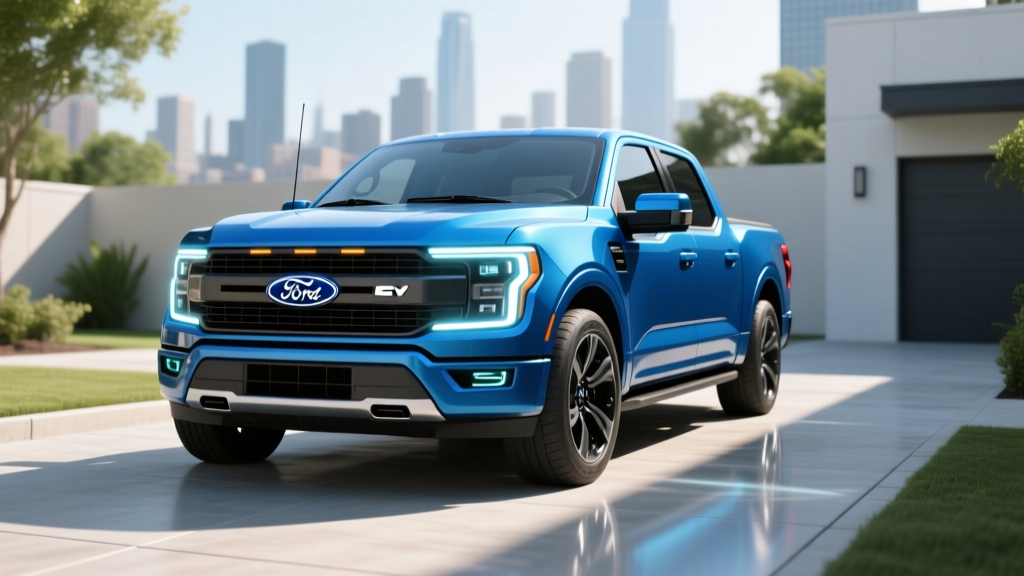
The 2025 Ford F-150 Lightning enters its fourth model year with the same core formula that made it a bestseller among full-size electric pickups: a standard dual-motor all-wheel-drive layout, competitive towing, and the party-trick Mega Power Front Trunk (frunk). Pricing has shifted slightly for 2025, and federal tax-credit rules under IRS §30D have tightened on battery sourcing — making trim selection more consequential than ever. This review breaks down every number a buyer needs before signing paperwork.
| Spec | Standard Range | Extended Range |
|---|---|---|
| EPA Range | 240 miles | 320 miles |
| Battery (usable) | 98 kWh (LFP) | 131 kWh (NMC) |
| Horsepower / Torque | 580 hp / 775 lb-ft | 580 hp / 775 lb-ft |
| 0–60 mph | ~4.0 sec | ~3.8 sec |
| Max DC Fast Charge | 150 kW | 150 kW |
| 10–80% DCFC Time | ~44 min | ~41 min |
| Level 2 Home Charge | 11.5 kW (~30 mi/hr) | 19.2 kW (~50 mi/hr) w/ 80A |
| Max Towing | 7,700 lb | 10,000 lb |
| Max Payload | 2,235 lb | 1,952 lb |
| MPGe (combined) | 68 MPGe | 70 MPGe |
2025 Ford F-150 Lightning MSRP by Trim
Here is the 2025 Ford F-150 Lightning MSRP breakdown by trim, including destination charge. Note that the base Pro trim is fleet-oriented and often limited in retail allocation; most individual buyers will land in XLT or Lariat territory.
| Trim | Battery | MSRP (incl. dest.) | Est. After §30D Credit |
|---|---|---|---|
| Pro | Std Range | $57,090 | ~$49,590* |
| XLT | Std Range | $64,990 | ~$57,490* |
| Lariat | Ext Range | $78,990 | ~$71,490* |
| Platinum | Ext Range | $98,890 | ~$91,390* |
*Estimates assume buyer meets all §30D requirements. See tax credit section below.
The XLT with the Extended Range battery (~$71,990) is the sweet spot for most buyers, offering the 320-mile EPA range, 19.2 kW onboard charger, and 10,000-lb towing capacity. The Platinum pushes into luxury-truck pricing, rivaling the Rivian R1T Tri Motor and GMC Sierra EV Denali.
Real-World Range: What the EPA Number Doesn't Tell You
EPA Sticker: 240 mi (Std Range) / 320 mi (Ext Range)
Real-World Highway (70 mph, 70°F): ~200–215 mi (Std) / ~265–285 mi (Ext)
Cold Weather (30°F, highway): ~155–175 mi (Std) / ~210–235 mi (Ext)
Towing (5,000+ lb trailer): Expect 40–50% range reduction
The F-150 Lightning is a brick on wheels — 6,100+ pounds with the aerodynamics of a tool shed. Highway efficiency drops to roughly 2.0–2.2 kWh/mi at 70 mph, which is why the 320-mile Extended Range trim delivers closer to 270 miles in sustained highway driving. According to fueleconomy.gov, the Extended Range model achieves 70 MPGe combined, but city driving with regenerative braking can push that higher.
If you tow regularly, plan your charging stops around 120–150 miles of range. The Lightning can tow up to 10,000 pounds, but a 7,000-lb camper will cut your effective range nearly in half. Ford's onboard range calculator is reasonably accurate once it learns your driving pattern, but always plan conservatively on long hauls.
Charging Speed: DC Fast, Level 2, and Home Setup
| Level | Power | Miles Added/Hour | Notes |
|---|---|---|---|
| Level 1 (120V) | 1.4 kW | ~3–4 mi/hr | Emergency/trickle only |
| Level 2 (240V, 48A) | 11.5 kW | ~30 mi/hr | Standard onboard charger |
| Level 2 (240V, 80A) | 19.2 kW | ~50 mi/hr | Extended Range only; requires 100A circuit |
| DC Fast Charge | 150 kW peak | ~150+ mi in 30 min | 10–80% in ~41 min (Ext Range) |
The Lightning's 150 kW peak DC fast-charge rate is its most significant competitive weakness. The Rivian R1T charges at up to 200+ kW, and GM's Silverado EV hits 350 kW on 800V architecture. At a 150 kW charger, the Extended Range battery sustains roughly 120–130 kW from 10–50% state of charge, then tapers significantly above 70%. Plan on 40–45 minutes for a 10–80% session — adequate for road trips with meal breaks, but noticeably slower than rivals.
At home, the Extended Range model's 19.2 kW onboard charger is a standout. With an 80-amp Level 2 wall connector and a dedicated 100-amp circuit, you'll add roughly 50 miles of range per hour — meaning a full overnight replenishment is easily achievable. A typical Level 2 home installation runs $800–$2,500 depending on panel capacity and run length; a panel upgrade from 100A to 200A service can add $1,500–$3,500. Always consult a licensed electrician for final specs.
Performance, Drivetrain, and Capability
Every 2025 F-150 Lightning comes with dual motors and electronic all-wheel drive. The 580 hp and 775 lb-ft of torque are identical across both battery options — the Extended Range simply carries more energy, not more power. The 0–60 mph sprint lands around 3.8–4.0 seconds, which is genuinely quick for a truck that weighs over three tons.
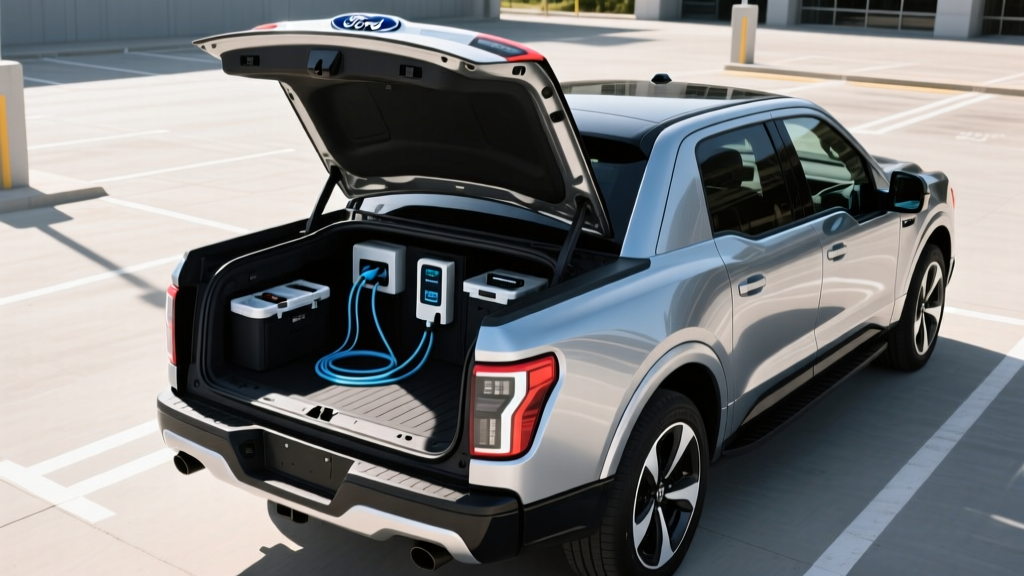
What impresses in daily driving is the low center of gravity and the independent rear suspension — the Lightning rides more composed over rough pavement than any solid-axle F-150. The Mega Power Frunk offers 14.1 cubic feet of lockable, weather-sealed storage with 400 pounds of payload capacity, four 120V outlets, and a drain plug. It's legitimately the most useful front trunk in any vehicle sold today.
Pro Power Onboard turns the Lightning into a mobile generator. The base system provides 2.4 kW of output through bed and frunk outlets; the available 9.6 kW system (standard on Lariat and Platinum) can power a job site, tailgate, or serve as home backup during outages when paired with Ford's Intelligent Backup Power system and a compatible home transfer switch.
Tax Credit Eligibility Under IRS §30D
- Vehicle MSRP cap: Pickup trucks must be under $80,000 MSRP (Pro, XLT, and some Lariat configurations qualify; Platinum exceeds the cap)
- Buyer income cap: AGI ≤ $150,000 (single), $225,000 (head of household), $300,000 (joint)
- Battery sourcing: Critical minerals and battery components must meet escalating percentages from US or FTA-partner countries per IRS §30D rules
- Point-of-sale transfer: Eligible buyers can apply the credit as an immediate price reduction at the dealer
- Final assembly: Must occur in North America (Lightning is built in Dearborn, MI)
For 2025, the §30D credit offers up to $7,500 — split between a $3,750 critical-minerals component and a $3,750 battery-component component. Ford sources NMC cells from SK On (Extended Range) and LFP cells from CATL (Standard Range). The LFP battery in the Standard Range model faces heightened scrutiny under the foreign-entity-of-concern (FEOC) rules that took effect in 2024–2025, potentially disqualifying the $3,750 critical-minerals half. Buyers should verify current eligibility with their dealer and a tax professional before relying on the full $7,500.
The Platinum trim, at $98,890, exceeds the $80,000 pickup MSRP cap and is ineligible regardless of buyer income.
Interior, Tech, and Driver Assistance
The Lightning's cabin mirrors the gas F-150 — functional, spacious, and increasingly tech-forward. A 12-inch touchscreen (15.5-inch vertical screen on Lariat and Platinum with SYNC 4A) anchors the dash. Wireless Apple CarPlay and Android Auto are standard. The available fold-flat work surface and max-recline front seats make the cabin a viable mobile office.
Ford's BlueCruise hands-free driving system is available on prequalified highway sections. As a Level 2 SAE system, BlueCruise requires the driver to remain attentive — a driver-monitoring camera tracks eye gaze and will issue warnings if attention lapses. It's competent for highway cruising but is not autonomous driving.
Notable drawbacks: rear-seat legroom (43.6 inches) is generous but the seat cushion sits low, limiting under-thigh support for taller passengers. The ride is firm when unloaded — the Lightning weighs over 6,000 pounds, and the suspension is tuned for payload, not comfort when the bed is empty. Road noise at highway speeds is noticeable compared to the Rivian R1T.
Warranty, Reliability, and Ownership Costs
Ford covers the Lightning's battery and electric powertrain for 8 years or 100,000 miles, whichever comes first — the standard EV warranty benchmark. The battery is warrantied to retain at least 70% of original capacity during that period. The bumper-to-bumper warranty is 3 years/36,000 miles.
Long-term battery degradation data from 2022–2024 model-year Lightnings suggests roughly 5–8% capacity loss over the first 50,000 miles, which is in line with industry averages. The LFP chemistry in the Standard Range model typically shows slower long-term degradation but lower energy density, while the NMC Extended Range pack offers more range but is more sensitive to sustained 100% state-of-charge storage.
Insurance premiums for the Lightning run 15–25% higher than a comparable gas F-150, reflecting repair costs and the vehicle's weight. Expect annual premiums of $2,200–$3,400 depending on location and driving history.
How It Stacks Up Against Key Competitors
The Lightning's closest rivals are the Rivian R1T, Chevrolet Silverado EV, and the upcoming Tesla Cybertruck (if you can get one). Here's how they compare on the metrics that matter:
| Metric | F-150 Lightning (Ext) | Rivian R1T (Dual Max) | Silverado EV (4WT) |
|---|---|---|---|
| EPA Range | 320 mi | 410 mi | 440 mi |
| Max DCFC | 150 kW | 200+ kW | 350 kW |
| 0–60 mph | ~3.8 sec | ~3.5 sec | ~4.5 sec |
| Max Towing | 10,000 lb | 11,000 lb | 10,000 lb |
| Base MSRP (comparable) | ~$71,990 | ~$87,000 | ~$77,900 |
The Lightning wins on value and dealership accessibility — Ford has over 2,600 US dealers, many with EV-certified service bays. The Rivian is the better driver's truck with superior range and charging, but costs significantly more. The Silverado EV charges faster and goes farther, but its car-like unibody architecture sacrifices the traditional pickup feel that Lightning buyers want.
Pros
- Mega Power Frunk is genuinely useful (14.1 cu ft, 400 lb capacity)
- Pro Power Onboard up to 9.6 kW — job-site and home-backup capable
- Competitive pricing; XLT Extended Range hits the value sweet spot
- Strong dealer network for service and warranty work
- BlueCruise is a competent Level 2 highway assist
- Independent rear suspension for composed ride quality
Cons
- 150 kW DC fast-charge peak lags rivals significantly
- Real-world highway range falls well short of EPA sticker
- Heavy weight (6,100+ lb) hurts efficiency and tire wear
- Firm unloaded ride quality
- LFP Standard Range battery faces §30D sourcing uncertainty
- Rear-seat cushion is low and flat
Who Should Buy the 2025 F-150 Lightning?
Buy the Lightning if: You need a full-size truck with real towing and payload, want home backup power capability, value a massive frunk for secure storage, and have reliable home charging. The XLT Extended Range at ~$71,990 (potentially ~$64,490 after the credit) is the smartest buy.
Look elsewhere if: You take frequent 400+ mile road trips (the 150 kW charging and ~270-mile real-world highway range mean more stops), want maximum range per dollar (Rivian R1T or Silverado EV), or need a lighter, more agile truck for trails (Rivian again).
Frequently Asked Questions
What is the real-world range of the 2025 F-150 Lightning?
The Extended Range model's EPA rating is 320 miles, but expect roughly 265–285 miles at highway speeds in mild weather, and 210–235 miles in freezing temperatures. The Standard Range model's 240-mile EPA rating translates to about 200 miles highway.
How fast does the F-150 Lightning charge?
DC fast charging peaks at 150 kW, achieving 10–80% in approximately 41 minutes for the Extended Range battery. At home on Level 2, the Extended Range model charges at up to 19.2 kW (with an 80A circuit), adding roughly 50 miles per hour. The Standard Range model is limited to 11.5 kW on Level 2.
Does the 2025 F-150 Lightning qualify for the federal EV tax credit?
Most trims under the $80,000 MSRP cap (Pro, XLT, some Lariat) can qualify for up to $7,500 under IRS §30D, provided the buyer meets income limits and the battery satisfies critical-mineral and component sourcing rules. The Platinum trim is ineligible due to its MSRP exceeding the cap. Verify current-year eligibility with your dealer and a tax professional.
How much does the F-150 Lightning cost after tax credits?
An XLT Extended Range at ~$71,990 could drop to approximately $64,490 with the full $7,500 credit. A Standard Range XLT at ~$64,990 could fall to ~$57,490, though the LFP battery's FEOC compliance may reduce the credit to $3,750.
Is the F-150 Lightning worth buying vs. the Rivian R1T or Silverado EV?
The Lightning offers the best value and dealership accessibility in the electric pickup segment. If you prioritize range and charging speed above all else, the Rivian R1T or Silverado EV are stronger choices — but they cost more and have smaller service networks. For most truck buyers who charge at home and drive under 250 miles daily, the Lightning's combination of price, frunk, Pro Power, and Ford dealer support makes it the pragmatic pick.
What battery chemistry does the Lightning use?
The Standard Range model uses a 98 kWh (usable) LFP (lithium iron phosphate) battery from CATL, which offers slower long-term degradation but lower energy density. The Extended Range uses a 131 kWh (usable) NMC (nickel manganese cobalt) pack from SK On, providing greater range and cold-weather performance.