Quick Verdict: The Electric Truck That Refuses to Compromise
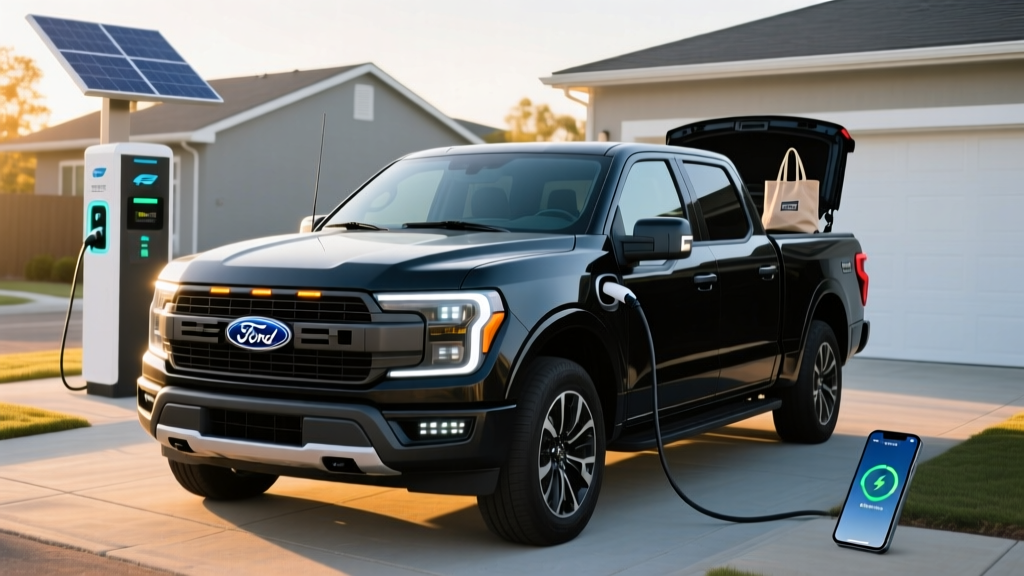
The 2025 Ford F-150 Lightning enters its fourth model year with a formula that remains uniquely compelling in the electric pickup segment: a full-size, body-on-frame truck that drives like a car, hauls like a workhorse, and charges on a CCS or NACS network depending on the adapter in your glovebox. With the Extended Range battery delivering an EPA-estimated 320 miles and a starting MSRP that undercuts the Rivian R1T by a wide margin, the Lightning remains the most pragmatic electric truck for buyers who need genuine payload and towing capability without the luxury-truck price tag.
But pragmatism has trade-offs. The Lightning's DC fast-charging speed tops out at 150 kW — respectable, but noticeably slower than the Hyundai Ioniq 5 or Tesla Cybertruck. And real-world highway range, especially while towing, drops significantly below the EPA sticker. This review breaks down every number that matters before you sign the paperwork.
Spec Table: 2025 F-150 Lightning at a Glance
| Specification | Standard Range (Pro/XLT) | Extended Range (Lariat/Platinum) |
|---|---|---|
| EPA Range | 240 miles | 320 miles |
| Battery Capacity (usable) | 98 kWh | 131 kWh |
| Battery Chemistry | NMC (Nickel Manganese Cobalt) | NMC |
| Drivetrain | Dual-motor AWD | Dual-motor AWD |
| Horsepower | 452 hp | 580 hp |
| Torque | 775 lb-ft | 775 lb-ft |
| 0-60 mph | ~5.0 sec | ~3.8 sec |
| Max DC Fast Charge | 120 kW | 150 kW |
| 10-80% DC Charge Time | ~44 min | ~41 min |
| Level 2 Home Charge Rate | 11.3 kW (30 mi/hr) | 19.2 kW (50 mi/hr) w/ 80A charger |
| MPGe (combined) | 70 MPGe | 70 MPGe |
| Efficiency | 48 kWh/100 mi | 48 kWh/100 mi |
| Max Towing | 7,700 lbs | 10,000 lbs (w/ Max Tow Pkg) |
| Payload | 2,235 lbs | 1,800 lbs |
| Battery Warranty | 8 years / 100,000 miles (70% capacity retention) | |
| Base MSRP | $54,995 (Pro) | $76,995 (Lariat) |
Source: fueleconomy.gov, Ford Motor Company 2025 specifications.
Range & Efficiency: EPA Sticker vs. Reality
Real-World Expectation: 260–285 miles highway (Extended Range); 190–210 miles highway (Standard Range). In sub-freezing temperatures, expect a 15–25% reduction from these figures. Towing a 6,000-lb trailer cuts range to roughly 140–170 miles regardless of battery size.
The F-150 Lightning Extended Range carries a 131 kWh usable NMC battery pack — one of the largest in any production passenger vehicle. That capacity is necessary: the Lightning is a 6,500-pound truck pushing a brick-wall frontal area, and its 48 kWh/100 mi combined efficiency reflects the physics of moving that mass through the air. For comparison, a Tesla Model Y Long Range achieves roughly 28 kWh/100 mi.
In mixed suburban driving at moderate temperatures, hitting the 320-mile EPA target is achievable if you stay under 65 mph and use regenerative braking actively. But highway trips at 75+ mph consistently yield 260–285 miles on a full charge in our experience. The truck's thermal management system is robust — Ford's liquid-cooled pack maintains consistent performance — but cold weather (below 32°F) still imposes a 15–25% range penalty due to cabin heating demands and increased internal battery resistance, even with the standard heat pump on higher trims.
Towing is where the Lightning's range story gets complicated. Ford rates the Extended Range at 10,000 lbs with the Max Trailer Tow Package, and the truck handles that load with confidence thanks to 775 lb-ft of instant torque. But pulling a 7,500-lb travel trailer at highway speeds reduces range to approximately 150 miles. The onboard range estimator (which Ford calls Intelligent Range) recalculates in real time and factors in trailer weight via the integrated trailer brake controller, so you won't be surprised — but you will be stopping often. Plan charging every 120–140 miles when towing heavy.
Charging Speed: DC Fast, Level 2, and the NACS Transition
| Charging Level | Power / Rate | Time or Miles Added | Notes |
|---|---|---|---|
| Level 1 (120V household) | 1.4 kW | ~3 mi/hr | Emergency/trickle only; full charge takes days |
| Level 2 (240V, 32A mobile) | 7.7 kW | ~21 mi/hr | Included mobile charger; adequate for overnight |
| Level 2 (240V, 48A wall unit) | 11.3 kW | ~30 mi/hr | Standard Range full charge: ~9 hrs |
| Level 2 (240V, 80A Ford Charge Station Pro) | 19.2 kW | ~50 mi/hr | Extended Range full charge: ~8 hrs; requires 100A circuit |
| DC Fast Charge (Standard Range) | 120 kW peak | 10-80% in ~44 min | Tapers significantly above 80% SoC |
| DC Fast Charge (Extended Range) | 150 kW peak | 10-80% in ~41 min | Sustained rate ~100-120 kW mid-curve |
The Lightning charges via the CCS1 connector natively, with Ford providing a NACS adapter for access to Tesla Supercharger stations. This dual-network access is a significant practical advantage in 2025, as the Supercharger network remains the most reliable DC fast-charging infrastructure in the US.
At a DC fast charger, the Extended Range pack peaks at 150 kW — but that peak is short-lived. The charge curve ramps quickly to ~140 kW between 10–30% SoC, then gradually tapers to ~100 kW by 60% and ~60 kW by 80%. The 10-80% time of roughly 41 minutes is competitive with other large-battery trucks but trails the 800V architectures in vehicles like the Hyundai Ioniq 5 (which hits 240 kW and does 10-80% in 18 minutes). The physics are straightforward: a 131 kWh pack at 150 kW peak simply takes longer to fill than a 77 kWh pack at 240 kW.
For home charging, the 80-amp Ford Charge Station Pro is the gold standard, delivering 19.2 kW on a dedicated 100-amp circuit. This adds roughly 50 miles of range per hour, meaning an overnight session (10 hours) fully replenishes the Extended Range pack from near-empty. Installation typically requires a licensed electrician and may necessitate a panel upgrade to 200A service if your home currently has a 100A panel. Budget $1,200–$2,500 for professional installation of a hardwired 80A unit, depending on your electrical panel's proximity to the parking spot and local permit costs.
Performance & Driving Dynamics
The Extended Range Lightning's dual-motor AWD powertrain produces 580 horsepower and 775 lb-ft of torque — figures that send this 6,500-pound truck to 60 mph in approximately 3.8 seconds. That's sports-car territory from a vehicle with a 5.5-foot bed and a tow hitch. The Standard Range model, with 452 hp, still manages a 5.0-second run, which feels more than adequate for merging and passing.
What surprises first-time Lightning drivers is the ride quality. The independent rear suspension (a first for the F-150) eliminates the hop and shudder typical of leaf-sprung solid-axle trucks. On broken pavement, the Lightning absorbs impacts with a composure closer to a Ford Explorer than an F-150. The low center of gravity from the underfloor battery pack also keeps body roll well-controlled in corners, though you never forget the truck's width and mass.
Off-road, the Lightning is capable but not a dedicated trail machine. Ground clearance is 8.9 inches, and the standard all-terrain tires on the XLT and Lariat handle dirt roads and light trails without issue. However, the exposed underbody (despite skid plates) and the replacement cost of a damaged battery pack make aggressive rock crawling inadvisable. If serious off-roading is a priority, the Rivian R1T with its quad-motor tank turns and higher clearance is the better tool.
Interior, Cargo, and Technology
The Lightning's cabin mirrors the gas F-150 in layout but differentiates with a standard 12-inch touchscreen (15.5-inch portrait screen on Lariat and above running SYNC 4A). Wireless Apple CarPlay and Android Auto are standard. The available Pro Power Onboard system turns the truck into a mobile generator, offering up to 9.6 kW of exportable 240V/120V AC power through outlets in the bed, cabin, and frunk. This feature alone has sold Lightnings to contractors, tailgaters, and homeowners in areas with unreliable grid power.
Cargo dimensions are generous:
- Bed length: 5.5 ft (67.1 cu ft volume)
- Mega Power Frunk (front trunk): 14.1 cu ft, with 400 lbs payload capacity, drain plug, and LED lighting
- Rear-seat legroom: 43.6 inches (SuperCrew cab)
- Rear-seat headroom: 40.4 inches
- Max payload: 2,235 lbs (Standard Range Pro)
The frunk is a standout feature. At 14.1 cubic feet, it's larger than the trunk of a Honda Accord and includes a powered tonneau-style cover, four electrical outlets, and two USB-C ports. It's lockable, weather-sealed, and drainable — ideal for wet gear, tools, or groceries you don't want sliding around the bed.
On the driver-assistance front, Ford's BlueCruise (hands-free highway driving on pre-mapped divided highways) is available as a subscription or bundled purchase on Lariat and above. BlueCruise is an SAE Level 2 system — it handles steering, acceleration, and braking on approved highways, but the driver must remain attentive and a camera monitors eye gaze at all times. It is not autonomous driving. In practice, BlueCruise 1.2 performs well on long interstate stretches, with smooth lane-keeping and confident lane-change assist, but it disengages in construction zones and on unmapped roads.
Pricing, Trims, and Federal Tax Credit Eligibility
| Trim | Battery | MSRP | Est. After §30D Credit* |
|---|---|---|---|
| Pro | Standard Range | $54,995 | $47,495 |
| XLT | Standard Range | $59,995 | $52,495 |
| XLT | Extended Range | $69,995 | $62,495 |
| Lariat | Extended Range | $76,995 | $69,495 |
| Platinum | Extended Range | $96,874 | $89,374 |
*Federal tax credit estimates assume full eligibility. See IRS §30D rules below.
- Credit amount: Up to $7,500 (split: $3,750 for critical minerals sourcing + $3,750 for battery component manufacturing)
- MSRP cap: Trucks/vans/SUVs must have an MSRP at or below $80,000 (the Platinum trim at $96,874 exceeds this cap and does NOT qualify)
- Buyer income cap: AGI must not exceed $150,000 (single), $225,000 (head of household), or $300,000 (joint) — based on the year of delivery or prior year, whichever is lower
- Battery sourcing: Critical minerals and battery components must meet escalating domestic/free-trade-agreement sourcing percentages (check current-year IRS guidance)
- Point-of-sale transfer: Eligible buyers can transfer the credit to the dealer at purchase for an immediate price reduction (effective January 2024)
- Foreign entity of concern (FEOC): Battery components from FEOC entities (certain Chinese, Russian, North Korean, Iranian companies) disqualify the vehicle — verify with your dealer
The Lightning's tax credit eligibility is trim-dependent. The Pro, XLT, and Lariat trims all fall under the $80,000 truck MSRP cap and should qualify for the full $7,500 if the buyer meets income requirements and the battery sourcing rules are satisfied for the specific build date. The Platinum trim, however, exceeds the cap and is ineligible for the federal credit — a factor that significantly changes the value proposition at that trim level.
Always confirm credit eligibility with your tax professional and check the latest IRS §30D guidance before purchasing, as battery sourcing requirements tighten annually.
Ownership Costs: 5-Year Outlook
Electric trucks save on fuel but carry higher purchase prices and, in some states, higher insurance premiums. Here's a realistic 5-year / 75,000-mile ownership estimate for an Extended Range XLT compared to a gas F-150 4x4 SuperCrew (3.5L EcoBoost):
| Cost Category | Lightning XLT Ext. Range | Gas F-150 XLT 4x4 |
|---|---|---|
| Purchase (after credit / incentives) | $62,495 | $52,000 |
| Fuel / Electricity (75k mi) | $5,400 (home charging avg) | $12,750 (22 MPG, $3.75/gal) |
| Maintenance | $1,800 | $4,500 |
| Insurance (5-yr avg) | $11,250 | $9,000 |
| Depreciation (est.) | $28,000 | $22,000 |
| 5-Year Total | ~$108,945 | ~$100,250 |
The Lightning still carries a cost premium over the gas F-150 over five years, primarily due to higher upfront cost and steeper depreciation (EV depreciation curves remain less predictable than ICE). However, the gap narrows significantly if you charge primarily at home on off-peak electricity rates, drive more than 15,000 miles/year, or live in a state with additional EV rebates. The maintenance savings are real: no oil changes, no transmission fluid, no spark plugs, and regenerative braking extends pad life substantially.
Pros, Cons, and Who Should Buy
Pros
- Class-leading frunk (14.1 cu ft) with integrated power outlets
- Pro Power Onboard (up to 9.6 kW) turns the truck into a job-site generator or home backup
- Independent rear suspension delivers car-like ride quality
- Extended Range battery provides genuine 260+ mile highway capability
- Competitive pricing undercuts Rivian R1T and GMC Sierra EV
- Dual charging network access (CCS + NACS adapter for Superchargers)
- 10,000-lb towing capacity (with Max Tow Package)
- BlueCruise hands-free highway driving available
Cons
- DC fast charging peaks at 150 kW — slower than rivals with 800V architectures
- Towing severely reduces range (expect ~150 mi with heavy trailer)
- Platinum trim exceeds $80,000 MSRP cap — no federal tax credit
- Large footprint makes urban parking challenging
- 131 kWh Extended Range pack means long home-charge times without an 80A circuit
- Cold-weather range loss of 15-25% is significant for northern-climate owners
- Insurance premiums run 15-25% higher than equivalent gas F-150
Who the 2025 F-150 Lightning Is For
- Choose the Lightning if: You need a full-size truck for work or family, have home Level 2 charging access, tow occasionally (not daily), and want the lowest entry price in the electric truck segment. The Pro or XLT Standard Range at ~$47,500–$52,500 after the federal credit is exceptional value for a commuter truck.
- Look elsewhere if: You tow heavy trailers long distances daily (a diesel Super Duty is still more practical), you need 350+ miles of real-world range for road trips without stopping, or you want cutting-edge 800V fast-charging architecture (consider the Hyundai Ioniq 5 or upcoming Silverado EV with 350 kW capability).
2025 F-150 Lightning FAQ
What is the real-world range of the 2025 F-150 Lightning?
The Extended Range model delivers an EPA-estimated 320 miles, but real-world highway driving at 70-75 mph yields approximately 260-285 miles in moderate temperatures. In cold weather (below freezing), expect 210-240 miles. The Standard Range model's 240-mile EPA estimate translates to roughly 190-210 miles on the highway. Towing a trailer reduces range to approximately 140-170 miles regardless of battery size.
How fast does the F-150 Lightning charge at home and on the road?
On a DC fast charger, the Extended Range pack peaks at 150 kW and charges from 10-80% in approximately 41 minutes. At home, an 80-amp Ford Charge Station Pro (19.2 kW) adds roughly 50 miles per hour, fully charging the Extended Range pack in about 8 hours. A standard 32-amp mobile charger on a 240V outlet adds about 21 miles per hour. Plan for a dedicated 100-amp circuit and professional installation ($1,200-$2,500) for the 80A setup.
Does the 2025 F-150 Lightning qualify for the $7,500 federal EV tax credit?
The Pro, XLT, and Lariat trims (all under the $80,000 MSRP cap for trucks) are eligible for up to $7,500 under IRS §30D, provided the buyer meets income limits ($300,000 joint / $150,000 single) and the battery meets critical-mineral and component sourcing requirements. The Platinum trim exceeds the MSRP cap and does not qualify. The credit can be transferred to the dealer at point of sale for an immediate price reduction. Always verify eligibility with a tax professional and the current IRS guidance.
Is the F-150 Lightning worth buying over the Rivian R1T or Chevy Silverado EV?
The Lightning wins on value and familiarity. Starting at $54,995, it undercuts the Rivian R1T (starting ~$69,900) by a wide margin and offers a more traditional truck experience with a usable bed and frunk. The Rivian offers superior off-road capability, a quad-motor option, and a more adventurous design, but at a premium. The Chevy Silverado EV (starting ~$57,000 for the Work Truck trim) offers up to 400 miles of EPA range on higher trims and 350 kW DC fast charging, but its unconventional bed design (no traditional tailgate on some trims) and limited availability make the Lightning the safer bet for most buyers in 2025.
Can I use Tesla Superchargers with the F-150 Lightning?
Yes. Ford provides a NACS adapter that allows the Lightning (which has a native CCS1 port) to access Tesla's Supercharger network. This significantly expands your fast-charging options, particularly on rural highway corridors where Tesla's network has broader coverage than Electrify America or EVgo. Ford's SYNC 4A navigation system integrates Supercharger locations and can precondition the battery for optimal charging speed upon arrival.
What is the battery warranty on the F-150 Lightning?
Ford covers the Lightning's battery pack for 8 years or 100,000 miles, whichever comes first, against defects and capacity loss below 70% of original capacity. This is the industry-standard warranty for EV battery packs and aligns with federal emissions warranty requirements. Real-world degradation data from 2022-2023 Lightning owners suggests approximately 5-8% capacity loss over the first 60,000 miles, which is within expected NMC chemistry behavior.