Why the 2025 F-150 Lightning Bolt Pattern Matters for EV Truck Buyers
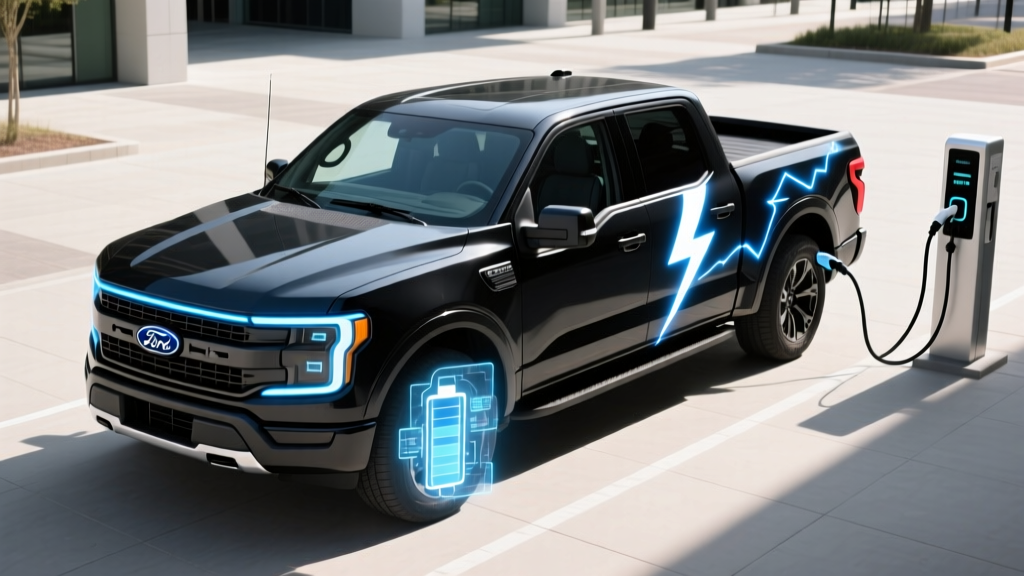
If you're shopping for a 2025 Ford F-150 Lightning and planning to swap wheels — whether for winter tires, off-road use, or an aftermarket upgrade — knowing the exact bolt pattern is non-negotiable. The 2025 F-150 Lightning bolt pattern is 6×135 mm (6×5.31 inches), with a center bore of 87.1 mm and M14×1.5 lug nuts. This is the same pattern Ford has used on the F-150 platform since 2004, meaning many F-150 wheels from the internal-combustion lineup will physically bolt on. However, the Lightning's significantly heavier curb weight (roughly 6,000–6,500 lbs depending on trim) and instant electric torque demand wheels with adequate load ratings — typically 3,800 lbs per wheel or higher.
This guide covers the bolt pattern in detail and then walks through every spec that actually matters for daily ownership: EPA range, real-world efficiency, DC fast-charging speed, battery chemistry, pricing after federal tax credits, and how the Lightning stacks up against the Rivian R1T and Chevrolet Silverado EV.
2025 F-150 Lightning Bolt Pattern and Wheel Specifications
| Specification | Value |
|---|---|
| Bolt Pattern | 6×135 mm (6×5.31 in) |
| Center Bore | 87.1 mm |
| Lug Nut Thread | M14 × 1.5 |
| Stock Wheel Sizes | 18 in (Pro/XLT), 20 in (Lariat), 22 in (Platinum) |
| Recommended Wheel Load Rating | ≥ 3,800 lbs per wheel |
| Typical Offset Range | +40 to +44 mm (OEM) |
| Torque Spec (lug nuts) | 150 lb-ft (203 Nm) |
Critical note for aftermarket wheels: The Lightning's extended-range battery pack adds substantial weight over the standard-range version. Always confirm any aftermarket wheel's load rating meets or exceeds Ford's OEM specification. Hub-centric rings are recommended if the aftermarket wheel's center bore differs from 87.1 mm to prevent vibration at highway speed.
EPA Range and Real-World Efficiency
The 2025 F-150 Lightning is offered with two battery options. The standard-range pack delivers an EPA-estimated 240 miles, while the extended-range pack pushes that figure to 320 miles in the XLT and Lariat trims (the heavier Platinum trim drops to approximately 280–300 miles due to its 22-inch wheels and added equipment).
EPA Estimate: 240 mi (standard-range) / 320 mi (extended-range)
Expect in practice: ~200–220 mi highway (standard) / ~260–280 mi highway (extended) at 70 mph. In cold weather (below 30°F), plan for 20–30% range reduction — roughly 170–190 mi for the standard pack and 220–250 mi for the extended pack. Towing a 5,000-lb trailer can cut range by 40–50%.
The extended-range Lightning achieves an EPA-rated 66 MPGe combined, which translates to approximately 48–51 kWh per 100 miles depending on trim and driving conditions. That efficiency figure is typical for a full-size electric pickup — the aerodynamic penalty of a truck body is significant at highway speeds. For context, the EPA's fueleconomy.gov listing confirms the combined MPGe varies by trim and wheel size, with smaller 18-inch wheels yielding measurably better efficiency than the 22-inch Platinum wheels.
Battery, Charging Speed, and Home Charging
The standard-range Lightning uses a 98 kWh usable lithium-ion NMC (nickel manganese cobalt) battery, while the extended-range pack provides 131 kWh usable. Both packs use liquid-cooled thermal management with active preconditioning for DC fast charging.
| Charging Level | Max Rate | Speed / Time |
|---|---|---|
| Level 1 (120V household) | ~1.4 kW | ~2–3 mi/hr |
| Level 2 (240V, 30A mobile) | ~7.2 kW | ~13–14 mi/hr |
| Level 2 (240V, 48A Wall Connector) | ~11.5 kW | ~20–22 mi/hr (std) / ~28 mi/hr (ext) |
| Level 2 (240V, 80A — optional) | ~19.2 kW | ~30–35 mi/hr (extended-range) |
| DC Fast Charge (CCS) | 150 kW peak | 15–80% in ~41 min (ext-range) |
Charging curve reality: The Lightning peaks at 150 kW only at low state of charge (below ~30% SoC) on the extended-range pack. Above 60% SoC, the rate tapers to roughly 80–90 kW, and above 80% it drops further to protect battery health. On a road trip, plan your DC fast-charge stops around the 15–80% window for the fastest throughput. A full 10–80% session on the extended-range pack takes approximately 41 minutes at a functioning 150 kW+ CCS station.
At home, the optional 80-amp Ford Charge Station Pro enables up to 19.2 kW Level 2 charging on the extended-range battery, which can replenish the full 131 kWh pack overnight in roughly 7–8 hours. Most buyers will install a 48-amp circuit, providing 11.5 kW — sufficient for daily top-ups but not a full overnight charge from empty on the extended-range pack. Expect home Level 2 installation to cost $800–$2,000 depending on panel capacity and conduit run, according to typical electrician pricing.
Performance, Capability, and Drivetrain
Every 2025 F-150 Lightning comes with a dual-motor all-wheel-drive powertrain. Output varies by battery:
- Standard-range: 563 hp, 775 lb-ft torque, 0–60 mph in ~4.0 seconds
- Extended-range: 580 hp, 775 lb-ft torque, 0–60 mph in ~3.8 seconds
Towing capacity maxes out at 10,000 lbs with the Max Trailer Tow Package (extended-range, XLT/Lariat trims). Payload capacity ranges from approximately 1,800 to 2,235 lbs depending on configuration. The Lightning's independent rear suspension — a departure from the live axle on the gas F-150 — provides noticeably better ride quality when unloaded, though some traditional truck buyers note the trade-off in articulation for extreme off-road use.
| Spec | Standard-Range | Extended-Range |
|---|---|---|
| EPA Range | 240 mi | 320 mi (XLT/Lariat) |
| Battery (usable) | 98 kWh, NMC | 131 kWh, NMC |
| Horsepower | 563 hp | 580 hp |
| Torque | 775 lb-ft | 775 lb-ft |
| 0–60 mph | ~4.0 sec | ~3.8 sec |
| Max DC Fast Charge | 150 kW | 150 kW |
| 10–80% DC Time | ~34 min | ~41 min |
| Max Towing | 7,700 lbs | 10,000 lbs |
| MPGe (combined) | 68 MPGe | 66 MPGe |
Pricing, Trims, and Federal Tax Credit Eligibility
The 2025 F-150 Lightning starts at $54,995 MSRP for the Pro trim with the standard-range battery and climbs through XLT ($62,995+), Lariat ($74,995+), and Platinum ($96,874+). Adding the extended-range battery typically adds $10,000–$20,000 depending on trim.
| Trim | Base MSRP | Est. After §30D Credit* |
|---|---|---|
| Pro (Std Range) | $54,995 | ~$47,495 |
| XLT (Std Range) | $62,995 | ~$55,495 |
| XLT (Ext Range) | $72,995 | ~$65,495 |
| Lariat (Ext Range) | $84,995 | ~$77,495 |
| Platinum (Ext Range) | $96,874 | ~$89,374 |
*Federal §30D credit eligibility requires meeting battery component and critical-mineral sourcing thresholds, buyer income caps ($150K single / $300K joint AGI), and the truck MSRP cap of $80,000. Platinum trim exceeds the MSRP cap and does not qualify. Point-of-sale transfer is available through participating dealers. Verify current eligibility on IRS.gov before purchase, as sourcing rules tighten annually.
A key detail: the §30D credit for trucks, vans, and SUVs has an $80,000 MSRP cap. This means most Platinum configurations are ineligible regardless of buyer income. The XLT and Lariat extended-range models hover near this threshold — destination charges and dealer-installed options can push them over. Always confirm the final MSRP on the window sticker before relying on the credit.
Interior, Tech, and Cargo Space
The Lightning's cabin mirrors the 14th-generation gas F-150 in layout but gains a massive 15.5-inch portrait touchscreen on Lariat and Platinum trims (12-inch on Pro and XLT), running Ford's SYNC 4A system with wireless Apple CarPlay and Android Auto. The available BlueCruise hands-free driving system (SAE Level 2 — driver must remain attentive) covers over 130,000 miles of pre-mapped divided highways.
Cargo dimensions remain truck-practical:
- Bed length: 5.5 ft (67.1 in) — all trims
- Bed volume: 52.8 cu ft
- Front trunk (frunk): 14.1 cu ft — lockable, drainable, with 400 lbs payload capacity
- Rear legroom: 43.6 inches (SuperCrew cab)
- Pro Power Onboard: 2.4 kW standard / 9.6 kW available (turns the truck into a mobile generator)
The frunk is a standout feature that gas trucks simply cannot match. With 14.1 cubic feet of sealed, lockable storage under the hood — complete with a drain plug for use as a cooler — it's one of the Lightning's most practical differentiators for job-site use and tailgating.
Warranty Coverage
Ford backs the Lightning's battery and electric drivetrain components with an 8-year/100,000-mile warranty, covering defects and capacity loss below 70% of original capacity. The bumper-to-bumper warranty covers 3 years/36,000 miles, and the powertrain warranty (for non-EV components like suspension and HVAC) extends to 5 years/60,000 miles. Ford also includes complimentary BlueCruise trials on equipped trims, though ongoing subscription costs apply after the trial period.
Pros, Cons, and Who Should Buy the Lightning
- Up to 320 mi EPA range (extended-range)
- 10,000-lb towing capability
- Massive 14.1 cu ft frunk
- Pro Power Onboard (up to 9.6 kW)
- Quick 0–60 (sub-4 sec, extended-range)
- Familiar F-150 ergonomics and service network
- BlueCruise hands-free highway assist
- 150 kW peak DC charge rate lags competitors (Rivian R1T: 200+ kW)
- Heavy towing slashes range by 40–50%
- Platinum trim exceeds §30D $80K MSRP cap
- Significant cold-weather range loss (20–30%)
- 5.5-ft bed is shorter than many gas F-150 configs
- Extended-range trims push past $80K quickly
Best for: Homeowners with Level 2 charging who need a daily-driver truck for commuting, light-to-moderate towing, job-site power (Pro Power Onboard), and family duty. The extended-range XLT or Lariat represents the value sweet spot — eligible for the §30D credit, practical range, and strong feature content.
Look elsewhere if: You regularly tow heavy trailers over long distances (range drops dramatically), rely exclusively on DC fast charging, or need a longer bed. The Rivian R1T charges faster and offers more off-road capability; the Chevrolet Silverado EV (4WT/4RT trims) offers a longer bed and available 400+ mile range in higher configurations.
2025 F-150 Lightning FAQ
Can I use gas F-150 wheels on the 2025 Lightning?
The bolt pattern (6×135 mm) is identical, but you must verify the wheel's load rating. The Lightning weighs 6,000–6,500 lbs — significantly more than most gas F-150 configurations. Only use wheels rated for at least 3,800 lbs per corner, and ensure proper offset to clear the Lightning's brake calipers.
What is the real-world range when towing?
Expect 120–170 miles with a 5,000–7,000 lb trailer on the extended-range pack, depending on speed, terrain, and temperature. Towing is where the Lightning's range limitation is most acute. Plan charging stops accordingly.
Does the 2025 F-150 Lightning qualify for the $7,500 federal tax credit?
Most trims qualify if the buyer meets income caps ($150K single / $300K joint) and the vehicle's MSRP stays under $80,000. Battery sourcing requirements under §30D tighten annually — check the current IRS eligible vehicles list before purchasing. The Platinum trim typically exceeds the MSRP cap.
How long does a full home charge take?
On a 48-amp Level 2 charger (11.5 kW), expect ~9 hours for the standard-range pack and ~12 hours for the extended-range pack from empty. The optional 80-amp Charge Station Pro reduces extended-range charge time to approximately 7–8 hours.
Is BlueCruise self-driving?
No. BlueCruise is an SAE Level 2 driver-assistance system. It allows hands-free driving on pre-mapped divided highways, but the driver must remain attentive and ready to take over at all times. A driver-facing camera monitors engagement.
How does the Lightning compare to the Rivian R1T?
The R1T charges faster (200+ kW peak), offers more off-road capability with quad-motor configurations, and has a slightly more premium interior. The Lightning wins on towing capacity (10,000 vs 11,000 lbs for R1T dual-motor but with greater range flexibility), frunk space, Pro Power Onboard, and dealer service network breadth. The Lightning also starts at a lower price point.