Quick Answer: Is the 2025 EV Silverado Worth It?
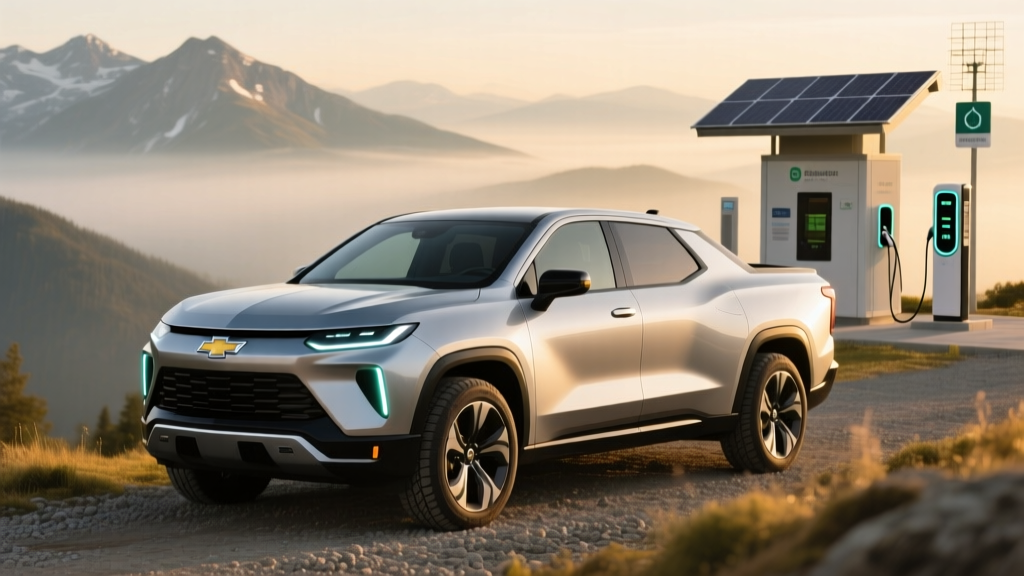
The 2025 Chevrolet Silverado EV targets full-size truck buyers who need serious range and utility in an electric package. With an EPA-estimated range up to 440 miles on the top-trim RST, a 200+ kWh Ultium battery, and a maximum towing capacity of 10,000 pounds, it's one of the most capable electric pickups on the market. However, real-world range drops significantly under towing loads (expect 40-50% loss), base pricing starts around $55,000 for the Work Truck (WT) and climbs past $90,000 for the RST First Edition, and federal §30D tax credit eligibility depends on your income, MSRP caps, and battery sourcing rules. For buyers with home Level 2 charging and daily commutes under 200 miles, the Silverado EV delivers compelling fuel savings and smooth, instant torque. For those who frequently tow heavy trailers long distances or lack reliable charging access, a gas Silverado 1500 or a hybrid alternative remains the more practical choice.
2025 Silverado EV Range and Battery Specs
The 2025 Silverado EV rides on GM's Ultium platform and offers two main battery configurations depending on trim. Understanding the difference between kWh (energy stored in the battery — think of it as the "fuel tank size") and kW (power flow rate — how fast energy moves in or out) is essential for evaluating this truck.
| Spec | WT (Work Truck) | RST / Max Range |
|---|---|---|
| Usable Battery Capacity | ~200 kWh (NMC) | ~200 kWh (NMC) |
| EPA Range | ~390 miles | ~440 miles |
| Real-World Highway (70 mph) | ~310-340 miles | ~360-390 miles |
| Real-World Towing (5,000+ lb) | ~170-220 miles | ~200-250 miles |
| Peak DC Fast Charge Rate | Up to 200 kW | Up to 350 kW (with compatible station) |
| 10-80% DC Fast Charge | ~45 minutes | ~20 minutes (at 350 kW) |
| Level 2 Home Charging (kW) | Up to 11.5 kW (19.2 kW optional on WT) | Up to 11.5 kW |
| Level 2 Full Charge Time | ~18-20 hours (11.5 kW) | ~18-20 hours (11.5 kW) |
| Horsepower | 510 hp | 664 hp (RST) |
| 0-60 mph | ~5.5 sec | ~4.5 sec |
| Max Towing | 10,000 lbs | 10,000 lbs |
| Max Payload | ~1,800 lbs | ~1,300 lbs |
Real-World Range Reality Check
The EPA 440-mile figure for the RST is impressive on paper, but real-world conditions tell a different story. In highway testing at sustained 70-75 mph speeds, expect 360-390 miles in mild weather. In cold climates (below 30°F), lithium-ion batteries lose efficiency — plan for 280-320 miles of usable range before needing a charge. Towing is the biggest range killer: pulling a 5,000-7,000 lb trailer can slash range to 200-250 miles, turning a 400-mile road trip into a two-stop affair. The Silverado EV's battery preconditioning feature helps mitigate cold-weather charging slowdowns, but it cannot overcome the physics of aerodynamic drag at highway speeds.
Charging the Silverado EV: Home, Public, and What It Costs
Charging a 200 kWh battery is a significant undertaking. Here's what the three charging levels look like in practice for this truck.
| Charging Level | Power (kW) | Miles Added Per Hour | Use Case |
|---|---|---|---|
| Level 1 (120V outlet) | ~1.4 kW | ~3-4 miles/hr | Emergency only — full charge takes 6+ days |
| Level 2 (240V home) | 11.5 kW (up to 19.2 kW on WT) | ~30-50 miles/hr | Daily overnight charging — primary method |
| DC Fast Charging | 200-350 kW | ~600-1,000 miles/hr (peak) | Road trips — 10-80% in 20-45 min |
For home charging, the Silverado EV's 200 kWh battery means even a 19.2 kW Level 2 charger needs over 10 hours for a full 0-100% charge. Most owners will plug in nightly and rarely deplete fully, making 11.5 kW sufficient for daily use. However, the WT trim's optional 19.2 kW onboard charger is a worthwhile upgrade for fleet operators or heavy users.
Home Charging Installation Costs
| Item | Estimated Cost |
|---|---|
| Level 2 Charger (48A-80A hardwired) | $500-$1,200 |
| Electrician labor (240V/50-100A circuit) | $800-$2,500 |
| Permit and inspection | $100-$400 |
| Electrical panel upgrade (if needed) | $1,500-$3,500 |
| Total typical install | $1,400-$4,100 |
The Silverado EV's large battery demands a robust home charging setup. If your home has a 100-amp electrical panel, you will likely need a panel upgrade to 200 amps before installing a dedicated 60-100 amp circuit for the charger. According to fueleconomy.gov, home charging costs average $0.12-$0.18 per kWh depending on your utility rate — meaning a full charge of the 200 kWh battery costs roughly $24-$36 at home, compared to $80-$120 for a gas Silverado 1500 to fill its 24-gallon tank at $3.50-$5.00/gallon.
Silverado EV vs. Gas Silverado 1500: Cost and Capability
The real question for truck buyers is whether going electric saves money and delivers the utility you need. Let's compare the 2025 Silverado EV WT against a comparably equipped gas Silverado 1500 WT with the 2.7L TurboMax engine.
| Metric | 2025 Silverado EV WT | 2025 Silverado 1500 WT (Gas 2.7L Turbo) |
|---|---|---|
| Starting MSRP | ~$55,000 | ~$38,800 |
| Federal Tax Credit (§30D) | Up to $7,500 (eligibility varies) | $0 |
| Effective Starting Price | ~$47,500 (if credit applies) | ~$38,800 |
| Fuel/Energy Cost Per Mile | $0.04-$0.06 (home charging) | $0.18-$0.24 (gas at $3.50-$4.50/gal, 20 MPG) |
| Annual Fuel/Energy (15,000 mi) | $600-$900 | $2,700-$3,600 |
| 5-Year Fuel/Energy Total | $3,000-$4,500 | $13,500-$18,000 |
| Maintenance (5 years) | ~$1,500-$2,500 | ~$3,500-$5,500 |
| Estimated Insurance (annual) | $2,200-$3,200 | $1,600-$2,400 |
| EPA Range / Tank Range | ~390 miles | ~480 miles (24 gal × 20 MPG) |
| Max Towing | 10,000 lbs | 9,500-13,300 lbs (varies by config) |
| 0-60 mph | ~5.5 sec | ~7.0 sec |
The Silverado EV commands a significant upfront premium — roughly $8,700-$16,200 more than its gas counterpart even after the potential federal tax credit. However, the energy and maintenance savings are substantial: over five years, you could save $10,000-$15,000 on fuel and $1,000-$3,000 on maintenance (no oil changes, fewer brake replacements due to regenerative braking, no transmission fluid). The break-even point typically arrives between years 4-6 for drivers covering 15,000+ miles annually with home charging access.
Higher insurance premiums partially offset these savings. EV insurance costs tend to run 15-30% higher than gas equivalents due to repair complexity and battery replacement costs. Always get quotes before purchasing.
Pricing, Trims, and Federal Tax Credit Eligibility
The 2025 Silverado EV lineup includes several trims, with pricing that climbs steeply as you move up:
- WT (Work Truck): ~$55,000 — fleet-focused, 11.5 kW standard charging (19.2 kW optional)
- LT: ~$65,000-$70,000 — more comfort features, Super Cruise available
- RST: ~$87,000-$95,000 — top trim, 664 hp, 440-mile range, fully loaded
Federal §30D Tax Credit — Key Rules for 2025
The IRS §30D credit can reduce your tax liability by up to $7,500, but strict rules apply:
- MSRP Cap: Vans, SUVs, and pickup trucks qualify up to an $80,000 MSRP cap. The RST trim may exceed this — verify with your dealer.
- Buyer Income Limits: Modified AGI must not exceed $150,000 (single), $225,000 (head of household), or $300,000 (joint filers).
- Battery Sourcing: Critical minerals and battery components must meet escalating domestic-content thresholds that tighten each year. GM has worked to localize Ultium battery supply chains, but verify current-year compliance on the specific VIN.
- Point-of-Sale Transfer: Eligible buyers can transfer the credit to the dealer at purchase, reducing the sale price directly rather than waiting for a tax refund.
- Final Assembly: Vehicle must undergo final assembly in North America (the Silverado EV is built at GM's Factory ZERO in Detroit — this requirement is met).
Eligibility rules change frequently. Always confirm with a tax professional and check fueleconomy.gov for the latest qualifying VIN list before purchasing.
Common Misconceptions About the Silverado EV
| Myth | Fact |
|---|---|
| "440 miles means I can tow 440 miles on a charge." | Towing 5,000+ lbs reduces range by 40-50%. Plan for 200-250 miles between charges when hauling. |
| "I can charge it on any regular outlet overnight." | A standard 120V outlet adds only 3-4 miles per hour. With a 200 kWh battery, a full charge would take over a week. Level 2 home charging is essentially mandatory. |
| "The battery will need replacing in 5 years." | GM provides an 8-year/100,000-mile battery warranty covering capacity below 70%. Ultium NMC batteries are projected to retain 85-90% capacity at 100,000 miles based on GM's degradation testing. Replacement cost, if needed out of warranty, is estimated at $20,000-$30,000+. |
| "It qualifies for the $7,500 tax credit automatically." | Eligibility depends on MSRP caps (some RST trims may exceed $80K), your income level, and battery sourcing requirements. Verify before signing. |
| "Super Cruise means I don't need to pay attention." | Super Cruise is an SAE Level 2 driver-assistance system. You must remain alert, keep your eyes on the road (monitored by a driver-facing camera), and be ready to take over at any time. It is not self-driving. |
Real-World Ownership: What First-Time EV Truck Buyers Need to Know
Transitioning from a gas truck to the Silverado EV involves lifestyle adjustments beyond the drivetrain. Here's what matters most:
Home Charging Is Non-Negotiable
With a 200 kWh battery, public-only charging is impractical for daily use. DC fast charging sessions cost $0.30-$0.50+ per kWh at networks like Electrify America or EVgo — making a full charge $60-$100 on the road, close to gas-truck fueling costs. Home Level 2 charging at $0.12-$0.18/kWh is where the economic advantage lives. If you live in an apartment or lack a dedicated parking spot with electrical access, this truck will be expensive and inconvenient to own.
Cold Weather Cuts Range and Slows Charging
In sub-freezing temperatures, expect 20-30% range reduction and slower DC fast-charge speeds until the battery warms up. The Silverado EV's thermal management system and preconditioning feature (activate via the MyChevrolet app before driving) help, but physics dictates that lithium-ion chemistry becomes less efficient in cold conditions. Northern-climate owners should budget for 280-320 miles of real winter range on the RST.
Charging Deserts Still Exist
While the Silverado EV can use the Tesla Supercharger network (via NACS adapter, which GM now provides), rural stretches of the Interstate system — particularly in the Mountain West, Great Plains, and parts of the South — still have sparse DC fast-charging infrastructure. Plan road trips around charger locations using apps like PlugShare or A Better Routeplanner. The truck's large battery gives you a buffer, but 200-mile towing range between chargers requires careful logistics.
The eTrunk (Front Trunk) Is a Genuine Utility Feature
The Silverado EV's front trunk (eTrunk) offers over 10 cubic feet of lockable, weatherproof storage — enough for tools, gear, or groceries. Combined with the 5'11" bed and available Multi-Flex Midgate (which extends bed length into the cabin), the truck's cargo versatility is a real advantage over gas pickups for certain work and lifestyle use cases.
Decision Framework: Should You Buy the 2025 Silverado EV?
Choose the 2025 Silverado EV If:
- You have reliable Level 2 home charging (garage, driveway, or dedicated spot with 240V access)
- Your daily driving is under 200 miles and you rarely tow more than 5,000 lbs long distances
- You want instant torque, quiet operation, and minimal routine maintenance
- You qualify for the §30D tax credit (income under caps, MSRP under $80K on your chosen trim)
- You value the eTrunk, Midgate, and onboard power features (Pro Power Onboard-style V2L capability)
- You drive 15,000+ miles annually — higher mileage accelerates the fuel-cost break-even point
Stick With the Gas Silverado 1500 or Consider a Hybrid If:
- You frequently tow 7,000+ lbs over long distances — towing range and refueling speed still favor gas/diesel
- You lack home charging access and would rely entirely on public DC fast chargers
- You live in a region with extreme cold (regularly below 0°F) and limited charging infrastructure
- Your budget is under $45,000 and you need a work truck today
- You need maximum towing capacity (the gas 1500 can be configured for 13,000+ lbs)
Battery Warranty, Longevity, and What Happens When It Degrades
GM covers the Silverado EV's Ultium battery with an 8-year/100,000-mile warranty that guarantees the battery will retain at least 70% of its original capacity. If capacity drops below that threshold within the warranty period, GM will repair or replace the battery at no cost.
For context, NMC lithium-ion batteries in large-format packs like the Ultium system typically lose about 1-2% capacity per year under normal use. At 100,000 miles (roughly 6-7 years for average drivers), you can expect approximately 85-92% state of health (SoH). Heavy DC fast-charging use, frequent charging to 100%, and extreme heat exposure can accelerate degradation slightly.
Out-of-warranty battery replacement costs remain a concern: industry estimates for a 200 kWh pack range from $20,000 to $35,000+ including labor. However, individual module replacement (rather than the full pack) may reduce costs as the Ultium platform matures and third-party repair options emerge. For most owners planning a 5-8 year ownership cycle, the battery warranty provides adequate coverage.
Frequently Asked Questions
Can the Silverado EV really tow 10,000 pounds?
Yes, the maximum rated towing capacity is 10,000 pounds for properly equipped models. However, towing at or near that capacity will reduce range to roughly 150-200 miles. For regular heavy towing over long distances, the gas Silverado 1500 with the available 6.2L V8 or 3.0L Duramax diesel remains more practical due to faster refueling and longer effective range under load.
Does the Silverado EV use NACS or CCS for charging?
GM has adopted the NACS (Tesla-style) connector for its newer EVs. The Silverado EV comes with a NACS charge port, granting access to Tesla Superchargers directly. For CCS-based networks like Electrify America, an adapter may be needed depending on the station. Always verify connector compatibility before planning a trip.
How long does it take to charge the Silverado EV at home?
With an 11.5 kW Level 2 charger, a full 0-100% charge takes approximately 18-20 hours. The WT's optional 19.2 kW charger reduces this to about 10-12 hours. Most owners plug in nightly and charge from 30-80% — which takes 6-8 hours at 11.5 kW — more than enough for daily use.
Is the Silverado EV eligible for the $7,500 federal tax credit?
It can be, but eligibility is not automatic. The IRS §30D rules require the truck's MSRP to be at or below $80,000 (pickup truck cap), your modified adjusted gross income to fall under the thresholds ($300K joint / $150K single), and the battery to meet critical-mineral and component sourcing requirements. The WT and LT trims generally fall under the cap; the RST may exceed it. Confirm with your dealer and tax advisor.
How does the Silverado EV compare to the Ford F-150 Lightning and Rivian R1T?
The F-150 Lightning offers a lower starting price (~$52,000) but shorter max range (~320 miles extended range). The Rivian R1T is more of a lifestyle/adventure truck with quad-motor performance but starts above $70,000 and has a smaller bed. The Silverado EV's 440-mile range advantage is significant for buyers who prioritize distance between charges, but the F-150 Lightning wins on value and the R1T on off-road capability and performance. Your choice depends on which trade-off matters most.
What happens if I run out of charge on the road?
The Silverado EV, like all EVs, will display range warnings well before the battery depletes. If you do run out, the truck will need to be flatbed-towed to a charger — you cannot use a traditional tow-bar setup without risking drivetrain damage. GM's roadside assistance covers EV-specific towing for the duration of the basic warranty (3 years/36,000 miles).