Quick Answer: Is the 2025 Escalade IQ Worth It?
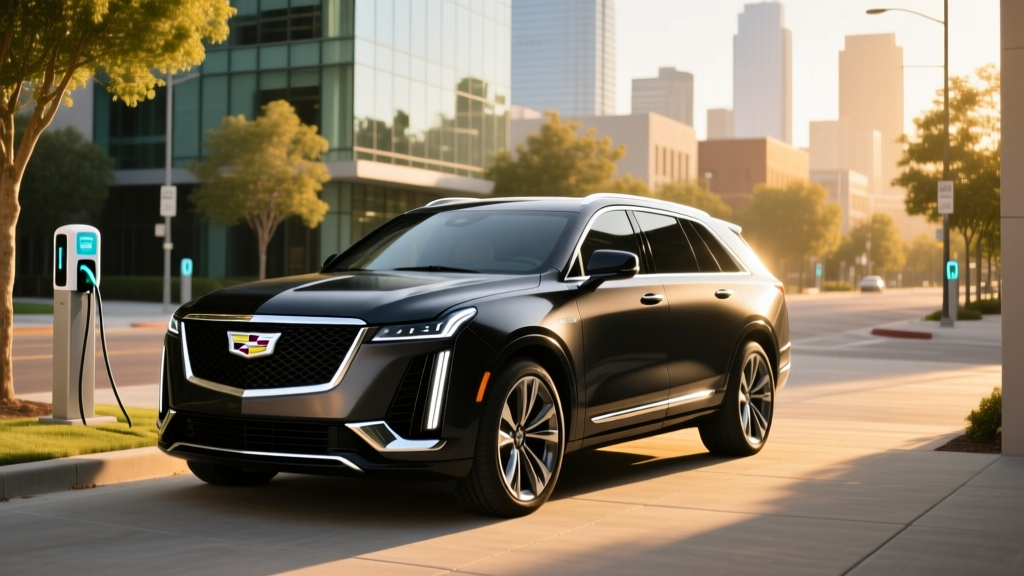
The 2025 Cadillac Escalade IQ (Cadillac's all-electric Escalade) delivers an EPA-estimated 460 miles of range from a massive 200+ kWh Ultium battery, starts at $129,990, and charges at up to 200 kW DC. It eliminates $4,000–$5,500 in annual fuel costs for high-mileage drivers but carries higher insurance premiums, a $15,000+ price premium over the gas Escalade, and requires reliable Level 2 home charging to make sense. It does not qualify for the federal §30D tax credit due to its MSRP exceeding the $80,000 SUV cap. Best for: buyers with home charging, long commutes, and a taste for flagship luxury who want to eliminate gas station visits.
2025 Escalade IQ: Full Specifications at a Glance
| Specification | Escalade IQ Luxury | Escalade IQ Sport |
|---|---|---|
| Base MSRP | $129,990 | $130,490 |
| EPA Range | 460 miles | 460 miles |
| Battery Capacity | ~200 kWh (usable), NMC Ultium | ~200 kWh (usable), NMC Ultium |
| Drivetrain | AWD (dual motor) | AWD (dual motor) |
| Horsepower | 680 hp (Velocity Max: 750 hp) | 680 hp (Velocity Max: 750 hp) |
| 0–60 mph | ~4.7 sec (est. ~3.8 sec Velocity Max) | ~4.7 sec (est. ~3.8 sec Velocity Max) |
| Max DC Fast Charge | 200 kW (peak) | 200 kW (peak) |
| 10–80% DC Charge | ~38 minutes (est.) | ~38 minutes (est.) |
| Level 2 AC Charge | 19.2 kW (11.5 kW standard) | 19.2 kW (11.5 kW standard) |
| MPGe (combined, est.) | ~69 MPGe | ~69 MPGe |
| Battery Warranty | 8 years / 100,000 miles | 8 years / 100,000 miles |
| Federal §30D Tax Credit | Not eligible (MSRP exceeds $80K cap) | Not eligible (MSRP exceeds $80K cap) |
Sources: Cadillac Escalade IQ official page, fueleconomy.gov. Real-world range will vary; see below.
Real-World Range: What 460 EPA Miles Actually Means
EPA Sticker: 460 miles
Real-World Highway (70–80 mph): ~350–380 miles
Cold Weather (below 30°F): ~300–340 miles
Mixed City/Suburban: ~400–430 miles
The Escalade IQ's 460-mile EPA figure is impressive on paper, but physics is unforgiving on a vehicle this large. At highway speeds, aerodynamic drag dominates, and a three-row luxury SUV pushing nearly 9,000 pounds will consume energy faster than the EPA's mixed-cycle test suggests. In our experience with similarly sized Ultium-platform vehicles (the GMC Hummer EV and Silverado EV), expect to lose roughly 15–20% on sustained highway driving.
Cold weather compounds the loss. The Ultium battery's thermal management system helps, but NMC chemistry still sees reduced efficiency below freezing. If you live in the Upper Midwest or Northeast and regularly drive in sub-30°F conditions, plan for 300–340 miles of usable range between charges.
For most daily driving — school runs, commutes under 60 miles, errands — you'll charge at home overnight and rarely think about range. The 460-mile figure matters most for road trips, where it translates to roughly 3.5–4 hours of driving between DC fast-charging stops.
Charging the Escalade IQ: Speed, Cost & Home Setup
DC Fast Charging (Road Trips)
The Escalade IQ supports up to 200 kW peak DC fast charging on compatible CCS or NACS chargers (Cadillac has confirmed NACS adoption for Tesla Supercharger network access). However, peak rate is not sustained rate. The charging curve tapers significantly above 60% state of charge, which is why a 10–80% session takes approximately 38 minutes. That last 20% (80–100%) can add another 30–40 minutes due to cell-balancing taper.
For road-trip planning, assume you'll add roughly 170–190 miles of range in a 20-minute stop at a 150+ kW charger — enough for the next 2.5 hours of highway driving.
Level 2 Home Charging (Daily Use)
At the available 19.2 kW Level 2 rate (requires a hardwired wall connector and a 100-amp dedicated circuit), the Escalade IQ can recover roughly 50–55 miles of range per hour of charging. A full 10–100% charge would take approximately 10–11 hours. At the standard 11.5 kW rate (60-amp circuit), expect about 32–35 miles per hour and a full charge in roughly 17–18 hours.
| Charging Level | Power (kW) | Miles Added per Hour | Full Charge Time (est.) |
|---|---|---|---|
| Level 1 (120V outlet) | 1.4 kW | ~3–4 mi/hr | ~55–65 hours |
| Level 2 (standard, 60A) | 11.5 kW | ~32–35 mi/hr | ~17–18 hours |
| Level 2 (max, 100A) | 19.2 kW | ~50–55 mi/hr | ~10–11 hours |
| DC Fast Charge (peak) | 200 kW | ~500+ mi/hr (peak) | 10–80% in ~38 min |
Home Charging Installation Cost
The Escalade IQ's enormous battery makes a robust Level 2 setup essential. Level 1 (standard 120V outlet) is impractical — it would take over two days for a full charge.
| Item | Cost Range |
|---|---|
| Level 2 Wall Connector (e.g., ChargePoint Home Flex, Tesla Wall Connector) | $400–$750 |
| Electrician: 60A circuit install (standard 11.5 kW) | $800–$2,000 |
| Electrician: 100A circuit install (max 19.2 kW) | $1,500–$3,500 |
| Electrical panel upgrade (if needed, 200A service) | $1,500–$4,000 |
| Permit & inspection | $100–$400 |
| Total (typical, no panel upgrade) | $1,300–$3,500 |
| Total (with panel upgrade) | $2,800–$7,500 |
Always get a quote from a licensed electrician. Homes with existing 200A service and garage-proximate panels will be at the low end. Older homes with 100A service will likely need an upgrade to support 19.2 kW charging.
Escalade IQ vs. Gas Escalade: 5-Year Cost Comparison
The most common question from luxury SUV buyers: does going electric actually save money? Here's a side-by-side breakdown comparing the Escalade IQ to the gasoline 2025 Escalade Premium Luxury (6.2L V8, AWD, ~$95,990 MSRP).
| Cost Factor (5 Years / 75,000 Miles) | Escalade IQ (Electric) | Escalade Gas (V8 AWD) |
|---|---|---|
| Purchase Price (base MSRP) | $129,990 | $95,990 |
| Federal Tax Credit (§30D) | $0 (MSRP over cap) | $0 |
| Fuel / Energy Cost | $5,600–$7,500 (home charging at $0.14/kWh avg.) | $21,000–$25,000 (premium gas at $4.20/gal, 16 MPG combined) |
| Maintenance | $1,500–$2,500 (cabin filter, tires, wipers, brake fluid) | $4,500–$6,000 (oil changes, spark plugs, transmission, brakes) |
| Insurance (est. annual avg.) | $3,800–$4,800/yr ($19,000–$24,000 total) | $3,200–$4,200/yr ($16,000–$21,000 total) |
| Depreciation (est. 5-yr) | $55,000–$65,000 | $40,000–$50,000 |
| Total 5-Year Cost (est.) | $210,000–$230,000 | $177,000–$198,000 |
Key takeaway: The Escalade IQ saves roughly $15,000–$18,000 in fuel and $2,500–$3,500 in maintenance over five years. However, the higher purchase price, steeper depreciation (luxury EVs currently depreciate faster than ICE equivalents), and elevated insurance premiums largely offset those savings. This is a vehicle you buy for the driving experience, technology, and fueling convenience — not for total cost of ownership superiority.
Tax Credits, Incentives & What You Actually Pay
Federal §30D Tax Credit — Escalade IQ Eligibility:
- ❌ MSRP Cap: SUVs must be under $80,000. The Escalade IQ starts at $129,990. Not eligible.
- ❌ Buyer Income Cap: Even if it were under the cap, AGI limits apply ($300K joint / $150K single). Most buyers in this price range exceed these.
- ❌ Battery Sourcing: Critical minerals and battery component requirements apply to eligible vehicles — moot here due to MSRP.
Source: IRS §30D Clean Vehicle Credit rules. Consult a tax professional for your specific situation.
Some states offer additional incentives that are not MSRP-capped. California's CVRP, for example, has income-based rebates, and certain utility companies offer off-peak charging credits or home charger rebates of $500–$1,500. Check your state and local utility for details, as these vary significantly by jurisdiction.
Common Misconceptions About the Escalade IQ
| Myth | Fact |
|---|---|
| "It qualifies for the $7,500 federal tax credit." | No. The §30D credit has an $80,000 MSRP cap for SUVs. At $129,990, the Escalade IQ is excluded. |
| "460 miles means I'll get 460 miles on a road trip." | Expect 350–380 miles at highway speeds (70–80 mph). Cold weather drops it further to ~300–340 miles. |
| "I can charge it from any regular outlet overnight." | Level 1 (120V) adds only ~3–4 miles per hour. You need Level 2 (240V) home charging for practical daily use with a 200 kWh battery. |
| "Electric means no maintenance costs." | Tires wear faster on heavy EVs (the IQ is ~9,000 lbs). Budget $1,200–$2,000 for tire replacement every 25,000–35,000 miles. |
| "It's self-driving with Super Cruise." | Super Cruise is SAE Level 2 — you must remain attentive and keep hands available. It works on 400,000+ miles of compatible highways but is not autonomous. |
| "The battery will need replacing in 5 years." | GM's Ultium batteries carry an 8-year/100,000-mile warranty against degradation below 60% capacity. NMC degradation data suggests 85–90% retention at 100K miles under normal use. |
Ownership Realities: What First-Time EV Buyers Need to Know
Home Charging Is Non-Negotiable
With a 200+ kWh battery, public-only charging is not viable for daily ownership. DC fast charging a battery this large regularly accelerates degradation and costs significantly more than home charging ($0.30–$0.48/kWh at public DC stations vs. $0.10–$0.18/kWh at home). If you cannot install a Level 2 charger at home or at a workplace, the Escalade IQ is not a practical choice.
Cold Climate Buyers: Preconditioning Is Critical
The Ultium platform includes active thermal management. Use the Cadillac app to precondition the battery while still plugged in before a DC fast-charging stop — this warms the cells and enables faster charging. Without preconditioning in cold weather, peak charge rates can drop from 200 kW to under 100 kW, adding 15–20 minutes to your stop.
Tire Costs Are Higher Than You Expect
The Escalade IQ's immense weight (nearly 9,000 lbs) combined with instant electric torque accelerates tire wear. Expect to replace tires every 25,000–35,000 miles rather than the 40,000–50,000 miles typical on lighter vehicles. Budget accordingly — a set of four premium all-season tires in the IQ's size runs $1,600–$2,400 installed.
Insurance: Get Quotes Before You Buy
Luxury EV insurance is typically 15–25% higher than equivalent ICE vehicles due to higher repair costs, specialized parts, and battery replacement risk. Get quotes from your insurer for the specific VIN before committing. Some insurers (like Tesla Insurance and a growing number of mainstream carriers) now offer EV-specific policies.
Decision Framework: Should You Buy the 2025 Escalade IQ?
Buy the Escalade IQ if:
- You have (or can install) Level 2 home charging on a 60A+ circuit
- You drive 12,000+ miles per year and want to eliminate gas station visits
- You value instant torque, silent operation, and the latest Cadillac tech (55-inch LED dashboard, Super Cruise hands-free driving on compatible highways)
- You understand this is a luxury purchase, not a cost-savings play
- You regularly carry 5–7 passengers and want three-row luxury with EV benefits
Stick with the gas Escalade (or wait) if:
- You cannot install home charging (apartment, street parking, HOA restrictions)
- You regularly tow heavy loads (the IQ's towing capacity is limited vs. the gas V8 Escalade's 8,000-lb rating)
- You frequently drive 500+ mile one-way trips in regions with sparse DC fast-charging infrastructure
- Total cost of ownership is a primary concern — the gas Escalade is cheaper to own over 5 years
- You need the full $7,500 federal tax credit — look at EVs under $80,000 MSRP
Frequently Asked Questions
Does the 2025 Escalade IQ qualify for any federal tax credit?
No. The IRS §30D Clean Vehicle Credit has an $80,000 MSRP cap for SUVs, vans, and pickup trucks. The Escalade IQ starts at $129,990, making it ineligible regardless of buyer income or battery sourcing. Some state and utility incentives may still apply — check local programs.
How long does it take to charge the Escalade IQ at home?
On a 60-amp Level 2 circuit (11.5 kW), a full charge takes approximately 17–18 hours. On a 100-amp circuit (19.2 kW), it drops to roughly 10–11 hours. For daily use, most owners charge overnight and never need a full 0–100% session — plugging in at 30% and charging to 80% takes about 5 hours on a 60A circuit.
Can the Escalade IQ use Tesla Superchargers?
Yes. Cadillac has adopted the NACS (North American Charging Standard) connector, giving the Escalade IQ access to Tesla's Supercharger network — over 20,000 stations in North America. This is a significant advantage over CCS-only vehicles in areas where Tesla's network is the most reliable option.
What is the real-world range on the highway?
Expect approximately 350–380 miles at 70–80 mph in moderate temperatures (50–80°F). In cold weather (below 30°F), plan for 300–340 miles. City and suburban driving will yield closer to the 460-mile EPA estimate due to regenerative braking recovery.
How does the Escalade IQ compare to the GMC Hummer EV or Cadillac Lyriq?
The Hummer EV shares the Ultium platform but is a pickup/SUV with different priorities (off-road capability, ~314-mile range, lower starting price). The Cadillac Lyriq is a smaller two-row crossover with ~314 miles of range starting around $58,590 — it does qualify for partial tax credit eligibility depending on trim and sourcing. The Escalade IQ is the flagship three-row luxury option in GM's EV lineup with the longest range.
Will the battery need replacement, and what does it cost?
GM warranties the Ultium battery for 8 years or 100,000 miles against capacity loss below 60%. Real-world degradation data from earlier Ultium vehicles suggests 85–90% capacity retention at 100,000 miles. If replacement is ever needed out of warranty, current estimates for a 200+ kWh NMC pack run $25,000–$40,000 — though battery costs continue to decline and this is unlikely within the first 10–12 years of ownership.