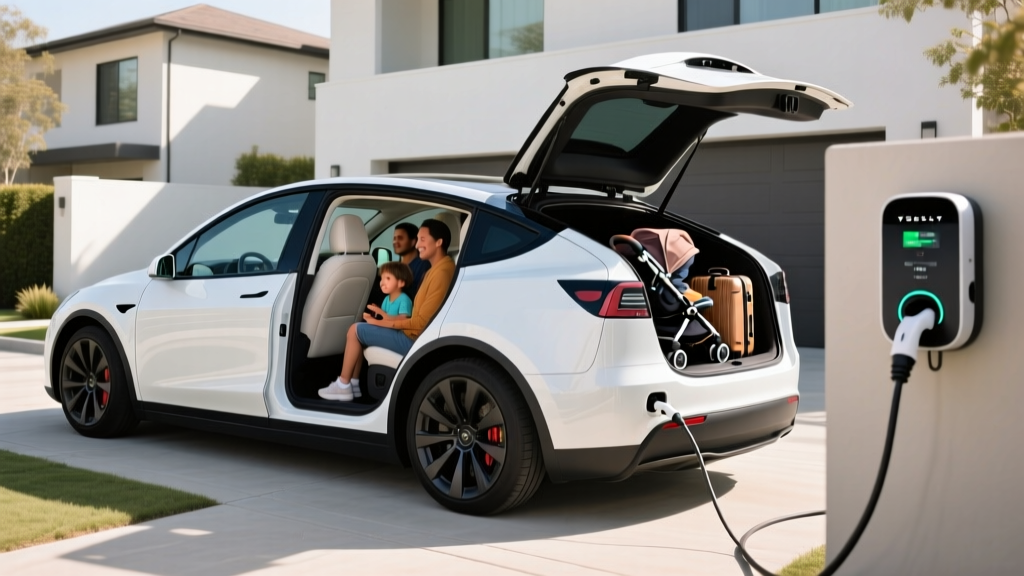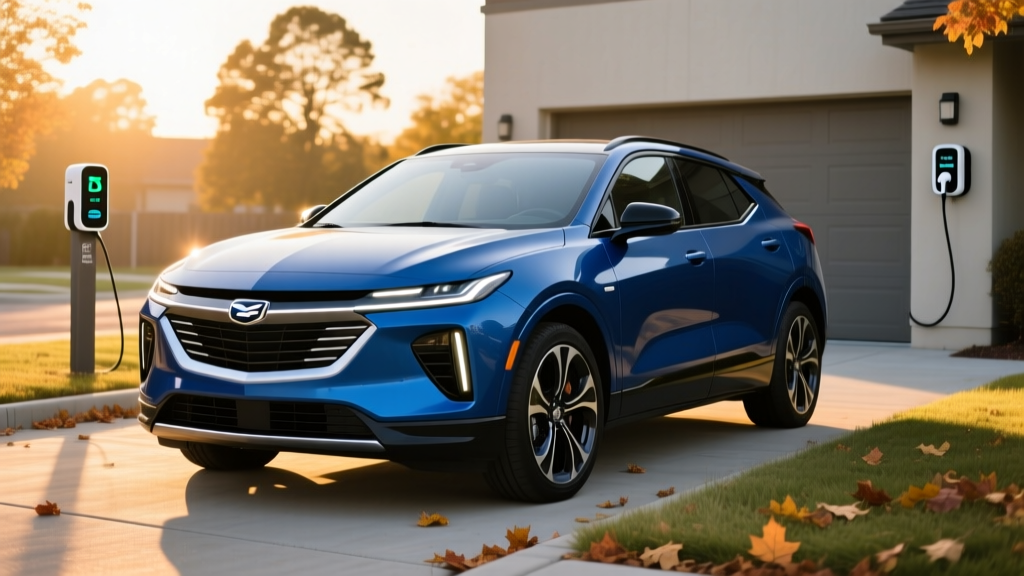
The 2025 Chevrolet Equinox EV RS sits in a sweet spot that few electric SUVs have managed to occupy: a long-range, feature-rich crossover priced below $45,000 before incentives, wearing a sporty badge that actually delivers on looks if not outright performance. Built on GM's Ultium platform alongside the Blazer EV and Silverado EV, the Equinox EV RS is the range-topping trim in a lineup that starts with the more affordable LT. After spending time with the specs, cross-referencing EPA data, and evaluating the ownership math, here's everything you need to know before putting one in your driveway.
Quick Verdict: Who the Equinox EV RS Is For
The RS trim targets buyers who want the Equinox EV's 315+ mile range and spacious interior but refuse to settle for base-model aesthetics. You get 21-inch wheels, a sport-tuned suspension, blacked-out exterior trim, and GM's full Super Cruise hands-free driving package availability. If you're a daily commuter with home charging access who occasionally road-trips and values style alongside substance, this is your trim. If you need maximum towing or the absolute lowest price, look at the LT or a competitor.
Range, Efficiency, and the Real-World Reality Check
Real-World Expectation: Plan for 260–285 miles on highway-heavy trips at 70+ mph. In freezing weather (below 30°F), expect a 20–30% reduction, putting usable range closer to 220–250 miles. City driving with regenerative braking recovers range closer to the EPA sticker.
The Equinox EV RS is available with front-wheel drive or all-wheel drive. The FWD RS with the larger Ultium battery pack earns an EPA-estimated 315 miles, while the AWD RS drops to approximately 290 miles. These are competitive figures — the Hyundai Ioniq 5 rates at 303 miles (Long Range RWD), and the Ford Mustang Mach-E Extended Range RWD achieves 320 miles.
Efficiency lands at approximately 97 MPGe combined for the FWD RS, translating to roughly 34 kWh per 100 miles, per fueleconomy.gov. That's respectable for a 4,700+ pound crossover, though the Ioniq 5's lighter platform squeezes out slightly better efficiency. The Ultium battery pack in the RS provides approximately 85 kWh of usable capacity using NMC (nickel manganese cobalt) chemistry — chosen for its energy density advantage over LFP, which matters in a vehicle this size.
| Spec | RS FWD | RS AWD (2LT/RS) |
|---|---|---|
| EPA Range | 315 miles | ~290 miles |
| Battery (Usable) | ~85 kWh, NMC | ~85 kWh, NMC |
| Horsepower | 213 hp | 288 hp |
| Torque | 236 lb-ft | 355 lb-ft |
| 0-60 mph | ~8.1 sec | ~6.5 sec |
| Drivetrain | Single motor FWD | Dual motor AWD |
| MPGe (Combined) | ~97 MPGe | ~90 MPGe |
| Max DC Charge Rate | 150 kW | 150 kW |
| Base MSRP | $43,400 | $46,100 |
Charging Speed: DC Fast Charging and Home Setup
The Equinox EV RS supports a peak DC fast-charge rate of 150 kW via its CCS1 connector (a NACS adapter is available for Tesla Supercharger access). At a 150 kW or higher station, a 10–80% session takes approximately 30 minutes. The charge curve tapers noticeably above 80% — this is normal lithium-ion behavior to protect cell health, but it means topping from 80–100% can add another 25–30 minutes. Plan your road-trip stops around 10–80% sessions for the best time efficiency.
| Charge Level | Power | Speed | Notes |
|---|---|---|---|
| Level 1 (120V) | ~1.4 kW | ~3–4 mi/hr | Emergency/top-up only |
| Level 2 (240V, 48A) | 11.5 kW | ~34 mi/hr | Full charge in ~8.5 hours |
| DC Fast Charge | 150 kW peak | 10–80% in ~30 min | Tapers above 80% SoC |
For home charging, the Equinox EV RS accepts up to 11.5 kW on a Level 2, 240-volt, 48-amp connection. That translates to roughly 34 miles of range per hour of charging — enough to replenish a full day's driving overnight. A dedicated 60-amp circuit with a hardwired Level 2 station (like a ChargePoint Home Flex or Tesla Wall Connector using the J1772 adapter) is the ideal setup. Installation typically runs $800–$2,000 depending on your panel capacity and conduit distance; if your home has a 100-amp panel, a $1,500–$3,000 panel upgrade may be necessary. Always consult a licensed electrician for final specs.
Performance and Driving Dynamics
The RS badge on the Equinox EV is more about appearance and suspension tuning than raw power. The FWD model delivers 213 hp and 236 lb-ft of torque from a single front motor — adequate for merging and passing, with a 0-60 time around 8.1 seconds. The dual-motor AWD RS bumps output to 288 hp and 355 lb-ft, dropping the 0-60 sprint to approximately 6.5 seconds. That puts it in the same ballpark as a Mach-E Premium AWD but well behind the Ioniq 5's dual-motor variant at 5.1 seconds.
The RS earns its sporty credentials through a stiffer suspension calibration, larger 21-inch wheels, and quicker steering ratio compared to the LT. Ride quality is firm but controlled — you'll feel expansion joints more than in the comfort-oriented trims, but body roll is well-managed in corners. Regenerative braking offers one-pedal driving capability with adjustable levels through the infotainment system. The low center of gravity from the floor-mounted battery pack keeps the Equinox EV planted, and the nearly 50/50 weight distribution (slightly front-biased in FWD) makes it feel more nimble than its curb weight suggests.
Interior Space, Technology, and the Super Cruise Factor
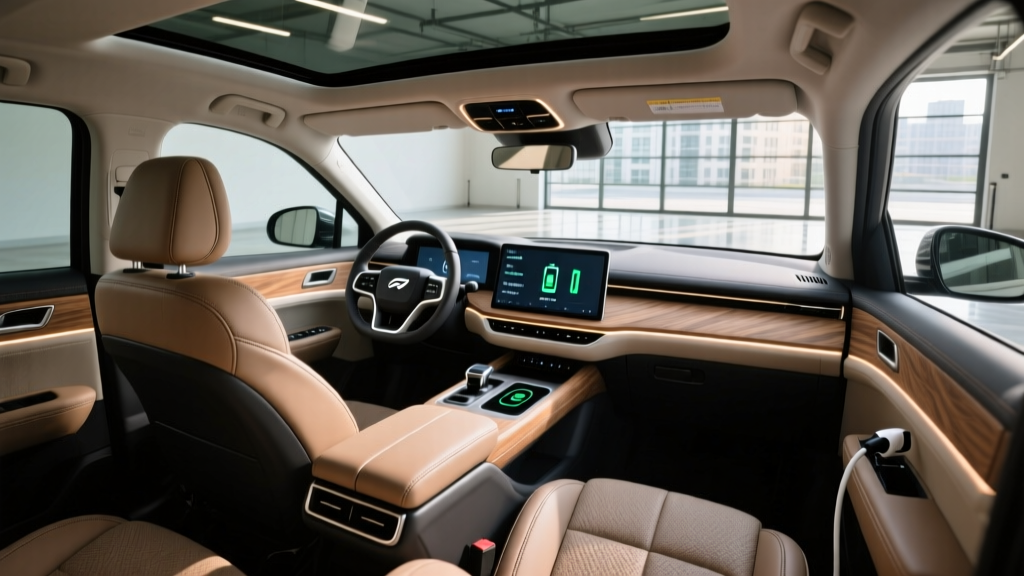
Inside, the Equinox EV RS features a dominant 17.7-inch diagonal infotainment touchscreen angled toward the driver, paired with an 11-inch digital instrument cluster. The Google Built-In operating system provides native Google Maps navigation (with real-time charging station routing), Google Assistant voice control, and access to the Play Store for apps. Wireless Apple CarPlay and Android Auto are standard. The RS adds a flat-bottom steering wheel, unique interior trim, and available Evotex seating surfaces.
Passenger space is generous: 41.2 inches of front legroom and 37.8 inches in the rear, making it comfortable for four adults on longer journeys. Cargo volume measures 26.4 cubic feet behind the second row and 63.7 cubic feet with the rear seats folded — competitive with the Ioniq 5 (27.2 / 59.3 cu ft) and slightly behind the Mach-E (29.7 / 59.7 cu ft). There is no front trunk (frunk) on the Equinox EV, which is a missed opportunity given the packaging freedom EVs provide.
Additional driver-assist features include Chevy's standard Safety Assist suite: automatic emergency braking, forward collision alert, lane keep assist, following distance indicator, and IntelliBeam auto high beams. Adaptive cruise control with stop-and-go is standard; Super Cruise is a premium option.
Pricing, Trims, and Federal Tax Credit Eligibility
| Trim | Base MSRP | Est. §30D Credit | Effective Price |
|---|---|---|---|
| RS FWD | $43,400 | Up to $7,500* | ~$35,900* |
| RS AWD | $46,100 | Up to $7,500* | ~$38,600* |
*Federal tax credit eligibility under IRS §30D is not automatic. The full $7,500 credit requires meeting all of the following criteria, per irs.gov:
- MSRP Cap: The Equinox EV is classified as an SUV — the cap is $80,000. Both RS trims clear this easily.
- Buyer Income Limits: Modified AGI must not exceed $150,000 (single), $225,000 (head of household), or $300,000 (joint). Check your tax situation.
- Battery Sourcing: The credit splits into two halves — $3,750 for critical minerals sourcing and $3,750 for battery component manufacturing. GM has worked to shift Ultium battery sourcing to North America, but exact credit amounts vary by production batch and model year. Confirm with your dealer and a tax professional before purchase.
- Point-of-Sale Transfer: As of 2024, eligible buyers can transfer the credit to the dealer at purchase, reducing the sale price directly rather than waiting for a tax refund. The dealer must be IRS-registered.
Destination charges, dealer-installed accessories, and any market adjustments add to the out-the-door price. A well-equipped RS AWD with Super Cruise and premium paint can push past $52,000 before credits. Always verify current credit eligibility at the point of sale — IRS sourcing rules tighten annually.
Ownership Costs, Warranty, and Long-Term Battery Outlook
Chevrolet backs the Equinox EV with a 3-year/36,000-mile bumper-to-bumper warranty and a 8-year/100,000-mile battery and powertrain warranty that covers capacity loss below 70% of original capacity. This is industry-standard and matches Ford, Hyundai, and Tesla's battery coverage terms.
The NMC Ultium battery uses GM's wireless battery management system, which reduces wiring harness complexity and potential failure points. Thermal management is handled by an active liquid cooling/heating system that conditions the pack for optimal charging and longevity. Expect typical NMC degradation of approximately 8–12% over the first 100,000 miles based on industry averages for liquid-cooled packs — meaning your 315-mile range might settle to 280–290 miles after several years of normal use.
Running costs favor the Equinox EV heavily over a gas-powered Equinox. At a national average electricity rate of $0.17/kWh and the RS FWD's 34 kWh/100mi consumption, you're paying roughly $5.78 per 100 miles at home. The equivalent gas Equinox at 28 MPG combined and $3.30/gallon costs $11.79 per 100 miles — more than double. Insurance premiums for the Equinox EV RS average 10–15% higher than the gas version due to repair cost structures; get quotes before purchasing.
How It Compares: Equinox EV RS vs. Key Rivals
| Spec | 2025 Equinox EV RS AWD | 2025 Ioniq 5 Limited AWD | 2025 Mach-E Premium AWD ER |
|---|---|---|---|
| EPA Range | ~290 mi | 290 mi | 300 mi |
| Battery (Usable) | ~85 kWh NMC | 77.4 kWh NMC | 91 kWh NMC |
| Peak DC Charge | 150 kW | 240 kW | 150 kW |
| 10–80% Time | ~30 min | ~18 min | ~35 min |
| 0-60 mph | ~6.5 sec | 5.1 sec | 5.5 sec |
| Horsepower | 288 hp | 320 hp | 346 hp |
| Cargo (rear up/down) | 26.4 / 63.7 cu ft | 27.2 / 59.3 cu ft | 29.7 / 59.7 cu ft |
| Base MSRP (comparable) | $46,100 | $54,200 | $51,375 |
| Hands-Free Driving | Super Cruise (opt) | None | BlueCruise (opt) |
Pros, Cons, and the Bottom Line
Pros
- 315-mile EPA range (FWD) at a sub-$44K starting price
- Super Cruise availability — best-in-class hands-free driving coverage
- Spacious rear seat with 37.8" legroom
- 17.7" infotainment screen with Google Built-In
- Strong federal tax credit eligibility potential
- RS styling and suspension tuning add genuine visual appeal
Cons
- 150 kW peak DC charging trails Ioniq 5's 240 kW capability
- No front trunk (frunk) despite EV platform
- FWD RS acceleration (8.1s 0-60) feels leisurely for the price
- 21" RS wheels reduce range and increase tire replacement cost
- Rear visibility is compromised by thick C-pillars
- Build quality and panel gaps on early-production units drew criticism
Choose the Ioniq 5 instead if: You road-trip frequently and need 10–80% charging in under 20 minutes, or want punchier acceleration.
Choose the Mach-E instead if: You need maximum cargo volume, prefer a sportier driving feel, or want Ford's BlueCruise ecosystem.
Frequently Asked Questions
What is the real-world range of the 2025 Equinox EV RS?
The EPA rates the RS FWD at 315 miles and the AWD at approximately 290 miles. In real-world highway driving at 70–75 mph, expect 260–285 miles (FWD). In freezing temperatures, range drops 20–30%, so plan for roughly 220–250 miles in winter conditions. City driving with regen braking keeps you closer to the sticker number.
How fast does the Equinox EV RS charge?
On a DC fast charger, it peaks at 150 kW and reaches 10–80% in about 30 minutes, with significant tapering above 80%. At home on a Level 2, 48-amp, 240V connection, it charges at 11.5 kW — adding about 34 miles per hour, or a full charge in roughly 8.5 hours.
How much does the Equinox EV RS cost after tax credits?
The RS FWD starts at $43,400 and the RS AWD at $46,100. If you qualify for the full $7,500 federal §30D credit (meeting income, MSRP, and battery-sourcing requirements), the effective price drops to approximately $35,900 (FWD) or $38,600 (AWD). Confirm eligibility with your dealer and tax professional — sourcing rules change and not every buyer qualifies for the full amount.
Does the 2025 Equinox EV RS qualify for the federal EV tax credit?
It is eligible for up to $7,500 under IRS §30D, provided the buyer meets income caps ($150K single / $300K joint), the MSRP stays under the $80K SUV cap (it does), and the battery meets current critical-mineral and component-sourcing thresholds. GM's Ultium batteries are manufactured in the US, but the exact credit split ($3,750 + $3,750) depends on the specific battery batch. Always verify at point of sale. The credit can be transferred to the dealer to reduce your purchase price directly.
Is the Equinox EV RS worth buying vs. the Ioniq 5 or Mach-E?
If value and hands-free driving are your priorities, yes — the Equinox EV RS undercuts both rivals by $5,000–$8,000 at comparable equipment levels and offers Super Cruise. If fast DC charging is critical for your road-trip habits, the Ioniq 5's 18-minute 10–80% time is a meaningful advantage. If cargo flexibility and driving engagement matter most, the Mach-E holds an edge. All three are strong; the Equinox EV RS wins on price-to-range ratio.
What is the battery warranty on the Equinox EV RS?
Chevrolet covers the Ultium battery and electric powertrain for 8 years or 100,000 miles, whichever comes first. The warranty guarantees the battery will retain at least 70% of its original capacity during that period. If degradation exceeds 30% within the warranty window, GM will repair or replace the battery pack.